At the end of 2025, a commitment to getting a new economic development plan out of the Legislature was halted. In this episode MichMash, Bridge Michigan’s business reporter Paula Gardner joins Cheyna Roth and Alethia Kasben to discuss economic development incentives and if they are helping to attract Michigan businesses.
One-of-a-kind podcasts from WDET bring you engaging conversations, news you need to know and stories you love to hear. Keep the conversations coming. Please make a gift today.
Q: We have a third bathroom in our finished basement that has a stall shower. My brother-in-law says it’s only considered a half-bath because it doesn’t have a bathtub. Is he correct?
A: Your brother-in-law is wrong. Bathrooms go by the number of fixtures. A bathroom with a sink and a toilet is a two-fixture bath, which is also referred to as a half-bath or a lav. A full bath has a sink, toilet, and either a bathtub or shower, or both, so it can be either a three- or four-fixture full bath.
Home maintenance tip
Are you losing up to 25% of your heat because you don’t have $40 to $80 worth of insulation in your basement? Having been in literally over a thousand homes over the years, I get to observe a lot of things. One thing I have noticed, especially in homes built before the 1980s, is the lack of insulation around the rim joist in the basement. That is where all the joists rest on top of the basement wall. If you see insulation, you’re good, but if you see bare wood, you’re losing money out of your pocket every minute during the cold weather here in Michigan.
The fix is simple: buy a roll or two of insulation and cut pieces to fit up in all of the cavities. (If you have bay windows or kitchen sinks that are in a bay with plumbing pipes, then consult with a professional on the correct way to insulate the bay.) It’s a good idea to wear gloves, long sleeves, safety glasses and a face mask when handling insulation. You can take it a step further and seal all the joints with a foam sealant first before adding the insulation. I recommend consulting your home improvement store or a contractor/handyman as to the best way to go about it for your home. As long as you do something, you will start saving money right away.
Market update
November’s market update for Macomb County and Oakland County’s housing market (house and condo sales) is as follows: In Macomb County, the average sales price was up by almost 3% and Oakland County’s was up by more than 2%. Macomb County’s on-market inventory was down by almost 2% and Oakland County’s was up by almost 4%. Macomb County’s average days on market was 35 days and Oakland County’s was 32 days. Closed sales in Macomb County were up by almost 3% and were down by almost 9% in Oakland County. (All comparisons are month to month, year to year.)
By the long-standing historical definition from the National Association of Realtors, which has been in existence since 1908, a buyer’s market is when there is a seven-month supply or more of inventory on the market. A balanced market between buyers and sellers is when there is a six-month supply of inventory. A seller’s market is when there is a five-month or less supply of inventory. Inventory has continued to stay low. In November, the state of Michigan’s inventory was at 2.6 months of supply. Macomb County’s inventory was at 2.4 months of supply and Oakland County’s inventory was at 2.3 months of supply. By definition, it’s still not close to a buyer’s market.
Steve Meyers is a real estate agent/Realtor at Realty Executives Home Towne in Shelby Township. He can be contacted with questions at 586-997-5480 or emailed at Steve@MeyersRealtor.com. You can also visit his website at AnswersToRealEstateQuestions.com.
The Detroit City Council voted in new leaders Monday.
WDET’S Bre’Anna Tinsley was there.
James Tate was voted President 5-4. He served as President Pro Tem under now mayor Mary Sheffield. He says he wants to strengthen how the council operates.
”For years, I have pushed for a legislative agenda, and while we have not fully realized that goal, I did help usher into our rules, a process that can move us there. That matters because it increases transparency, accountability, and it also provides the public a way to see our priorities and measure our progress.”
Coleman Young II was voted Pro Tem, defeating Mary Waters.
Additional headlines for Tuesday, Jan. 6, 2025
Duggan’s independent campaign stresses unity
Independent gubernatorial candidate Mike Duggan says he’s bringing a message of unity to the state—the kind he says helped him bridge divides as mayor of Detroit.
As an independent Duggan won’t get any visibility from the party primary process. He says instead he’s visiting with small groups of voters across Michigan and finding many of them concerned about the same issues like affordable housing and job training opportunities.
Duggan says Republicans and Democrats are more interested in beating each other than working together to solve problems. “I have never seen a state more evenly divided than Michigan today. And people more fed up. I don’t think the climate’s ever been more fertile…to have a third option.”
Duggan claims rural voters in particular find they have more in common than they thought with the urban electorate that placed him at the top of Detroit’s city government. (Quinn Klinefelter)
Retail Food Business Cohort
The Brightmoor Artisan Collective is getting ready to launch a program for folks who want to start a food business.
Applications for the Retail Food Business Cohort are set to go live in a few weeks. Participants will be able to access free food safety certification, business plan development, networking events and a one year membership in the collective.
The Detroit Parks and Rec Department is launching a slew of sports programs for kids this and next month. Offerings include tennis, baseball, volleyball, basketball, flag football, soccer and “sports movement.”
Programs will be offered at recreation and community centers throughout the city.
Listen to the latest episode of the “Detroit Evening Report” on Apple Podcasts, Spotify, NPR.org or wherever you get your podcasts.
Support local journalism.
WDET strives to cover what’s happening in your community. As a public media institution, we maintain our ability to explore the music and culture of our region through independent support from readers like you. If you value WDET as your source of news, music and conversation, please make a gift today.
Tariffs have pushed up the cost of some goods. Unemployment has ticked up slightly. Hiring practices are shifting as artificial intelligence tools like ChatGPT become more prevalent in workplaces.
Those changes raise big questions for the state’s more than 900,000 small businesses — and the workers who depend on them. How are owners adapting to rising costs and new technologies? What does this moment feel like on the ground? And what should people be doing now to stay resilient?
To explore those questions, Mark Lee, founder of The Lee Group, sat down with The Metro’s Robyn Vincent. Lee hosts several talk shows and writes about business and the economy for Crain’s Detroit, with a focus on how national trends play out locally.
Listen to The Metro weekdays from 10 a.m. to noon ET on 101.9 FM and streaming on demand.
WDET strives to make our journalism accessible to everyone. As a public media institution, we maintain our journalistic integrity through independent support from readers like you. If you value WDET as your source of news, music and conversation, please make a gift today.
Empty office spaces and buildings continue to be an issue for owners the COVID-19 pandemic. Rent is too high for small businesses and entrepreneurs to fill in the gap.
Bamboo is a co-working space seeks to fill the need of office space without the large commitments required when renting a whole building. Bamboo has flexible options to obtain office space and common areas for any business-related needs.
Bamboo now has five locations across Michigan, including one of its newest locations in Midtown.
Amanda Lewen says Bamboo started as a grassroots idea from a group of friends. She spoke with The Metro’s Tia Graham about Bamboo and the current state of Michigan’s small business ecosystem.
Bamboo Jefferson Hub
Listen to The Metro weekdays from 10 a.m. to noon ET on 101.9 FM and streaming on demand.
WDET strives to cover what’s happening in your community. As a public media institution, we maintain our ability to explore the music and culture of our region through independent support from readers like you. If you value WDET as your source of news, music and conversation, please make a gift today.
President Donald Trump’s plan to take control of Venezuela’s oil industry and ask American companies to revitalize it after capturing President Nicolás Maduro in a raid isn’t likely to have a significant immediate impact on oil prices.
Venezuela’s oil industry is in disrepair after years of neglect and international sanctions, so it could take years and major investments before production can increase dramatically. But some analysts are optimistic that Venezuela could double or triple its current output of about 1.1 million barrels of oil a day to return to historic levels fairly quickly.
“While many are reporting Venezuela’s oil infrastructure was unharmed by U.S. military actions, it has been decaying for many many years and will take time to rebuild,” said Patrick De Haan, who is the lead petroleum analyst at gasoline price tracker GasBuddy.
Vehicles drive past the El Palito refinery in Puerto Cabello, Venezuela, Sunday, Dec. 21, 2025. (AP Photo/Matias Delacroix)
American oil companies will want a stable regime in the country before they are willing to invest heavily, and the political picture remained uncertain Saturday with Trump saying that the United States is in charge — while the current Venezuelan vice president argued, before Venezuela’s high court ordered her to assume the role of interim president, that Maduro should be restored to power.
“But if it seems like the U.S. is successful in running the country for the next 24 hours, I would say there would be a lot of optimism that U.S. energy companies could come in and revitalize the Venezuelan oil industry fairly quickly,” said Phil Flynn, a senior market analyst at the Price Futures Group.
And if Venezuela can grow into an oil production powerhouse, Flynn said “that could cement lower prices for the longer term” and put more pressure on Russia.
Speaking to reporters on Air Force One on Sunday, Trump said oil companies are “going to go in and rebuild this system.”
A major shift in oil prices wasn’t expected because Venezuela is a member of OPEC, so its production is already accounted for there. And there is currently a surplus of oil on the global market.
The price of U.S. crude oil lost 23 cents early Monday to $57.09 per barrel. Brent crude, the international standard, gave up 18 cents to $60.57 per barrel.
Proven reserves
Venezuela is known to have the world’s largest proven crude oil reserves of approximately 303 billion barrels, according to the U.S. Energy Information Administration. That accounts for roughly 17% of all global oil reserves.
So international oil companies have reason to be interested in Venezuela. Exxon Mobil didn’t immediately respond to a request for comment Saturday. ConocoPhillips spokesperson Dennis Nuss said by email that the company “is monitoring developments in Venezuela and their potential implications for global energy supply and stability. It would be premature to speculate on any future business activities or investments.”
Chevron is the only one with significant operations in Venezuela, where it produces about 250,000 barrels a day. Chevron, which first invested in Venezuela in the 1920s, does business in the country through joint ventures with the state-owned company Petróleos de Venezuela S.A., commonly known as PDVSA.
“Chevron remains focused on the safety and wellbeing of our employees, as well as the integrity of our assets. We continue to operate in full compliance with all relevant laws and regulations,” Chevron spokesman Bill Turenne said.
But even with those massive reserves, Venezuela has been producing less than 1% of the world’s crude oil supply. Corruption, mismanagement and U.S. economic sanctions saw production steadily decline from the 3.5 million barrels per day pumped in 1999 to today’s levels.
The problem isn’t finding the oil. It’s a question of the political environment and whether companies can count on the government to live up to their contracts. Back in 2007, then President Hugo Chávez nationalized much of the oil production and forced major players like ExxonMobil and ConocoPhillips out.
“The issue is not just that the infrastructure is in bad shape, but it’s mostly about how do you get foreign companies to start pouring money in before they have a clear perspective on the political stability, the contract situation and the like,” said Francisco Monaldi, who is the director of the Latin American energy program at Rice University.
But the infrastructure does need significant investment.
“The estimate is that in order for Venezuela to increase from one million barrels per day — that is what it produces today — to four million barrels, it will take about a decade and about a hundred billion dollars of investment,” Monaldi said.
Strong demand
Venezuela produces the kind of heavy crude oil that’s needed for diesel fuel, asphalt and other fuels for heavy equipment. Diesel is in short supply around the world because of the sanctions on oil from Venezuela and Russia and because America’s lighter crude oil can’t easily replace it.
Years ago, American refineries on the Gulf Coast were optimized to handle that kind of heavy crude at a time when U.S. oil production was falling and Venezuelan and Mexican crude was plentiful. So refineries would love to have more access to Venezuela’s crude because it would help them operate more efficiently, and it tends to be a little cheaper.
Boosting Venezuelan production could also make it easier to put pressure on Russia because Europe and the rest of the world could get more of the diesel and heavy oil they need from Venezuela and stop buying from Russia.
“There’s been a big benefit for Russia to see Venezuela’s oil industry collapse. And the reason is because they were a competitor on the global stage for that oil market,” Flynn said.
Complicated legal picture
But Matthew Waxman, a Columbia University law professor who was a national security official in the George W. Bush administration, said seizing control of Venezuela’s resources opens up additional legal issues.
“For example, a big issue will be who really owns Venezuela’s oil?” Waxman wrote in an email. “An occupying military power can’t enrich itself by taking another state’s resources, but the Trump administration will probably claim that the Venezuelan government never rightfully held them.”
But Waxman, who served in the State and Defense departments and on the National Security Council under Bush, noted that “we’ve seen the administration talk very dismissively about international law when it comes to Venezuela.”
Associated Press writers Matt O’Brien, Ben Finley, Darlene Superville and Rio Yamat contributed to this report.
Evana, an oil tanker, is docked at El Palito port in Puerto Cabello, Venezuela, Sunday, Dec. 21, 2025. (AP Photo/Matias Delacroix)
A nearly four-decade-long business partnership between The Detroit News and Detroit Free Press ended Sunday, Dec. 28, pitting the newspapers against each other financially at a time when few other U.S. cities support two major papers.
Free Press owner USA TODAY Co., formerly known as Gannett Co. Inc., and MediaNews Group — owner of The News — in June opted against renewing the longstanding agreement, thus ending among the last such tie-ups in the country. The companies have not provided further reasoning behind the split.
The News announced Friday it will launch a Sunday edition Jan. 18, at which point it will once again print newspapers all seven days. Other changes include makeovers for the detroitnews.com website and mobile app, an updated print design and a refreshed eNewspaper, Editor and Publisher Gary Miles said. The changes are expected to take place during a roughly month-long transition period.
The end of the Detroit joint operating agreement (JOA) marks the end of an era in U.S. newspapers. Aside from a contentious Las Vegas partnership that was ruled invalid earlier this year, the Detroit JOA was the last major JOA still in existence, and the only one in which both newspapers emerged to print seven days and compete on all digital platforms.
“To the JOA’s credit, there are two newspapers to this day in metropolitan Detroit,” said Mark Silverman, who was editor and publisher of The News from 1997 to 2005. “So that’s clearly a positive. And both newspapers had very different editorial page positions. That’s a positive for a community.”
Joint operating agreements were cost-saving measures allowed by the Newspaper Preservation Act of 1970, which permitted two newspapers in the same city to merge their business operations to protect diversity in opinion and newsgathering. If approved by the federal government, the newsrooms continued to compete, but companies saved overhead costs associated with newsprint, printing presses and distribution.
“Even in the federal government, there was some understanding of the value of journalism and the value of preserving those voices,” said Carole Leigh Hutton, a former Detroit News editor and the Free Press’ former editor and publisher.
In virtually all cases outside of Detroit, newspapers concluded their partnerships with mergers, one partner shuttering its operations or the smaller paper dramatically curtailing operations.
Bitterly contested in court when it was first proposed in 1986, the Detroit joint operating agreement remains a subject of debate over whether it was a success, although its primary stated goal — preserving two editorial voices — was fulfilled.
“Ultimately, what it intended to do was to keep two papers in Detroit,” said the Poynter Institute’s Kelly McBride, who advises news organizations on best practices. “So yeah, I guess that means it was successful. Clearly, I don’t think Detroit would have two papers now if the (joint operating agreement) had not existed.”
But McBride and former editors of both papers said it’s difficult to separate the role of business partnerships in the survival or death of newspapers compared to the existential loss of funding widely blamed on digital advertising.
“It’s been a really tough environment for newspapers,” Hutton said. “And they have gone to online-only in a lot of places. Many have just gone away. So it’s not far-fetched to think it would have been tough to continue to have two nameplates in this particular area, and I think the JOA probably did keep two nameplates alive. But again, it’s hard to know.”
Ed Wendover, a former Plymouth newspaper publisher who fought the Detroit papers’ partnership in court, said the outlets survived in spite of their agreement. Free to compete on all levels without being tethered financially, the papers “would be stronger than they are today and have more circulation,” Wendover said.
Silverman expressed a similar sentiment, saying that “the business aspect of the JOA was a hindrance to both newspapers.”
“The positive was that it kept two newspapers going,” he said. “The negative was that the business staff tried to serve too many masters and didn’t serve either very well.”
In addition, a bitter newspaper strike marked the early years of the JOA, costing the publications both subscribers and brand loyalty.
“The mismanagement under the JOA drove readers away, and advertisers will always play follow-the-readers. It’s a double-edged sword seeing the JOA end,” Wendover said.
Why did the Detroit papers partner?
In the years before the joint operating agreement, The News and the Free Press were locked in a financially draining, “old-fashioned, intense newspaper war,” said The News’ editorial page editor Nolan Finley, who at the time worked as an editor on the paper’s city desk.
Lucrative ad sales were at stake, and advertising rates were based on circulation, said former News reporter Bryan Gruley, whose 1993 book “Paper Losses: A Modern Epic of Greed and Betrayal at America’s Two Largest Newspaper Companies” details the path toward the joint agreement. Both papers steeply discounted subscription prices to beef up readership numbers and increase the prices they could charge for ads.
“You couldn’t throw a stone in Detroit without meeting someone who got a free Free Press or a free Detroit News that they never paid for and that landed on their doorstep every morning,” Hutton said. “Everybody knew that was part of the war.”
In response, The News ― then owned by Gannett (recently renamed USA TODAY Co.) ― and the Free Press ― then owned by now-defunct Knight Ridder ― in 1986 filed for federal approval to merge business operations in a 100-year partnership, leaving separately owned and competitive newsrooms.
Wendover, the former Plymouth publisher, led opposition to the partnership and sued to block it. He said vying for permission from the Reagan administration reflected poorly on the newspapers’ editorial independence and would reduce journalistic competition between them.
Once the deal was before federal judges, scrutiny increased over claims that the Free Press was in imminent danger of failure if not for the agreement. The reason: federal law on joint-operating agreements required one paper to be failing.
“They were saying these are not failing newspapers,” said Gruley, who covered the legal battle. “They’re not failing because the economics are bad. They’re failing because they’re choosing to fail, knowing that maybe we can push the other guys out and then maybe we get the whole banana, the whole enchilada.”
The U.S. Supreme Court ultimately ruled 4-4 on the case, allowing the agreement to take effect in 1989. The pact was renegotiated as a 20-year deal in 2005 when newspaper ownership changed; Gannett bought the Free Press and sold The News to MediaNews Group.
“I remember that when it came about, it was a matter of survival,” said U.S. Rep. Debbie Dingell, D-Ann Arbor. “And I think local media matters. I think it’s important that there are two newspapers with different perspectives, and I’m someone that thinks we need more media, not less. People need to be able to go to places where you can really get the facts. And I hope both papers survive.”
Although the rise of digital advertising at the expense of newspapers wasn’t what prompted the tie-up, former Free Press publisher Dave Hunke said the timing of the agreement was unwittingly prescient.
“The JOA was necessary from an economic standpoint to keep two newspapers in place,” Hunke said. “We were within a couple of years heading into the deepest financial crisis this country had seen since the Great Depression, and the business was not good.”
The role of journalism and how to pay for it
The papers’ upcoming split once again raises questions about the market for two dailies and whether current economics can support both outlets.
“People wanted two fiercely independent competitive newspapers in that town,” said Hunke, who became president of the joint business operations when the partnership was reconstituted in 2005. “People wanted their newspapers. And they wanted them competitive, and they wanted them separate.”
Throughout the agreement, Detroit maintained its rare status as a two-paper town.
“It kept two fairly strong newspapers in Detroit with opposing … editorial page viewpoints,” Finley said. “So we’re the only market you could say that about in the country, where you have two competitive, fairly equal newspapers, one on the right (and) one on the left that people can choose from.”
Silverman said both papers served readers well during the JOA.
“The News always had a certain journalistic personality embodied by its name: The News,” he said, adding that during his time in Detroit, the Free Press was known as “the friendly Freep.”
Both newspapers won Pulitzer Prizes during the partnership and “changed lives in the community,” Hutton said. She cited coverage of former Detroit mayor Kwame Kilpatrick, who was convicted 12 years ago of federal racketeering and tax evasion charges after being accused of running a criminal enterprise out of City Hall, rigging bids and pocketing more than $840,000 in bribes and kickbacks.
“Even though there’s a whole political entity out there that likes to trash it and say that journalism is harmful and anti-American, it’s quite the opposite,” she said. “If you think about it, journalism is about preserving the ideals and making sure that people know what’s happening because it’s our money, and it’s our government, and it’s our right, and it’s supposed to be our decision. And it’s just not possible for the average person to oversee what’s happening in the world the way journalists should be overseeing it for them.”
Leadership at The News has said the split will allow the outlet to operate more closely with its sister papers in Michigan, including the Macomb Daily, The Oakland Press, The News-Herald in the Downriver area, and The Morning Sun in mid-Michigan, which share the same ownership as The Detroit News.
Hutton said the success of the papers “all comes down to: What do the advertisers think?”
“You got to unlock the business solution, somehow,” Hunke said. “But you cannot take the shortcuts on the news side. Good journalism, in the end, I swear it will win. I just wish somebody could find a way to unlock the economics.”
Staff of The Detroit News works in the newsroom at 6001 Cass Ave. in Detroit. (Kevin J. Hardy/The Detroit News/Kevin J. Hardy)
On Reddit, a user recently asked if spending money on an expensive hobby can be justified.
Sure, expensive hobbies may bring joy. But does it make sense to splurge on something like golf, sailing or world travel? What if that splurge takes money away from other more “responsible” goals, such as saving or paying off debt?
Responses were mixed: Some encouraged the poster to spend now on what makes them happy. After all, you never know what the future might bring. Those folks shared stories of spending on luxury cars, video gaming accessories and musical instruments.
Others recommended a more balanced approach, suggesting a responsible split between spending on future savings and today’s hobbies.
It turns out financial experts think it’s OK to indulge — in a balanced way, of course.
Take care of your essentials
Before splurging on non-essentials, do a review of your basic needs, suggests Andi Wrenn, an accredited financial counselor and founder of Coaching Capability in the Raleigh, North Carolina area.
Are you covering the important stuff and still feeling good about your financial situation?
It’s a good idea to make sure your bills are paid and you’re saving for the future before turning to hobby-related spending, Wrenn says.
Reflect on bigger goals
What’s your master plan? Thinking about your goals and values is a useful way to decide how to prioritize your discretionary funds, says John Jones, a certified financial planner and investment advisor representative at Heritage Financial in Newberry, Florida.
If you have a partner, it’s useful to talk together about where you want to be in five, 10 and 15 years, he adds.
“How do you want to spend your time? How do you want to spend your financial assets? Is it on golfing, boating or sailing? One might appeal more to one person than the other,” Jones says.
Build hobby spending into your budget
Once you’ve set your financial priorities, you can make room for your expensive hobby in your overall budget, Jones says.
“I like to think through what is sustainable,” he says.
A sustainable expense is one you can pay for with your current cash flow instead of turning to savings or loans.
There might be ways to cut back in other areas to make room for the extra expense. “Maybe we save $10,000 a year for this hobby,” Jones suggests.
Wrenn takes that approach in pursuit of her passions, which include travel and crafting.
“For me, it was important to have money in the budget to do the things that I enjoy doing,” she says, which means scaling back spending in other categories to compensate.
Find creative ways to fund your hobby
To fund her travel passion, Wrenn strategically uses credit cards. She pays them off each month to earn travel rewards. Done right, she can purchase airplane tickets with points instead of savings.
She recently took her family on a trip to Scotland, which was paid for largely by those travel rewards. “I could afford it because I planned for it,” she says.
Another option is to brainstorm ways to make your hobby pay for itself. If you’re a crafter, you can try to sell some of your creations on Etsy. If you love to sail, maybe you can offer charters to paying clients, Jones suggests.
Embrace patience and planning
Sometimes, a big hobby-related purchase requires extra planning, Wrenn says.
For example, she spends big on craft supplies, but only stocks up during her favorite store’s annual sale.
“For me, going to the craft store and spending $300 makes me happy, so I save for that,” she says.
In her case, savvy planning pays off. She used the stamps, ink and paper — all bought on sale — to make her annual holiday, thank-you and greeting cards.
Another tip: Create a separate savings account for the hobby and deposit money into it each month, says Wrenn. That can make it easier to accrue funds for a passion while avoiding debt.
This method also helps head off any potential fights with your partner about how the money is spent. “If the spending is pre-planned, you don’t need to fight about it,” she says.
Taking that approach allowed her to purchase a large sewing machine and a computer to assist with crafting projects.
“Having a dedicated savings account that I just put money into every month makes it very purposeful and allows me to save without being tempted to spend on something else,” Wrenn says.
Expensive hobby. Justified.
Reddit is an online forum where users share their thoughts in “threads” on various topics. The popular site includes plenty of discussion on financial subjects like spending and saving, so we sifted through Reddit forums to get a pulse check. People post anonymously, so we cannot confirm their individual experiences or circumstances.
Over the holidays, we’re sharing some of the stories Detroit Evening Report hosts produced for the radio this year. Today we hear a story from Sascha Raiyn.
Terees Western is an artisan perfumer and owner of the business FragranTed. Sascha Raiyn spoke to her about her work and about one title she uses, “scent docent.”
Western says she explains the experience of scent the way a docent at the DIA might explain a work of art.
Detroit Public Library branches are hosting holiday break events throughout this week.
Offerings include card-making and Kwanzaa craft sessions, video and board gaming and storytimes. The Sherwood Forest Branch will host a family New Year’s Party Tuesday from 4-5pm at 7117 West Seven Mile Road.
Come Play Detroit is bringing Broomball to Downtown Detroit in early January and tomorrow is the last day to register to play.
The co-ed league hits the ice at Campus Martius Tuesday, Jan. 6.
Teams can register for $1100 dollars with a $100 deposit. Individuals can play for $120. The Broomball leagues runs through January and February. For more information visit comeplaydetroit.com.
Listen to the latest episode of the “Detroit Evening Report” on Apple Podcasts, Spotify, NPR.org or wherever you get your podcasts.
Support the podcasts you love.
One-of-a-kind podcasts from WDET bring you engaging conversations, news you need to know and stories you love to hear. Keep the conversations coming. Please make a gift today.
The holiday season will soon come to a close, but the busiest time of the year for product returns is just beginning.
The National Retail Federation estimates 17% of holiday purchases will be sent back this year. More retailers are reporting extended return windows and increased holiday staff to handle the rush this year.
A major driver for returns is uncertainty. When we buy for other people, finding what they want is a bit of a guessing game. Online purchases have higher return rates because finding the right size and color is tough when you’re just staring at images on screens.
“Clothing and footwear, as you can imagine, because fit is such an important criteria, they have higher rates of returns,” said Saskia van Gendt, chief sustainability officer at Blue Yonder, which sells software designed to improve companies’ supply chain management.
Returns come with an environmental cost, but there’s a lot consumers and companies are doing to minimize it.
The impact of returns
If a company sells a thing, it’s probably packaged in plastic. Plastic is made from oil, and oil production releases emissions that warm the planet. If that thing is bought online, it’s put on a plane or a train or a truck that usually uses oil-based fuel.
If you buy a thing and return it, it goes through most or all of that all over again.
And once those products are back with the retailer, they may be sent along to a refurbisher, liquidator, recycler or landfill. All these steps require more travel, packaging and energy, ultimately translating to more emissions. Joseph Sarkis, who teaches supply chain management at Worcester Polytechnic Institute, estimates that returning an item increases its impact on the planet by 25% to 30%.
Roughly a third of the time, those returns don’t make their way to another consumer. Because frequently, it’s not worth reselling.
If, for example, you get a phone, but you send it back because you don’t like the color, the seller has to pay for the fuel and equipment to get the phone back, and then has to pay for the labor to assess whether it has been damaged since leaving the facility.
“It can be quite expensive,” said Sarkis. “And if you send it out to a new customer and the phone is bad, imagine the reputational hit you’ll get. You’ll get another return and you’ll lose a customer who’s unhappy with the product or material. So the companies are hesitant to take that chance.”
Something as expensive as a phone might get sold to a secondary or refurbishment market. But that $6 silicone spatula you got off Amazon? Probably not worth it. Plus, some stuff — think a bathing suit or a bra — is less attractive to customers if there’s a chance it’s been resold. The companies know that.
And that’s where the costs of returns are more than just environmental — and consumers wind up paying. Even free returns aren’t really free.
“Refurbishment, inspection, repackaging, all of these things get factored into the retail price,” said Christopher Faires, assistant professor of logistics and supply chain management at Georgia Southern University.
What consumers can do about it
If you want to reduce the impact of your returns, the first move is to increase their chances of resale. Be careful not to damage it, and reuse the packaging to send it back, said Cardiff University logistics and operations management lecturer Danni Zhang.
If you have to return something, do it quickly. That ugly Christmas sweater you got at the white elephant office party has a much better chance of selling on Dec. 20 than it does on Jan. 5. Zhang said it’s not worth the cost to the company to store that sweater once it’s gone out of season.
Another tip: in-person shopping is better than online because purchases get returned less often, and in-person returns are better, too — because those items get resold more often. Zhang said it reduces landfill waste. Sarkis said it reduces emissions because companies with brick-and-mortar locations spread out across the country and closer to consumers thus move restocked goods shorter distances.
“If I can return in-store, then I definitely will,” Zhang said. “The managers can put that stuff back to the market as soon as possible.”
Obviously the best thing consumers can do is minimize returns. Many shoppers engage in “bracketing behavior,” or buying multiple sizes of the same item, keeping what fits, and returning the rest.
“This behavior of bringing the dressing room to our homes is not sustainable,” said Faires.
If you’re buying for someone else, you can also consider taking the guesswork out of the equation and going for a gift card.
“I know we do really want to pick up something really nice to express our love for our friends or our family. But if we are more sustainable, probably the gift card will be much better than just purchasing the product,” Zhang said.
What businesses can do about it
Sarkis wants to see companies provide more information in product descriptions about the environmental impact of returning an item, or how much of the purchase price factors in return costs.
“But I don’t know if they want to send a negative message,” he said. “If you’re telling someone to stop something because of negative results, that’s not going to sell.”
Sarkis and Zhang both say charging for returns would help. Already Amazon is requiring customers pay in certain situations.
On the tech side, Blue Yonder’s recent acquisition of Optoro, a company that provides a return management system for retailers and brands, uses a software to quickly assess the condition of returned products and route them to stores that are most likely to resell them.
“Having that process be more digitized, you can quickly assess the condition and put it back into inventory,” said van Gendt. “So that’s a big way to just avoid landfill and also all of the carbon emissions that are associated with that.”
Clothing is returned most often. Many sizes do not reflect specific measurements, like women’s dresses, so they vary a lot between brands. Zhang said better sizing could help reduce the need for returns. On top of that, Sarkis said more 3D imaging and virtual reality programs could help customers be more accurate with their purchases, saving some returns.
FILE – A person carries a shopping bag in Philadelphia, Dec. 10, 2025. (AP Photo/Matt Rourke, File)
NEW YORK (AP) — The shopping rush leading up to Christmas is over and in its place, like every year, another has begun as millions of people hunt for post-holiday deals and get in line to return gifts that didn’t fit, or didn’t hit quite right.
Holiday spending using cash or cards through Sunday has topped last year’s haul, according to data released this week by Visa’s Consulting & Analytics division and Mastercard SpendingPulse.
But growing unease over the U.S. economy and higher prices in part due to President Donald Trump’s tariffs have altered the behavior of some Americans. More are hitting thrift stores or other discounters in place of malls, according to data from Placer.ai. The firm tracks people’s movements based on cellphone usage.
And they’re sticking more closely to shopping lists and doing more research before buying. That may explain why returns so far are down compared with last year, according to data from Adobe Analytics.
Here are three trends that defined the holiday shopping season so far:
A weaker holiday season for traditional gift giving
Americans are still spending on gifts, yet increasingly that shopping is taking place at thrift and discount stores, according to data from Placer.ai.
That’s likely forcing traditional retailers such as department stores to fight harder for customers, Placer.ai said.
Clothing and electronics that traditionally dominate holiday sales did have a surge but struggled to grow, according to Placer.ai. Both goods are dominated by imports and thus, vulnerable to tariffs.
For example, traffic doubled in department stores during the week before Christmas, from Dec. 15 through Sunday, compared with the average shopping week this year. But traffic in the week before Christmas this year fell 13.2% compared with 2024.
Traffic surged 61% at traditional sellers of only clothing in the week before the holiday compared with the rest of the year. But again, compared with the runup to Christmas last year, sales slid 9%.
Some of that lost traffic may have migrated to the so-called off-price stores— chains like TJ Maxx. That sector had a sharp seasonal traffic bump of 85.1% and a gain of 1.2% in the week before the holiday.
But it was thrift stores that were red hot, with traffic jumping nearly 11% in the week before Christmas compared with last year.
“Whether hunting for a designer deal or uncovering a one-of-a-kind vintage piece, consumers increasingly favored discovery-driven experiences over the standardized assortments of traditional retail,” Shira Petrack, head of content at Placer.ai, said in a blog post Friday.
Thrift stores broaden their appeal
In the past it may have seemed gauche to gift your mother a gently used sweater or a pair of pants from a local thrift store, but seemingly not so amid all of the economic uncertainty and rising prices, according to Placer.ai.
Through the second half of 2025, thrift stores have seen at least a 10% increases in traffic compared with last year. That suggests that environmental concerns as well as economic issues are luring more Americans to second-hand stores, Placer.ai said. Visits to thrift stores generally do not take off during the holidays, yet in the most recent Black Friday weekend, sales jumped 5.5%, Placer.ai. reported.
In November, as customer traffic in traditional apparel stores fell more than 3%, traffic in thrift stores soared 12.7%, according to Placer.ai.
The thrift migration has altered the demographics of second-hand stores. The average household income of thrift customers hit $75,000 during October and November of this year, a slight uptick from $74,900 last year, $74,600 in 2023 well above the average income of 74,100 in 2022, based on demographic data from STI:PopStats combined with Placer.ai data.
U.S. sales at thrift chain Savers Value Village’s rose 10.5% in the three months ended Sept. 27 and the momentum continued through October, store executives said in late October.
“High household income cohort continues to become a larger portion of our consumer mix,” CEO Mark Walsh told analysts. “It’s trade down for sure, and our younger cohort also continues to grow in numbers. ”
Fewer returns, so far
For the first six weeks of the holiday season, return rates have dipped from the same period a year ago, according to Adobe Analytics.
That suggests that shoppers are doing more research before adding something to their shopping list, and they’re being more disciplined in sticking to the lists they create, according to Vivek Pandya, lead analyst at Adobe Digital Insights.
“I think it’s very indicative of consumers and how conscientiously they’ve purchased,” Pandya said. “Many of them are being very specific with how they spend their budget.”
From Nov. 1 to Dec. 12, returns fell 2.5% compared with last year, Adobe reported. In the seven days following Cyber Week — the five shopping days between Thanksgiving and Cyber Monday, returns fell 0.1%.
From the Nov. 1 through Dec. 12, online sales rose 6% to $187.3 billion, on track to surpass its outlook for the season, Adobe reported.
Between Dec. 26 to Dec. 31, returns are expected to rise by 25% to 35% compared with returns between Nov. 1 through Dec. 12, Adobe said, and it expects returns to remain elevated through the first two weeks of January, up 8% to 15%.
This is the first year that Adobe has tracked returns.
Still, the last week of December sees the greatest concentration of returns: one out of every eight returns in the 2024 holiday season took place between Dec. 26 and Dec 31, a trend expected to persist this year, Adobe said.
Post-holiday shoppers pass a Christmas tree and festive display at Calef’s Country Store, Friday, Dec. 26, 2025, in Barrington, N.H. (AP Photo/Charles Krupa)
The investing information provided on this page is for educational purposes only. NerdWallet, Inc. does not offer advisory or brokerage services, nor does it recommend or advise investors to buy or sell particular stocks, securities or other investments.
If you’ve ever decided to save less cash in your retirement account so you could do more traveling or support an expensive hobby, you might be “soft saving” (and not even know it).
Soft saving is about choosing to spend money on things you enjoy today and stashing money away less aggressively for your later years. People who take this approach are more concerned about what they’re doing tomorrow than what they’ll be doing at age 65 or 70.
“Soft saving is being more mindful about your lived experience now and not being willing to sacrifice too much in favor of your future yet,” says Rebecca Palmer, a certified financial planner in Washington, D.C., and head of guidance for financial planning platform Fruitful. “So, the balance between prioritizing future you versus current you.”
Is soft saving new?
While revenge saving has gotten more attention recently, soft saving isn’t a new phenomenon — for years, people have chosen current wants over elevated saving for future needs. But today’s soft saving trend is a purposeful mindset shift.
Jesica Ray, a certified financial planner with Brighton Jones in Washington, D.C., recently talked to a young client who didn’t want to focus on retirement savings. “They said, ‘I’m not going to do that because I don’t really care what’s in that bucket when I’m 50 years old, I care about using that money now and knowing it’s not tied up in some retirement account that I can’t access until I’m 59,’” Ray says.
Soft saving is often attributed to Gen Zers who’ve watched their parents navigate strict rules around money and budgeting — and they don’t want to take that same approach.
“I really felt allergic to this idea of budgeting when I was getting my own financial life together,” says Nicole Lapin, a Los Angeles-based financial expert, author and host of the “Money Rehab” podcast. “It felt really scary. It felt like, ‘Wow, I can’t have any fun.’ Where are the extras?”
The pros and cons of soft saving
In some cases, soft saving serves as a gentle entry to a consistent savings habit, which can be a boon for people feeling anxious about how to approach financial planning.
“Soft saving invites people to just start,” Palmer says. “It does need to be consistent for it to work, though. It can’t be just, ‘Oh, I’ll save a little when I want to.’ Consistency here is really important so it can be increased later.”
One disadvantage, however, is that if your savings rate is smaller as a person in your 20s, it may be tough to boost it in your 40s — especially if you’ve experienced lifestyle creep and have more financial obligations like a mortgage and children. It’s easier to downsize your savings rate than to upsize it.
The advantage to starting with a higher savings percentage, Palmer says, is that “if stuff comes up, you might need that space.”
Is soft saving smart for long-term goals?
“I actually don’t think this is an irresponsible strategy,” Ray says. “I like the idea of reframing the conversation to, ‘Is your money supporting the life that you want to have today?’”
Good financial planning is about being aware of your decisions, Ray says, and she does her best to make sure her clients understand the pros and cons of their choices. If they understand the tradeoffs and choose to take certain steps anyway, “I think that’s OK,” she says.
Palmer points out that it’s important that people don’t stop investing for retirement, even if it’s not a huge percentage. “If they don’t do some investing for the long term early on, they’re going to miss out on a massive amount of compounding interest, and later you have to work twice as hard to get half as far,” she says.
How to find the middle ground
Soft saving doesn’t mean no saving — it means saving some while giving yourself room to enjoy your life.
The key to making soft saving work is to keep an eye on future you — are your choices going to force you to work until age 75? If so, you may want to tweak your approach. Consider having a financial professional run the numbers on your planned savings rates over time.
“What I do is show them, ‘If you do that, here’s what that means for the lifestyle you can afford when you’re in your 50s and 60s,’ so they understand the impact of the choices that they’re making,” Ray says.
To set yourself up for success, try saving first and spending what’s left. Lapin refers to it as making your “end game” money moves first. “I like to think about paying my future self, that old lady Nicole,” Lapin says.
And make sure you’re leaving room in your budget for some extras. “Whatever that small indulgence is for you, allow for it in the overall plan so it keeps you on track and keeps you from binging later on,” Lapin says.
In the end, soft saving is a great way to get started, Palmer says, but you have to couple it with a consistent system for bumping up your savings over time.
“Don’t rely on memory or willpower or ‘shoulds,’ — automate your soft savings,” Palmer says. “Then maybe have a check-in point for increasing that. Bump it up a little every quarter, every year, whatever that cadence is so you’re slowly building the space for more savings over time.”
By JAMES POLLARD and LINLEY SANDERS The Associated Press
NEW YORK (AP) — Most Americans aren’t making end-of-year charitable giving plans, according to the results of a new AP-NORC poll, despite the many fundraising appeals made by nonprofits that rely on donation surges in the calendar’s final month to reach budget targets.
The survey, which was conducted in early December by The Associated Press-NORC Center for Public Affairs Research, found that about half U.S. adults say they’ve already made their charitable contributions for 2025. Just 18% say they’ve donated and will donate again before the year is over. Only 6% report they haven’t given yet but will do so by December’s end. The rest, 30%, haven’t donated and don’t plan to.
But weaker income gains and steep price inflation meant that lower-income households had less money to redistribute. Other surveys have also found a yearslong decline in the number of individuals who give.
December still serves as a “very important deadline” for donors, according to Dianne Chipps Bailey, managing director of Bank of America’s Philanthropic Solutions division. She cited estimates from the National Philanthropic Trust that nearly one-third of annual giving happens in the final month.
“December 31 does provide a target to make sure that they’ve given what they intended to give before the year is over,” Bailey said.
Few donate on GivingTuesday
Perhaps no day is more consequential for fundraisers than GivingTuesday. Beginning as a hashtag in 2012, the well-known celebration of generosity now sees many nonprofits leverage the attention to solicit donations on the Tuesday after Thanksgiving. Americans donated an estimated $4 billion to nonprofits this most recent GivingTuesday.
But Americans were much more likely to make a Black Friday purchase than a GivingTuesday gift this year. Just under half say they bought something for Black Friday, according to the poll, compared to about 1 in 10 who say they donated to a charity for GivingTuesday.
“Black Friday gets the lion’s share of things,” said Oakley Graham, a 32-year-old from Missouri. “And then you’ve got GivingTuesday a couple days later. Most people have probably spent all their spending money at that point.”
Graham said his family has “definitely tightened the financial belt” in recent years. He and his wife are dealing with student loan debts now that the Trump administration suspended their repayment plan. Their two young children are always growing out of their clothes. It’s good if there’s anything left for savings.
He still tries to help out his neighbors — from handiwork to Salvation Army clothing donations.
“Not that I’m not willing to give here and there,” he said. “But it seems like it’s pretty tough to find the extra funds.”
Checkout charity proves more popular
Another avenue for nudging Americans to give is more widely used, even if individual donations are small. The AP-NORC poll found that about 4 in 10 U.S. adults say they donated to a charity when checking out at a store this year.
Graham is among those who reported giving at the cash register. As an outdoorsy person who enjoys hunting and fishing when he can, he said he is “always susceptible to giving for conservation.” He said he likely rounded up once or twice at Bass Pro Shops for that reason.
“With the finances, I don’t do a lot of buying these days. But a couple cents here or there is like — I can do that,” he said. “It doesn’t sound like much. But I know if everybody did it would make a difference.”
The poll found that older adults — those over 60 — are more likely than Americans overall to donate at store checkouts.
One Texas architect’s unusual process for year-end donations
About one-quarter of Americans plan to donate in the last weeks of the year, and Chuck Dietrick is one of them. The 69-year-old architect applies what he calls a “shotgun approach” as the year comes to a close.
He and his wife give monthly to Valley Hope, a nonprofit addiction services provider where their son did inpatient rehab. And then there are eight or so organizations that they support with end-of-the-year gifts.
“We’re doing our own thing,” he said. “I don’t do Black Friday or Cyber Monday, either … So, I don’t do the GivingTuesday thing.”
Dietrick estimates their household donated somewhere between $501 and $2,500. The Dallas-Fort Worth area couple mostly contributes to organizations that have touched their lives or those of their friends.
There’s the Florida hospice that Dietrick said did a “super job” caring for his mother. He has relatives and friends who served in the military, so he also gives to the Disabled American Veterans and the Wounded Warrior Project.
“I would rather give a smaller amount of money to a variety of institutions that I care about rather than giving a big chunk of money to one,” he explained.
Giving plans went unaffected by federal funding cuts or the shutdown
Most 2025 donors say the amount they gave wasn’t affected much by this year’s federal funding cuts or the government shutdown, according to the AP-NORC poll, although about 3 in 10 say those situations did impact the charities they chose to support.
The survey suggests that, while private donors mobilized millions to fill funding gaps and hunger relief groups saw donation totals spike last month, many Americans did not respond with their pocketbooks to the nonprofit sector’s newfound pressures this year.
Jeannine Disviscour, a 63-year-old Baltimore teacher, is among 2025 donors who say the cuts prompted them to give more.
“I did not donate on GivingTuesday,” she said. “But I did donate that week because I was feeling the need to support organizations that I felt might not continue to get the support they needed to get to be successful.”
She estimates her household gave between $501 and $2,500. That included support for National Public Radio. Congress eliminated $1.1 billion allocated to public broadcasting this summer, leaving hundreds of NPR stations with some sort of budget hole. She said she wanted to ensure journalism reached news deserts where residents have few media options.
Living in an area that is home to many refugees, Disviscour also donated her time and money to the Asylee Women Enterprise. She said the local nonprofit helps asylum-seekers and other forced migrants find food, shelter, clothing, transportation and language classes.
“There is a gap in funding and there’s more need than ever,” she said. “And I wanted to step up. And it’s in my community.”
___
Sanders reported from Washington.
___
Associated Press coverage of philanthropy and nonprofits receives support through the AP’s collaboration with The Conversation US, with funding from Lilly Endowment Inc. The AP is solely responsible for this content. For all of AP’s philanthropy coverage, visit https://apnews.com/hub/philanthropy.
___
The AP-NORC poll of 1,146 adults was conducted Dec. 4-8 using a sample drawn from NORC’s probability-based AmeriSpeak Panel, which is designed to be representative of the U.S. population. The margin of sampling error for adults overall is plus or minus 4 percentage points.
Chuck Dietrick poses for a portrait at his home in Anna, Texas, Thursday, Dec. 18, 2025. (AP Photo/LM Otero)
MARIENBERG, Germany – In a workshop tucked into the rolling hills of eastern Germany’s Ore Mountains, rows of wooden soldiers stood at attention. Their red coats gleamed and their square-jawed mouths – designed to crack nuts but mostly decorative – formed the trademark stiff grin of Steinbach Nutcrackers.
For decades, these handmade figures have sailed across the Atlantic and into American homes, filling mantels and collectors’ shelves and appearing in countless Christmas card photos. Alongside gingerbread houses and fir trees with all the trimmings, they are one of the most recognizable German exports of the holiday season.
This year, however, tariffs imposed by President Donald Trump have given the stern-faced ornaments a new reason to grimace: About 95 percent of sales by the family-founded manufacturer, Steinbach Volkskunst, come from the United States and the company’s most reliable market has become its biggest bureaucratic headache.
Under a deal between Trump and the European Union reached earlier this year, most exports to the U.S. are subject to a 15 percent tariff. Separately, the Trump administration also ended the “de minimis” exemption – a rule that had allowed small parcels under $800 to enter duty-free.
The move was aimed at curbing low-cost imports from Chinese e-commerce giants such as Temu and Shein. But for niche businesses that rely on direct-to-consumer shipments, like Steinbach, that change hit even harder than 15 percent tariff.
“The biggest concern wasn’t price – it was instability,” CEO Rico Paul said, standing in front of a glass cabinet filled with colorful nutcrackers. “Policies changed depending on political mood. For us, planning ahead is essential. One day, the rules were one way, the next day they changed.”
For six months after Trump’s inauguration, confusion reigned. Initially, the president threatened tariffs of 30 percent or more on most goods, prompting the E.U. to ready plans for retaliation. The deal on 15 percent tariffs, reached in late July, ended that uncertainty.
But in late August, Trump issued an executive order ending the “de minimis” exemption, meaning a slew of new paperwork and bureaucracy.
Costs rose and delays mounted as Customs and Border Protection grappled to keep up with the surge in new parcels requiring clearance. With the holiday season approaching, Steinbach faced the possibility of its nutcrackers getting stuck in customs warehouses.
More than half of Steinbach’s business comes from online orders shipped directly to American doorsteps, and customers soon felt the increase. Prices are up roughly 25 percent compared to last year, because of the tariffs and customs costs, as well as rising wages.
“In the United States, our name is extremely well known,” Paul said. “We’re practically synonymous with the word nutcracker.” The outsize U.S. demand for Steinbach products, he added, “was always an advantage – until the tariff dispute.”
American affection for Steinbach’s products seems undiminished by the price increases. “We were worried Americans wouldn’t pay more,” Paul said, pulling up a fresh order from Monticello, Florida, on his phone. “But the loyalty is incredible. They’re still buying, even if it’s more expensive.”
That loyalty stretches back to the 1950s, when U.S. service members stationed in postwar Germany discovered the nutcrackers and brought them home as souvenirs. They quickly became a cultural shorthand for authentic European Christmas.
The nutcracker legacy itself is older. In Saxony’s Ore Mountain region, miners began carving these wooden figures in the 1600s, meant to bring protection and keep evil spirits at bay during the darkest months of winter.
French author Alexandre Dumas’ adaptation of E.T.A. Hoffmann’s 1816 story “The Nutcracker and the Mouse King” later inspired Tchaikovsky’s 1892 ballet “The Nutcracker.” The ballet, initially a flop in Russia, became an American holiday institution in the mid-20th century – catapulting the nutcracker to global fame as a Christmas icon.
On a late November morning at the Steinbach factory, about 40 artisans carved, sanded and painted wooden limbs, while sewing machines upstairs stitched miniature outfits. Outside, snow settled on fir branches as workers packaged the finished products for their long journey.
One detail is new: a bright yellow sticker on every box, addressed to the person who will decide if the toy enters the United States smoothly: “Dear U.S. Customs Officer,” it says, “Thank you for keeping the trade flowing.”
It may be wishful thinking. In October, U.S. news outlets reported that thousands of packages had stalled in customs hubs under the new rules. Some carriers reportedly disposed of abandoned shipments.
“Because of changes to U.S. import regulations, we are seeing many packages that are unable to clear customs due to missing or incomplete information,” UPS, the shipping company, said in a statement. “Our goal is to speed every package to its destination, while complying with federal customs regulations.”
In late November, UPS said that its brokerage team was clearing more than 90 percent of packages on the first day – but not without complications.
Still, Steinbach nutcrackers continue to sell well, particularly those with pop culture and political themes.
Last year, Steinbach introduced a pair of nutcrackers dubbed “Republican” and “Democrat,” bearing more than a passing resemblance to Trump and Kamala Harris. The Republican model sold out before Election Day.
Prices for the smallest nutcrackers start at about $150, while the largest and most intricate figures cost more than $700. Alongside traditional soldiers and Santas, Steinbach has embraced the American appetite for nutcrackers in all forms, including Star Wars stormtroopers, “Wizard of Oz” characters and even Pope Leo XIV.
But the tariffs and customs delays have prompted Steinbach to seek a work-around. “We are building a warehouse in Pennsylvania and hiring staff,” Paul said.
The nutcrackers will still be made in Germany – local craftsmanship remains a central selling point – but pre-shipping and storing finished goods in the United States stands to insulate the business from further regulatory whiplash. The tariffs and additional costs of maintaining and staffing the warehouse will be passed on to customers, but the move should eliminate paperwork and delays for shipments to individual buyers.
Steinbach is not alone. Across Germany, exporters large and small are recalculating.
“The escalation of U.S. import duties – now effectively averaging 15 percent on key industrial goods – has hit Germany particularly hard,” said Andreas Baur, foreign trade expert at the Munich-based Institute for Economic Research. “If you take January to September and compare it to the previous year, we have a decline [in exports] of about 8 percent, and for cars around 14 percent.”
OTTENDORF-OKRILLA, GERMANY – NOVEMBER 26: Baker Marlon Gnauck carries a board of traditional Dresden Christmas stollen in the Gnauck bakery on November 26, 2025 in Ottendorf-Okrilla, Germany. The Gnauck bakery is a fifth-generation family business. (Photo by Carsten Koall/Getty Images)
But beyond automakers, chemical giants and heavy industrial goods, the regulatory shift has quietly reshaped the fate of artisans whose exports trade more in memories than volume.
On the outskirts of Dresden, a 90-minute drive northeast of the nutcracker workshop, the sweet smell of raisins and butter filled Bäckerei Gnauck in the district of Ottendorf-Okrilla.
Bäckerei Gnauck is one of about 100 bakeries permitted to bake true Dresdner Christstollen – a dense fruitcake that is tightly regulated by the Dresden Stollen Protection Association.
Here too, the lifting of the de minimis rule has left fifth-generation baker Marlon Gnauck kneading frustration into this year’s cake loaves.
Stollen, another German Christmas tradition that has gone global, has deep roots in and around Dresden, where it first appeared in the 14th century as a simple, butter-free loaf made under strict Advent fasting rules.
That changed in 1491, when Pope Innocent VIII issued the “Butter Letter,” allowing bakers to enrich the dough. Spices, candied fruit and almonds followed and, by the 18th century, Dresden bakers were presenting enormous loaves to royalty, securing the bread’s vaunted holiday status.
OTTENDORF-OKRILLA, GERMANY – NOVEMBER 26: A traditional Dresden Christmas stollen is packaged at the Gnauck bakery on November 26, 2025 in Ottendorf-Okrilla, Germany. The Gnauck bakery is a fifth-generation family business. (Photo by Carsten Koall/Getty Images)
Today, mass-produced versions fill German supermarkets, but only a small group of certified bakeries may call their loaves Dresdner Stollen. Dotted with raisins, and carefully folded together before being baked and doused in confectioners sugar, Stollen is supposed to represent the image of a swaddled baby Jesus.
Every holiday season since 1999, Gnauck, a fifth-generation baker in his family, has shipped some of his stollen to Americans – half as corporate gifts, he estimates, and a quarter to families with German ancestry.
He has enjoyed hearing from happy customers, even those who make him wince with their “American innovations” such as toasting stollen or spreading it with peanut butter.
“Just a good slice of stollen, with a cup of coffee – that’s it, ” he said. “That’s how it should be enjoyed.”
But now a single two-kilogram shipment, with postage and duties, costs more than $170, he said as he attached the required documents to parcels bound for Dorchester, Massachusetts; Raleigh, North Carolina; and Houston.
“You’re looking at paying between $60 and $70 in import charges for a two-kilo stollen,” Gnauck said. “The product costs 50 euros [about $59]. Shipping is almost another 50. And then roughly $70 of customs and administrative fees.”
Only about 2 percent of Gnauck’s sales are to the United States, but the time required for paperwork and the additional costs for longtime customers have tainted the festive cheer. Gnauck’s verdict: “The Grinch lives in the White House,” he said. “Because what he’s actually doing is completely ruining the gifts.”
In October, after the first seasonal orders were shipped across the Atlantic, Gnauck temporarily stopped shipping to the U.S. after customers complained about unpredictable costs.
“We called the next 50 customers who had placed an order,” he said. “A quarter of them canceled. Another quarter of them reduced their order to a 1 kg, and the rest said they’d pay no matter what.”
Sending stollen to America was never economically logical, he said. “It was emotional. A gesture. And now that gesture is expensive.”
Some Dresden bakeries have stopped exporting to the United States altogether. But like Paul, the Steinbach CEO, Gnauck isn’t ready to quit. Both men said they simply want one thing from Trump: predictability.
Paul said a limited-edition nutcracker resembling Trump at the Resolute Desk – with a price tag of $399 – has nearly sold out. “The president is sitting at his desk and is signing a declaration, granting the Steinbach company duty-free status for all eternity,” he quipped.
For now, that remains fantasy: a wooden wish for stability in a season built on nostalgia – and customs logistics.
MARIENBERG, GERMANY NOVEMBER 26: Wooden nutcrackers stand on a shelf at Steinbach Volkskunst in Marienberg, Germany, on November 26, 2025. Steinbach Volkskunst is a family-run business that produces traditional nutcrackers as well as modern versions featuring characters such as Darth Vader, Sherlock Holmes, and Uncle Sam. Located in the Ore Mountains of Saxony, a region known for its Christmas crafts, Steinbach Volkskunst exports 95 percent of its production to the USA. (Photo: Carsten Koall/Getty Images)
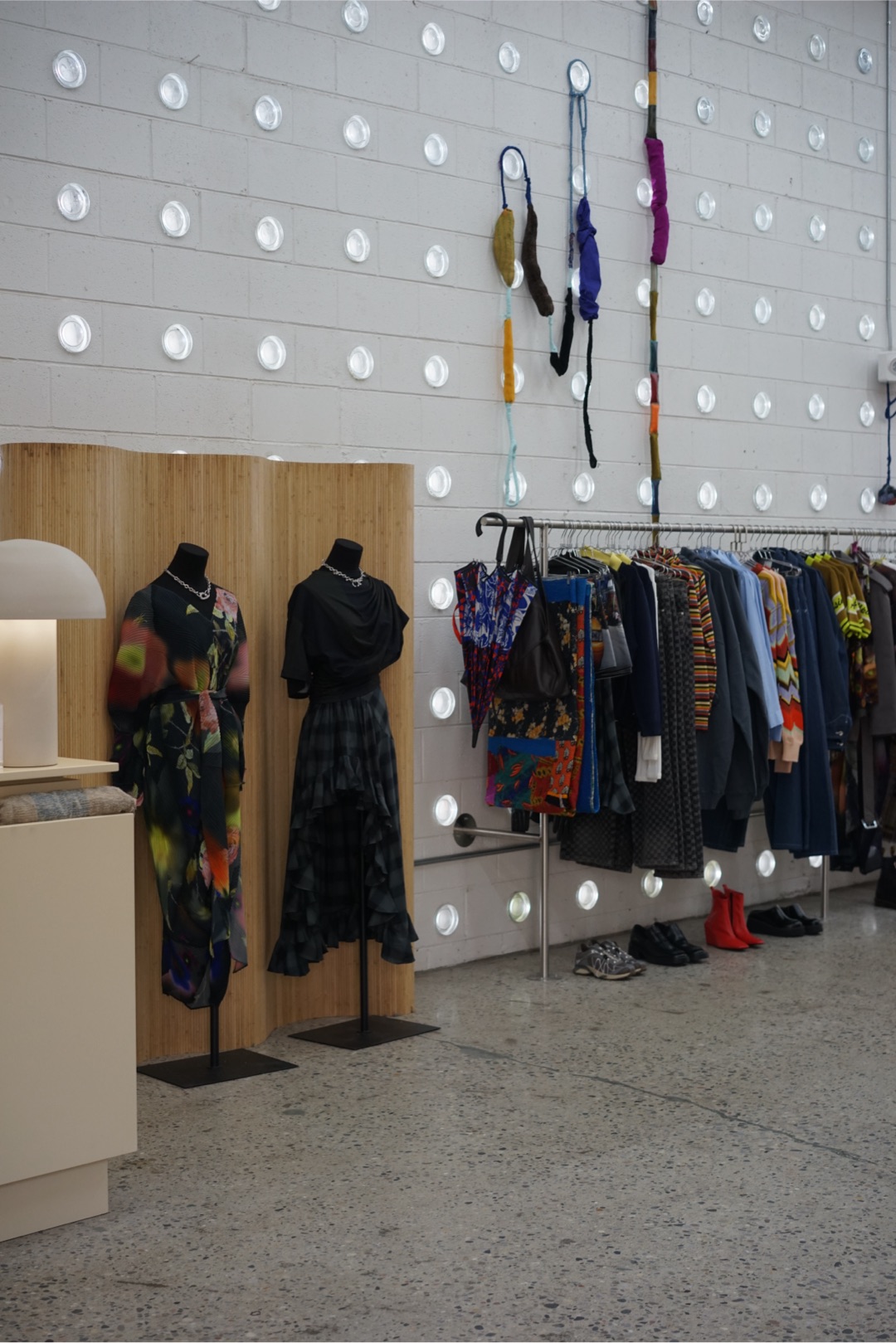
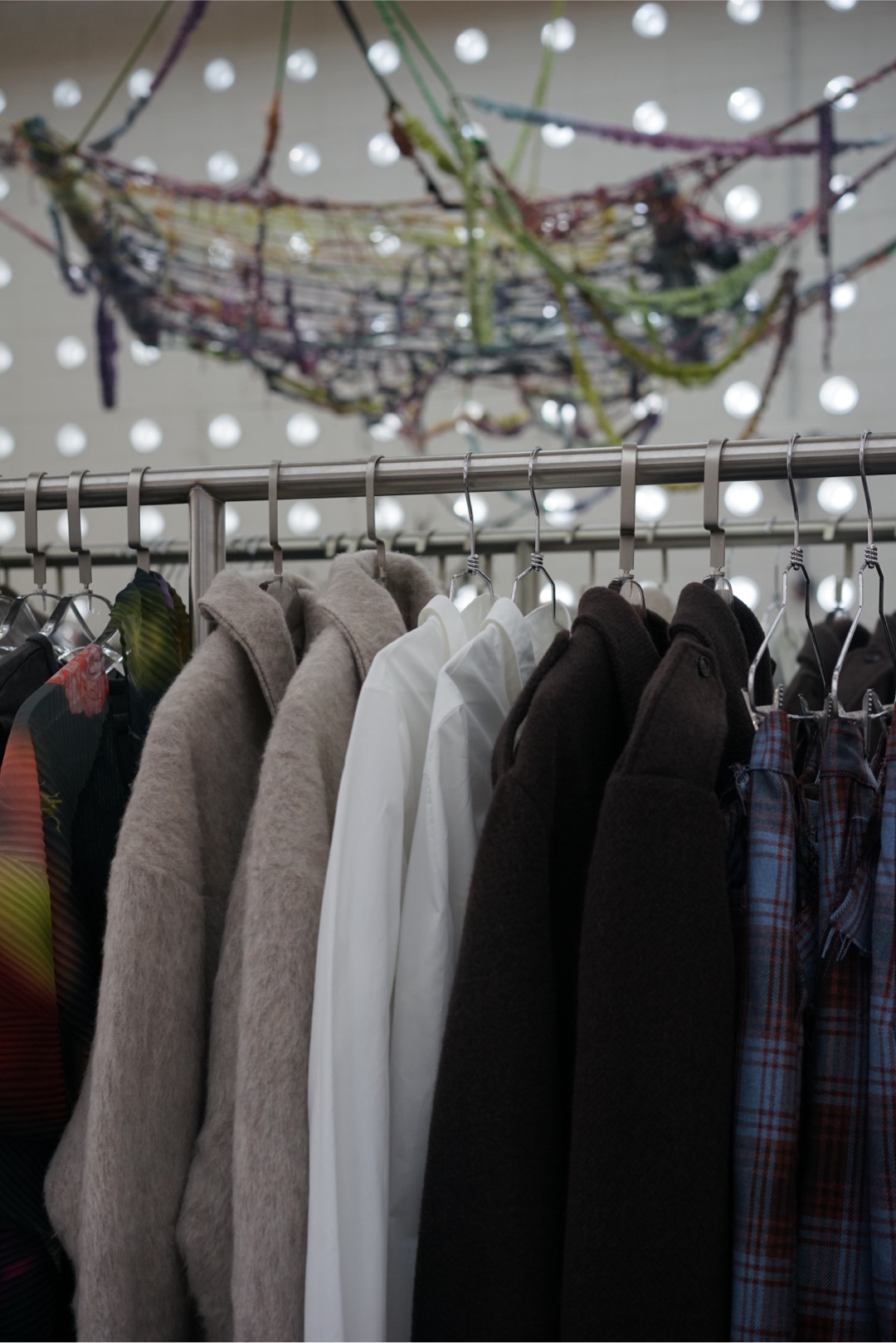
Coup D’état is a one of two local shops in Michigan to be chosen for New York Times list of 50 Best Clothing Stores in America. The article states Coup D’etat is inspirational and distinctive in its approach to customers and its community.
Located on Detroit’s east side, its nestled in a growing community of new and legacy Detroit residents. The store has embedded itself with local movers and shakers, making sure to be present and open to support local makers.
In 2025, Coup D’état held an art exhibition honoring the legacy of Detroit photographer Bill Rauhauser, highlighting the work he did capturing everyday life in Detroit through the 20th century.
Angela Wisenski-Cobbina is the owner and founder of Coup D’état. She wanted to make sure the boutique was than luxury shop, she wanted it to be inclusive for all people at all price points.
Angela spoke with The Metro’s Tia Graham about opening the space in 2019 and the journey so far.
Listen to The Metro weekdays from 10 a.m. to noon ET on 101.9 FM and streaming on demand.
WDET strives to cover what’s happening in your community. As a public media institution, we maintain our ability to explore the music and culture of our region through independent support from readers like you. If you value WDET as your source of news, music and conversation, please make a gift today.
New car prices didn’t spike after President Donald Trump announced sweeping tariffs in the spring, as some experts and dealers projected.
But prices on many models are now pushing notably higher — and analysts said carmakers recouping Trump’s higher import costs is a key factor.
Consider a recent analysis that found automakers are implementing more aggressive price increases on 2026 model-year vehicles compared to when 2025s were hitting dealership lots last year.
Cloud Theory, which tracks car inventory on dealer websites across the country, found the average marketed price increase on 2026 models was nearly $2,000, compared to an approximately $400 uptick during last year’s model year changeover. This year, 23 models have at least a $2,000 price hike; last year there were just nine.
“What I think is different this year is you have a lot of cost increases that are $1,000 or $1,500 or more, $2,000 or more,” said Rick Wainschel, Cloud Theory’s vice president of data and analytics, whose analysis looked at 2026 models with at least 2,000 vehicles in inventory.
“I think that’s a big change and a big shift that’s occurred, and it’s hard to point to any other catalyst for that (except for) tariff costs that the OEMs have had to absorb for the last eight months, and will likely have to absorb going forward,” he said.
Any increase comes on top of average car prices that were already hovering around $50,000. Pair that with stubbornly high interest rates, and the average monthly car payment is now $766, according to Edmunds.com Inc., up more than 3% from a year ago. A record share of subprime borrowers has been falling behind on their auto loans this fall.
Yet the huge car sticker price increases tied to tariffs — which analysts originally warned might tally anywhere from an extra $5,000 to $15,000 per vehicle — haven’t come to pass.
Among the reasons: competitive pressures between rival automakers, concern over blowback from Trump, large pre-tariff vehicle inventories that gave companies a lag time before pricing adjustments were needed, as well as policy adjustments that reduced the pain of the tariffs themselves.
Automakers opted to absorb many of the extra costs in the near term.
But if you’re shopping for a new car right now or plan to in the coming months, experts said it is likely tariffs will cost you in one way or another, even if it’s tough to discern exactly how. Automakers haven’t been eager to publicly disclose any connection between tariffs and their pricing adjustments.
Vehicle destination charges — those mandatory fees for transporting the car to the dealership — are rising, revealing one area where automakers “might be trying to make up a little bit of the costs,” said Erin Keating, an executive analyst at Cox Automotive Inc.
There are also signs of automakers pulling features out of certain models in a bid to trim costs while holding the same sticker price, a phenomenon known as shrinkflation. And then there are indications of carmakers offsetting their tariff costs with higher 2026 model-year MSRPs.
“Automakers really held their prices throughout the ’25 model year, and we’re starting to see a bit (of an impact) in ’26,” said Stephanie Brinley, an auto analyst with S&P Global Mobility. “But it’s being wrapped up in different ways, so it’s very difficult to suss out.”
Car companies often adjust pricing on new model-year vehicles, whether due to minor repackaging of features and trim levels, or full overhauls that include new technology and freshened sheet metal. Brinley said that means there’s no clear way for consumers to figure out where those extra tariff costs might’ve been tacked on.
Keating agrees the tariff impacts have been hard to pin down. Average car prices have been rising steadily much of this year — with September reaching an all-time high above $50,000 — but she said some of that uptick would have been expected anyway because of normal inflation.
Sy Newman of Walled Lake checks out the vehicles in the showroom while waiting for his car to be serviced at the Golling Chrysler Dodge Jeep Ram dealership in Bloomfield Hills, April 10, 2025. (David Guralnick, Detroit News/The Detroit News/TNS)
The analyst now feels confident those initial shocking projections of price hikes in the 10% to 15% range aren’t going to happen: “The market just won’t bear it,” she said.
Automakers appear to be settling into their new normal under Trump. They’ve secured at least some tariff relief on parts and vehicles imported from certain countries, while simultaneously feeling the benefits of Trump’s moves to loosen federal vehicle emissions and fuel economy standards.
A September J.P. Morgan report estimated combined tariff costs on vehicles and parts will amount to $41 billion in the first year, rising to $45 billion in year two and $52 billion in year three.
The bank expects automakers and consumers to ultimately share the burden equally, which could lead to a 3% increase in new vehicle prices: “This will hit consumers hard,” the report said, “especially as many are already struggling to afford new vehicles.”
Wainschel, the Cloud Theory analyst, said average prices listed on dealer websites have only increased a few hundred dollars per vehicle since the tariffs took effect in early April. But that’s because automakers have pushed an increasing number of affordable models and trims into the market, which has helped hold the overall average price down.
If the current mix of vehicle types listed for sale was the same as it was back in April, Wainschel said, average prices would, in fact, look approximately $1,300 higher now: “So there are some things that are masking the increases that are taking place, the segment mix being a big part of it.”
Brendan Harrington, president of Autobahn Fort Worth in Texas, which sells Porsche, BMW, Mini, Volvo, Volkswagen, Jaguar and Land Rover brands, said big price hikes didn’t occur early on as companies fretted over losing market share.
But now, carmakers are beginning to make larger changes in response to tariffs, he said, including trimming back slower-selling models and increasing MSRPs where they can. He said Porsche and Land Rover are two examples of brands that have upped prices in response to tariffs.
And carmakers are also passing through higher destination charges, he said — increases that are adding $200 to $300 to the cost of a car. Tariffs also are contributing to steadily rising costs for Harrington’s parts and service departments.
“Until now, every OEM has really tried to hold the line,” he said. “But we are seeing prices now come up.”
(Detroit News Staff Writer Grant Schwab contributed.)
Cars sit in the showroom at the Golling Chrysler Dodge Jeep Ram dealership in Bloomfield Hills, April 10, 2025. (David Guralnick, Detroit News/The Detroit News/TNS)
The city of Trenton is hosting its first ever Noel Nights. The three-week event aims to bolster its local businesses and highlight extracurricular activities.
This is the first year Trenton has a Downtown Development Authority Director. Angelia Pusino is a lifelong resident of Trenton and the city’s first Director of Downtown Development Authority.
Director of Downtown Development Authority Angelia Pusino
The Metro’s Tia Graham spoke with Angelia about the three week long event, family friendly activities and what makes Trenton a tight-knit community.
Listen to The Metro weekdays from 10 a.m. to noon ET on 101.9 FM and streaming on demand.
WDET strives to cover what’s happening in your community. As a public media institution, we maintain our ability to explore the music and culture of our region through independent support from readers like you. If you value WDET as your source of news, music and conversation, please make a gift today.
Detroit Mayor Mike Duggan gave his exit interview at the Detroit Economic Club Monday.
He says he doesn’t plan to align himself with either party’s congressional races during his campaign for governor in 2026. Duggan was a lifelong Democrat until he decided to run for Whitmer’s seat. He says he’s not worried about how Michiganders vote in the U.S. House races.
“I am going to work with the people in both parties to get results that won’t get reversed every two years as the state flips back and forth. I’m going to try to do what I did in Detroit, convince people that actually solving problems is better politics than tearing each other down.”
Duggan says he plans to run his campaign for governor just like he ran his campaign for mayor—by meeting with voters directly.
His term as mayor ends in January.
Additional headlines from Tuesday, December 9, 2025
Mayor-elect Sheffield gets married
Detroit Mayor-elect Mary Sheffield got married over the weekend. Her transition team confirmed social media chatter, saying she and Ricke Jackson, Jr. tied the knot in a private ceremony at The Godfrey Hotel on Sunday.
Jackson works for the Community Foundation for Southeast Michigan. He runs a youth sports program.
Menorah in the D
Hanukkah starts Sunday and that means Menorah in the D! This will be the 15th annual lighting of the 26 foot menorah. The event begins at 4:30 p.m. with the menorah lighting at 5:30 p.m.
There will be musical performances, strolling street performers, the Detroit Pistons Extreme Team, a chance to take photos with the Chanukah Mensch and Dreidel Man & the dancing Dreidels, and free soup and hot chocolate.
Pontiac welcomes new businesses
The City of Pontiac will celebrate several new additions to its downtown business community tomorrow with a “mass ribbon cutting.”
Eight new businesses will be welcomed to North Saginaw Street with ceremonies starting between noon and 4:00 p.m. Several of the new offices are opening in the building at 91 North Saginaw Street, including an emergency health training services organization, a salon, and a multicultural community center.
At 4:30 p.m. there will be a celebration of the one year anniversary of interior design firm Designed Mindfully.
Free admission to history museums
Admission to the Dossin Great Lakes Museum and the Detroit Historical Museum is free Sunday, Dec. 14 and Dec. 21 this month.
The Dossin on Belle Isle highlights the maritime history of Michigan and the U.S. The Detroit Historical Museum is focused on the comprehensive history of Detroit.
Listen to the latest episode of the “Detroit Evening Report” on Apple Podcasts, Spotify, NPR.org or wherever you get your podcasts.
Trusted, accurate, up-to-date.
WDET strives to make our journalism accessible to everyone. As a public media institution, we maintain our journalistic integrity through independent support from readers like you. If you value WDET as your source of news, music and conversation, please make a gift today.
A Michigan judge ruled against marijuana businesses in the state Monday, rejecting their arguments that a new 24% wholesale tax on their products, imposed by the Legislature as part of a road-funding deal, should be immediately blocked.
The Michigan Cannabis Industry Association has contended that the new tax should have required supermajority support from lawmakers during votes in October, which it didn’t get, because the policy amends a ballot proposal that voters approved in 2018 to legalize recreational marijuana and set a 10% tax on retail sales.
However, Court of Claims Judge Sima Patel said in her 28-page decision Monday that the new wholesale tax bill was “consistent” with the text of the ballot proposal, which recognized “other taxes.”
“Plaintiffs have not met the stiff burden of demonstrating that they will likely succeed on the merits,” Patel wrote of not granting a preliminary injunction against the new law.
For now, her ruling allows the new 24% tax to go into effect Jan. 1.
But it wasn’t an outright victory for the Legislature and Gov. Gretchen Whitmer’s administration.
Patel said there “remain questions of fact” whether the 24% wholesale excise tax interferes with the purposes of the 2018 ballot proposal. Patel noted the businesses had argued that voters “purposefully selected the 10% excise tax on retail sales to keep retail prices reasonable” and to diminish the illicit market.
“Discovery will be required to develop the evidence needed to support the parties’ positions in this regard,” Patel wrote, rejecting the state’s pursuit of a summary judgment against the businesses on the matter.
Patel set a scheduling conference for Jan. 13 but referenced “the high likelihood that both parties will seek an appeal to the Court of Appeals.” Whitmer appointed Patel to the Court of Appeals in 2022.
In reaction to the decision, Rose Tantraphol, spokeswoman for the Michigan Cannabis Industry Association, said the organization plans a “swift appeal.”
“We don’t believe the Court of Claims made the right call,” Tantraphol said. “While we are deeply frustrated by this ruling, I can tell you this: The fight is far from over.”
The wholesale tax was at the center of a road-funding compromise that ended a months-long budget standoff between Democrats and Republicans in the Capitol in October.
The nonpartisan Michigan House Fiscal Agency has projected the wholesale marijuana tax would create about $420 million in additional revenue for roads annually.
Under the state Constitution, to amend a voter-approved policy, three-fourths of the lawmakers in the House and Senate would have to support the change. While the new wholesale tax wasn’t added directly to the voter-approved law, the lawyers argued the tax’s passage effectively amended it.
The 24% new tax didn’t get three-fourths support in the House or Senate. In the Senate, only 19 of the 37 lawmakers supported it.
The Michigan Cannabis Industry Association represents about 400 licensed marijuana businesses. Last year, Michigan’s recreational marijuana retail sales came in at about $3.2 billion, according to monthly reports from the Cannabis Regulatory Agency.
A large crowd gathers outside of the Michigan State Capitol to protest against a potential tax increase on marijuana sales on Tuesday, Sept. 30, 2025 in Lansing. (Katy Kildee/The Detroit News)

 Login
Login