Today on Stateside, we continued a series of conversations with candidates running for Michigan's Supreme Court. Casandra Morse-Bills is a Republican, and a presiding judge for a state circuit court on the edge of Saginaw Bay.
Also, photographer Joseph Ferraro talked about his practice of zooming in on insect life. Ferraro's workspace is part of a Detroit building in which artists are hosting open studios this weekend.
Finally, we spoke with advocate Valerie von Frank. The founder of Parents of Sister Survivors Engage (POSSE), von Frank has assisted survivors of sexual assault in legal and personal struggles. We turn to her for perspectives on the Cornell Seven case, in which an unnamed student is suing the university, her sorority, and a Cornell fraternity and seven of its members for an alleged sexual assault.
GUESTS ON TODAY'S SHOW:
Casandra Morse-Bills, presiding judge in Michigan’s 23rd Judicial Court
Steve Carmody, Mid-Michigan reporter for Michigan Public.
Joseph Ferraro, photographer.
Valerie von Frank, founder of Parents of Sister Survivors Engage (POSSE).
Today on Stateside, where do young people turn when the moral stances that move them are not easy to find in the current political landscape? We talked to one young voter to find out in our latest installment of What the Vote?.
Then, Michigan's environmental agency is sending investigators to look into complaints of noxious odors using finely tuned instruments: their noses.
Plus, journalist Andrew Lapin brought us a tale of two bridges: the Ambassador, the Gordie Howe, and the guy who put a wrench in U.S.-Canadian relations.
Finally, scientists at the University of Michigan have figured out a new way to break down nitrate, a major water pollutant found in fertilizers. We talked to one of the lead researchers about what this could mean for cleaning up the country's waterways.
Looking for today’s It’s Just Politics? You can find it here.
Guests on today's show:
Dewaynia English, young voter from Kentwood, Mich.
Elliot Russell, WMUK reporter
Andrew Lapin, senior reporter with the Jewish Telegraphic Agency
Nathaniel Szymczak, Professor of Chemistry at the University of Michigan
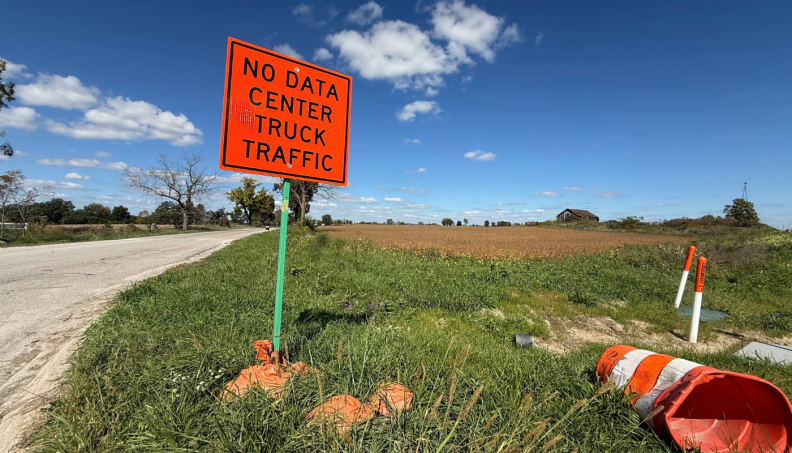
There have been many instances of massive turnout at public meetings about data centers in communities throughout the state of Michigan. Angry and concerned residents are expressing frustration with their public officials about even the potential of a new build, or the concerns over facilities that are already under construction.
In many cases, elected officials may have less recourse on the matter. A new survey from the Ford School for Public Policy at the University of Michigan shows most elected officials also have hesitations or skepticism themselves about new data center proposals. Stephanie Leiser, director of the Center for Local, State and Urban Policy at the U of M's Ford School (CLOSUP), led this survey and joined Stateside's April Baer to discuss.
April Baer: Stephanie, welcome back to Stateside. It's good to see you.
Stephanie Leiser: Wonderful to be here.
AB: Before we get to the results, I'm just curious, were you able to get responses from very many local governments that you asked about this?
SL: Yes. So we run this survey regularly, and it is our goal to achieve a 70% response rate. And there's 1,856 cities, villages, townships, and counties in the state. And so we hear from 70% of them. And I think one thing that allows us to do is hear from parts of the state that we don't often hear from.
AB: Meaning to say smaller units of government.
SL: Smaller communities, smaller townships. And and as we know, these are some of the people who have the strongest feelings about data centers right now.
AB: I saw from the overview of the numbers that a majority of people who responded expected strong opposition. How did that line up with how they actually felt about the data centers themselves?
SL: So we noticed a few interesting things. When you ask sort of generally, do you think data centers, you know, considering all the costs and benefits, do you think they're worth it? When you ask them just themselves in general, there's maybe some receptiveness to it, but still opposition more than support. But then when you sort of zoom in and say, how do you think your residents feel? Or how do you think your city council or your board feels about this? That's when the opposition gets a little bit stronger. There are all kinds of things to consider with data centers in the community and things that might be on the cost side and the benefit side. Not surprisingly, there's a lot of concern about fresh water and utility bills and public health and quality of life. But one thing we uncovered too is there's, you know, generally a recognition among public officials that this may still have some positive effects, like you know, they are thinking about economic competitiveness. They are thinking about impact on local property tax base. And still, well, while you weigh all of those things together, there is, you know, much more opposition than there is support. I think this is a more nuanced conversation than sometimes we hear about.
AB: Did you get a sense of whether municipal leaders in rural settings felt very differently than people in more urban settings?
SL: Yeah, definitely. We see stronger opposition in rural communities. It's partly a function of, you know, this is where they're being sited, right? You can't plunk down a gigantic data center in the middle of a city. And so they are looking at more rural parts of the state, you know, so that's part of it too, is that this is definitely something that is impacting their communities more, but also that you know, when you have smaller townships or smaller communities, it's sort of a David and Goliath situation. Like how can you expect them to bargain with and deal with these massive companies and massive developments. So it's also a sort of a capacity issue as well as a political issue for, for smaller and rural places.
AB: Did you notice many responses to the survey that reflected a sense of inevitability?
SL: I think there's definitely a sense of inevitability. And we did get a lot of comments to that effect. But I think that sort of could go one of two ways. Like it's inevitable. So we might as well take advantage of it, is I think maybe the minority opinion. And then the, you know, maybe we got more opinions to the effect of: this is inevitable. What can we do? We just sort of throw up our hands and accept our fate.
AB: Were there any questions that were part of the survey that that might have given us some insight into how local leaders feel like they're going to decide these questions.
SL: Well, I think one thing that's also really important that pops out of the survey is how much they are sort of begging the state for help. And this is actually somewhat surprising because local governments are often very, you know, like, stay out of our business, let us handle ourselves. But I think in this case, they're, they're really asking the state for help. So, what happens with decommissioning if these projects stop functioning? And this, you know, like they're so big and they're such large users of utilities, this is a big concern for down the road. They want help from the state to think through health and environmental impacts. They want the state to help them deal with regulations around water use and discharge. They don't want the state to interfere in their ability to do zoning and planning and siting of centers. They want to maintain that authority. But the types of resources that they're looking for; 57% say it would be very useful to have model ordinances. 57% say that they'd really like help, you know, guidance negotiating with data centers. They want to try to coordinate with the county and their other local governments. They need help figuring out how to do resident engagement. There's a lot of need. And I think there's a kind of frustration with the state that, you know, the state adopted these incentives for data centers, and now they're just sort of sitting on the sidelines, leaving local governments to fend for themselves and deal with all their angry residents in the process. So it's really they're kind of between a rock and a hard place.
AB: Stephanie Leiser directs the Center for Local, State and Urban Policy within the University of Michigan's Ford School. Stephanie, it's good to talk to you. Thank you for your help with this.
SL: Very happy to. Thanks!
Editor's note: Some quotes in this article have been lightly edited for length and clarity. You can play the full audio of the interview near the top of this page.
Former Michigan House Speaker Lee Chatfield faces felony charges over campaign contributions, following his fall from political prominence amid corruption allegations. We spoke with Bridge Michigan politics reporter Simon Schuster about his reporting.
Then, Grand Rapids resident Mario David Coronado Juarez died in a car crash shortly after an encounter with ICE agents last Sunday. While officials say there was no pursuit, questions remain about the moments before the crash. Stateside Producer Michelle Jokisch Polo has been following the story.
Plus, a federal judge heard emergency testimony this week from Krystal Clark, who is seeking to leave the Women’s Huron Valley Correctional Facility due to alleged life-threatening toxic mold exposure. Michigan Public’s Zena Issa had the details.
And as the Festival of the Book takes place in Harbor Springs, IPR’s Astrid Code visited Petoskey to follow in Ernest Hemingway’s footsteps at his old summer haunts.
Finally, Michigan lawmaker Tom Barrett discusses the impact of AI technology and the growth of data centers across the state, exploring what these developments mean for Michigan’s future. He spoke on the weekly call-in show, Michigan We Need To Talk.
GUESTS:
Simon Schuster, reports on politics for Bridge Michigan
Michelle Jokisch Polo, Stateside Producer
Zena Issa, Michigan Public, criminal justice reporter
Astrid Code, Interlochen Public Radio reporter
Stephen Henderson, host of "Michigan We Need To Talk"
Congressman Tom Barrett, Republican representing the 8th district
Foam caused by PFAS contamination at one of the many sites in the state where the "forever" chemicals have been found.(Lester Graham / Michigan Radio)
The legacy of Michigan's industrial history includes several places around the state where land and water are contaminated by so-called forever chemicals, or PFAS (per-and polyfluoroalkyl substances). Scientific consensus is that contact with PFAS has serious repercussions for human and animal health. The state has spent years trying to develop a cleanup strategy.
MLive reporter Garret Ellison joined Stateside to talk about where the state's effort to clean up PFAS contaminated sites stand right now.
Earlier this year, Governor Gretchen Whitmer declared Sept. 21-25 PFAS Awareness Week. The state encourages Michiganders to "take steps to reduce their exposure to PFAS through actions such as sampling their private drinking water well to see if it is impacted by PFAS, checking the Eat Safe Fish guides before consuming locally caught fish, avoiding foam on surface water, and reducing the use of consumer products that can contain PFAS," according to the State of Michigan website.
"Michigan's been dealing with [PFAS] in an intense way for almost a decade. But, you know, really the chemicals were first found here in about 2010, 2011, found by the state at Wurtsmith Air Force Base in Oscoda," Ellison said. "But it, it was sort of dealt with intermittently, quietly site-specific ways until the Wolverine contamination in 2017 kind of blew up."
While the Wolverine contamination brought PFAS contamination to the forefront, there are locations in Michigan that are impacted by the substances that may not be as widely known.
"The amount of sites in Michigan where there's a known source of contaminants and it exceeds the state's criteria for cleanup or remedial criteria in groundwater is about 350. And that's sites with known sources," Ellison said. "There's also another about 40 areas known as area of interest investigations where it may be like a neighborhood with low detections and some wells, and they're not exactly sure where the contaminants are coming from, but they may be exceeding what is considered to be safe drinking water levels. So there's a response going on."
The Michigan PFAS Action Response Team was created in 2017, and Ellison said the state has since then been testing drinking water and testing fish in order to find other locations that may be contaminated. There's also concern about contaminated groundwater entering farm fields and leaching PFAS into the agricultural products from those fields.
"The state launched a large scale public water supply testing effort, and that was an effort to identify all the municipal and community water supplies across Michigan that may have had the chemicals, and they did find lots of public water systems that had them," Ellison explained. "And that directly led to state rules in 2020, requiring testing and filtration in a lot of these water supplies. So there has been, you know, through finding the data, there has been concrete steps taken to reduce people's exposure to it. That doesn't necessarily mean that we're done dealing with PFAS, though."
Despite the work to locate the current 350 contaminated sites, Ellison said there's not a lot of work being done to clean up those locations. Wurtsmith Air Force Base in Oscoda is operating several interim remedial systems, which target hot spots on the base. It's meant to be a stopgap system until a larger base-wide remedial treatment plan can be put in place, according to Ellison.
"I think it's worth remembering, particularly now that we're in the midst of PFAS Awareness Week, that it was really sort of ordinary regular citizens who put us on this path," Ellison said. "In the Rockford area, it was a citizen group led by a woman named Lynn McIntosh, who was a piano teacher who just, you know, kind of refused to be deterred. [...] And, you know, citizens like her just sort of refuse to take no for an answer. They continue digging. They continue finding evidence of the use and disposal of this stuff, and eventually forced the hand of regulators. It was regular citizens that put us on the path to getting here."
Today on Stateside, after federal funding losses, two Detroit museums are asking voters to contribute to a new funding model. We'll talk to the heads of those museums about the Say Yes to Our Story millage.
Also, the Detroit Tigers’ ballpark has a new name. Fan reactions are mixed, but it isn't the first stadium naming controversy in Detroit. We talk to veteran Detroit reporter Bill McGraw to get some historical context on the new name.
Looking for today’s It’s Just Politics? You can find it here.
GUESTS ON TODAY'S SHOW:
Neil Barclay, president and CEO of the Charles H. Wright Museum of African American History
Elana Rugh, president and CEO of the Detroit Historical Society
Bill McGraw, veteran journalist and Detroit historian
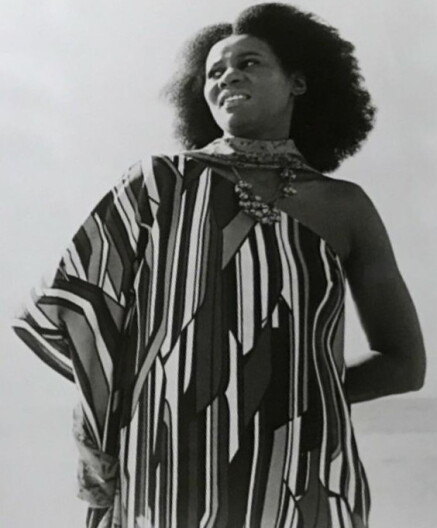
Alice Coltrane in a 1972 publicity photo for promoting her album <i>World Galaxy.</i>( Wikimedia Commons)
America is celebrating the centennial of jazz giant John Coltrane this year. And in Detroit, the visionary saxophonist, composer, and bandleader’s legacy is thriving.
Coltrane was a frequent presence on the city’s stages alongside veterans like Donald Byrd after World War II – the golden age of bebop – and made some of his most compelling music in the company of legendary drummer Elvin Jones, a native of Pontiac. But John Coltrane’s deepest tie to the city is his marriage in 1965 to multi-instrumentalist, composer, spiritual seeker, and Detroiter Alice Coltrane (née McLeod).
Andy Beta's 2026 biography of multi-instrumentalist, composer, and spiritual leader Alice Coltrane. ( DaCapo Books)
In Andy Beta’s new biography, Cosmic Music: the Life, Art, and Transcendence of Alice Coltrane, Detroit is the backdrop for Alice’s formative period studying at Cass Tech’s famed music program, her work in gospel settings, and her adult years on Detroit stages.
“She is a historical part of the Detroit jazz music scene,” said Beta, speaking to Stateside about the mind-bogglingly rich environment that nurtured Alice Coltrane.
“John Lee Hooker was recording not far from where she lives. Berry Gordy, the future founder of Motown, is her next door neighbor, and [their] families are very close through most of her life.” Beta says he gained an understanding for Alice Coltrane’s work through Detroit jazz history: her half-brother Ernie Farrow played with Yusef Lateef, and “the people who were kind of just before her, like the harpist Dorothy Ashby, and another bebop pianist Terry Pollard, who was very much a mentor and a big sister to [Coltrane]. She's the one who gives the family the first piano, and sets Alice on this path.”
John Coltrane had been performing in Detroit for about a decade when he met Alice McLeod in the early 1960s. She joined his band at the keyboard, and their mutual interest in the divine gave rise to some of Coltrane’s most memorable compositions, like A Love Supreme. Beta said Alice Coltrane also deserves credit for Coltrane’s position in American culture.
“We're celebrating John Coltrane's centennial and the legacy of John Coltrane,” he said. “And that's all due to the work that she did in the wake of his passing. Of making sure that his legacy lived on, that his catalog lived on. There [are] at least a dozen records that of his that saw release because of her curation and her dedication, to say nothing of the John Coltrane Festivals that she put on through the ‘80s and ‘90s.”
In later years, after her husband's death, Beta said, Alice Coltrane moved West, immersing herself in Eastern religion, and founding an ashram. Adopting the name Swamini Turiyasangitananda, her music ventured into previously unexplored sonic territory, beyond the strictures of straight-ahead jazz.
Beta’s affecting treatment of Alice Coltrane’s life and music deliver a revitalized appreciation for an artist who faced down multiple personal and professional challenges, while staying true to her personal journey. While in her lifetime, critics often dismissed her work, her role as a forerunner in jazz and pop gets its due in this telling.
New reporting from the Detroit Free Press shows a resident at Michigan State's medical school has been accused of two sexual assaults on patients. Arpit Saxena, 39, is accused of sexually assaulting two patients in April 2025. The Detroit Free Press has learned that the day after the first allegation of sexual assault was made to police, Saxena continued to treat patients.
Alice Coltrane was a composer, pianist, harpist, and singer, born in Detroit in 1937. Many know her through her marriage to jazz great John Coltrane, who would’ve been 100 years old this year. We spoke with Andy Beta about his biography, Cosmic Music: The Life, Art, and Transcendence of Alice Coltrane. Beta is doing a virtual event with Detroit Public Library on Wednesday, September 23. Details here.
Plus, our On Hand team explores the volcanic ridge beneath us that most Michiganders don’t even know is there. Find the story here.
GUESTS:
Kristen Jordan Shamus, Detroit Free Press reporter
Andy Beta, author of Cosmic Music: the Life, Art, and Transcendence of Alice Coltrane
Erika Vye, geosciences research scientist at the Great Lakes Research Center at Michigan Tech University
Daniel Lizzadro-McPherson, geospatial research scientist at Michigan Tech University
Today on Stateside, the Trump administration this week announced it will roll back rules governing power plant emissions, despite clear evidence of climate change and an overwhelming consensus among scientists that it is caused by human activity. We talked to Rachel Rothschild, an assistant professor at Michigan Law, whose work lies at the intersection between scientific research and public policy.
Also, The Dish takes a long weekend Up North with some of Traverse City's top chefs and explores what makes the food scene there so special.
Plus, writer Lillian Li on her smash novel Bad Asians, which imagines a group of high-achievers coming of age in the Great Recession.
GUESTS ON TODAY'S SHOW:
Rachel Rothschild, assistant professor at the University of Michigan Law School
Mercedes Mejia, Stateside senior producer and host of The Dish
Lillian Li, author of Bad Asians and Number One Chinese Restaurant
Sounds From the Park Freedom Festival 2025 Poster(Ndubisi Okoye)
Detroit composer, musician, and saxophonist Marcus Elliot’s new album incorporates the sounds, activities, and energy from five Detroit parks.
The five tracks on the album are named after the Detroit locations where the original performances took place: Eliza Howell, Clark, Chandler, Palmer, and Belle Isle.
The album is available on Spotify starting September 17.
Stateside Host April Baer spoke to Marcus Elliot about the process of composing this album.
The following is a transcript that has been edited for clarity.
April Baer: Were there some things that in each case, you felt like you wanted to understand before you could come up with the concept for each composition?
Marcus Elliot: I really wanted to make sure that I approached this project from a place of listening. Listening is really important when it comes to making music, and especially as a composer, listening to not just the environment, but the community that cared for these parks was really an important process for me.
Originally, I got to be honest; I was excited about this project because I was like, “Man, I get to spend an entire year in the parks - a dream project for me.” Then, as I got to spend more time in the parks and meet the people, and really just listen and see what the parks had to say, what the communities had to say, it really left an impact on me.
AB: Each park ultimately became its own musical world in that each one had different melodies, of course, but it was a different theme and a different ensemble of musicians and a different composition.
[Eliza Howell Park] is on the edge of Brightmoor, I think, and this is a big park. It's about 250 acres. It's got some relatively wild spaces. And people might know of the Stickwork sculpture that, you know, kids just love playing over there. Can we talk first about what you experienced when you were spending time at the park and how you developed the piece?
ME: Eliza Hall Park is a special one for me because it's very close to my house on the west side. And some of my son's earliest memories will actually be at this park because we spent a lot of time there.
The other great thing is, out of all of the parks in Detroit, this one has really allowed the natural space to just thrive there, so it almost feels like you're not in Detroit while at the same time being a very Detroit experience.
It's kind of like both things; it doesn't feel like you're in the city, but you are just in this green space. It's very quiet there, and it's huge. It's a really large park. But I wanted some power as well behind the music. So I added a great drummer and a pianist keyboardist to kind of add that punch to it as well. That's what I was attempting to kind of capture with that ensemble.
AB: Can you talk a little bit about the elements of sounds from the parks that you worked in to some of these compositions, like actual recordings of, say, birdsong, or kids playing or different things that people would hear. What was your sense of when to incorporate those?
ME: The thing that I incorporated more than anything was actually the voices of the caretakers and the stewards of the park. So not on this track, but on some of the other songs that we have done and also on the album as well, that will be coming out. You'll be hearing voices and those voices are actual stewards and community members that care for the parks - this is where Sidewalk Detroit did a lot of help.
They helped me gather a lot of these different interviews and conversations of different park stewards. I took a lot of those and I chopped them up and did some different things with them, and I allowed that. I allowed a lot of the compositions to surround what they were speaking about, and what they were talking about.
In a lot of those interviews in the background, you hear the birds or you hear kids playing or in one of them, at first we were upset about it, but I was like, no, I'll leave it in there. There was somebody with a lawn mower cutting. One of the things, it was like, yeah, that's part of it. I wanted it to have all those elements in there.
AB: Are there ways that doing this changes the way you understand the parks or Detroit or the communities that make up the city?
ME: One hundred percent. I think especially when it comes to our parks, I took for granted, because you don't see these people, you don't see these sort of silent heroes that show up every day, every week to clean up a playground or to care for a community garden or to, you know, run that little like soccer league or these sort of things that.
You just assume that somebody is doing it or, you know, someone's on staff somewhere to do it. But these are literally, in a lot of these situations, it's just the community. It's just community members, just our neighbors. It's how we care for one another, you know, without anybody asking us to, you know, you just do what needs to be done.
That's why this place is so resilient. That's where the resilience is – it's not any sort of any other thing. That's truly in these communities that we have. So it was just a humbling experience to see that. And it definitely changed the way that I think about how I want to show up, as a neighbor, as a father.
AB: Well now that all these compositions performed in the parks are becoming an album, people who are listening to them may actually have their earbuds in and be standing at Palmer or Belle Isle or Eliza Howell and listening to it while experiencing the park.
Have you thought much about what might carry over and how the music might change when it's listened to outside of the parks a little bit, a little bit less in context?
ME: I mean, I've been listening to it in my car. You know, like I've just been listening to it in the house, in the car. My experience is a little bit different. I'm immediately tranced, it's like, it takes me to space. Like I'm there in the park.
And I think anybody who was able to attend some of the performances, when they hear it, they will be like, boom. It will take them back to the park. And yeah, I would highly suggest anybody who is checking out the album, listen to it. If you get a chance, go to the park where we recorded it, and listen to it, and experience it there.
I think it will really leave an impact. And also just so that you can, especially if it's a park that you haven't visited yet and you're not familiar with. I would highly suggest going and spending some time there and getting to know that park. And hopefully that music can be a bridge for some of the people here in Detroit who haven't been to some of these parks to go check them out.
Stateside is produced daily by a dedicated group of producers and production assistants. Listen daily, on-air, at 3 and 8 p.m., or subscribe to the daily podcast wherever you like to listen.
U.S. Immigration and Customs Enforcement has arrested the highest number of people in Michigan this summer. The highest since President Donald Trump took office. We break down the numbers with MLive investigative reporter, Rose White.
Then, what do Uzbek melons and Detroit barbecues have in common? More than you'd think. A conversation with food writer and Michigander, Anna Ansari.
Plus, on Its Just Politics, absentee ballots will start hitting mailboxes soon. Find the full story here.
GUESTS:
Rose White, MLive Investigative Reporter
Anna Ansari, author of Silk Roads: A Flavour Odyssey with Recipes from Baku to Beijing
Michigan’s data center boom is facing strong new opposition, including the University of Michigan's data center project in Ypsilanti Township.
Then, Jim Abbott defied the odds, becoming a baseball legend — without a right hand. This summer he won the Jimmy V Award for Perseverance at the ESPYs.
Plus, a conversation with legendary filmmaker and novelist John Sayles. The story he published this year centers on Detroit in the auto industry’s golden years.
GUESTS:
Dustin Walsh: a senior reporter, Crain’s Detroit Business
Jim Abbott: former professional baseball pitcher
John Sayles: filmmaker and screenwriter, author of Crucible
A 1987 file photo shows Jim Abbott pitching for the University of Michigan baseball team.(University of Michigan Athletic Department / Bentley Historical Library)
Flint native Jim Abbott dominated collegiate baseball at the University of Michigan before being selected eighth overall in the 1988 Major League Baseball draft.
On top of being one of the best pitchers in the majors, Abbott was born without a right hand. He spent his career proving he could be a great pitcher and baseball player no matter his limb difference.
More than 25 years after Abbott retired, his impact on sports is still being recognized.
ESPN recently released a documentary called Southpaw: The Life and Legacy of Jim Abbott and he was awarded the prestigious Jimmy V Award at the ESPYs this July.
He joined Stateside Host April Baer to talk about his career and what it means to receive the Jimmy V Award.
The following is a transcript of the conversation and has been edited for length and clarity.
April Baer: Did you know about the Jimmy V Award before you were under consideration for it?
Jim Abbott: Well, I knew about it before the ceremony, but I was just as shocked when I got the phone call from my friend Mike Farrell at ESPN, my collaborator on the documentary that we did a couple years ago.
It's an iconic award in the sports world. These are like the athletic Oscars. It's a fancy event. A lot of people getting dressed up and a lot of famous people in the audience. So my first reaction was being deeply honored. My second reaction was terror of speaking in front of the group because there have been some very, very memorable and moving, impactful speeches that were given in association with that award.
AB: I watched the clip of your speech and it was wonderful. You said at one point that it's important to have focus on what's been given rather than what's been taken away.
Were there times in your life when your limb difference was something that you didn't have that kind of peace with?
JA: I think there was an evolution. And, you know, self-awareness comes along as we grow a little bit older. And in my case, there was always the presence of being just a little bit different whether it was on a playground or whether it was in a classroom or whether it was on a sporting field.
And so there were reminders of not looking like other kids, of not being able to do things the way other kids did them. And what you find is, those things are very present when you're young. Very present.
You think about them a lot and you process them a lot, but as you get older, it's almost like a muscle. You get stronger and you become more inured to it. You're used to it. You're able to deal with it and process it — and I think in a little bit healthier way. At least that was my experience.
AB: Can I just ask you about your technique?
You mentioned the fact that you came up with some different methods for switching the glove back and forth, and you had a technique for balancing your mitt on your right hand while you were pitching.
Is there a story about how you started doing that?
JA: It was an evolution. I learned to throw and catch with my dad. As a lot of people say, they were out in the front yard, just throwing the ball back and forth and just trying to figure out a way to get the glove, you know, because I couldn't throw with my right hand and I couldn't catch with my right hand. So I had to do this, do all of it with my left.
It was an evolution. I can't say that it was smooth all the way through. There was a lot of trial and error. And I used to — in the same way that basketball players will tell you that they used to just go out and shoot baskets by themselves imagining the countdown at the end of the game and making that clutch shot. For me, it was baseball — I used to throw a ball against a brick wall and watch it bounce back to me and try to catch it.
And I wasn't trying to practice. I wasn't trying to get better. I was just out there having fun. And I think that helped me to learn how to switch the glove on and off of my left hand.
AB: There are a lot of other athletes with limb differences who've broken through at the professional level in recent years in different ways and different sports. That said, you know, the game of baseball has just gone through some changes. Do you ever think about whether it would have been possible to have had the career that you had today?
JA: I marvel at the athleticism and the talent of the modern players, no question, but no, I truly believe that you can do things differently and still do them just as well as anybody else.
I truly, truly believe that. And I think that goes back to the spirit of my hometown in Flint, Michigan. Parents and teachers and coaches who wouldn't take no for an answer. You know, who were bound and determined to find that way of going about things and tying shoes and buttoning a shirt and switching the glove on and off.
So, yes, I firmly believe that an athlete with the talent and ability, may not be able to do it exactly the way people do it day in and day out, but I still believe they can do it just as well. I believe that is out there as a possibility.
Special thanks to director Mike Farrell and producers Brian Lockhart, Heather Lombardo, Burke Magnus, José Morales, Jimmy Pitaro, and Andrew Tennant for facilitating this interview with Stateside.
The state experiments with a new system to boost road maintenance funds: what if we all paid for the miles we drive?
Also, former U.S. attorney Barb McQuade projects what it would look like to reboot American democracy in her latest book, The Fix: Saving America from the Corruption of a Mob-Style Government.
Today, Western Michigan University president Russ Kavalhuna reflected on the controversial outcome of the Bronco's game against the Michigan Wolverines. The game represented an important chance for both teams to get an early season win. It also was a key revenue opportunity for Western’s athletic department, which received more than $1 million for playing a Big-10 team.
We also talk with Rick Williams, an artist widely known in Detroit’s sneaker world as a designer, entrepreneur, and co-founder of the Burn Rubber boutique. He's also a musician and tap dancer. Design and dance come together in his new project, Introducing Metal Feet.
And, an anthropologist who studies vaccine hesitancy talked about trends in vaccination rates. Today, Grand Valley State University’s Kristin Hedges tells us why the number of children attending school with a vaccine waiver is the highest it's been since 2013.
Plus, a story from Harvest Public Media explored why many farmers are choosing to fix their old tractors rather than buying new equipment.
GUESTS:
Russ Kavalhuna, president of Western Michigan University
Rick Williams, Detroit-based artist, designer, and musician
Kristin Hedges, associate professor of anthropology at Grand Valley State University; co-chair of the Society for Medical Anthropology Special Interest Group Anthropological Responses to Health Emergencies (ARHE)
Emma George-Griffin, reporter for WCMU Public Radio
Today, Canada's retaliatory tariffs against the U.S. go into effect. The new tariffs on Michigan's largest trade partner come a month after President Donald Trump imposed similar tariffs on Canadian imports. We talked to a supply chain expert about the potential long-term effects.
Then, the FAQ Squad dug into claims around U.S. Senate candidate Mike Roger's residency. Opponents have claimed he's a "Florida man," pointing to a home in Cape Coral, Florida. The Livingston County native currently lives in White Lake.
And why the Children's Foundation of Michigan is working to create an endowment for arts programming in Detroit. We spoke with the foundation's CEO, and actor and arts advocate Marc Evan Jackson.
Plus, poet Michael Lauchlan shared from his new collection, Running Lights. His writing moves from the mundane, everyday things to powerful themes of friendship and family.
GUESTS:
Jason Miller, professor of supply chain management at Michigan State University's Broad College of Business
Zoe Clark, political director and associate general manager for Michigan Public
Matt Mencarini, data and accountability reporter for Bridge Michigan
Andrew Stein, president and CEO of The Children's Foundation of Michigan
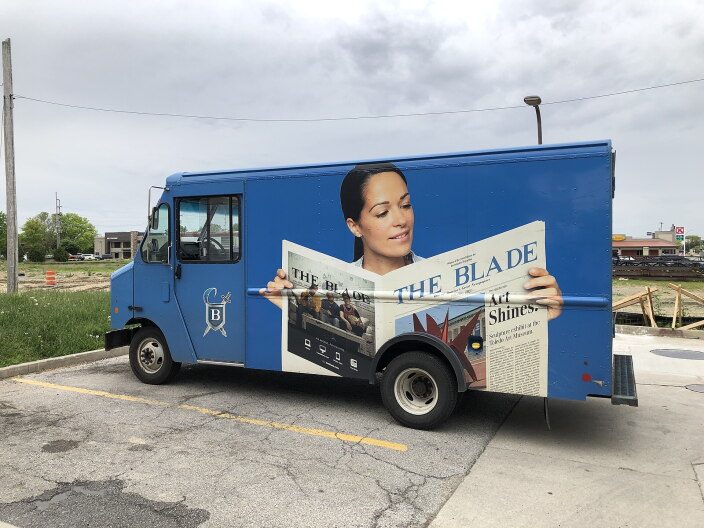
A delivery van for the Toledo Blade, a nearly 200-year-old paper in Northwest Ohio, is parked in a lot. (Mbrickn / Wikimedia Commons)
The Toledo Blade will print its final edition at the end of the year, unless a buyer steps in before then, according to an email sent by the nearly 200-year-old paper’s current owners to its staff on September 8.
Block Communications, which has held The Blade since 1925, reached the “extremely difficult decision” due to financial considerations, president and chief operating officer Jodi Miehls informed staff, as reported by the paper.
“The Block Family’s continued investment to keep the Blade open is no longer an option,” Miehls wrote. “The financial losses the Blade has endured for years are simply not sustainable.”
Miehls’ notice came after negotiations over a contract late last month.
The NewsGuild, which represents Blade’s staff, said that its Toledo chapter voted down a proposed contract in a 46-25 vote.
“The Company’s proposal would have axed seniority, halved severance for its most experienced employees, and allowed the outsourcing of all Guild work,” said Lillian King, Blade features writer and Toledo NewsGuild bargaining chair. “All content at The Blade could be created or edited with Al, with no protections for journalists or requirements to disclose Al usage to its readers.”
Instead of returning to the bargaining table last week, the NewsGuild said that the Block Communications board decided to sell or shutter the paper.
Block Communications similarly cited financial losses when it announced in January that it would cease publishing another newspaper, The Pittsburgh Post-Gazette. But about two weeks before it was to shut down in May, Block announced that the nonprofit Venetoulis Institute for Local Journalism would buy the newspaper and keep it open.
A team of reporters from The Blade won the Pulitzer Prize in investigative reporting in 2004 for articles about an elite Army platoon accused of killing unarmed Vietnamese civilians in 1967. Reporters at the newspaper also were finalists for the prestigious journalism award in 2000, again for investigative reporting, and in 2006 in the public service category.
Among the newspaper’s alums was Mildred Wirt Benson, better known to legions of Nancy Drew fans as Carolyn Keene, the original author of the mystery books featuring the plucky amateur detective.
Detroit area reporter Larry Vellequette grew up in Toledo and came of age working at The Blade. He joined April Baer on Stateside to talk about what place the paper occupied in metro Toledo and in journalism throughout the years.
"For decades, the blade was this shining, little outperforming newspaper in a small Midwestern city," Vellequette said. "From a pay standpoint, it's pay rivaled that of you know, the the Cleveland Plain Dealer, much larger paper, Chicago. In this little town. It was a very wonderful place to work and, and especially to, to start a career."
The Blade was founded in 1835 — two years before Toledo was officially incorporated as a city — and says it is the city’s oldest continually operating business. Paul Block Sr., a newspaper mogul, took over the paper in August 1926.
An advertisement printed the day after Block was introduced to the newspaper staff said the date “will long be remembered by us as the beginning of a new era of good will in our association with the Toledo Blade,” along with a list of all of the newspaper’s employees, according to the paper.
“Block Communications Board of Directors and the Block Family are truly disappointed to have reached this point,” Miehls said in Tuesday’s email, just over a hundred years later. “Unfortunately, the realities facing local journalism have left us in this situation.”
Vellequette believes that if The Blade ceases production, it will be a loss for the city and for journalism.
"I think that Toledo, like so many cities, it suffers without a newspaper," he said. "Because you don't have somebody covering the local townships, for example, like we used to. You don't have somebody, you barely have somebody covering City hall. [...] These decisions that are so, so influential and impactful upon our lives are happening now in the dark because newspapers across the country, which traditionally covered these boards and local boards and local politicians have disappeared because people decided that if it was on their phone and it was free, why should I pay for it? [...] It is a tragedy beyond tragedy."
This story was originally published on September 8, and was updated to include an interview with journalist Larry Vellequette that aired on Stateside on September 17.
Football kicks off our show today - because it's college football season, people. And when you talk about football you can't avoid the question: Why are Michigan and Ohio State such fierce rivals? The answer seems obvious, but there’s a little more historic and cultural meaning than you may have heard.

 Login
Login