❌

Reading view

There are new articles available, click to refresh the page.

Michigan sues state's largest health insurer, Blue Cross Blue Shield, claiming it's a monopoly
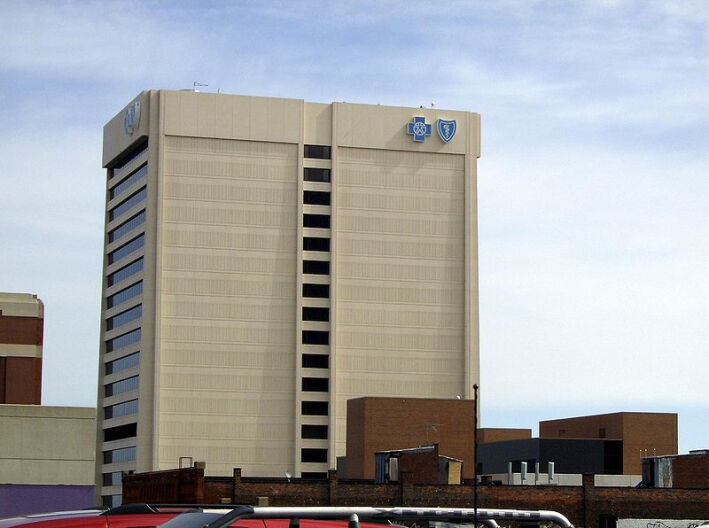
Blue Cross Blue Shield building on Lafayette in Detroit.
Blue Cross Blue Shield building on Lafayette in Detroit.(Mikerussell / <a href="https://commons.wikimedia.org/wiki/File:BlueCrossBuildingonLafayetteDetroit.jpg" target="_blank" link-data="{&quot;cms.site.owner&quot;:{&quot;_ref&quot;:&quot;00000179-84c8-d933-ad7f-f5f846b10000&quot;,&quot;_type&quot;:&quot;ae3387cc-b875-31b7-b82d-63fd8d758c20&quot;},&quot;cms.content.publishDate&quot;:1791501709976,&quot;cms.content.publishUser&quot;:{&quot;_ref&quot;:&quot;0000017d-95e3-dada-a9ff-fdeb3d1e0000&quot;,&quot;_type&quot;:&quot;6aa69ae1-35be-30dc-87e9-410da9e1cdcc&quot;},&quot;cms.content.updateDate&quot;:1791501709976,&quot;cms.content.updateUser&quot;:{&quot;_ref&quot;:&quot;0000017d-95e3-dada-a9ff-fdeb3d1e0000&quot;,&quot;_type&quot;:&quot;6aa69ae1-35be-30dc-87e9-410da9e1cdcc&quot;},&quot;cms.directory.paths&quot;:[],&quot;anchorable.showAnchor&quot;:false,&quot;link&quot;:{&quot;cms.directory.paths&quot;:[],&quot;attributes&quot;:[],&quot;linkText&quot;:&quot;&lt;i class=\&quot;rte2-style-italic\&quot;&gt;wikimedia commons&lt;/i&gt;&quot;,&quot;target&quot;:&quot;NEW&quot;,&quot;attachSourceUrl&quot;:false,&quot;url&quot;:&quot;https://commons.wikimedia.org/wiki/File:BlueCrossBuildingonLafayetteDetroit.jpg&quot;,&quot;_id&quot;:&quot;000001a1-1dd2-da7a-a3f7-fdd2a52d0000&quot;,&quot;_type&quot;:&quot;ff658216-e70f-39d0-b660-bdfe57a5599a&quot;},&quot;_id&quot;:&quot;000001a1-1dd2-da7a-a3f7-fdd2a52d0001&quot;,&quot;_type&quot;:&quot;809caec9-30e2-3666-8b71-b32ddbffc288&quot;}">Wikimedia Commons</a>)

Michigan Attorney General Dana Nessel sued the state’s biggest health insurance company in federal court Thursday. She accused Blue Cross Blue Shield of Michigan of forming an illegal monopoly

The lawsuit argues BCBSM worked with Blue Cross Blue Shield Association companies in other states to keep competition out. The complaint cites license agreements and territorial rights deals as ways BCBSM built influence.

Nessel said that’s illegal under state and federal antitrust laws.

“Competition is good, not just for the quality of care but of course to bring down prices. And that’s the purpose of the antitrust laws in the first place, that it allows us to break up these big monopolies that are so harmful,” Nessel told reporters during a press conference in Lansing Thursday morning.

While the lawsuit names several Blue-branded companies in other states as coconspirators, only BCBSM is listed as a defendant. The attorney general is suing in her capacity as both a representative of the state government and of Michigan residents.

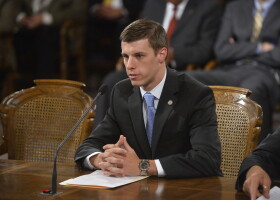
Blue Cross Blue Shield of Michigan serves state employees. Assistant Attorney General Jonathan Comish said the company’s size and power made it the only realistic option for the state to contract with.

“They’re able to charge us, what we would call in the antitrust world, as supracompetitive fee. That is an unlawfully large amount of money per employee, per head, and with the size of the state workforce, that adds up to a real drain on the state’s resources,” Comish said.

A 2025 American Medical Association study found BCBSM controlled around 65% of the state’s healthcare insurance market. That was among the highest market concentrations in the country.

When asked for a comment on the lawsuit Thursday afternoon, BCBSM said it hadn’t yet been served and could not comment on the “specific merits” of the case. In a written statement, the company sided it was “blindsided.”

“We fundamentally disagree with the Attorney General’s characterization of an uncompetitive insurance market in Michigan. Competition exists everywhere in our state’s insurance markets, with strong local and national insurers competing with us every day. For nearly 90 years, Blue Cross has provided coverage for citizens across Michigan, in every county, without exception. This heritage, and the quality of products and services we provide, is foundational to our success in Michigan,” the company said.

The state alleges BCBSM used its power to negotiate unsustainably low reimbursement rates for care providers. Earlier this year, the company went to battle with Michigan Medicine over those concerns.

The health insurer and the University of Michigan’s health system eventually worked out a deal. But southeast Michigan father Andrew Bashi said the dispute put critical care for his infant son at risk.

“When one company holds all that power, it doesn’t have to worry about what happens to us in a negotiation, we have nowhere else to go, and they know it. Patients stop being customers. We become leverage,” Bashi said.

The lawsuit was filed in District Court for the Eastern District of Michigan. Federal cases often take months or years to play out.

Nessel, who is term-limited, is leaving office after December. She said she hopes her successor decides to keep pursuing the matter.

Keith Schipper is a campaign spokesperson for Republican Attorney General nominee Doug Lloyd. He said Lloyd would consider it.

"Since the case was just filed, Doug hasn't been privy to all the facts and evidence, but he is committed to protecting Michigan consumers, just as he protected Eaton County consumers as its prosecutor," Schipper said in a statement.

"Under Doug's leadership, the Eaton County Prosecutor's Office started the Eaton County Economic Crimes Unit to go after fraud and other illegal business practices that hurt Eaton County residents. When Doug is Attorney General, he will review this case to understand all the facts and evidence and make a determination,” said Schipper.

Naina Agrawal-Hardin is with Democratic nominee Eli Savit.

“Eli has not yet had an opportunity to review the case or the evidence, but as with any matter he will inherit, he will make a determination based on the facts, the law, and the best interest of the people of Michigan. More broadly, Eli is committed to using every available tool to lower costs for Michiganders who are struggling, just as he has done throughout his career,” Agrawal-Hardin said in an email.

The attorney general's court filing demands a trial by jury. The state is seeking monetary damages and an end to what it described as Blue Cross Blue Shield of Michigan's monopoly on the market.
US House speaker, law enforcement groups lend support to Barrett in tight reelection race

U.S. Representative Tom Barrett (R-MI 7) speaks at a rally for his reelection campaign on October 7, 2026.
U.S. Representative Tom Barrett (R-MI 7) speaks at a rally for his reelection campaign on October 7, 2026.(Colin Jackson / Michigan Public Radio Network )

Republican Congressman Tom Barrett took his reelection campaign to the sidewalk in front of the Ingham County Sheriff’s Office Wednesday.

The event’s message largely focused on the differences between Barrett and his Democratic challenger William Lawrence’s approaches to public safety.

Leaders from the Police Officers Association of Michigan and Fraternal Order of Police flanked Barrett, along with some mid-Michigan prosecutors and sheriffs. Republican Congresswoman Lisa McClain (R-MI 9) and U.S. House Speaker Mike Johnson of Louisiana also spoke.

Johnson said Barrett has long supported law enforcement through funding and other measures in both Congress and the Michigan Legislature.

“You have to look at the record and not the rhetoric in a campaign. And in this campaign, in Michigan’s 7th District, you have a clear contrast between two competing visions, two completely different world views,” Johnson said while talking to reporters.

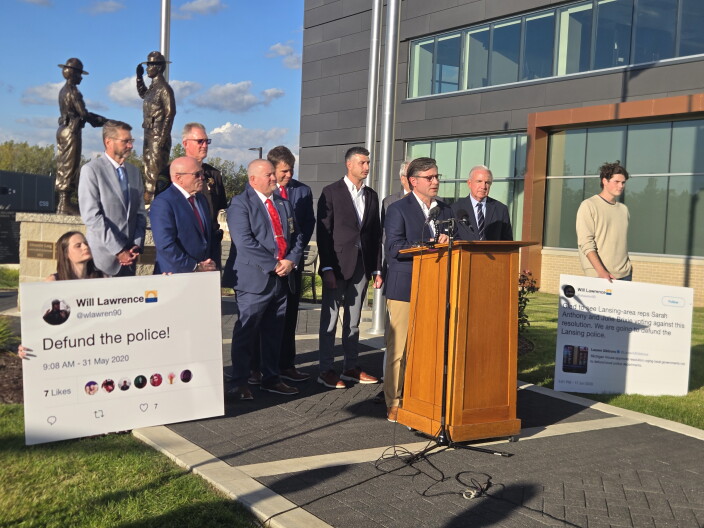
Republicans have repeatedly attacked Lawrence for past social media comments. In 2020, Lawrence called for defunding the police on what was then Twitter. The Democrat has since disavowed that position.

Barrett supporters stood behind him holding large printouts of Lawrence’s 6-year-old tweets as Barrett asked them — and his constituents — a question.

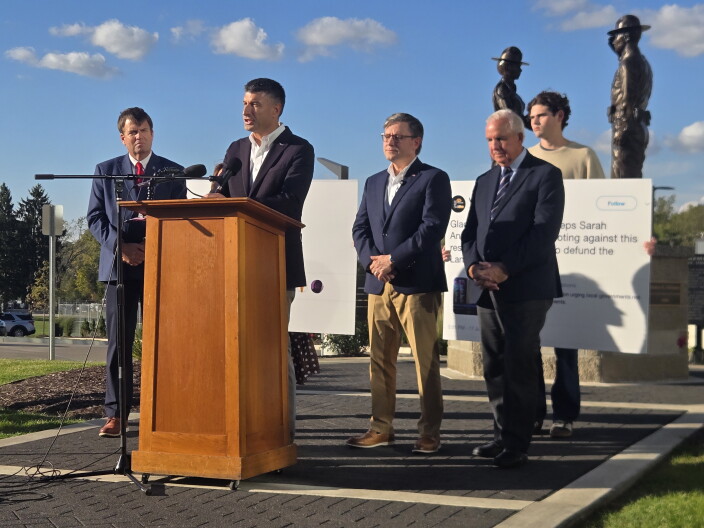
U.S. House Speaker Mike Johnson speaks at a wooden lectern outside a modern building, surrounded by several officials, including Congressman Tom Barrett. A police memorial statue stands behind them. Two oversized social-media posts criticizing police funding are displayed in the foreground and background.
U.S. House Speaker Mike Johnson lends his support to the reelection campaign of Congressman Tom Barrett (R-MI 7) on October 7, 2026. Behind Johnson, Barrett supporters hold posters showing deleted tweets by Barrett's Democratic opponent Will Lawrence.(Colin Jackson / Michigan Public Radio Network)

“Do you want somebody with a record of service like I have in our military supporting our law enforcement and doing the right thing to keep our communities safe?” Barrett asked. “Or are you going to turn your back on our police officers, and seek to have them defunded, take away their dignity, and abolish them altogether.”

A similar question came up Tuesday, during a TV debate hosted on WKAR and WILX-Lansing.

Lawrence told reporters afterward that he's changed his mind on the topic since those now-deleted posts. He said he now believes in a public safety approach that includes funding for police, community violence intervention, and more mental health resources.

Michigan’s 7th Congressional District is considered among the most competitive races in the country.

Democrats hope to flip the seat by taking advantage of anger with Republican support of President Donald Trump’s positions, like the Iran war.

Barrett has tried to distance himself from the president by introducing legislation to wind down the operation by this summer. But it hasn’t gone anywhere in Congress.

When asked about its prospects, Johnson, who controls which bills come up for votes in the House, sidestepped the question by calling the war a success and saying it’s close to ending.

“We’re right there now, that’s where we are. I believe our international partners, a combination of NATO countries, and our Arab states and friends and allies in that region who all have a direct in interest in this will be a part of that. And so the U.S. did the heavy lifting there and everyone will have to help,” Johnson told reporters.

Johnson also did not directly answer a question about the future of legislation Barrett cosponsors to stop federal agencies from using Flock surveillance cameras.

Despite the conference taking place in front of his office, Ingham County Sheriff Scott Wrigglesworth was not there Wednesday. Barrett did not say if he had the Democratic sheriff’s blessing to be there.

James distances himself from Trump as Benson tries to connect them in gubernatorial debate

Republican John James and Democrat Jocelyn Benson stand at their lecterns during a gubernatorial debate on October 6, 2026.
Republican John James and Democrat Jocelyn Benson stand at their lecterns during a gubernatorial debate on October 6, 2026.(Colin Jackson / Michigan Public Radio Network)

Michigan’s major party candidates for governor met for the first time on the debate stage Tuesday night. The Grand Rapids television station WOOD-TV hosted the event.

Democratic Secretary of State Jocelyn Benson and her Republican opponent, Congressman John James (R-MI 10), used questions on foreign policy, education, and energy to differentiate themselves from one another.

Benson frequently tried to tie James to President Donald Trump and unpopular administration policies like going to war with Iran and starting a trade war with Canada.

“If you like gas pushing $5 a gallon, or mortgage rates over 7%, or tariffs taxing just about everything we pay for, then John James is your guy,” Benson said during her closing remarks of the debate.

James routinely emphasized his willingness to break with the president. He called for an end to the war in Iran — a turnabout from his previous statements — and for smarter trade policy.

“I’ve actually called out the administration, specifically talking with the trade ambassador, in saying we must get back to the table, stop acting like children, and negotiate a reciprocal, fair, and mutually beneficial arrangement,” James said.

Benson, for the first time, said she’d support suspending the state gas tax.

The question is among the latest policy debates to enter Michigan’s political races as gas prices spike largely due to the war with Iran. Benson previously called for the suspension of the federal gas tax to give Americans some savings on fuel.

Other policies Benson said would bring some price relief to Michiganders were a bit more unclear. She said she wanted to sign an agreement directly with Canada that would exempt Michigan from tariffs being charged under the trade war.

“You create an agreement between the state of Michigan and our neighbors to the north that says anything that goes from Michigan to Canada or Canada to Michigan are exempt from these tariffs,” Benson said.

It’s uncertain how Benson would go about putting that policy in place or what authority Michigan would have to supersede national trade policy.

“The state doesn’t have anything to do with international agreements,” James said during the debate when Benson first brought up the idea.

On education

Michigan’s poor reading scores have been a consistent theme for all candidates in the November general election. The state’s latest scores show only around 40% of 4th graders reading at level.

James and Benson have both named similar policies like increasing support for teachers and students as ways they’d improve education. But they drew some separation when it came to accountability measures.

Michigan in 2023 repealed its “Read by Grade 3” law that aimed to hold students back for falling behind. James said he’d be open to bringing a similar policy back.

“Retention is absolutely on the table, and we have to make sure that we’re doing it in a manner that doesn’t hurt or crush the spirit of the child,” James said.

He continued by calling on Michigan to follow Mississippi’s model for reversing its reading scores. It’s been a popular Republican refrain this election cycle. James campaigned with Mississippi Governor Tate Reeves earlier this week.

For her part, Benson said decisions to hold kids back should be left with teachers and parents, not the state.

“At the same time, we need to be providing the support for every school, for every parent, for every district, for every kid, for every teacher to ensure it never gets to that point, and if it does, that we do come in with the wraparound support that our teachers, our students and our school districts need,” Benson said.

Energy takes center stage

While Benson hammered James for his association with Trump administration policies, James criticized Benson for her support of Michigan’s clean energy laws. The state requires a full transition to clean energy by 2040.

James said Michigan shouldn’t rule out any forms of energy that could be cheaper to produce.

“We need to make sure we have an all-of-the-above approach where yes, renewables, yes, natural gas, yes, nuclear, all of the above so that we can keep our prices low so we can remain resilient, but this needs to be economical as well as environmental,” James said.

Benson doubled down on investing in clean and renewable energy sources as the best way to advance the state’s economy and lower power bills while also protecting the environment. She also pushed for greater utility company regulation.

“I know the next governor of Michigan must ensure we are ending profit-driven rate hikes that have gotten us here where our electricity bills are going up, in some cases more than many other states. Also, invest in clean energy infrastructure,” Benson said.

Data centers

The debate also gave both candidates a chance to rehash the ongoing debate over data center policy. Michiganders have shared concerns about their potential environmental impacts and high energy needs.

Benson advanced a statewide moratorium on data centers while lawmakers figure out better policy protections. James’ position focused more on “local control.”

James previously called for a moratorium as well. But he said he’d support communities’ choices to welcome or block a data center, without the state government getting involved.

“If free people decide what they want to do then the government should get the heck out their way, they should facilitate it,” James told reporters after the debate.

When pressed on how that would count as a moratorium if the state isn’t pausing approvals for new data center projects, James’ stance got less clear.

“It’s a moratorium on Lansing and not the people,” he said.

The candidates also accused each other of profiting off data centers — James because of his investment portfolio, Benson because her husband works for Related Companies, which helped bring a massive AI data center to Saline Township over the original wishes of the local government.

Benson sought to play down those concerns. “He earns a salary from a company that, among other things, he’s worked to build developments in Detroit like the University of Michigan Center for Innovation, and now works on no Michigan projects but only affordable housing work nationwide,” she told reporters, denying her family made money off data centers.

Third party unrest

Outside WOOD-TV’s Grand Rapids studio where the debate took place, Libertarian Party nominee Anthony Hudson held a small protest over not being invited to attend.

Speaking through a amp in the back of a pick up truck parked on the street, Hudson said he’d be responding in real time to the debate’s questions.

He argued he was doing it for all the third-party candidates who weren’t allowed to take part.

Nessel reassures Michiganders of voting security

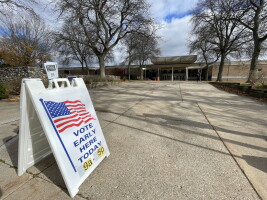
A white sandwich board sign rests on the concrete outside a building. On the sign is an illustration of an American flag, waving. The sign says VOTE EARLY HERE TODAY in blue letters, and 9a - 5p underneath
Some people have already voted in Michigan. For those yet to head to the polls, there may be more election challengers when you get there, but they're not allowed to talk to voters.(Dustin Dwyer / Michigan Public )

Michigan’s attorney general is reiterating that people should have confidence in the state’s elections.

Absentee voting in Michigan’s November general election began last month.

But Michigan Attorney General Dana Nessel said officials have been planning how to handle any possible disruptions for months.

“We want to make sure people know that it’s safe to vote, their votes are secure and that we have an accurate and democratic representation of votes cast,” Nessel said in an interview Tuesday.

Nessel said her office has been working with the governor’s team, state police, and election officials on “table-top exercises” to prepare for anything that could go wrong.

That’s as President Donald Trump continues to promote unproven claims about vote-rigging ahead of next month’s midterm elections. In a recent interview with Time Magazine, Trump didn’t rule out declaring a state of emergency in the lead-up.

Nessel said officials are preparing other briefs for everything from power outages to military troops at the polls.

“It could be the ones that we’re hearing the most about — federal agents or ICE being at the polls — or you have people who come to the polls who are disruptive in nature, or they plan to try to intimidate voters, or discourage people from not voting who are eligible voters,” Nessel said.

Voting has been relatively quiet in Michigan since 2020, when lies about the election being stolen fueled turmoil around its certification.

During this year's August primary election, federal monitors came to East Lansing, Lansing, Hamtramck, and Detroit. State officials said their presence didn’t cause any interruptions.

The Michigan Department of State Tuesday said it wasn’t aware of any future plans to send federal monitors to Michigan for the general election.

New Michigan laws crack down on gift card fraud

(Lester Graham / Michigan Radio)

Michigan is cracking down on gift card fraud.

State officials say gift card fraud happens when someone takes a card, steals the redemption information, then puts it back on the shelf for an unsuspecting person to buy and activate. Fraudsters can steal the balance of the card before the purchaser can use it.

Newly signed state laws count that practice as organized retail crime, a felony.

The Michigan Retailers Association worked with lawmakers on the change. The association's vice president of governmental affairs, Drew Beardslee, said the new classification is a better fit for prosecuting gift card fraud.

“By putting it under the umbrella of organized retail crime, especially when, in Michigan, we’ve got a unit that is solely dedicated to investigating and prosecuting organized retail crime, it just made sense to put it all under the same statutory framework,” Beardslee said.

Before the law change, state officials used other statutes to charge people for card draining. Earlier this year, Michigan’s Attorney General's office charged a California man with conducting a criminal enterprise and possession of a fraudulent financial transaction device.

Conducting a criminal enterprise carries a maximum sentence of 20 years in prison. The possession charge is a four-year felony.

The new laws would carry maximum punishments of five years in prison, a $5,000 fine, and restitutions.

In recent years, the state and federal governments have put more resources into fighting gift card fraud and scams. Press releases on the matter often cite Federal Trade Commission data showing over $200 million in annual losses to scams in recent years.

Beardslee said it’s a crime people often don’t report after finding out their new gift card doesn’t work.

“A lot of times they assume they just got a dud, or it goes unreported and it’s maybe the value they put on it was just not so much they wanted to go back and redeem it. It’s hard to quantify exactly how much it is but it’s certainly something that’s been seen all over the country,” he said.

Governor’s race hits Saline Township, site of massive data center project

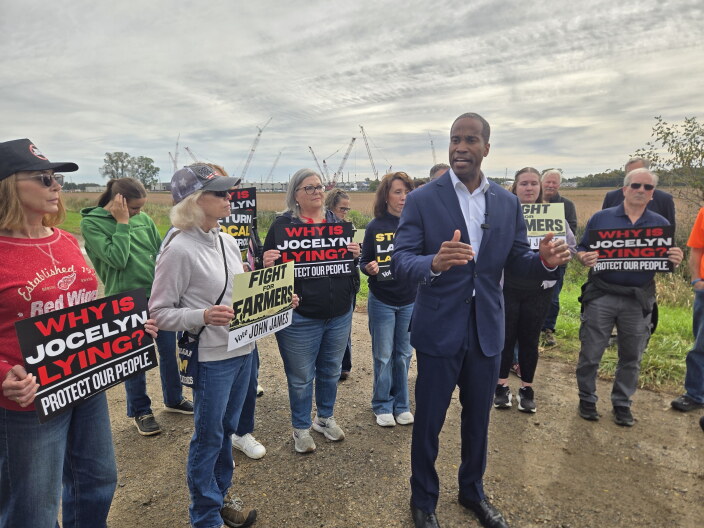
Republican gubernatorial candidate John James speaks outside the site of a planned data center in Saline Township on October 2, 2026.
Republican gubernatorial candidate John James speaks outside the site of a planned data center in Saline Township on October 2, 2026.(Colin Jackson / Michigan Public Radio Network )

Republican nominee for Michigan governor John James took his message on data centers to Saline Township Friday.

James spoke near farmland that borders a massive data center project connected to tech companies OpenAI and Oracle.

The local government had first tried to block the project, relenting after being faced with lawsuits. Some area officials attended a ceremonial groundbreaking for the data center this past summer.

James has made “local control” a key part of his data center policy vision, blaming the state government for helping recruit projects by offering tax breaks.

“I believe very strongly that Michigan is open for business. But we are not for sale. And, ultimately if you want a data center, fine, we’ll help. If you don’t want a data center, fine, we’ll help. But, ultimately, the control should be by the locals, not dictated by Lansing and lawyers and lobbyists,” James said during the press conference.

James, an incumbent Republican Congressman, said this is an area where he breaks with President Donald Trump.

The Trump administration has been a large supporter of AI research and advancement, often trying to block local pushback. Earlier versions of Trump’s signature legislation, the One Big Beautiful Bill Act, included language that would have limited states and communities’ ability to regulate AI.

Michigan Secretary of State Jocelyn Benson accused James of voting against local control while supporting the OBBBA in committee and on the floor of the U.S. House of Representatives.

“He has voted four times to block local control. Four times to block communities from having a voice in data centers,” Benson said during a campaign stop in Flint Friday.

Benson has faced her own baggage related to the Saline Township project. Her husband works for Related Companies, one of the partners that helped secure the Saline Township project. Benson said her husband has stepped away from any projects in Michigan.

But James still accused her of profiting off data centers.

“I wonder if she’s willing to own up to the fact that her family has personally benefited to the tune of hundreds of thousands of dollars because of this right here,” James said, pointing to the construction over his shoulder.

Despite the back and forth, the candidates’ positions on what to do about data centers aren’t entirely different.

Both are calling for a moratorium on new projects while lawmakers figure out more regulations. Each plan also calls for policies to protect the environment and Michigan residents against being charged for large-scale data centers’ massive power needs.

State regulators say some of those protections are already required by the utility contracts the state’s Public Service Commission has approved so far.

State lawmakers on both sides of the aisle and the governor have already called to make those utility requirements state law. Nothing has passed yet this legislative term.

Another point of difference between the candidates is where each plan would prioritize siting these projects. James wants to put them on existing industrial sites rather than farmland, like in Saline Township.

James supporter and Washtenaw County resident Ron Zimmerman said that idea worked for him.

“Why does it need to be taking farmland and food capacity away from, not only Michigan, but the rest of the world. People want to talk about food insecurity. Why are we taking the supply out?” Zimmerman said.

Zimmerman said he wasn’t against data centers altogether. Rather, he was concerned about how they come to a community.

Whitmer backs federal gas tax holiday, but stays silent on state tax

When you pull up to the pump, you're paying two taxes. One is a per-gallon motor fuel tax. The other is the state's 6% sales tax. Only the motor fuel tax revenue goes toward maintaining or building roads.
When you pull up to the pump, you're paying two taxes. One is a per-gallon motor fuel tax. The other is the state's 6% sales tax. Only the motor fuel tax revenue goes toward maintaining or building roads.(Lester Graham / Michigan Radio)

Governor Gretchen Whitmer continued to call for a federal gas tax holiday Thursday as AAA listed Michigan’s average gas price for a gallon of unleaded at around $4.50.

Many state lawmakers and candidates for office are calling for a suspension of Michigan’s state gas tax to lower costs for drivers.

Prices have spiked since February, when Iran closed a global shipping lane in response to U.S. and Israeli airstrikes.

Speaking to reporters Thursday, Whitmer placed responsibility with the federal government.

“The federal government needs to fix this. The federal government needs stop, not just end the war but also give people relief right now,” Whitmer said.

The federal government charges about $0.18 per gallon of gas and $0.24 per gallon of diesel. The math of a gas tax holiday for a mid-sized car owner with a 16-gallon tank works out to about $2.88 in savings for a full tank.

Michigan, on the other hand, charges a tax of about $0.52 per gallon. Whitmer said she’s not ready to comment on proposals to pause the state’s tax.

“We have done a lot to put money back in peoples’ pockets. Got rid of the 6% sales tax that you see on gas. And we’ll continue to look at other ways that maybe we can get people relief but I’m not going to weigh in on something that may or may not ever see my desk,” Whitmer said.

Democrats in the Michigan House of Representatives tried last week to force a vote on proposals to suspend the state’s tax but failed. The Republican leader in that chamber reportedly said he wouldn’t entertain the measure without a way to replace missing revenue.

The Senate did not pass any gas tax holiday legislation while it met in Lansing Thursday.

Michigan’s fuel tax pays for road repairs. Lawmakers celebrated it as a major win when it passed last year.

Now, industry groups are issuing warnings to lawmakers about interfering with it.

In a statement, the Michigan Infrastructure and Transportation Association suggested the state could lose hundreds of millions of dollars of revenue — and shed important jobs — through a three-month pause.

"Every dollar of the gas tax has a name and a face attached to it. It's the equipment operator in Gaylord, the flagger in Kalamazoo, the truck driver in Saginaw, and the laborer in Detroit who get up before dawn to make our roads safer," MITA vice president Rob Coppersmith said in a statement.

State will use $89 million in settlements from polluters to clean up Kalamazoo, Detroit rivers

Tree trunks are embedded into the outer bank of one curve in the Kalamazoo River. The roots face out to capture capture floating vegetation and sediment which will help strengthen the bank. It's also good habitat for small aquatic organisms, turtles, and fish.
Tree trunks are embedded into the outer bank of one curve in the Kalamazoo River. The roots face out to capture capture floating vegetation and sediment which will help strengthen the bank. It's also good habitat for small aquatic organisms, turtles, and fish.(Lester Graham / Michigan Public)

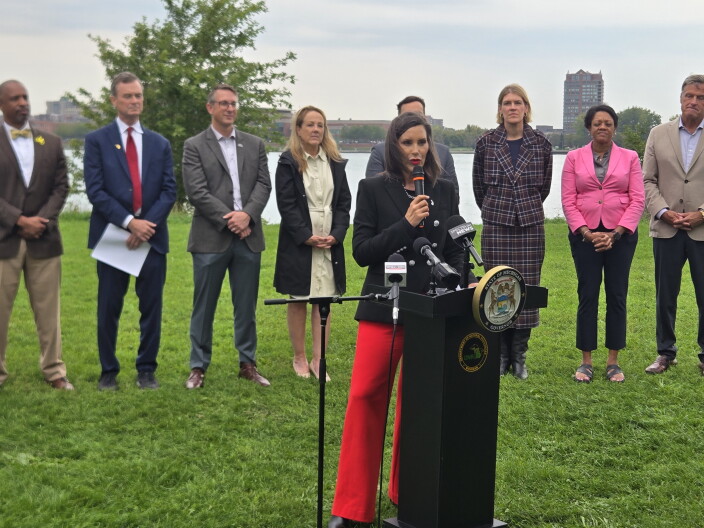
Michigan will put $89 million toward cleaning up the Detroit and Kalamazoo Rivers and related waterways, federal, state, and local officials said Thursday. They met on the Detroit River’s Belle Isle to announce the Reclaim the Rivers initiative.

Money will come from pollution settlements with companies like Monsanto and the operator of the Morrow Dam. A chunk of that money will go toward addressing the legacy of decades of industrial pollution.

The Michigan Department of Natural Resources and Department of Environment, Great Lakes, and Energy will partner on the effort.

EGLE director Phil Roos said both the Detroit and Kalamazoo Rivers need help. He spoke to reporters at the Belle Isle announcement ceremony.

“This is such an important waterway, a big waterway, so there are more pockets where it’s happening here than other places. But the Kalamazoo River, which is part of this initiative, has several places, a couple of Superfund sites,” Roos said. “There’s plenty of contamination to go around.”

Michigan Governor Gretchen Whitmer speaks on Belle Isle, announcing a plan to put millions of dollars in settlement funds toward cleaning up pollution in the Detroit and Kalamazoo rivers.
Michigan Governor Gretchen Whitmer speaks on Belle Isle, announcing a plan to put millions of dollars in settlement funds toward cleaning up pollution in the Detroit and Kalamazoo rivers.(Colin Jackson / Michigan Public Radio Network)

Superfund sites are heavily contaminated areas the federal Environmental Protection Agency prioritizes for cleanup.

Roos said every dollar spent on cleaning up the riverways and preparing them for other uses brings much more back to the state by way of commercial and other spending.

Michigan already promotes swimming, fishing, and other recreational activities on many of its waterways, including the Detroit River.

Governor Gretchen Whitmer said some of the continued need is because Michigan has relatively high environmental standards when it comes to industrial pollution.

“When you are being as forward looking and aggressive as we are, you find a lot more. It’s not unique to Michigan, unfortunately, this is a story that’s playing out across the country,” Whitmer told reporters.

Both the Detroit and Kalamazoo Rivers are listed as EPA areas of concern for the Great Lakes region.

Other uses for the Reclaim the Rivers money include restoring fish habitat and creating more riverfront access for the public. Government officials said they hope to use the state spending to attract more funding from federal, local, and private sources.

Detroit City Councilman Scott Benson echoed the point that making the waterways more usable would help economically.

“Now that we have our federal, state partners coming in with the resources to be able to help that, you can see what the results are and how we have families flocking. So, it’s just, as we clean up and expose more spaces to recreational uses, it allows more families to come down and enjoy our riverfront,” Benson said.

Advocates pressure lawmakers to end fees for serving restraining orders

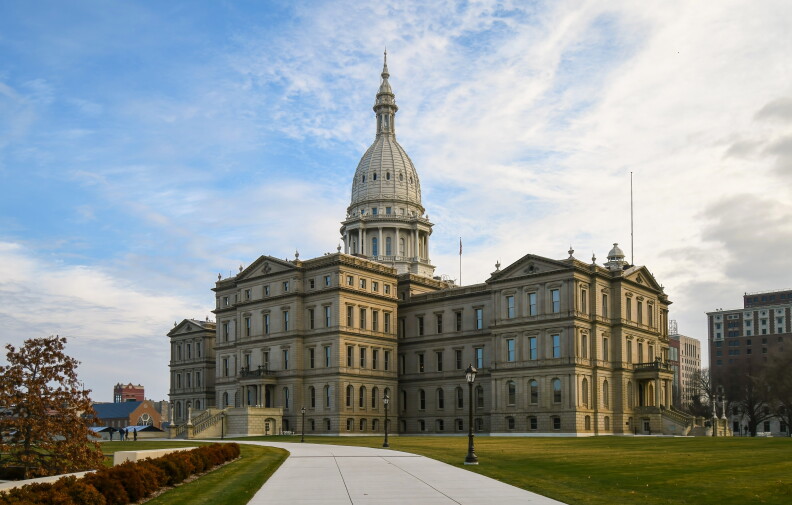
Michigan Capitol building in Lansing, including a tree.
The Michigan Capitol building in Lansing.(Emma Winowiecki / Michigan Radio)

Supporters of domestic violence survivors are pressing Michigan lawmakers to get rid of fees for serving restraining orders.

In Michigan, law enforcement agencies can charge fees for serving a personal protection order. It’s one of fewer than 10 states where petitioners may have to pay for PPO service.

Some nonprofits and sheriff’s offices, like in Genesee County, have systems to help petitioners serve their PPOs for free. But it’s not uniform.

“In this county, I went right to the circuit court, I went to the circuit court administrator and said, ‘This is not law, this is an action that only I can, as the sheriff, control.’ We’ve got 27 other police departments in Genesee County. I can’t control what they do. That’s why we need this precedent,” Genesee County Sheriff Chris Swanson said during a press conference Wednesday.

Advocates say the costs of serving a personal protective order could vary greatly depending on county where it’s issued, where the recipient is, and the process a petitioner uses to serve it.

Aita Wellington is a legal representative with the YWCA of Kalamazoo County. She said those fees can stack up.

“It could go hundreds of dollars if we have a perpetrator who committed the offense in Kalamazoo County but then they fled to Wayne County, and we have to pay mileage, we have to pay time that they have on the road,” Wellington said.

Although PPOs take effect as soon as a judge signs them, police can’t enforce them until they’ve been served.

That became an issue last year when the ex-husband of Henry Ford Hospital employee Latricia Brown allegedly murdered her at work in Detroit. A PPO had been approved for Brown, but it hadn’t been served.

Legislation to change the system seems to be moving forward in the Michigan Legislature.

Both the state Senate and House of Representatives have voted to create a new state fund that would handle the costs of service for petitioners.

State Representative Sarah Lightner (R-Springport) co-sponsored the House package. Lightner said she’s cautiously optimistic votes can happen once both chambers get final bill language.

“Time is of the essence in a lot of these cases, and you can’t let a couple hundred bucks be worth letting someone die. You know what I mean? We need to protect them, we need to have their back, and we’ll do what we can to protect you,” Lightner said.

The Senate passed its version of the bipartisan bill package in December. The House passed mirror bills last week.

The advocates worry time is running out before the end of the term to get everything finalized.

Ryan Bates, a strategist working with the group End Gun Violence Michigan, said he credits constant pressure on lawmakers with getting the bills this far.

“It seems like when there’s an issue that a moneyed interest group needs to get taken care of, that can go to the top of the agenda. But when it’s domestic violence survivors, or other folks who are marginalized or vulnerable who need something, they’re at the bottom of the list,” Bates said.

Both chambers are only scheduled to meet a few more times before the November 3 general election. After that, any major legislative action could depend on the results of that election.

Michigan Secretary of State candidates debate election security, voter trust

people in voting booths
(Steve Carmody / Michigan Radio)

Michigan’s Secretary of State candidates shared their visions for the office during a candidate forum Tuesday night.

The event was hosted by the League of Women Voters.

Many of the questions came back to the office’s role as Michigan’s top elections official. Macomb County Clerk Anthony Forlini, the Republican nominee, often tied his vision to his experience in office.

On a question about restoring voters’ trust and making sure information comes out in a timely way, Forlini said he’s found success by listening to people’s concerns and making sure that processes are followed. Beyond that, he said, Michigan is behind other states when it comes to speedily announcing vote tallies.

“We need to balance between efficiency, trusting our clerks, but also being able to verify everything that they do along the way. And, when they don’t, we make them redo things,” Forlini said.

His Democratic opponent, Lieutenant Governor Garlin Gilchrist, focused his answer more on combating misinformation and increasing transparency.

Gilchrist said he’ll make it easy for people to see how elections run and how votes are verified.

“I’ll build a rapid response system so that when false claims about elections begin to circulate, the department can respond quickly with clear facts, and in language anyone can understand. And I’ll work with clerks so voters in every community can hear the same accurate information from their local officials,” he said.

Other candidates, like Libertarian Party nominee Christine Sloan, said they’d work with local law enforcement and other officials to address people's fears faster.

“I do think that the problem here really is that there’s an increased concern of safety and that points to a concern that’s happening with the public,” Sloan said. “The public has a concern for the integrity of our election process.”

Green Party Candidate Eric Borregard said he felt election security worries are being “overblown.”

“We need to go back to the way it was before and let people be more free to go and vote,” Borregard said. He went on to criticize efforts to tighten Michigan’s voter ID laws.

Other parts of the forum focused on how to improve the Secretary of State Office’s general services to the public like vehicle registration and regulating notaries.

U.S. Taxpayers Party nominee Scott Aughney said he’d re-open some of the offices that have closed while ensuring walk-in appointments are always honored.

“I would like to examine possibly opening some small satellites across the state,” Aughney said.

Michigan Libertarian party washes its hands of its gubernatorial nominee

A white man wearing a black polo shirt and baseball cap and carrying an American flag shakes the hand of another white man along a parade route.
“As a veteran, as a truck driver, I’ve spent my entire adult life pushing the country forward behind the wheel of a semi. We can do the same job in office. And I think the people understand that,” said Anthony Hudson.(Steve Carmody / Michigan Public )

The Libertarian Party of Michigan and its nominee for governor are done with one another. Earlier this month, party leadership voted to censure Anthony Hudson.

Now, the party said, it’s disavowing the Hudson campaign and disassociating “from any affiliation, support, or political connection with his candidacy.”

At a September 13 meeting, some Libertarians in leadership raised concerns about Hudson’s use of a homophobic slur on social media, anti-Muslim language, and support for President Donald Trump’s military actions in Venezuela and Iran.

State party District 10 Representative Mike Saliba offered the censuring motion.

“We're not very well known. So, if they hear something coming from the top of the ticket, they're going to believe that’s what we believe in,” Saliba said during the September 13 meeting.

Hudson responded on Facebook by saying “F—- the Libertarian Party” multiple times. He also criticized party positions in favor of LGBTQ rights and legalizing certain drugs like marijuana and psilocybin — or what are often called "magic" — mushrooms.

State party leaders accused Hudson of opposing true freedom of expression and being pro-authoritarian in some of his comments. Meanwhile, Hudson accused the Libertarian Party of Michigan of losing its way and trying to silence his own free speech.

“I’m not a fan of political parties in the State of Michigan. I’m not going to ask for permission how to speak, how to think, how to vote, or how to push back against the system that does not represent the people in our state,” Hudson said in an interview with Michigan Public Radio Tuesday.

Prior to winning the Libertarian nomination at the party’s nominating convention in June, Hudson ran for governor as a Republican. He left the Republican race for his Libertarian bid in February.

Absentee voting has already begun in Michigan, meaning it’s far too late for the Libertarian Party to take back Hudson’s nomination.

The party said it will not be using any further resources to support Hudson’s campaign. Though it acknowledged that Hudson remains the party’s candidate.

“The Libertarian Party of Michigan remains committed to freedom of speech, freedom of religion, equal individual rights, and the principle that government should neither infringe upon those liberties nor discriminate among individuals,” a press release from the party said.

House lawmakers consider several items during wind down to general election

Interior of the state Capitol's rotunda.
(Lester Graham / Michigan Radio)

The Michigan House of Representatives this week met for what could be one of its last times before election day.

Lawmakers in the Republican-led chamber took the opportunity to pass some final legislative priorities as well as possible longshots in the Democratic-controlled state Senate.

Dam safety legislation was among the bills passed after the House worked out an agreement with the Senate.

The bill would give state regulators more power to oversee the state’s dams and strengthen disaster planning.

In a press release, Rep. John Roth (R-Interlochen) called it “a good first step.”

“By addressing our vulnerabilities in the infrastructure beforehand, we can make needed improvements before an emergency occurs. Northern Michigan has repeatedly seen the tragic consequences of dam failure, and our communities deserve serious oversight to ensure that the work is being done to prevent future disasters,” Roth said in the statement.

Critics of the legislation have shared concerns about overstepping the state’s authority when it comes to oversight of federally-licensed dams.

After passing the House by a 96-7 vote, the bill returns to the Michigan Senate for a concurrence vote before it can head to the governor.

Several House committees also met this week, including the House Insurance Committee. There, lawmakers discussed a bipartisan auto insurance package.

Six years ago, a 2019 law change took effect that let most Michiganders choose lower levels of personal injury protection coverage in case of a vehicle accident. The new bills would again lower that minimum required option from $250,000 of coverage for most drivers to $50,000.

State Representative Mike Harris (R-Waterford) chairs the House Insurance Committee.

He said auto insurance is so expensive partly because it’s treated as a stand in for health insurance, without the discounts health plans negotiate.

"I don't care if you're in a car or if you fall off your roof, it's horrible no matter what. But we treat them differently. That's why auto insurance is high,” Harris said.

The legislation would also lower the minimum required liability protections for bodily injury.

Many catastrophically injured car accident survivors and their advocates said it became harder for them to get insurance to pay for their care after the changes took effect. Meanwhile, Michigan continues to have some of the highest car insurance rates in the country.

On Thursday, the Michigan House voted to close what some saw as a loophole in the state’s ethics laws.

State lawmakers already banned their former colleagues from immediately becoming lobbyists after leaving the Michigan Legislature.

A new bill passed in the House would stop lawmakers from working for an organization that receives a grant from the state’s Utility Consumer Participation Board within two years of leaving office.

State Representative Parker Fairbairn (R-Harbor Springs) said lawmakers shouldn’t benefit from organizations they help fund when in office.

“This glaring hole in our state’s ethics laws should be closed immediately and ratepayers protected,” Fairbairn said during a floor speech.

Fairbairn tried to snipe at last session’s Democratic House majority, which boosted the board’s grants, before being gaveled down.

The bill now goes to the state Senate after passing 88-15 in the House.

Beyond policy bills, the House also took up several resolutions, including ones to condemn antisemitism and socialism.

Democrats accused Republicans of electioneering and playing games with the socialism resolution.

Sponsor Rep. Jay DeBoyer (R-Clay Twp), who’s also running for lieutenant governor, spoke at length while Democrats were not allowed to speak.

Republicans also forced a roll call vote, which would get members on the record either condemning or not condemning socialism.

Meanwhile, Democrats tried unsuccessfully to tie several votes to legislation to suspend the state’s gas tax in their own messaging attempt. That's as regular fuel prices remain over $1.50 higher than a year ago.

State Representative Carrie Rheingans (D-Ann Arbor) accused Republicans of focusing too much on sending signals to voters rather than issues people care about.

“They’re not asking us to solve how a flag hangs in a classroom. They’re not asking us to denounce free political speech, which is a first amendment protected right. They’re asking us to address their gas prices,” Rheingans said.

In 2022, Republicans also unsuccessfully tried to suspend taxes on gas during a gas price spike.

The Detroit News reports House leadership called suspending the gas tax unrealistic given budgetary concerns.

Absentee voting starts in Michigan

Absentee voting got underway in Michigan on September 24, 2026, ahead of the November 3 Election Day.
Absentee voting got underway in Michigan on September 24, 2026, ahead of the November 3 Election Day.(Rebecca Williams / Michigan Public Radio Network )

Thursday marked the first day of absentee voting in Michigan’s general election. A few local election officials used the occasion to reassure residents about the safety and security of voting.

That’s as President Donald Trump and some of his allies continue to push lies about the 2020 presidential election being stolen, despite dozens of audits concluding it was not.

Grand Rapids City Clerk Joel Hondorp said the election disinformation is a “distraction.”

“It comes with a cost. Carrying out elections is expensive and it takes a lot of time. Yet we are having to dedicate resources to combating and correcting the false claims are often peddled by politicians,” Hondorp said Thursday during a press conference hosted by the ACLU of Michigan.

During last month’s primary election, the federal government sent observers to a handful of Michigan cities. Federal officials said it was to ensure the right procedures were being followed, although Michigan Attorney General Dana Nessel questioned that motivation this week.

Two of the cities where the feds were stationed were Lansing and East Lansing. Both are mostly in Ingham County, where Clerk Barb Byrum said she’s not sure if the monitors are coming back for the general election.

“The intent was to make voters worry and make voters question the integrity of our elections. But, truth be told, we have poll watchers all the time,” Byrum said.

Byrum and other speakers at Thursday’s press conference encouraged people to sign up to work at polling sites if they’re concerned about election integrity.

A recent poll showed a slight dip in Michiganders’ faith in elections, although most respondents still trusted in them overall.

The group Promote the Vote is among those working to restore confidence from the doubters.

Promote the Vote election protection director Mackenzie Walz said her group is encouraging people to see how they’re run.

“Go observe the public logic and accuracy tests. Get a chance to meet your clerks and see how those tabulators are programmed and operate. We’ve also been encouraging folks to attend their local county board of canvasser meetings,” Walz said.

Promote the Vote also helps run a nonpartisan hotline to address issues like voting accessibility and other concerns. Walz said that hotline saw an influx of calls during the August primary and expects to see around a thousand made during the general election.

Absentee ballots are available now in Michigan. The final day of the general election is November 3. Some towns and cities can start early in-person voting as soon as October 5.

Michigan House votes to toughen sexual assault penalties

(Lester Graham / Michigan Radio)

Sex crimes in Michigan could carry tougher penalties under bills the Michigan House of Representatives passed Wednesday to allow possible life sentences for first- through third-degree criminal sexual conduct.

Under current law, only first-degree criminal sexual conduct carries a maximum life sentence. Second- and third-degree charges carry a maximum prison term of 15 years.

Representative Tom Kuhn (R-Troy) cosponsors the package. He said the longer sentences would keep Michiganders safe.

“These bills are to protect victims. Victims of sexual assault, victims of sexual predators, and sending a clear message that those kind of criminal conduct will be punished,” Kuhn said.

The package would also set mandatory minimums for the three most serious sexual assault charges.

First-degree counts would carry a minimum 15-year term. Convictions for second-degree would see a 10-year minimum sentence. Third-degree convictions would mean at least five years in prison.

House Judiciary Committee Chair Sarah Lightner (R-Springport), who used to work as a paralegal specializing in criminal defense and family law, said she’s all for that.

“There’s certain things people do that are crimes against humanity that I don’t think they should ever see the light of day quite frankly,” Lightner said during a committee meeting Wednesday morning before the House session.

The bills faced criticism from Democrats who argued increasing the punishment alone wouldn’t do much to support sexual assault survivors.

Democratic state Rep. Kara Hope (D-Holt) revealed during committee that she herself has faced sexual abuse. In a press release, she accused her Republican colleagues of playing politics with the issue.

“The bill sponsors and the entire House Republican Caucus were using the crime of sexual abuse as a political football. This was and is a sick attempt to get the Democrats they perceive as politically vulnerable on the record against longer penalties for sexual abuse. It’s the same old 'soft on crime' sideshow that politicians have dragged out in moments of desperation for as long as I’ve been alive,” Hope said in her statement.

During committee she tried unsuccessfully to tie passage of the tougher sentences legislation to bills that would extend the statute of limitations for criminal sexual conduct and a House resolution to investigate the late and well-connected sex offender Jeffrey Epstein’s ties to the Interlochen Center for the Arts.

Hope called the sentencing bills “disingenuous” and “not well researched.”

“There’s very little research connecting sentences with the occurrence of a crime. There’s very little evidence suggesting that they deter crime,” Hope said during the meeting.

Some Democrats and one Republican voted against the bills on the House floor. The legislation now goes to the Democratic-controlled state Senate.

Lee Chatfield embezzlement trial delayed over expert witness dispute

(U.P. Politico / Wikimedia Commons)

An Ingham County judge put the corruption trial of a former Michigan House speaker on hold Monday.

Former Republican House Speaker Lee Chatfield faces 13 felony charges. The state accuses him of allegedly using funds from a political nonprofit and campaign committees for personal uses, like travel and paying off credit cards.

A jury trial was supposed to start Tuesday.

The delay is so Chatfield attorney Mary Chartier can appeal a decision to allow witness testimony from a forensic accountant that had been working with the state. Chartier reportedly shared concerns the witness’ experience wasn’t relevant to the specifics of this case.

The appeals process could take months to play out before the Michigan Court of Appeals. Meanwhile, Michigan Attorney General Dana Nessel leaves office at the end of the year.

In an emailed statement, Nessel accused the defense and courts of stalling.

“I have never seen a trial delayed like this; it's outrageous and beyond unusual. If the Court hadn't adjourned this case for nearly an entire year, bending over backward to accommodate Lee Chatfield's lawyers in their endless efforts to push this important trial past my last day in office, this simple evidentiary matter would have been resolved months ago,” Nessel said.

The case was bound over for trial in May last year. A rundown of events in the case shows a series of jury trial dates being tentatively set then pushed back.

In an email to the Michigan Public Radio Network, Chartier said Nessel was “out-of-touch” with litigation.

“There is nothing unusual about the scheduling of this trial. Courts are busy, and [Nessel’s] continued disrespect to judges is unbecoming of an elected official. Moreover, her office disclosed the so-called expert as a trial witness less than a month before trial. If the disclosure had been made earlier, it would have been challenged earlier. It’s as simple as that,” Chartier said.

El-Sayed issues EV challenge during Michigan UAW conference

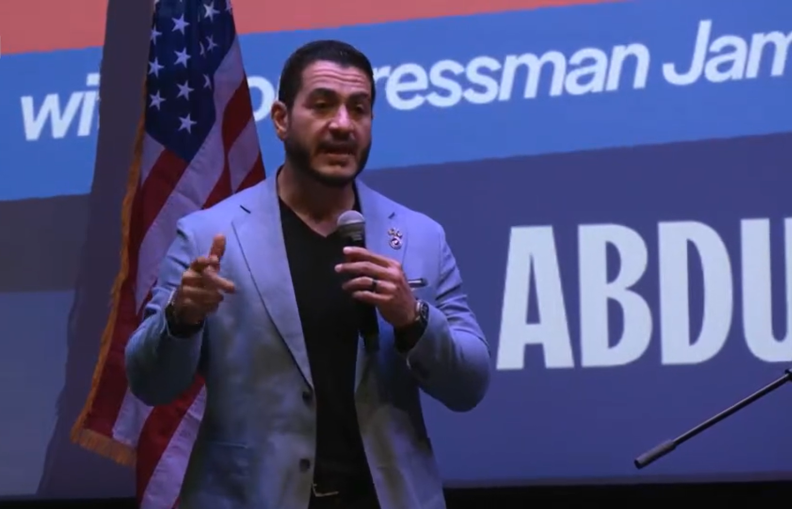
Abdul El-Sayed, Democratic candidate for U.S. Senate, speaks at a rally at the University of Michigan on August 26, 2026.
Abdul El-Sayed, Democratic candidate for U.S. Senate, speaks at a rally at the University of Michigan on August 26, 2026.( C-SPAN)

United Auto Workers members from across the state are meeting in Lansing this week. They’re gathering for the union’s restarted Michigan Community Action Program Conference.

The three-day conference is a chance for delegates to discuss political strategy, as well as hear from party leaders and candidates that the union has endorsed.

UAW President Shawn Fain outlined the union’s four core issues during a keynote speech early Tuesday afternoon. He described them as "adequate wages, adequate healthcare, retirement security, and time off the job.”

While showing a chart of UAW-represented companies and their collective profits, Fain argued corporate greed was keeping workers down. He urged attendees not to let culture war issues distract them.

“The billionaires try to divide us ... based on race, based on where we’re from, based on who we love, what bathroom we use,” Fain said. “They will use anything they can. When they talk about diversity, equity, inclusion, or affirmative action programs, and say that’s why your life sucks, we know that’s bulls---. Because they don’t want you looking at this,” he said, referring to the profit chart.

Earlier in the day, Fain said this year's midterm election is a “defining moment.” He told reporters he wanted workers to set the union’s tone.

“This is really about putting the membership in charge, putting the people back in charge. Not just as a union but where we head, whether it’s bargaining contracts or whether it’s organizing worksites or whether it’s our politics. You know, the membership is going to drive this,” Fain said.

This is the first time the conference is happening in Lansing since 2018. Members from the union’s Community Action Program said they were happy to see it come back.

Southeast Michigan worker Carrie Robinson from the union’s Local 7 chapter found the day “inspiring.”

“I’m encouraged to go out and step out and, what they say, put the hand on the plow. And, in numbers, we will have power,” Robinson said.

El-Sayed addresses union supporters

The convention began Monday. On Tuesday, Democratic U.S. Senate nominee Abdul El-Sayed spoke to the downtown Lansing crowd.

El-Sayed attacked the Trump administration for its trade war with Canada and scaling back policies that helped domestic electric vehicle production. That’s as Chinese companies dominate the global EV market with a series of low-cost models.

El-Sayed said the government should help American car companies build their own cars capable of driving 300 miles on a single charge to retail for less than $25,000.

“Our job I think is to double down on American research, design, and manufacturing. Double down on the power of union auto shops and to build the future of auto for ourselves. The gauntlet that I laid down, that should be a challenge everybody’s willing to pick up.”

El-Sayed is running against former Republican Congressman Mike Rogers, who has criticized EV incentives as increasing reliance on Chinese battery technology.

The Democrat also criticized perceived corporate influence in politics and responded to Republican accusations that he is a socialist or communist.

“I’m a capitalist who actually read about capitalism,” El-Sayed said.

He continued by paraphrasing 18th century economist Adam Smith, whose book, The Wealth of Nations, was seminal in explaining what became capitalist philosophy. While skeptical of overbearing governments, Smith also warned against “the monopolizing spirit of merchants and manufacturers.”

El-Sayed won the party’s endorsement during his primary against Congresswoman Haley Stevens (D-MI 11). Fain said Rogers turned down an invitation to seek the union’s endorsement.

Fain said, as with any large organization, not all members will agree on candidates.

Dwayne Walker, president of UAW Local 900, one of the state’s larger chapters, said the event helps with energizing members to pass along the message to others who may still feel split on El-Sayed.

“It’s just like anything else. I don’t want to say old against new, or traditional versus progressives,” Walker said. “Me being one of those traditionalists, that’s why we had to sit down. And we asked him the hard questions, and we screened him, and we made sure that we know.”

Walker said he liked how El-Sayed appeals to the younger generation.

“We can’t leave the young ones behind. And ... here’s the thing about it, he’s the future, he’s in their generation. We’ve got to realize that change in times. I had a flip phone back when I was young. Now we’ve got an iPhone,” Walker said.

The conference continues Wednesday with a speech from Democratic gubernatorial nominee Jocelyn Benson.

Whitmer travels to South Korea on trade mission with economic and military officials

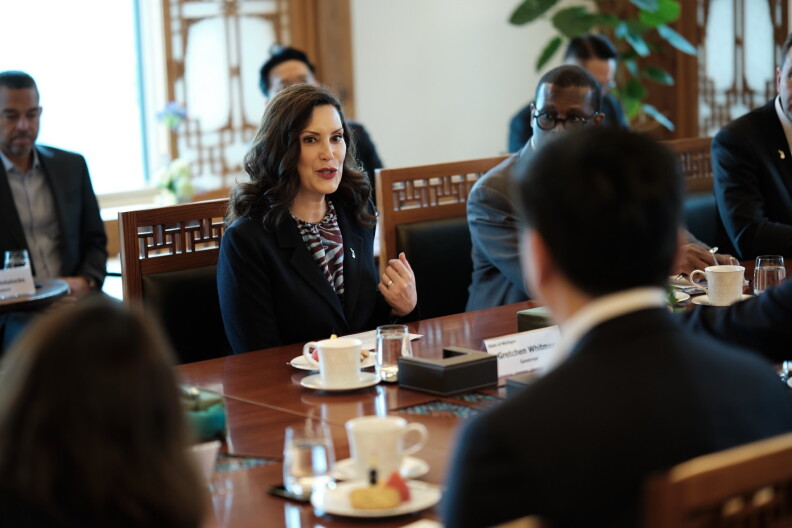
Michigan Governor Gretchen speaks during an event as part of a 2024 trade mission to South Korea.
Michigan Governor Gretchen speaks during an event as part of a 2024 trade mission to South Korea.( <a href="https://www.michigan.gov/whitmer/news/press-releases/2024/03/08/whitmer-meets-president-of-south-korea-companies-during-asia-mission-to-bring-supply-chain" target="_blank" link-data="{&quot;cms.site.owner&quot;:{&quot;_ref&quot;:&quot;00000179-84c8-d933-ad7f-f5f846b10000&quot;,&quot;_type&quot;:&quot;ae3387cc-b875-31b7-b82d-63fd8d758c20&quot;},&quot;cms.content.publishDate&quot;:1789426552983,&quot;cms.content.publishUser&quot;:{&quot;_ref&quot;:&quot;0000017d-95e3-dada-a9ff-fdeb3d1e0000&quot;,&quot;_type&quot;:&quot;6aa69ae1-35be-30dc-87e9-410da9e1cdcc&quot;},&quot;cms.content.updateDate&quot;:1789426552983,&quot;cms.content.updateUser&quot;:{&quot;_ref&quot;:&quot;0000017d-95e3-dada-a9ff-fdeb3d1e0000&quot;,&quot;_type&quot;:&quot;6aa69ae1-35be-30dc-87e9-410da9e1cdcc&quot;},&quot;cms.directory.paths&quot;:[],&quot;anchorable.showAnchor&quot;:false,&quot;link&quot;:{&quot;cms.directory.paths&quot;:[],&quot;attributes&quot;:[],&quot;linkText&quot;:&quot;Michigan Executive Office of the Governor&quot;,&quot;target&quot;:&quot;NEW&quot;,&quot;attachSourceUrl&quot;:false,&quot;url&quot;:&quot;https://www.michigan.gov/whitmer/news/press-releases/2024/03/08/whitmer-meets-president-of-south-korea-companies-during-asia-mission-to-bring-supply-chain&quot;,&quot;_id&quot;:&quot;000001a0-a222-d846-adb6-ae273da70000&quot;,&quot;_type&quot;:&quot;ff658216-e70f-39d0-b660-bdfe57a5599a&quot;},&quot;_id&quot;:&quot;000001a0-a222-d846-adb6-ae273da70001&quot;,&quot;_type&quot;:&quot;809caec9-30e2-3666-8b71-b32ddbffc288&quot;}">Michigan Executive Office of the Governor</a>)

Governor Gretchen Whitmer began meeting Monday with business leaders as part of an investment mission to South Korea.

Her office said the trip aims to recruit business in industries like shipbuilding, advanced manufacturing, and mobility.

Michelle Grinnell is chief communications and attraction officer with the Michigan Economic Development Corporation. She said the pitch to Korean leaders involves letting them know “Michigan is open for business.”

“It’s not anything you wouldn’t expect. It’s highlighting our ... density of industry sectors here in the state, proximity to supply chain, proximity to customers,” Grinnell said.

The press release announcing the trip lists state and Oakland County officials, U.S. military leaders, and some businesspeople as part of the delegation.

The Michigan Economic Development Corporation said the businesses are paying their own way while the MEDC corporate budget and the Michigan Economic Development Foundation, the corporation's nonprofit arm, are paying for other travel. It said no taxpayer dollars are funding the trip.

This is the fourth publicly announced trip abroad Whitmer took this year. In January, she spent five days in Europe, including a speech at the World Economic Forum in Davos, Switzerland.

During a ten-day trip in February, Whitmer attended the Munich Security Conference. It’s known for attracting world leaders and major players in the defense industry.

When asked about the emphasis on defense contracts on the South Korea trip, Grinnell mentioned Michigan’s military infrastructure at Camp Grayling, a Michigan National Guard base and the largest national guard training facility in the U.S. She said the defense sector is a natural fit for Michigan’s economy, given its ties to the auto industry.

“There’s a lot of opportunities for businesses that are in that sector, particularly in the supplier side, to diversify into defense,” Grinnell said.

She said this is also a chance for state leaders to connect with South Korean companies that already have a presence in Michigan. That’s as U.S. relations with the East Asian country have faced some stress in recent months.

Whitmer visited South Korea in 2024 as well.

Senate again passes nine vetoed bills that sat in limbo for 18 months

The Michigan state Senate room.
(Lester Graham / Michigan Radio)

The Michigan Senate resurrected nine bills Thursday that Governor Gretchen Whitmer vetoed earlier this summer.

The Senate had passed each of the policies at least once before, over a year and a half ago, during the last legislative term. The House approved the legislation at that time too. Both were under Democratic control, but they failed to transmit the bills to the Democratic governor before the end of the term.

Then, when Republicans took control of the House the following term, the House continued to sit on the bills rather than deliver them to the governor, sparking a drawn-out legal fight that the Democratic-controlled Senate ultimately won.

Whitmer vetoed the bills the same day as the Senate’s state Supreme Court victory. She cited concerns about timing and logistics, including date references that had already passed.

Now, Senate Majority Leader Winnie Brinks (D-Grand Rapids) said it’s time to try getting the bills to the governor once more.

“She’s clearly called to have these bills to be returned to her desk once again. We’re taking her at her word on that, and we, of course, have felt that this was an important policy priority to get done,” Brinks told reporters after the votes Thursday.

Brinks said she believed the governor should have signed the bills instead of vetoing them.

While many of the bills passed Thursday along party lines, some Republicans did support a package that would give corrections and conservation workers access to the state police pension system.

Supporters argued it would be a way of fixing dire staffing shortages at the state’s prisons.

State Senator Thomas Albert (R-Lowell), however, was skeptical.

“To think that an employee is going to gut out 20 years or more at a job that mandates overtime and does not pay well relative to jobs with significantly less risk for a pension alone is an oversimplification,” Albert said from the Senate floor.

Other policies would lower healthcare premiums for state employees, allow new funding mechanisms for some Detroit museums, and strengthen wage garnishment protections for people in debt.

State Sen. Jeff Irwin (D-Ann Arbor) sponsored the wage garnishment bill. He said Michigan’s current laws let debt collectors take too much.

“We allow debt collector to even seize, not just tax returns but also the Earned Income Tax Credit, unlike most other states,” Irwin said during a floor speech.

State Sen. Jonathan Lindsey (R-Coldwater) opposed the bill, saying it would “arbitrarily” shield people from paying debts.

“It’s going to hurt our small businesses. It’s going to hurt the people that would be the recipients of collecting that money,” Lindsey said.

The bills are likely to stall out in the Michigan House, where Speaker Matt Hall is already casting doubt about their future.

“Democrats have had two years to bring these bills back and negotiate with me after they blew it, but they chose to wait and pull a campaign stunt,” Hall said in a written statement.

“I’m the best dealmaker in Lansing, and they could have come to me anytime," Hall said. "If Democrats actually want these bills to move, they need to be ready to make a real deal on our plans to eliminate state property taxes, lower electric rates, and create the health care cost review board. Democrats want to play politics with these bills, but I’m more interested in passing major reforms that actually lower people’s costs.”

Jewish faith leaders air concerns with Democratic Senate nominee El-Sayed

Abdul El-Sayed, Democratic candidate for U.S. Senate, speaks at a rally at the University of Michigan on August 26, 2026.
Abdul El-Sayed, Democratic candidate for U.S. Senate, speaks at a rally at the University of Michigan on August 26, 2026.( C-SPAN)

Some liberal Jewish faith leaders have called for Michigan Democrats and the party’s U.S. Senate nominee to do more to be a welcoming community for Jews who have felt alarmed by recent rhetoric.

Nonnegotiable Michigan says it wants Abdul El-Sayed to be more conscious of how he criticizes Israel and its American lobby.

Rabbi Josh Whinston, at Temple Beth Emeth in Ann Arbor, said using terms like “bloodthirsty” to describe Israeli Prime Minister Benjamin Netanyahu’s far-right government plays into antisemitic stereotypes.

“There are people he could influence, that would do us harm because of those kinds of comments, that do not make the distinction that he’s trying to make between Israel and the Jews. People do not hear that on the far ends of the spectrum,” Josh Whinston said during a press conference announcing the coalition.

Nonnegotiable Michigan has five points they want the Michigan Democratic Party and the El-Sayed campaign to commit to. The group wants Democratic leaders to be to be more forceful about supporting Jewish safety, self-definition, sovereignty in Israel, rights to political participation, and “a better future for the Middle East.”

Congregation Shaarey Zedek Rabbi Aaron Starr said he’s concerned about how often Israel is criticized compared to other nations.

“When the only Jewish state in the entire world ... a tiny sliver of the Middle East ... is singled out, as opposed to all the bad actors in the entire world, we can’t help but hear antisemitism,” Starr said.

Nonnegotiable Michigan is supported by the Zioness Action Fund, the campaign arm of a group formed for progressive Jews who also identify as Zionist.

The new coalition echoes 2024’s Uncommitted Movement, which called for then-President Joe Biden and Vice President Kamala Harris to end their support for Israel’s military campaigns in Gaza. El-Sayed supported the movement, though he later endorsed Harris for president.

While Uncommitted called for pro-Palestine activists to have a greater voice within the party, Whinston said he wants Nonnegotiable Michigan to keep Jews from being left out.

Whinston said he’s not asking El-Sayed to compromise his beliefs.

“Broaden the tent, Dr. El-Sayed. That’s what I’m asking. Broaden the tent, find a way to thread this needle. Be in communication with us and let’s figure this out together. It will be important,” Whinston said in an interview Wednesday.

El-Sayed’s campaign did not respond to a request for comment Wednesday afternoon. But he has recently tried to smooth over relationships with some Jewish Democrats who voted against him during the party’s primary election last month.

El-Sayed, a Muslim former public health official who has said his family has faced prejudice for their faith, has also said often that he cares about Jewish safety like that of his own daughters. He recently met with Jewish community leaders and apologized for past comments some found hurtful.

Meanwhile, Republican Senate nominee Mike Rogers has been actively recruiting Jewish voters to his camp.

❌