Reading view

There are new articles available, click to refresh the page.

The Metro: State regulator says DTE restoration timelines ‘weren’t what they needed to be’

Many Michiganders feel powerless over their own electrical power. That’s because, despite approved rate hikes, when a storm hits the power can be out for days before utility companies like Consumers Energy and DTE Energy are able to restore it. 

But while many are disappointed with the performance of Michigan’s utility companies, some regulators point to progress as outage time has decreased by about 23% since 2019. 

How are Michigan’s utility companies held accountable for their actions? And, what kinds of improvements are taking root?

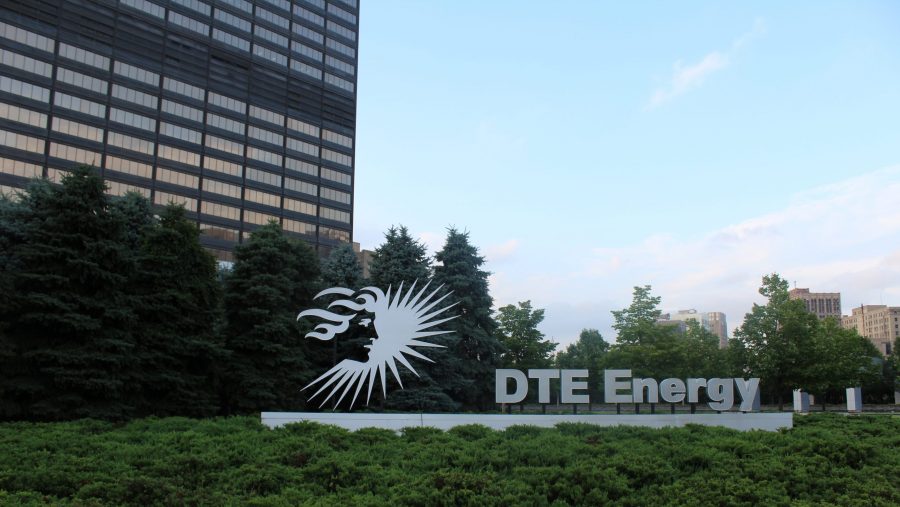
Dan Scripps is the chair of the Michigan Public Service Commission, which regulates DTE Energy. He says the utility’s performance has been improving. 

“Last year… DTE for the first time in at least 25 years… was actually in the top quarter of utilities when you consider performance across the whole year.” 

Scripps joined host Robyn Vincent on The Metro to discuss what is being done to restore and upgrade the state’s aging grid. 

DTE is a financial supporter of WDET. Our newsroom observes a clear boundary between funders and editorial content, and we do not serve the agendas of those who support us. 

Hear the full conversation using the media player above.

Listen to The Metro weekdays from 10 a.m. to noon ET on 101.9 FM and streaming on-demand. Never miss an episode — subscribe to The Metro on Apple Podcasts, Spotify, YouTube, or NPR or wherever you get your podcasts.

Support the podcasts you love.

One-of-a-kind podcasts from WDET bring you engaging conversations, news you need to know and stories you love to hear. Keep the conversations coming. Please make a gift today.

More stories from The Metro

The post The Metro: State regulator says DTE restoration timelines ‘weren’t what they needed to be’ appeared first on WDET 101.9 FM.

The Metro: What happens when women hold the door open for each other

It is one of the older and more uncomfortable patterns in working life: women in power sometimes pull the ladder up behind them, leaving the women coming after stranded.

Research shows it’s less about gender than about scarcity — about what happens when there are only so many seats at the table.

Danielle North has lived it. She’s a Detroit entrepreneur who’s spent the last decade building what the world didn’t give her: a childcare center, a college program for first-generation students, a women’s leadership network with 11,000 members.

North founded that network in 2014 after some of the hardest setbacks of her career came not from men, but from other women.

Fast forward to this moment, when Michigan has more women in power than ever: a woman governor, a woman secretary of state who has a good chance to be the next governor, a woman attorney general, a woman leading Detroit for the first ever. Many of them are here at the Mackinac Policy Conference this week. So today we’re asking: when women finally get power, how do they keep the door open for others?

North joined Robyn Vincent to discuss.

Listen to The Metro weekdays from 10 a.m. to noon ET on 101.9 FM and streaming on demand.

Subscribe to The Metro on Apple Podcasts, Spotify, NPR.org or wherever you get your podcasts.

Support the podcasts you love.

One-of-a-kind podcasts from WDET bring you engaging conversations, news you need to know and stories you love to hear. Keep the conversations coming. Please make a gift today.

More stories from The Metro

The post The Metro: What happens when women hold the door open for each other appeared first on WDET 101.9 FM.

The Metro: The battle for Michigan’s clean energy future

House Republicans want to eliminate Michigan’s clean energy law requiring 100% renewable power by 2040.

A second bill would also limit distributed energy sources, such as rooftop solar, to just 1% of a utility’s total energy sales. Democrats say that amounts to a ban on community solar programs like Ann Arbor’s Solarize, where neighbors group together to buy solar panels at bulk discounts.

Ann Arbor solar installations jumped from 17 per year to 180 after the Solarize program launched. The 1% cap could hurt that growth.

Republican Rep. Pauline Wendzel says her bill puts “reliability and affordability first.” 

On the other side of the aisle, Democratic Rep. Tonya Myers Phillips points to utilities and their frequent rate increases as the problem behind high energy bills.

Reporter Kyle Davidson from Michigan Advance joined Robyn Vincent on The Metro to discuss the battle over energy costs.

Listen to The Metro weekdays from 10 a.m. to noon ET on 101.9 FM and streaming on demand.

Subscribe to The Metro on Apple Podcasts, Spotify, NPR.org or wherever you get your podcasts.

Trusted, accurate, up-to-date.

WDET strives to make our journalism accessible to everyone. As a public media institution, we maintain our journalistic integrity through independent support from readers like you. If you value WDET as your source of news, music and conversation, please make a gift today.

Donate today »

More stories from The Metro

The post The Metro: The battle for Michigan’s clean energy future appeared first on WDET 101.9 FM.

The Metro: The reason for Ann Arbor’s rooftop solar boom

In 2019, Michigan’s largest utility ended what’s called net metering. That meant if you had solar panels, you no longer got full credit for the extra energy you sent back to the grid. So, instead of getting a dollar’s worth of credit, you might get 30 cents.

But in Ann Arbor, this didn’t slow down rooftop solar, or make it less attractive financially. Solar installations exploded there —from 17 per year before 2019 to 180 per year since 2020.

This is partly because of a program called Solarize — neighbors banding together to get group discounts on solar installations. Now it has spread across metro Detroit.

Julie Roth launched Solarize. Today, she’s the energy manager at the city of Ann Arbor’s Office of Sustainability and Innovations. She spoke with The Metro‘s Robyn Vincent.

Listen to The Metro weekdays from 10 a.m. to noon ET on 101.9 FM and streaming on demand.

Subscribe to The Metro on Apple Podcasts, Spotify, NPR.org or wherever you get your podcasts.

Trusted, accurate, up-to-date.

WDET strives to make our journalism accessible to everyone. As a public media institution, we maintain our journalistic integrity through independent support from readers like you. If you value WDET as your source of news, music and conversation, please make a gift today.

Donate today »

More stories from The Metro

The post The Metro: The reason for Ann Arbor’s rooftop solar boom appeared first on WDET 101.9 FM.

The Metro: Michigan law guarantees disabled voters equal access to the polls. A new report shows that rarely happens

Usually, they are found in school gymnasiums or church fellowship rooms. Voting booths are among the most intimate spaces in American democracy.

The process is typically quiet and quick, and it is supposed to be equal. But this is not the case for people with disabilities. A new report published by Detroit Disability Power documents just how often there are barriers at the voting booth, and why it keeps getting worse.

1 in 4 Americans has a disability. In Michigan, that number is nearly 1 in 3. Yet this new report finds only 10% of the polling places assessed in 2025 were fully accessible. That’s down from 13% in the previous report covering the 2024 elections and 16% in the report covering the 2022 elections.

Detroit Disability Power has now audited more than 1,000 polling places across metro Detroit. Trained volunteers have visited precincts during early voting, primaries, and on Election Day, carrying a checklist and a mission: ensure the law is being followed.

Eric Welsby is the advocacy director at Detroit Disability Power. He serves on the Michigan Bureau of Elections’ Voting System Advisory Committee for Accessible Elections, and was recently appointed by Governor Whitmer to the Michigan Developmental Disabilities Council.

Bakpak Durden is a Detroit-born artist, disability advocate, and one of the people who actually show up to do the audits — at roughly 100 polling sites and counting.

They joined Robyn Vincent to discuss why the number of accessible polling locations continues to shrink and what it feels like to be part of a community treated like an afterthought.


Listen to The Metro weekdays from 10 a.m. to noon ET on 101.9 FM and streaming on demand.

Subscribe to The Metro on Apple Podcasts, Spotify, NPR.org or wherever you get your podcasts.

Support the podcasts you love.

One-of-a-kind podcasts from WDET bring you engaging conversations, news you need to know and stories you love to hear. Keep the conversations coming. Please make a gift today.

More stories from The Metro

The post The Metro: Michigan law guarantees disabled voters equal access to the polls. A new report shows that rarely happens appeared first on WDET 101.9 FM.

❌