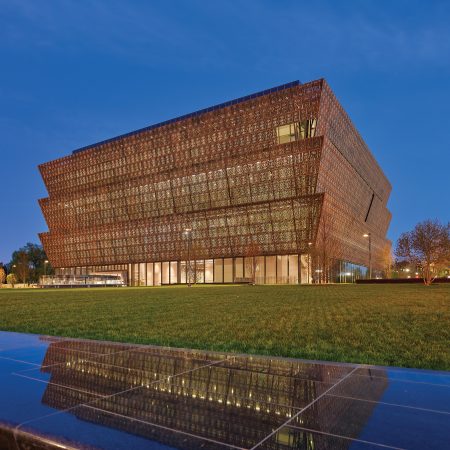
Sometimes, history reaches out to make itself known.
A historic preservationist was going through an old, forgotten truck when she discovered something extraordinary: decades old journals.
As she began to read through them, she realized they held more than family memories, they held the words of her mother’s journey to the United States. The long forgotten journals revealed a surprising connection to one of Detroit’s most famous figures.
During World War II, Albert Kahn, the legendary architect who shaped much of Detroit’s skyline, quietly helped support her family.
One-of-a-kind podcasts from WDET bring you engaging conversations, news you need to know and stories you love to hear. Keep the conversations coming. Please make a gift today.
In this episode of CuriosiD, listener Max Spayde asks the question:
Why is there a boat club and a yacht club on Belle Isle?
The short answer
The two clubs were each founded for different boat-centered sports. The Detroit Boat Club was founded as a rowing club—although many decades ago it developed a “pure” sailing program that’s motorless. And the Detroit Yacht Club was developed as a sailing organization that continued to build on its motor-powered sailing programs.
Belle Isle was an ideal setting for both because of its location on the Detroit River and its connection to the Great Lakes system.
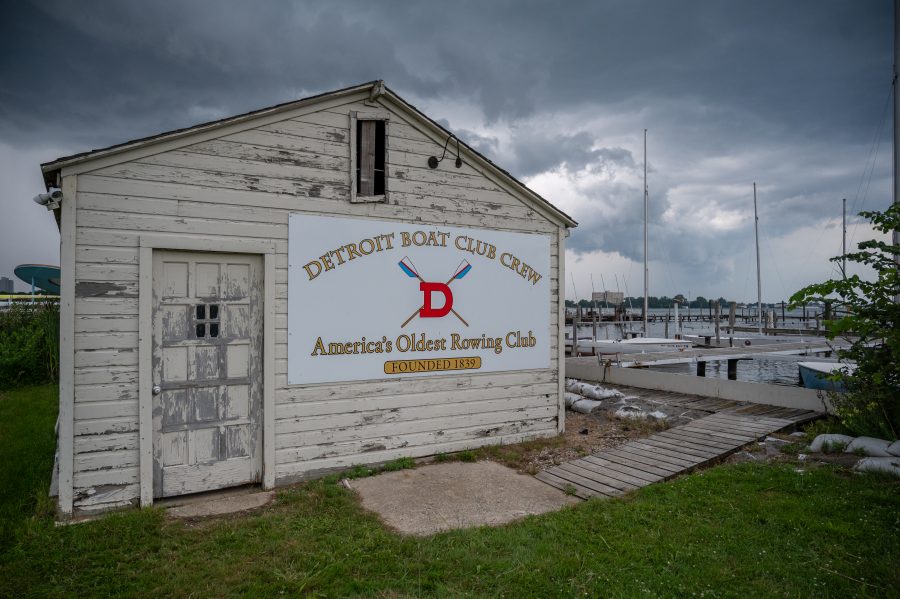
Detroit Boat Club
The Detroit Boat Club was founded in 1839 after Detroit developer Edward Brush fell in love with rowing on a visit to the East Coast. It is the fifth oldest non-academic rowing clubs in the world and the second oldest in the country.
Rowing was the most popular sport in Detroit after the Civil War. There were more than 1,000 rowers in the city by the late 1870s with a boat house district that stretched from St. Aubin to McDougall. Hundreds of thousands of people would come to the river to watch rowing competitions.
Stephen Malboeuf is a rower at the Boat Club, its official archivist and its unofficial historian. He says at that time the sport wasn’t just for the wealthy.
“Both of the stove works—both the Detroit Stove Works and the Michigan Stove Works had boat clubs that were organized by their iron workers,” Malbouef said. “The railroads would have their employees…form boat clubs…and they’d compete in regular regattas.”
But that level of enthusiasm for rowing didn’t actually last that long, Malboeuf said.
“By the 1880s and as early as 1881 the rowers noticed that most of their spectators had abandoned the sport in favor of watching baseball.”
The first professional baseball team was organized in Detroit in 1881.
“In 1879 You’ve got 30 clubs, and by 1893 you’re down to just two,” Malbouef said.
Detroit Yacht Club
The Detroit Yacht Club sets its founding in 1868 and its focus has always been sailing. Its early members are among the most notable names in the city’s history, including the Fords, Dodges, Scripps and Fishers.
Mike Alberts has been a member of the Detroit Yacht Club for over 45 years.
The Yacht Club’s Mike Alberts says the DYC had two or three buildings before its current clubhouse. He says inventor Gar Wood was the commodore when the club built it in 1922 after Wood’s win at the Harmsworth Challenge Regatta in 1920 made him a rock star.
Alberts says even though the Detroit Yacht Club was built by some of the automotive industry’s heavy hitters, boat racing was bigger than car racing in those days. And, he says the DYC was and still is a pioneer in freshwater sailing, power boat racing and competitive swimming.
But why Belle Isle?
In the mid-1880s, when clubs were looking for better positions on the river as it became more industrial, the Detroit Park Commission gave the Detroit Boat Club and the Detroit Yacht Club permission to build on the island.
The clubs are actually not technically on the island. They built the foundations for the buildings next to Belle Isle. And gave them a pretty sweet deal.
“When the Park Commission originally approved the clubs to move to Belle Isle, each club had to furnish a $5,000 bond,” Malbouef said. He said that’s like $125,000 today.
“Then they’d pay an annual lease of $1 a year for property in Belle Isle.”
The one hundred year, one dollar a year leases ended in 1992. Malbouef says the Boat Club went from paying $1 to be on the island to 100,000 dollars overnight.
The Detroit Boat Club is one of the oldest boat clubs in America, and one of the oldest social organizations in Michigan.
Hitting rough waters
The boat club’s membership was around 250 by the 1990s– down from around 1400 in the 60s. It was leasing its building from the city on a month-to-month basis until 2014. When the state took over Belle Isle, the Boat Club got a 30 year lease.
It hosted about 50 weddings a year before COVID – that money went into trying to keep the building in shape. But just after COVID part of a porch collapsed and the building was condemned.
Now, a developer is working to restore the building so rowers, sailors and the community can use it.
That’s just a little bit of the histories of the Detroit Boat Club and the Detroit Yacht Club. We didn’t get into the part where they were sued to let Black members in. And Mike Alberts has a great story about the King of Norway.
But we answered Max Spayde’squestion: There are two clubs because they were originally focused on different sports – and they made a deal with the city that made it possible for them to stay on Belle Isle for at least 100 years.
WDET’s CuriosiD series answers your questions about everything Detroit. Subscribe to CuriosiD on Apple Podcasts, Spotify, NPR.org or wherever you get your podcasts.
We want to hear from you!
Have a question about Southeast Michigan’s history or culture? Send it our way at wdet.org/curious or fill out the form below. You ask, we answer.
Support the podcasts you love.
One-of-a-kind podcasts from WDET bring you engaging conversations, news you need to know and stories you love to hear. Keep the conversations coming. Please make a gift today.
Mid-February through March can be an exciting time across southeast Michigan. With spring being around the corner, people are looking to get out once again and connect with nature. One place to do that is the sugarbush.
The sugarbush is a grove of sugar maples, and the name for an Indigenous practice of harvesting and cooking down sap to make syrup.
For years Indigenous people have used sugarbush as an opportunity gather, practice fellowship, and give back to the land by cleaning the area, removing debris and evasive plants. They utilize the trees for their sap and return the land to the state in which they found it.
A conversation with Rosebud Schneider, a member of the Anishinaabe people, shed light on the community aspect around sugarbush.
“We have a responsibility to protect this land, protect each other. This is one way to do that,” said Schneider. She added that people coming together for sugarbush gives the older generations a chance to teach the younger generations what they know.
Black to the Land echoes Indigenous ethos
Organizations such as Black to The Land and Friends of Rouge Park keep the spirit of this practice going. Antonio Cosome, Black to The Land co-founder, and lead volunteer and organizer Isra Daraiseh, take volunteers through the process of sap collection, boiling and giving back to the land.
Listen: Interview with Black to the Land co-founder Antonio Cosme
Utilizing the teachings of Indigenous elders, they’ve cultivated a sense of community by bringing people out and sharing the practice with them.
Each year they gather to tap maple trees, collect sap, and boil the sap down to produce maple sugar, maple vinegar, and, of course, syrup. Even the runoff during the boil itself gets reused to top deserts such as ice cream. Though it’s labor intensive, there’s a sense of transformation or enlightenment that comes from the practice.
And, the products from the boil-down give meetings a sweet touch in the months to come.
The process of making maple syrup is shown in photos of Black to the Land Coalition’s boil down. Click photos to enlarge. Credit: Isaiah Lopez, WDET
Support local journalism.
WDET strives to cover what’s happening in your community. As a public media institution, we maintain our ability to explore the music and culture of our region through independent support from readers like you. If you value WDET as your source of news, music and conversation, please make a gift today.
After being diagnosed with stage IV colon cancer and being told he’s nearing the end of his life, Dan Austin wants to secure the preservation and advancement of the city he loves. He and his wife found a way to do that with the Austin Past & Future Fund.
Listen: Ann Delisi talks with Dan Austin about starting the Austin Past & Future fund
Austin, 45, is a storyteller who has spent the past 20 years showcasing Detroit’s architecture, music and history. His work on the website Historic Detroit serves as a comprehensive archive of Detroit landmarks. It’s been primarily funded by Austin himself for the last 15 years, with some help from his audience.
The Austin Past & Future Fund allows for Historical Detroit’s archive to live on after he passes. It also provides scholarship funds to help motivated youth receive an education that will help them build up the city.
Eligible students can range from 16 to 26 years of age and apply to a variety of fields. “Whether they want to be a teacher or an urban planner… there are so many ways that you can make Detroit a better place, make a difference here,” says Austin. The amount of funding those students receive, as well as the number of students benefiting, all depends on donations to the Past & Future Fund in the years to come. Scholarships will be available starting in 2027.
Only a small portion of money is needed to keep Historic Detroit online as a resource. All donations to the site since the beginning of March go to the Austin Past & Future fund, and are tax-deductible.
Austin will also be auctioning off his extensive vinyl collection and donating the proceeds to the fund this summer.
“All I’ve ever wanted to do is give back to the city, because the city has given me so much,” said Austin. “So being afforded this opportunity, this vehicle to continue giving back to the city even after I’m gone… It’s more than I could have hoped for.”
WDET strives to cover what’s happening in your community. As a public media institution, we maintain our ability to explore the music and culture of our region through independent support from readers like you. If you value WDET as your source of news, music and conversation, please make a gift today.
The preservation of history doesn’t belong only to institutions, it lives in the hands, voices and memories of everyday people. In Detroit, a new generation of community historians is stepping forward.
Through oral histories, archival research, and creative storytelling, Black Bottom Archives’ Preserving Black Legacy Fellowship, builds living records of Detroit’s footprint. The year-long program trains Black Detroiters to document, preserve, and share the stories rooted in their own neighborhoods.
All of the fellows’ work will culminate in a public exhibit and a festival in 2026 celebrating Black Detroit history.
Lex Draper Garcia Bey is Director of Community Engagement and Programs for Black Bottom Archives.
We begin the conversation talking about “From the Bottom, Up,” an exhibition by Black Bottom Archives on display at the Detroit Historical Society. It’s guided by the principle of Sankofa: “go back and get it.” Its closing ceremony is April 5 at the museum.
Listen to The Metro weekdays from 10 a.m. to noon ET on 101.9 FM and streaming on demand.
One-of-a-kind podcasts from WDET bring you engaging conversations, news you need to know and stories you love to hear. Keep the conversations coming. Please make a gift today.
A Wayne County judge has ruled that Detroit Thermal does not have the legal right to run steam lines across private property in Detroit’s historic Lafayette Park neighborhood, delivering a major victory to residents of the Mies van der Rohe–designed townhome cooperatives.
The Negro Leagues are widely credited with revolutionizing baseball.
The aggressive, scrappy, base-stealing style of play was an attraction for fans of all backgrounds. The league’s founder, Rube Foster, was largely responsible for introducing that mentality and bringing the league to its early success. After Foster passed in 1930, the league continued to innovate for nearly two decades. During that time, the league pioneered night games, fielded some of sports greatest players and broke the color barrier.
Bob Kendrick, the President of the Negro Leagues Baseball Museum in Kansas City, Missouri, joined the show and details the Negro league’s lasting legacy in baseball, in sports and in American culture.
Listen to The Metro weekdays from 10 a.m. to noon ET on 101.9 FM and streaming on demand.
WDET strives to cover what’s happening in your community. As a public media institution, we maintain our ability to explore the music and culture of our region through independent support from readers like you. If you value WDET as your source of news, music and conversation, please make a gift today.
Malcolm X was a leader during the Civil Rights Movement known for his more radical approach to advancing Black Americans rights. But he was also a young man that grew up in Michigan, known as Detroit Red.
Though most only recognize “Malcolm X,” he went by several names throughout his life. His birth name is Malcolm Little, which progressed to Malcolm X. He ended his life as El-Hajj Malik El-Shabazz.
Who was Detroit Red and how did his name change reflect his personal transformation?
Dr. Tareq A. Ramadan teaches anthropology and near eastern studies at Wayne State University.
Dr. Tareq A. Ramadan is an anthropologist, historic preservationist, and interdisciplinary adjunct professor of Anthropology and Near Eastern Studies at Wayne State University and at Henry Ford College. He’s also the co-founder of The Malcolm X House Historic Preservation Project along side Aaron Sims.
This month, Ramadan will take part in The Black Cannon’s program “Martin and Malcolm” where they will discuss the lives and legacies of Malcolm X and Martin Luther King Jr.
Tareq joined The Metro’s Tia Graham to discuss how Detroit Red became Malcolm X.
Listen to The Metro weekdays from 10 a.m. to noon ET on 101.9 FM and streaming on demand.
WDET strives to cover what’s happening in your community. As a public media institution, we maintain our ability to explore the music and culture of our region through independent support from readers like you. If you value WDET as your source of news, music and conversation, please make a gift today.
For more than a century in the United States, Native children were forcibly removed from their families and sent to boarding schools. Designed to strip students of their languages, cultures, and identities, the schools were created through federal policy, supported by state governments, and often operated by religious institutions.
In Michigan, this system lasted longer than many people realize, with some open into the late 20th century.
There have been some moves to reconcile this, what many consider a genocidal policy of assimilation.
Leora Tadgerson’s work is pushing Michigan toward a reckoning led by Tribal nations. A citizen of Gnoozhikaaning, Bay Mills, and Wiikwemkong First Nations, Tadgerson is director of Reparations and Justice for the Episcopal Diocese of Northern Michigan. She also co-chairs the national Truth, Justice, and Healing Commission on Native Boarding Schools for The Episcopal Church.
Leora Tadgerson
She joined Robyn Vincent on The Metro to discuss the history and lasting impacts of Native American boarding schools in Michigan and what justice and healing looks like.
Listen to The Metro weekdays from 10 a.m. to noon ET on 101.9 FM and streaming on demand.
WDET strives to make our journalism accessible to everyone. As a public media institution, we maintain our journalistic integrity through independent support from readers like you. If you value WDET as your source of news, music and conversation, please make a gift today.
In this episode of CuriosiD, listener Leah Warshaw asks the question:
“How did The Old Miami get its name?”
The short answer
The first Miami on Cass was the Miami Lounge, which opened in 1947. As the neighborhood took a turn for the worse in the 60s, the bar became the site of murder, prostitution, and other crimes that marred its reputation.
The bar switched owners several times but kept “Miami” in the name, for the most part. Shortly after The New Miami was burned down, veteran Danny Overstreet opened The Old Miami, with “Miami” standing for “missing in action Michigan”. Though it started as a place to serve veterans, it’s an inviting dive for everyone in the neighborhood today, with gems like a koi pond in its expansive backyard.
Danny’s wife, Julie, credits the use of “old” to Danny’s sense of humor. She runs the bar today.
Manager Dena Walker adds, “I mean what would you call it—the New New Miami?”
For more details on the history of The Old Miami and what to expect from today’s laid-back atmosphere, listen to the podcast above.
WDET’s CuriosiD series answers your questions about everything Detroit. Subscribe to CuriosiD on Apple Podcasts, Spotify, NPR.org or wherever you get your podcasts.
We want to hear from you!
Have a question about Southeast Michigan’s history or culture? Send it our way at wdet.org/curious or fill out the form below. You ask, we answer.
Support the podcasts you love.
One-of-a-kind podcasts from WDET bring you engaging conversations, news you need to know and stories you love to hear. Keep the conversations coming. Please make a gift today.
Dr. Marita Gilbert The Associate Dean of Osteopathic Engagement & Community Practice at Michigan State University
This year the guest speakers are Dr. Jelani Cobb, the dean of the Graduate School of Journalism at Columbia University in New York, Bob Kendrick, the president of the Negro Leagues Baseball Museum (NLBM) and Mary Ann Pettway and China Pettway of Gee’s Bend Quilting Collective.
Dr. Marita Gilbert is the Associate Dean of Osteopathic Engagement & Community Practice at Michigan State University. She leads the lecture series. Dr. Gilbert joined The Metro to talk about the lectures this year, and the big question of who really influences history.
Listen to The Metro weekdays from 10 a.m. to noon ET on 101.9 FM and streaming on demand.
WDET strives to cover what’s happening in your community. As a public media institution, we maintain our ability to explore the music and culture of our region through independent support from readers like you. If you value WDET as your source of news, music and conversation, please make a gift today.
Women have been at the forefront of civil rights and human rights movements throughout history. Yet, their stories are left untold and forgotten.
Dr. Keisha N. Blain is a historian, speaker, advocate, and social justice activist who is a best-selling author. She is a professor of Africana studies at Brown University. Her most recent book “Without Fear: Black Women and the Making of Human Rights” takes a historical look back at various civil rights movements and the Black women behind the scenes who created global change.
Dr. Blain spoke at Wayne State University as part of the university’s annual Rev. Martin Luther King Jr. commemoration. She joined The Metro to talk about the women who helped progress human rights, often leading to systemic change.
Listen to The Metro weekdays from 10 a.m. to noon ET on 101.9 FM and streaming on demand.
WDET strives to make our journalism accessible to everyone. As a public media institution, we maintain our journalistic integrity through independent support from readers like you. If you value WDET as your source of news, music and conversation, please make a gift today.
The Trump administration wants American museums to be less critical of the nation’s history.
Yesterday, the Smithsonian Institution submitted documents about upcoming exhibitions and programming to the White House for a review of “improper ideology.”
What the president does next remains to be seen, but the effort to censor and rewrite history and culture raises important questions about American culture and history.
Listen to The Metro weekdays from 10 a.m. to noon ET on 101.9 FM and streaming on demand.
Trusted, accurate, up-to-date.
WDET strives to make our journalism accessible to everyone. As a public media institution, we maintain our journalistic integrity through independent support from readers like you. If you value WDET as your source of news, music and conversation, please make a gift today.
Like many of those who will recall memories of David Rambeau in the wake of the recent memorial, I remember my first days with him and so many subsequent unforgettable moments. A fresh one came to mind when I learned he had joined the ancestors on November the first, a birthday I share with my […]
The music landscape has changed a lot since the turn of the 21st century. Not just styles, but how we consume music. Nothing illustrates that better than the rise of the indie music scene.
DeVille talks with WDET’s Russ McNamara. Click on the link to listen or read selected excepts below.
Listen: New book looks at ’00s indie rock explosion
The following interview has been edited for length and clarity.
RM: So why write this book?
DeVille: There’s many different sort of through lines that are being traced here. One of them is technology. It’s a subject that I think is really complex and really fascinating, and it involves a lot of my favorite music ever.
This stuff that has been kind of chronicled and debated online for years in blog posts and social media posts and a lot of the documentation of it is starting to disappear, because websites just go offline, or people delete their social media accounts. And so I wanted to create a little bit more permanent record of some of these things that happened—some of the ways that these bands broke through, some of the conversations that were being had around this music.
One reviewer compared it to like a yearbook that you look back at and you get some fond memories, and you get some cringe, but yeah, it’s kind of like a history of my listening as an adult.
Russ McNamara, WDET: In the book, you mention the TV show ‘The OC’ which was a popular teen soap opera in the early ’00s. How much did that show’s soundtrack play into the rise in indie rock?
Chris DeVille, author of “Such Great Heights”: I was surprised as I was writing the book, how much it became like a shadow history of the evolution of the Internet over the last couple of decades. And you know The OC thing, it’s like they’re putting these bands in front of a much bigger audience. Like Death Cab for Cutie is like a fairly obscure band at the time, and then this character on this popular teen show is like making his whole personality that he loves Death Cab for Cutie.
Stereogum Managing Editor Chris DeVille
It’s like giant platform, but then they lose cool points with some people, as you know, sort of a more norm-y audience discovers this band, but it’s definitely, there’s no doubt that it was a huge like funnel, bringing a bunch of bands to a much broader audience
RM: What about the added accessibility of file sharing sites like Limewire and Napster?
CD: Whatever platform you were using to pirate music I think contributed to the accessibility of stuff. Stuff could blow up, even if it didn’t fit into a particular radio format, or it wasn’t getting past the MTV gatekeepers. It didn’t have to fit into any existing niche or existing format to blow up. It could just catch fire and go viral on these file sharing servers.
I mean, the same thing was still true when iTunes came in and kind of formalized and commercialized the process. You could still have a song that people would download it like crazy.
RM: Which indie bands benefitted the most from this setup in the early 00’s?
CD:Arcade Fire was definitely the biggest. The other dimension that I talk a lot about in the book, is Pitchfork. And just like the power that Pitchfork had to make or break someone’s career. If they gave something a 10.0 people were just going to jump on it and worship it. And if they kind of talked smack about a particular band or completely panned a band, then there were instances where that basically ended someone’s commercial prospects. And so like Arcade Fire were like the perfect storm.
RM: So where is indie rock at now? Is it dead? Does the genre really mean anything anymore?
CD: Over time, indie became like more of a genre, and then the genre itself started to change. But I think what we saw happen in the 2010s is sort of like the indie goes pop thing. It was like a bubble, and it really did pop. We still have these sort of like boutique pop stars like Clairo.
We had artists that came out of the indie world become pop stars of a sort because of stuff like Tiktok. Like Mitski is a good example of that where she’s coming from, from the indie rock infrastructure, and she is making music that jumps across genres a little bit.
There’s a hunger for bands that have a little bit more of an edge to them, that are a little bit less smooth, a little bit willing to be weird or noisy. That’s what you see with a lot of the biggest indie bands today – ones that have gone against that sort of, like Spotify-friendly, passive-listening experience. There’s now a hunger for music that’s a bit more abrasive, something that will jolt people out of their stupor.
Music wants to evolve. It wants to find new audiences. And so the whole idea of like, gatekeeping and having the right audience versus the wrong audience, like, that’s something that factors into the book too.
Support local journalism.
WDET strives to cover what’s happening in your community. As a public media institution, we maintain our ability to explore the music and culture of our region through independent support from readers like you. If you value WDET as your source of news, music and conversation, please make a gift today.
Over the holidays…we’re sharing some of the stories Detroit Evening Report hosts produced for the radio. Today…we hear a story from Nargis Rahman.
The state health department hoped to register 500 doulas in its doula registry by 2028. This fall, it had more than a thousand. That includes doulas across the state with various specialties and most are able to accept payment through Medicaid.
Nargis spoke to Dawn Shanafelt the Director of Maternal and Infant Health for the Department of Health and Human Services about the registry and efforts to export birthing assistance services in Michigan.
Outro: This is just part of Nargis Rahman’s interview with Dawn Shanafelt from the Department of Health and Human Services. You can her the full story at wdet.org.
The city’s 30 foot tall Kwanzaa Kinara join Detroit’s official Hannukah Menorah and Christmas tree in Campus Martius Friday, Dec. 26. This first day of Kwanzaa celebrates the principle Umoja or Unity.
If you missed the City’s Kinara lighting, there are Kwanzaa celebrations throughout the city until the holiday ends on New Year’s Day. The Redford Branch of the Detroit Public Library has festivities tomorrow, including arts & crafts and African dance and drumming.
For more information visit detroitpubliclibrary.org/events.
The Charles H Wright Museum of African American History will host Kwanzaa events through Monday. Festivities include performances, speakers, family-friendly activities, a vendor marketplace and candle lightings.
Each day’s schedule is a little different. Visit thewright.com/events/kwanzaa for more information.
Source Booksellers is hosting a virtual celebration of cooperative economics on the 29th with author Ben Passmore, who will talk about his book “Black Arms to Hold You Up: A History of Black Resistance.”
The event is at 5pm. To register look for Source Booksellers on Eventbrite.
Listen to the latest episode of the “Detroit Evening Report” on Apple Podcasts, Spotify, NPR.org or wherever you get your podcasts.
Support the podcasts you love.
One-of-a-kind podcasts from WDET bring you engaging conversations, news you need to know and stories you love to hear. Keep the conversations coming. Please make a gift today.
An area of very old trees at Independence Oaks County Park has been recognized as part of a national network of old-growth forests, drawing attention to both rare natural features and thousands of years of human history tied to the land.
Carol Bacak-Egbo is an Oakland County Parks historian. She says the newly designated old-growth forest lies within a landscape shaped by Indigenous peoples for 5,000 to 6,000 years. The park sits near historic Native American trail routes, and contains the headwaters of the Clinton River, once a major travel route for the Anishinaabe across what is now southeast Michigan.
“This history doesn’t start with log cabins and sawmills,” Bacak-Egbo says. “People lived with and cared for this land long before Europeans arrived.”
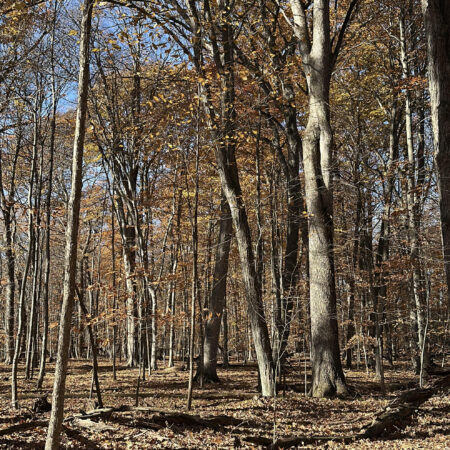
Even in winter, Independence Oaks’ old-growth trees tower above the landscape. (Photo by Amanda LeClaire, WDET News)
Artifacts indicate the area was likely used as seasonal camps rather than permanent villages. The park also contains one of only two remaining wild rice beds in southeast Michigan, a culturally and spiritually significant food source for the Anishinaabe.
The forest largely escaped widespread logging and farming in the 19th century, almost by accident.
In the early 1900s, a wealthy Detroit businessman purchased land around Crooked Lake but left it undeveloped. Later owners also did not farm the southern portion of the property, allowing the old-growth trees to remain intact.
Park naturalist Kegan Schildberg says the designation supports efforts to protect remaining natural areas in Oakland County, which has developed rapidly during the last century.
Bacak-Egbo encourages visitors to view parks as places where natural and human history intersect.
“When people walk these trails, they aren’t just connecting with nature,” says Bacak-Egbo. “They are walking through the same forest people walked through hundreds and even thousands of years ago.”
WDET strives to make our journalism accessible to everyone. As a public media institution, we maintain our journalistic integrity through independent support from readers like you. If you value WDET as your source of news, music and conversation, please make a gift today.
The first floor of the historic Leland House in downtown Detroit felt as cold as the street outside. That’s where Dianne Lamb stood on a recent morning, bundled in a hooded winter coat, her breath visible in the unheated air. She’d slept two hours and was worn out from packing. For the past 12 years, […]

 Login
Login














 Leora Tadgerson