Reading view

There are new articles available, click to refresh the page.

Detroit Evening Report: Sheffield’s State of the City address prioritizes affordability, bringing business to city

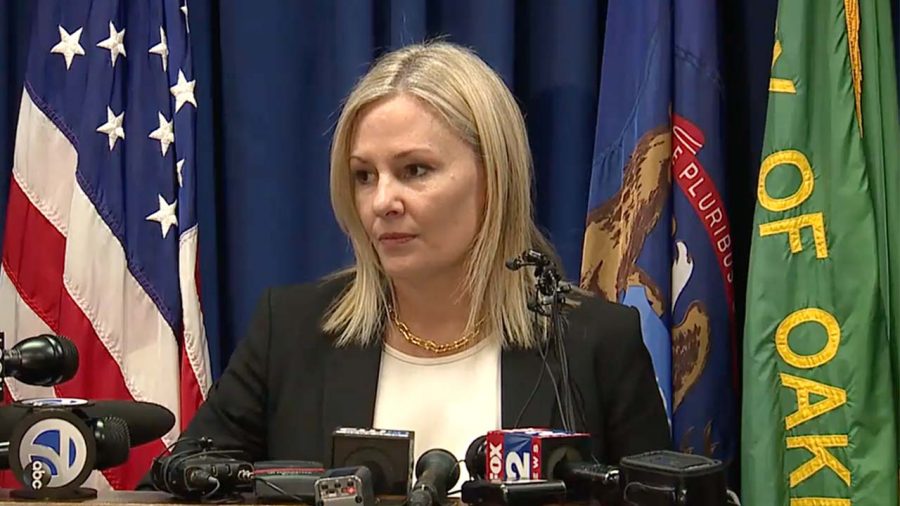
Detroit Mayor Mary Sheffield gave her first state of the city address last night at Mumford High School.

She announced a new program starting today for Detroit Public Schools students. “Any K-12 student in the city can ride the bus for free, seven days a week, 365 days a year.” Sheffield said some of the school budget money for bus fare will be rerouted into after-school programs. 

And she announced a plan to lure businesses to economic corridors in the city, with a new position: the Director of Retail Attraction. 

“For too long, the city has waited for retailers to come to them. My administration will go out and compete for that investment, because strong neighborhoods need more than housing and infrastructure. They need vibrant commercial corridors where people can shop, work and gather close to home.” 

Sheffield also said she was working with billionaire Dan Gilbert and the Move Detroit Coalition to entice more people to move to the city. “Our first program will support 313 current and future Detroiters with real resources, $15,000 to support home ownership and business growth, and $1,000 in relocation assistance to make it easier to come home to Detroit.” 

The mayor also highlighted some of the things she’s already done since taking office, such as raising the minimum wage for city workers, and bringing the program Rx Kids to the city to help new mothers. 

Additional headlines from Wednesday, April 1, 2026

New personal finance education initiative

The Michigan Treasury Department is kicking of a new initiative today called Mi Money Matters Financial Empowerment.

According to the Treasury department, nearly 80% of metro Detroiters earning below 125,000 report never receiving formal education in personal finance. Roughly 25% of Detroiters do not have access to a bank.

The initiative includes a website that links to free tools and courses on credit, banking, and student loans. 

Neighborhood Enterprise Zone tax

Detroit City Council debated the value of Neighborhood Enterprise Zone tax incentives yesterday, questioning whether they are a useful tool for relieving the tax burden on residents.

NEZ tax incentives cap the city and county millage rate at 50%. Under the current structure, a $300,000 home would be taxed $6,000; in the suburbs, the same home’s taxes would be less than $2,000.

Councilmember Scott Benson says the city needs to be competitive with neighboring cities, which the NEZ does by lowering taxes—even if they aren’t as low as a suburb’s. 

Listen to the latest episode of the “Detroit Evening Report” on Apple Podcasts, Spotify, NPR.org or wherever you get your podcasts.

Support local journalism.

WDET strives to cover what’s happening in your community. As a public media institution, we maintain our ability to explore the music and culture of our region through independent support from readers like you. If you value WDET as your source of news, music and conversation, please make a gift today.

The post Detroit Evening Report: Sheffield’s State of the City address prioritizes affordability, bringing business to city appeared first on WDET 101.9 FM.

The Metro: Ann Arbor’s bid to dump DTE and go public

If you live in southeast Michigan, chances are you have a DTE story — the kind where your food spoiled during an outage, your pipes froze while you waited for power, or the number on your energy bill last month spurred disbelief.

The data backs up that frustration. According to a report from the Citizens Utility Board of Michigan, the state ranked last in 2023 for average time to restore power after an outage, taking roughly 12 hours per incident —more than double that of any neighboring state.

Energy rates, meanwhile, continue to climb. DTE Energy has filed four rate increase requests with the Michigan Public Service Commission in five years. In 2024, the company cut power to approximately 150,000 customers for nonpayment, according to a report from the Center for Biological Diversity. That same year, DTE paid more than $607 million in dividends to shareholders while its profits surged 41%.

Now, a grassroots effort in Ann Arbor is trying to change the equation.

The group Ann Arbor for Public Power has launched a petition drive to put a question on the November 2026 ballot: whether to establish a governing board for a future city-owned electric utility. The group needs approximately 6,500 signatures to qualify for the ballot.

What happens next

If approved by voters, the measure would not immediately purchase DTE’s infrastructure. Instead, it would create a nine-member public utility board to lay the groundwork for an eventual transition away from the investor-owned utility. A separate vote would be required in the future to authorize the actual acquisition of DTE’s poles and wires.

Michigan already has roughly 40 municipal utilities in cities like Lansing, Traverse City, Holland, and Wyandotte. But none of them were formed by acquiring infrastructure from a private utility. Ann Arbor would be the first city in the state to attempt it. Organizers believe success there could open the door for other Michigan cities, including Detroit, to follow.

Sean Higgins, president of Ann Arbor for Public Power, joined Robyn Vincent on The Metro to discuss why his group believes public ownership is the path to cleaner, cheaper, and more reliable energy for Ann Arbor residents.

DTE Energy has not responded to WDET’s request for comment about this effort.

Hear the full conversation using the media player above.


Listen to The Metro weekdays from 10 a.m. to noon ET on 101.9 FM and streaming on demand.

Subscribe to The Metro on Apple Podcasts, Spotify, NPR.org or wherever you get your podcasts.

Support local journalism.

WDET strives to cover what’s happening in your community. As a public media institution, we maintain our ability to explore the music and culture of our region through independent support from readers like you. If you value WDET as your source of news, music and conversation, please make a gift today.

More stories from The Metro

The post The Metro: Ann Arbor’s bid to dump DTE and go public appeared first on WDET 101.9 FM.

The Metro: A 93-year-old pipe flooded Southwest Detroit. Now GLWA wants historic rate hike

The price of water has been steadily rising in Southeast Michigan. Now, one of the steepest rate increases in the Great Lakes Water Authority’s decade-long history is up for a vote.

GLWA is proposing roughly a 7% water rate hike and a 6% sewer rate hike for the fiscal year starting July 1 — the second straight year exceeding the 4% cap the authority held for its first decade. GLWA says the money is needed to replace aging infrastructure: 83.6 miles of transmission main are past their useful life, and the system is largely funded by ratepayers.

At the authority’s January board meeting, residents pushed back. A GLWA representative acknowledged that 155,000 Detroiters are already enrolled in water assistance programs, roughly one in four residents.

Noah Kincade, who leads Detroit Documenters for Outlier Media, joined Robyn Vincent to break down what’s driving the increase, how rates are set, and what residents can do.

Listen to the full conversation above.

How to get involved

Residents can contact state lawmakers about Senate Bills 248–256, which address water affordability, or call We the People of Detroit’s water hotline at 1-844-429-2837. The GLWA board holds its public hearing and vote on Feb. 25 at the Water Board Building (735 Randolph St., Detroit) and via Zoom. Last year, public testimony led the board to reduce its proposed hike before the final vote.

Listen to The Metro weekdays from 10 a.m. to noon ET on 101.9 FM and streaming on demand.

Subscribe to The Metro on Apple Podcasts, Spotify, NPR.org or wherever you get your podcasts.

Trusted, accurate, up-to-date.

WDET strives to make our journalism accessible to everyone. As a public media institution, we maintain our journalistic integrity through independent support from readers like you. If you value WDET as your source of news, music and conversation, please make a gift today.

Donate today »

More stories from The Metro

The post The Metro: A 93-year-old pipe flooded Southwest Detroit. Now GLWA wants historic rate hike appeared first on WDET 101.9 FM.
The Metro: Could a free market ease Michigan’s affordability crisis?

Affordability. That’s the word that’s been buzzing around politics. 

In November, Democrats across the country won on the promise of reducing the cost of living. 

But it’s not just liberals that are embracing an “affordability agenda.” Conservatives and libertarians are latching on as well. 

Jarrett Skorup is the vice president of marketing and communications at the Mackinac Center for Public Policy, which appreciates the free market and criticizes government regulation. 

In this conversation, The Metro‘s Sam Corey spoke with him about why he thinks unregulated capitalism can help free people from the burden of rising costs.

Listen to The Metro weekdays from 10 a.m. to noon ET on 101.9 FM and streaming on demand.

Subscribe to The Metro on Apple Podcasts, Spotify, NPR.org or wherever you get your podcasts.

Trusted, accurate, up-to-date.

WDET strives to make our journalism accessible to everyone. As a public media institution, we maintain our journalistic integrity through independent support from readers like you. If you value WDET as your source of news, music and conversation, please make a gift today.

Donate today »

More stories from The Metro

The post The Metro: Could a free market ease Michigan’s affordability crisis? appeared first on WDET 101.9 FM.

The Metro: The liberal politicians enacting an affordability agenda

To counter President Donald Trump’s agenda, liberals aren’t discussing democracy. They’re talking about the issue of affordability.

Last year, Congressional Democrats fought a previous budget bill on the grounds that peoples’ healthcare costs would rise if it passed. In November, Democrats ran across the country — and won — on reducing the cost of living. Last month, Senate Democratic Leader Chuck Schumer unveiled a plan to make America more affordable. 

But what, exactly, is an affordability agenda? And how are politicians trying to resolve the affordability crisis?

EJ Dionne is a New York Times opinion writer, a professor at Georgetown University, and a senior fellow at the Brookings Institution. He joined Robyn Vincent to discuss.


Listen to The Metro weekdays from 10 a.m. to noon ET on 101.9 FM and streaming on demand.

Subscribe to The Metro on Apple Podcasts, Spotify, NPR.org or wherever you get your podcasts.

Trusted, accurate, up-to-date.

WDET strives to make our journalism accessible to everyone. As a public media institution, we maintain our journalistic integrity through independent support from readers like you. If you value WDET as your source of news, music and conversation, please make a gift today.

Donate today »

More stories from The Metro

The post The Metro: The liberal politicians enacting an affordability agenda appeared first on WDET 101.9 FM.

❌