Reading view

There are new articles available, click to refresh the page.

The Metro: Can interfaith conversations bring Muslim and Jewish communities together?

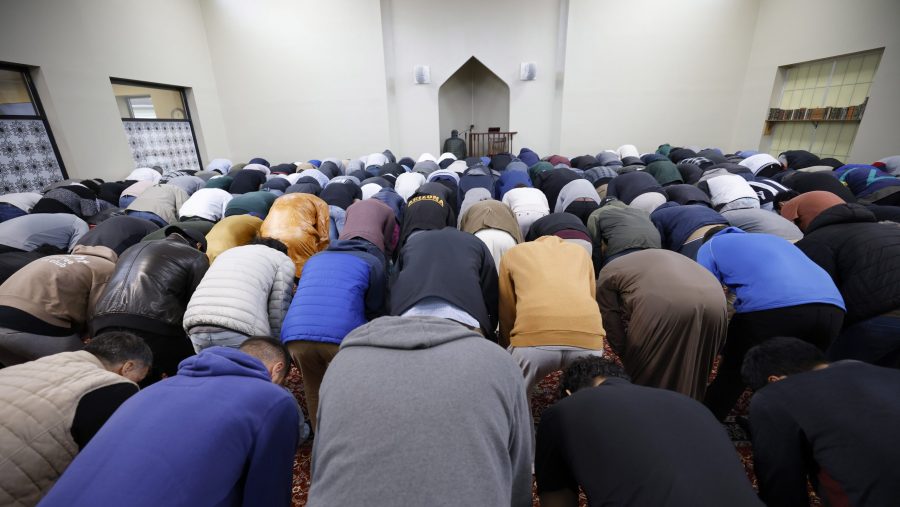
It’s an intense time of political polarization in the United States. With wars taking place across the Middle East and Arab World, many Jewish and Muslim Americans are feeling those tensions especially strong.

Reports of antisemitism and islamophobia are on the rise, including a recent attack on Temple Israel in West Bloomfield by a man who had family members killed in an Israeli airstrike on Lebanon.

Just yesterday, Rabbi Aaron Bergman of Adat Shalom told The Metro his temple has pretty much stopped its interfaith dialogue work.

Interfaith groups that include Jewish, Muslim and Christian community leaders are present in metro Detroit and the United States, but how effective are they? How do you talk about hard things during tense, divisive times?

Ben Ginsburg is part of an organization with a response to those questions. He’s the communications director for NewGround, which is a Muslim-Jewish interfaith group in Los Angeles. He spoke with Sam Corey on The Metro about how to have difficult conversations in divisive times.

Listen to The Metro weekdays from 10 a.m. to noon ET on 101.9 FM and streaming on demand.

Subscribe to The Metro on Apple Podcasts, Spotify, NPR.org or wherever you get your podcasts.

Support the podcasts you love.

One-of-a-kind podcasts from WDET bring you engaging conversations, news you need to know and stories you love to hear. Keep the conversations coming. Please make a gift today.

More stories from The Metro

The post The Metro: Can interfaith conversations bring Muslim and Jewish communities together? appeared first on WDET 101.9 FM.

The Metro: Why several liberal initiatives failed to reach the 2026 ballot

Michigan, like the rest of the country, has faced polarizing political winds. Because of all the disagreement, fewer policies are making it through the state legislature. 

But that doesn’t mean political change isn’t possible in the state. A major vehicle for policy change has been ballot initiatives. Cannabis legalization, the end of gerrymandering, and the expansion of reproductive freedoms all were passed by ballot initiative over the last 8 years. 

And that leaves a pressing question now: Why have so many ballot initiatives from the left failed to make it to the ballot this year? Already, the initiative for ranked choice voting, an effort to tax rich people to fund Michigan schools, and a campaign to create one minimum wage for Michiganders all failed to make it on the 2026 ballot.  

Why? And, what does this say about the state of liberals and the Democratic Party in Michigan?

Colin Jackson is a Capitol reporter for the Michigan Public Radio Network. He spoke about this with The Metro‘s Robyn Vincent.

Listen to The Metro weekdays from 10 a.m. to noon ET on 101.9 FM and streaming on demand.

Subscribe to The Metro on Apple Podcasts, Spotify, NPR.org or wherever you get your podcasts.

Support the podcasts you love.

One-of-a-kind podcasts from WDET bring you engaging conversations, news you need to know and stories you love to hear. Keep the conversations coming. Please make a gift today.

More stories from The Metro

The post The Metro: Why several liberal initiatives failed to reach the 2026 ballot appeared first on WDET 101.9 FM.

❌