Reading view

There are new articles available, click to refresh the page.

JD Vance makes stop in Auburn Hills

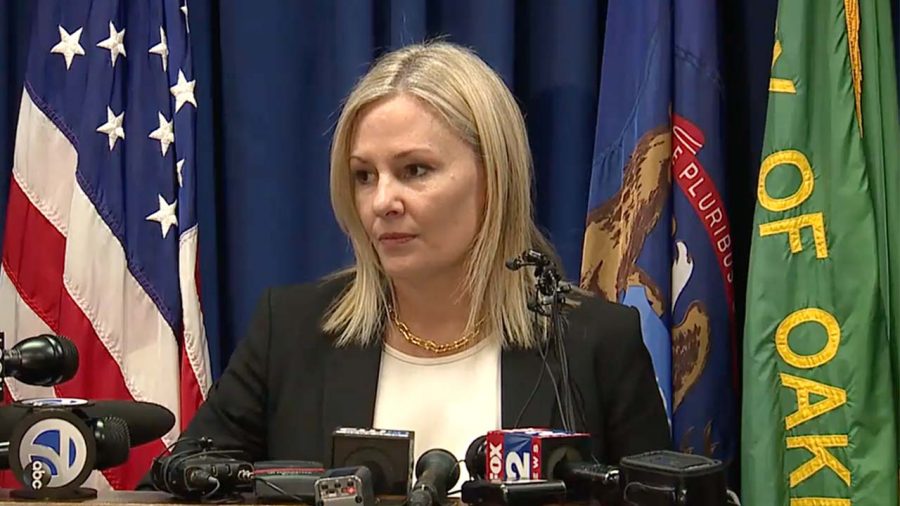
Vice President JD Vance made a stop at a robotics manufacturing plant in Auburn Hills this week.  The visit was mainly focused on promoting Republican policies ahead of this year’s midterm elections.

The vice president spent most of time touting the administration’s economic policies, which Vance claims have been good for job growth. The most recent report from the Bureau of Labor statistics shows a loss of 92,000 jobs in February. 

He made little reference to the ongoing war in Iran during his prepared remarks. When asked by reporters about oil prices, Vance acknowledged they are up.

“I will say,” says Vance. “the president said this and I certainly agree with it, this is a temporary blip.”

Vance promised the crowd gasoline costs would come back down once the U.S., quote, “finishes taking care of business” in the Middle East. He did not say when that would be.

It was his first visit to the state since last week’s attack on the Temple Israel synagogue, which took place about 30 minutes away from where the vice president was speaking. Vance says he and the president stand with Michigan’s Jewish community.

“We love you,” says Vance, “and we’re proud of how you’ve handled this particular situation because it is tough.”

The suspect, 41-year-old Ayman Mohamad Ghazali — a naturalized U-S citizen from Lebanon — took his own life during the attack. Vance praised the work of security guards at Temple Israel.

He reassured the crowd that the U.S. government is constantly monitoring to try to stop such attacks before they happen.

Trusted, accurate, up-to-date.

WDET strives to make our journalism accessible to everyone. As a public media institution, we maintain our journalistic integrity through independent support from readers like you. If you value WDET as your source of news, music and conversation, please make a gift today.

Donate today »

The post JD Vance makes stop in Auburn Hills appeared first on WDET 101.9 FM.

SCOTUS tariff ruling extends uncertainty for Detroit automakers

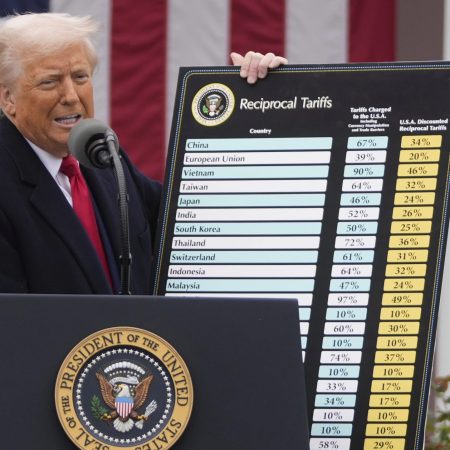
President Trump lashed out at the U.S. Supreme Court after it ruled his use of certain tariffs was illegal.

Trump noted he had other options, including blocking all trade with other nations.

“I can destroy the trade. I can destroy the country,” the president said. “I’m even allowed to impose a foreign country-destroying embargo. I can embargo. I can do anything I want. But I can’t charge $1.”

Trump later said he would impose a new global 15% tariff, though it initially began at 10%.

Congress would have to extend the tariff in about five months. The president could potentially get around that provision by announcing a new round of levies at that time.

Many businesses are weighing the impact of the tariff upheaval, including Detroit’s Big 3 automakers.

The head of the trade association MichAuto, Glenn Stevens, Jr., says car companies had anticipated the High Court’s decision.

Listen: SCOTUS tariff ruling extends uncertainty for Detroit automakers

The following interview has been edited for clarity and length. 

Glenn Stevens, Jr.: It was pretty much assumed that the justices would rule this way based on some of the preliminary arguments. We also felt that there would be a response from the administration that they might use additional or new tools if the Supreme Court ruled this way. And we have seen the president state that. I think it does reaffirm the power of Congress according to the U.S. Constitution, in the case of this particular act. But it leaves a lot of uncertainty with our industries and in our economy.

Quinn Klinefelter, WDET News: The High Court ruled on the reciprocal tariffs on other countries. But they’re still allowing levies imposed ostensibly to protect national security. The 25% tariffs on imported vehicles and auto parts still stands, except for imports covered under the North American trade deal. So, how do you see the Supreme Court decision affecting the auto industry in particular?

GS: It affects a portion of it. But not by any stretch all of the tariffs and trade deals that have been put in place since Jan. 20 of last year when the America First Trade Policy Act was issued. Yes, the national security tariffs remain in place. The unfair trade practice tariffs remain in place. Those are very tied heavily to China. Those are significant. But anything that did deal with this Emergency Powers Act has been struck down now.

What happens from here, we don’t know. There will be court challenges. The question of whether companies will be able to get a rebate, so to speak, on what they paid, there was no direction from the court on that. So, again, we have a lot of uncertainty moving forward. And then we have a new wild card, which we anticipated, where the president said that he’d use fair trade and anti-dumping subsidy tariffs. And there’s a whole process for that.

QK: And how would that affect the auto industry?

GS: It’s such a complex supply chain. It depends on where the vehicles are assembled. It depends on what is the country of origin where the components come from. For example, a lot of the parts and the components are still exempt on this continent under the current USMCA agreement. But if you’re importing parts from other countries outside of that agreement, it does impact you, the 25% on imported vehicles does apply. So it’s actually quite complex and has been for some time. And this may muddle it up a little bit more.

QK: The trade deal between the US, Mexico, and Canada was coming up for review this year. It’s vital for automakers in particular, considering the cross-pollination of parts and vehicles between the three countries. But with this new Supreme Court decision, do you think the president may have a lot less leverage to push for a new USMCA deal that he would like?

GS: I’m not so sure about the less leverage. What I do know is our organization and many others that are related to the industry, we remain steadfast that we need to get to a renewed and strengthened USMCA agreement. We are stronger together with Canada and Mexico in the current supply chain.

Are modifications and some things needed to be adjusted? Yes. Where that goes, we’re not sure. Discussions are at a bit of a stalemate. But we have quite a bit of runway yet up to July 1st with regards to that.

QK: Canada reached a deal recently with China to sell some Chinese vehicles in that country. The Ford Motor Company has talked about perhaps trying to set up their own deal with Chinese automakers. General Motors has said they did not want that type of a thing. In light of what’s happened with tariffs now, how do you think all that might play out?

GS: Let’s look at the Canada situation first. Prime Minister Carney has a tentative agreement with China to import a small quantity, a very controlled number, of electric vehicles. That was a significant development that has drawn some criticism from the White House. It may complicate things. Again, I underscore that it’s tentative. There are a lot of other things going on with regards to trade and we’re not really certain where this is going right now.

QK: Some automotive analysts have forecast that the impact of tariffs would force car companies to raise prices on new vehicles this year. Now we have this Supreme Court decision. Even if it only affects the auto industry to an extent, as you said, it does not totally rid it of any of the difficulties companies might suffer from having tariffs. So where do you see it going now in terms of potential price increases?

GS: That’s hard to say. It’s probably not going to impact things too directly. At this point, most of the companies have absorbed as much of the increases they can within their supply chains. Affordability of vehicles is an issue. The average in our country is about $50,000 for a new vehicle. That’s a high number. Anyone who sells, distributes, or makes vehicles in this country is very hesitant to raise those prices any further. We have seen some creep.

We’ve seen some certain charges increase, like destination charges on the delivery of a vehicle, and that’s been one way the extra cost has been passed through. But there haven’t been significant increases. Most of the time in any type of consumer product, when prices go up, they don’t tend to come down too quickly. So that’s not good for the consumer.

QK: One of the things you’ve mentioned several times is the uncertainty of the situation. I’ve heard many business executives over the last year or so complain that one of the hardest things about tariffs is the uncertainty they create for people trying to make a business plan. Now we also have this Supreme Court ruling. In your view, is this making it even more uncertain now?

GS: It could, yes. The key words the in last year have been instability and uncertainty. If you apply those two words to just about anything, they’re not good. Especially if you apply them to the automotive industry. It is a long lead time, complex supply chain business that requires stability and certainty to make capital decisions, to look at its workforce, to look at supply chains. We do have new tariffs now. That doesn’t give stability and certainty.

Trusted, accurate, up-to-date.

WDET strives to make our journalism accessible to everyone. As a public media institution, we maintain our journalistic integrity through independent support from readers like you. If you value WDET as your source of news, music and conversation, please make a gift today.

Donate today »

The post SCOTUS tariff ruling extends uncertainty for Detroit automakers appeared first on WDET 101.9 FM.

The Metro: Why the price of lettuce keeps increasing at your local grocery store

Grocery stores offer colorful produce aisles, where pyramid-shaped mounds of apples, oranges and lemons sit waiting for your inspection.

In that moment, you might wonder — how did the prices on those apples and oranges and lemons come to be? Who decided on that particular number?

Food prices are influenced by many factors. And in recent years, the numbers have been going up.

In 2022, food prices increased by almost 10% — the largest increase since 1979. And while they haven’t increased as much since then, fruits and vegetables are still becoming pricier. Lettuce, for example, is up over 7% since last year. Why? And how much have prices changed because of President Donald Trump’s tariffs and immigration policies?

Bill Loupée is the COO of Ben B. Schwartz & Sons wholesaler, which operates out of Detroit. He spoke with Robyn Vincent. .

Listen to The Metro weekdays from 10 a.m. to noon ET on 101.9 FM and streaming on demand.

Subscribe to The Metro on Apple Podcasts, Spotify, NPR.org or wherever you get your podcasts.

Trusted, accurate, up-to-date.

WDET strives to make our journalism accessible to everyone. As a public media institution, we maintain our journalistic integrity through independent support from readers like you. If you value WDET as your source of news, music and conversation, please make a gift today.

Donate today »

More stories from The Metro

The post The Metro: Why the price of lettuce keeps increasing at your local grocery store appeared first on WDET 101.9 FM.

Windsor mayor surprised by Trump bridge threat, points finger at Morouns

Last week President Trump threatened to block the Gordie Howe International Bridge from opening. In a rambling post on social media, Trump argued that Canada is treating the U.S. unfairly without making any specific demands.

That’s left politicians on the Michigan and Ontario sides of the new span scrambling. Windsor Mayor Drew Dilkens says he is unaware of any attempts by the Trump Administration to contact Canadian officials over the opening of the Gordie Howe International Bridge.

Listen: Mayor Dilkens discusses U.S. threat to block Gordie Howe Bridge

Dilkens says that while Canada paid to build the span, ownership of the bridge is shared.

“Canada as a federal government and the state of Michigan as a state government jointly own the Gordie Howe Bridge,” says Dilkens. “We’re 50-50 owners and we will repay the cost of construction through the collection of tolls over a period of many years, after which we will split the proceeds of toll revenue moving forward.”

Meeting with Morouns

The Windsor mayor blames the Moroun family for the President’s sudden desire to halt the bridge opening. There are reports of a meeting between the wealthy Ambassador Bridge owner Matthew Moroun and U.S. Commerce Secretary Howard Lutnick hours before Trump threatened the Gordie Howe Bridge.

“You know I’m not sure what the billionaires are doing behind the scenes,” says Dilkens, “but we’re really interested in the families that are affected by this on both sides of the border.”

The U.S. House Oversight Committee has sent a letter to Lutnick requesting all documents related to his alleged meeting with Matthew Moroun.

Dilkens says retaliating by blocking the Ontario side of the Ambassador Bridge is not something Canada would consider, regardless of the White House’s stance on the Gordie Howe span. The Windsor-Detroit Bridge Authority says the international span remains on track to open early this year.

Trusted, accurate, up-to-date.

WDET strives to make our journalism accessible to everyone. As a public media institution, we maintain our journalistic integrity through independent support from readers like you. If you value WDET as your source of news, music and conversation, please make a gift today.

Donate today »

The post Windsor mayor surprised by Trump bridge threat, points finger at Morouns appeared first on WDET 101.9 FM.

The Metro: A positive perspective on Michigan’s economy

How is the Trump administration doing overall at managing the economy? 

There are bright spots: inflation is down, unemployment is low, and the stock market is strong. But there are also concerns: Prices are still high in many areas, there’s been a hiring freeze across a number of industries, and most of the investments energy is are concentrated in artificial intelligence — not spread across a diverse range of sectors. 

The U.S. Chamber of Commerce is traditionally pro-free market, pro-business, and conservative leaning — and that’s also true for their partner organizations around the country.

Faye Nemer is the CEO of the Middle East North Africa American Chamber of Commerce, which operates out of Dearborn. She told producer Sam Corey that she generally likes how the Trump administration is managing the economy. She thinks the tariffs are strategic. And while Nemer realizes small businesses are hurting, she thinks that’s likely to change as national policies will trickle down to everyone else.


Listen to The Metro weekdays from 10 a.m. to noon ET on 101.9 FM and streaming on demand.

Subscribe to The Metro on Apple Podcasts, Spotify, NPR.org or wherever you get your podcasts.

Support the podcasts you love.

One-of-a-kind podcasts from WDET bring you engaging conversations, news you need to know and stories you love to hear. Keep the conversations coming. Please make a gift today.

More stories from The Metro

The post The Metro: A positive perspective on Michigan’s economy appeared first on WDET 101.9 FM.

Will massive data centers create large rate increase for Michigan customers?

A new report finds that the rise in requests to build huge data centers across the country could reshape the size and cost of the electric grid in Michigan.

The Union of Concerned Scientists estimates that within five years data centers could require well over half of all the new power demand in the state.

One of the report’s co-authors, Lee Shaver, specifically analyzed the likely impact of data centers on Michigan.

Shaver says the question is not how much new electricity Michigan will need, it’s who will pay for it.

Listen: Will massive data centers create large rate increase for Michigan customers?

The following interview has been edited for clarity.

Lee Shaver: The utilities have what’s called an obligation to serve. So they are going to build enough generation capacity to be able to meet the demand from data centers. The way that the system is supposed to work is that whoever causes that new demand pays for it. But the amount of demand we’re seeing from data centers kind of upsets the way that these things have been done historically. There’s a much higher likelihood that customers other than the data center would end up paying for a portion of those costs.

The big difference is just how much larger the data centers are. As an example, the total size of the data center that DTE Electric was just approved to connect to their grid in Saline Township would be 1.4 gigawatts, which is equivalent to the energy demand of over a million homes.

If could take decades for a million people to move into a new city. It’s slow growth that the utility can plan for over a long timeframe. Those costs can be spread out very easily. But when you’ve got a million homes showing up in a community in less than two years, that’s a massive amount of growth. There’s tons of new infrastructure that has to be built. And the regulation just can’t accommodate that level of growth without the way that those costs are covered being distorted.

Quinn Klinefelter, WDET News: The Michigan Public Service Commission says the agreement between the data center and DTE includes strong protections against a big rate increase for customers. I’ve also heard that some utilities require owners of data centers to pay what’s called a “large load tariff.” Just what is that?

LS: The word tariff is a bit misleading, especially since tariffs have been in the news so much. But when a utility talks about a large load tariff, they’re talking about a set of terms and conditions that data centers have to agree to in order to be provided with electric service.

And there are a lot of really good and positive things in those tariffs that utilities are proposing, like minimum contract terms, minimum monthly billing amounts. The challenge is that, especially in Michigan, especially with the DTE data center that was just approved, there’s just not enough detail that has been made public from these large load tariffs and from the applications that the data centers themselves are submitting for the public to have assurance that the costs are actually going to be covered.

QK: Is there a point where you finally find that out one way or the other? Does it have to be when the centers are operating or can it be determined while they’re constructed?

LS: There’s several points in the process at which that needs to be done. Obviously the large load tariff needs to be in place when that contract between the data center and the utility is signed. There has to be transparency. A lot of that information, though not all of it, should be public so that it can be reviewed. And there should be regular reporting on at least an annual basis. The utility and the data center should be providing information back to the regulators to say, here’s how much energy was provided, here’s how much it cost, here’s how it was paid for. And at the same time, look at how the billing of other customers changed over that same time period.

QK: Does it take until the things are actually up and going before you can really find that out? Or can you tell that during the construction process?

LS: You need both pieces. You’re not going to get assurance that it happened properly until after things are up and running. But if you don’t have a good framework in place at the beginning to collect and share that data, you would never get any reassurance that it’s been done properly.

QK: Beyond purely financial considerations, I’ve heard some concerns about the possible health or other costs that could be associated with these massive data centers. In your view, is it reasonable to be worried about some of those effects?

LS: Absolutely. What we know today is that any new data centers coming in the near term are going to result in more fossil fuels being burned to provide them with power. And when we burn fossil fuels, there’s emissions of heat trapping carbon dioxide, nitrous oxide, sulfur dioxide and other pollutants that have measurable health impacts. Our report found that due to data centers being built over the next 5-10 years, there’s close to $20 billion worth of health damages that would be caused from air pollution, most of which would happen directly in Michigan. And the global climate damages are estimated to be over $400 billion across the 2026-2050 timeframe.

QK: Having analyzed the issue, what, in your view, is the best strategy for a state like Michigan to follow in regards to where or how many data centers are allowed in?

LS: We didn’t speak to whether or not specific data centers should be allowed to operate, but we do make a couple of recommendations from the policy side.

In addition to the steps that need to be taken to ensure that data centers pay for their own costs, we also recommend what we’re calling a CO2 reduction policy. We found that’s necessary because, while Michigan does have some really progressive clean energy and renewable energy standards, with the growth in data centers, those standards are not enough to continue Michigan on the path to reaching net zero carbon emissions. A CO2 reduction policy would essentially set a limit on how much fossil fuel can be burned in the state of Michigan. And by enacting that limit, over time combustion of fossil fuels will be reduced and all of those negative health impacts would diminish.

QK: Considering the current makeup of Congress and the White House, in your view, how realistic is it that such prohibitions could actually get through?

LS: Our recommendation is actually at the state level, for exactly that reason. And our modeling shows that regardless of policies elsewhere, if Michigan were to enact a CO2 reduction policy, it would have significant impacts on reducing emissions in Michigan.

Trusted, accurate, up-to-date.

WDET strives to make our journalism accessible to everyone. As a public media institution, we maintain our journalistic integrity through independent support from readers like you. If you value WDET as your source of news, music and conversation, please make a gift today.

Donate today »

The post Will massive data centers create large rate increase for Michigan customers? appeared first on WDET 101.9 FM.

The Metro: As inflation eases, many Detroit small businesses still struggle

Small businesses are often described as the backbone of the economy. But in moments of stress, they can also be an early warning system.

In metro Detroit, inflation has slowed — consumer prices in the Detroit area rose about two percent over the past year, but that has not translated into relief for many households or business owners. Spending remains cautious, and many small business owners say they are no longer planning for growth. Instead, they are focused on endurance.

One pressure point keeps coming up in conversations with owners: health care. Small-business health insurance plans in Michigan are set to rise again in 2026, while tens of thousands fewer Michiganders are enrolling in individual marketplace coverage this year as premiums increase and federal assistance shrinks.

The result is a heavy load for small businesses. They are helping families stay afloat, providing places for connection and routine in neighborhoods, and absorbing rising costs that often land directly on owners.

In this conversation, The Metro’s Robyn Vincent examines how small businesses have become survival engines, community anchors, and stress points all at once — and what that means for workers, customers, and neighborhoods across metro Detroit.

Our guest is Mark Lee, president of the LEE Group, a consulting firm that works with small businesses on strategy, marketing, and growth. Lee also teaches business at Michigan universities and regularly speaks with owners across southeast Michigan about the challenges they’re facing.

Listen to The Metro weekdays from 10 a.m. to noon ET on 101.9 FM and streaming on demand.

Subscribe to The Metro on Apple PodcastsSpotifyNPR.org or wherever you get your podcasts.

Support local journalism.

WDET strives to cover what’s happening in your community. As a public media institution, we maintain our ability to explore the music and culture of our region through independent support from readers like you. If you value WDET as your source of news, music and conversation, please make a gift today.

More stories from The Metro

The post The Metro: As inflation eases, many Detroit small businesses still struggle appeared first on WDET 101.9 FM.

New book examines equitable degrowth as necessary to combat climate change

How does a global community provide for the needs of its citizens without destroying the planet? That’s the crux of “Anthropause: The Beauty of Degrowth,” a new book out this month.

In the early days of the Covid-19 pandemic, society shut down for a few months. As humans stayed inside, animals returned to their old habitats and pollution eased as industry slowed.

Stan Cox, author of “Anthropause: The Beauty of Degrowth”

Retired researcher—and new metro Detroit resident—Stan Cox looks at how that “anthropause” could be a preview of the necessary societal changes to save lives and the planet.

He spoke with All Things Considered – Detroit host Russ McNamara last month. Click on the media player to listen or read selected transcripts below.

Listen: New book examines equitable degrowth as necessary to combat climate change

Russ McNamara, WDET: Why did you write this book?

Stan Cox, Author: The main point I’m making in the book is imagining that we as a society, if we were to rapidly phase out fossil fuels and get by just on the energy that could be generated other ways; and if we stopped plundering the earth for minerals and cutting down forest and causing ecological damage; and we had less energy and materials, and had to allocate them carefully: people know that’s going to mean sacrifice. What am I going to have to give up and so forth?

And what I’m saying in the book is okay, yeah, there are certain things, obviously that will have to be given up. But let’s consider all of the dangers and nuisances, terrible stuff that we put up with an advanced industrial society that has all this energy and materials running through it.

We would be saying goodbye to a lot of those harms and ills by simply not doing a lot of the stuff that requires so much energy input. So the rest of the book, then, is going through specific technologies and activities and so forth that are really harmful to people and the environment, of course, that we would not have the fuel to undertake them, or we would be using resources for meeting people’s basic needs, and we wouldn’t be spending a lot of energy on these other things.

RM: You discuss this and I’m reminded of data centers to run artificial intelligence. People certainly don’t seem to want them and definitely don’t want these in their backyard because there is this concern about the high cost of electricity, and the amount of groundwater that is needed.

SC: That’s absolutely right. One of the big reasons these communities don’t want them is that they create this horrific noise at very high decibel levels and low low frequency noise, which is especially dangerous to human health. When I started writing the book, there wasn’t as much being said about A.I. and the data centers at that time, so I did eventually incorporated them, but the beginning of the second chapter is about noise pollution and and I just used it. It’s seemingly a very small thing, but it really brings out other issues. The leaf blower, especially the gas powered leaf blower, also produces this low frequency and very high volume sound—about eight times the decibel level that the World Health Organization says is safe – and they’re producing a wind about the speed of an EF five tornado. The low frequency sound can travel like three football fields. It’s still above the safe limit.

RM: So what are the societal impacts? Let’s say we start degrowth right now. What are the benefits?

SC: We can’t go on like we’re on the trajectory that we’re on now, because. A degrowth is going to happen. Either a chaotic, brutal degrowth where it’s a Mad Max kind of future, because we’ve tried to force growth to continue and have destroyed ecosystems

Or we can have a planned, rational degrowth that ensures that there’s enough for everybody and that we’re not causing ecological collapse. But there’s no way that growth can continue at this rate.

Sometime in the past three years, we passed a milestone. The quantity of human made stuff—that is everything that human society has manufactured or built or produced—if you weigh all of it up, the mass of all of that exceeds the total mass of all living things on Earth, all plants, animals, microbes, et cetera, and that quantity of stuff being produced is is doubling every 20 years. And clearly that can’t go on.

Herb Stein, an economist from the 70s or 80s was kind of the Yogi Berra of economists. He had a line: “if something can’t go on forever, it won’t” and that’s where growth cannot go on forever. So we have to pull back, create what I called in the book an “anthropause” of our own, and try to have a rational, safe and just reduction in the amount of economic activity for the good of everybody.


Support local journalism.

WDET strives to cover what’s happening in your community. As a public media institution, we maintain our ability to explore the music and culture of our region through independent support from readers like you. If you value WDET as your source of news, music and conversation, please make a gift today.

The post New book examines equitable degrowth as necessary to combat climate change appeared first on WDET 101.9 FM.

The Metro: Why Wayne State University is leaning into artificial intelligence

Artificial intelligence is already shaping daily life, whether we’re ready or not. That’s caused celebration and concern. 

It’s reducing the work we do, helping us find answers more quickly, and some research suggests it has strong capabilities to diagnose illness, perhaps better than doctors.

But the rise of AI is also accompanied by pessimism and fear. Jobs could be taken and never replaced; our loneliness could worsen; and scholars say our critical thinking abilities are already degrading.

Some of these concerns are the context for opposition to data centers. Those spaces house and advance artificial intelligence, and many don’t want them in their backyards. 

In Monroe and Kalamazoo Counties, there’s been pushback, which has might permanently delay the creation of data centers there. In Saline, many are unhappy about a center planned for the area. 

All of this is happening after Wayne State officially opened its own AI research center in October. 

Ezemenari Obasi is the Vice President for Research & Innovation at Wayne State University and heads the university’s Institute for AI and Data Science.

The Metro‘s Sam Corey spoke with him about why he believes AI can help us solve some of our biggest problems.


Listen to The Metro weekdays from 10 a.m. to noon ET on 101.9 FM and streaming on demand.

Subscribe to The Metro on Apple Podcasts, Spotify, NPR.org or wherever you get your podcasts.

Trusted, accurate, up-to-date.

WDET strives to make our journalism accessible to everyone. As a public media institution, we maintain our journalistic integrity through independent support from readers like you. If you value WDET as your source of news, music and conversation, please make a gift today.

Donate today »

More stories from The Metro

The post The Metro: Why Wayne State University is leaning into artificial intelligence appeared first on WDET 101.9 FM.

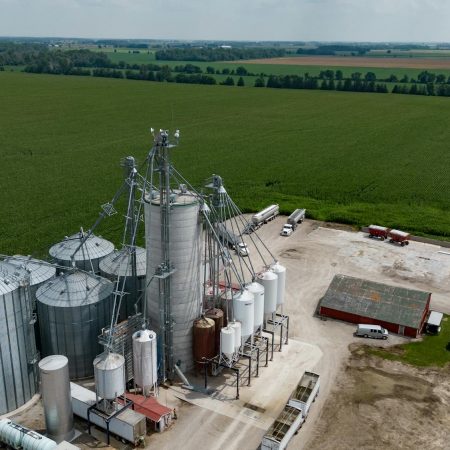
Michigan farmers face uncertainties despite bailout, union says

The Trump administration recently announced $12 billion in bailout money in an effort to prop up the farming industry. That comes as farmers around the country have complained about trade wars and general economic conditions making it tough for them to do business.

What that money looks like by the time it makes its way to local farmers remains to be seen. Michigan Farmers Union president, Bob Thompson, says there are still questions surrounding the distribution.

Listen: Bob Thompson discusses issues facing Michigan farmers

“The Administration,” says Thompson, “still has to decide how much money is going to corn, versus wheat, versus soy beans, versus 15 different row crops.”

Thompson says about $11 billion of the $12 billion in the bailout will be dedicated to row crops. That means farmers growing specialty crops, like apples and cherries, will share the remaining funds.

Thompson warns the funding may not be enough to offset the challenges facing Michigan’s farms.

“The financial problems that a lot of farmers, particularly our smaller family farmers are experiencing, is a direct result of a lot of policies of the new administration,” Thompson explains, “ Particularly the tariff policies.”

He says the Trump administration’s crackdown on immigration has also hurt farmers in the state. About three-quarters of the seasonal workforce on farms comes from immigrant labor programs.

The Michigan Farmers Union says it may take a new long-term farm bill to stabilize the industry.

Trusted, accurate, up-to-date.

WDET strives to make our journalism accessible to everyone. As a public media institution, we maintain our journalistic integrity through independent support from readers like you. If you value WDET as your source of news, music and conversation, please make a gift today.

Donate today »

The post Michigan farmers face uncertainties despite bailout, union says appeared first on WDET 101.9 FM.

❌