Reading view

There are new articles available, click to refresh the page.

MichMash: Duggan weighs in on citizens-only voting, speaks about gubernatorial campaign

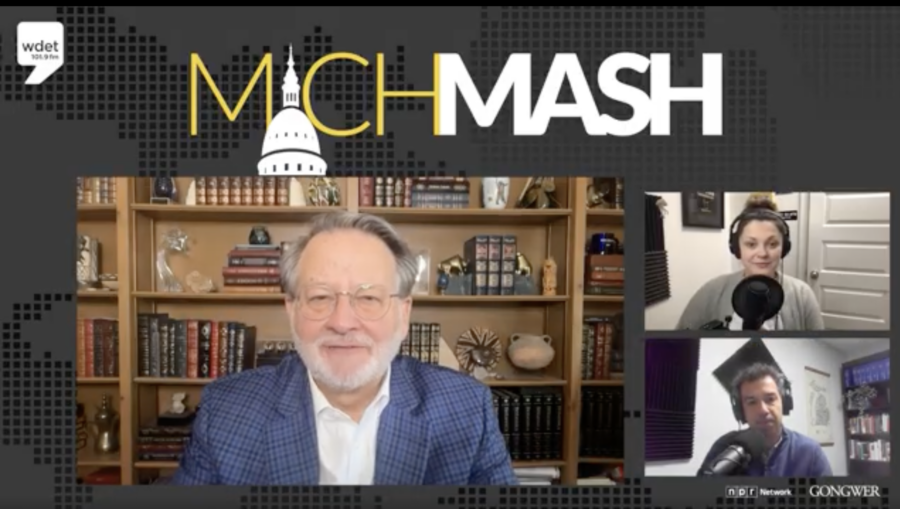
Michigan voters may get a ballot proposal changing the way they are verified to vote. This week on WDET’s MichMash, Gongwer News Service’s Zach Gorchow and Alethia Kasben discuss what this ballot would require. Later, candidate for Michigan governor Mike Duggan joins the discussion.

Subscribe to MichMash on Apple Podcasts, Spotify, NPR.org or wherever you get your podcasts.

In this episode

  • What is in the citizens-only ballot proposal?
  • How is former mayor Mike Duggan connecting with voters during his gubernatorial campaign?

If the citizens-only voting ballot initiative is passed, the Secretary of State is required to verify all 8.5 million voters in Michigan are U.S. citizens—which all voters already do. This proposal would require both old and new voters to verify with additional requirements involving social security, valid driver’s license number, or identification on absentee ballot.

Earlier this month the citizens-only voting ballot group Americans for Citizens Voting turned in the 750,000 signatures they would need to the state ahead of the deadline. If the signatures are verified, the proposal will appear on the ballot.

Former Detroit Mayor Mike Duggan says this ballot would create another barrier for those looking to vote. “I think anything that makes mail in balloting a bigger problem is wrong. Anything that makes voting harder, I wouldn’t be supportive of.”

There are reports that the Michigan Department of State may verify the votes by April.

Support the podcasts you love.

One-of-a-kind podcasts from WDET bring you engaging conversations, news you need to know and stories you love to hear. Keep the conversations coming. Please make a gift today.

The post MichMash: Duggan weighs in on citizens-only voting, speaks about gubernatorial campaign appeared first on WDET 101.9 FM.

MichMash: State Rep. Whitsett not seeking fifth term; Road agencies to see funding increase

In this episode

  • Why is State Rep. Karen Whitsett not seeking a new term?
  • How has the Regional Transit Authority improved public transportation?

Subscribe to MichMash on Apple Podcasts, Spotify, NPR.org or wherever you get your podcasts.


State Representative Karen Whitsett, is making waves this week for not running for a fifth term in office. What influenced her decision? This week on MichMash, WDET’s Cheyna Roth and Gongwer News Service’s Zach Gorchow discuss her reasons for leaving as well as her career in office. 

Although Whitsett was a Democrat, there was friction between her and her own party. Gorchow pointed out multiple policy disagreements she had with her party but there was one thing that seemingly irked people the most.  “Whether in the most liberal corners of Detroit and Ann Arbor to the conservative bastions of Hillsdale…is that elected officials who don’t show up for work can hit the road.” 

This is in reference to Whitsett not showing up to multiple legislative sessions in the span of a year.  

Later in this episode Ben Stupka, executive director of the Regional Transit Authority of Southeast Michigan, stopped by to talk about road funding. Stupka says the RTA is responsible for things like making transportation in Detroit more efficient and unifying the fare policy between SMART and DDOT. When it comes to ridership he says things are improving. “We are 80% back to pre-covid levels. We are seeing an increase each year. Transit is a public service, if that means putting routes out there that aren’t heavily used but are available for the people who have funded them locally….that’s what we have to do.” 

Michigan’s 2026 budget includes an increase in road funding.   


Support the podcasts you love.

One-of-a-kind podcasts from WDET bring you engaging conversations, news you need to know and stories you love to hear. Keep the conversations coming. Please make a gift today.

The post MichMash: State Rep. Whitsett not seeking fifth term; Road agencies to see funding increase appeared first on WDET 101.9 FM.

MichMash: Gov. Whitmer reflects on her final state of the state

In this episode

  • Governor Gretchen Whitmer delivers her final State of the State of her tenure. 
  • Why did Gov Whitmer thank President Trump?
  • What is the “GSD Tour”
Subscribe to MichMash on Apple Podcasts, Spotify, NPR.org or wherever you get your podcasts.

Gov. Gretchen Whitmer delivered her final State of the State address, reflecting on her tenure and outlining priorities for the remainder of her term. This week on MichMash, WDET’s Cheyna Roth and Gongwer News Service’s Alethia Kasben discuss what stood out.

Roth said one of the most notable aspects of the speech was that there were few surprises. She described it as a reflection of Whitmer’s time as governor. One moment that did stand out was Whitmer thanking President Trump for his support of a new fighter mission slated for Selfridge Air National Guard Base in Harrison Township. Kasben said she believes the acknowledgment was intentional.

“I think she is trying to keep the pressure on about it,” Kasben said. “The more that she publicly talks about it and notes President Trump promised this, the more it’s out there that this commitment was made and hopefully makes sure it does happen.”

Less than 24 hours after the address, Whitmer joined MichMash to discuss key elements of her speech, her experience as governor and her plans for the remainder of her term. That includes launching her GSD Tour, which stands for “Get Stuff Done.” She said the effort is focused on making sure residents understand what has been accomplished during her administration.

“Michigan is full of hardworking, good people who have a lot going on in their lives and maybe have not heard about all the things that we’ve accomplished or what is available,” Whitmer said. “I think telling the story of what’s out there, what we’ve accomplished and listening to Michiganders is what the GSD is all about.”

During the interview, Whitmer also reiterated her goal of having state leaders pass the budget by June 30.

Support the podcasts you love.

One-of-a-kind podcasts from WDET bring you engaging conversations, news you need to know and stories you love to hear. Keep the conversations coming. Please make a gift today.

The post MichMash: Gov. Whitmer reflects on her final state of the state appeared first on WDET 101.9 FM.

MichMash: What is a ConCon and will it happen in Michigan?

In this episode: 

  • Why did Michigan have a ConCon? 
  • What are the chances of us having a ConCon in 2026 and if so what will it change? 

Subscribe to MichMash on Apple Podcasts, Spotify, NPR.org or wherever you get your podcasts.


For the fourth time since the 1960’s…Michigan voters will get the chance to hold a convention on whether or not they want to do a complete overhaul on the constitution. This week on MichMash, Gongwer News Service’s Alethia Kasben and Zach Gorchow discuss all the things this convention could change to Michigan’s constitutional laws. They are joined by Lynn Liberato who is the author of Michigan Con-Con 11: Women and State Constitution-making in 1961.  

Most Michiganders will have no recollection about a ConCon because of its rarity but it has the potential to change a lot of things. Liberato said that the last ConCon in 1961 was the culmination of 20-40 years of non-partisan efforts with groups like the League of Women Voters in Michigan. Liberato encourages voters to think deeply about a decision to have another ConCon. “By the time we got to 1961, we were operating under a constitution that was over 100 years old. Michigan changed from an agricultural society to a manufacturing mecca. Is that comparable to us in 2026 from the 1960’s?” 

Michiganders will have a chance to vote on whether or not we have a ConCon in the 2026 midterm elections.  

Support the podcasts you love.

One-of-a-kind podcasts from WDET bring you engaging conversations, news you need to know and stories you love to hear. Keep the conversations coming. Please make a gift today.

The post MichMash: What is a ConCon and will it happen in Michigan? appeared first on WDET 101.9 FM.

MichMash: Trump causes chaos for bridge opening to Canada; Whitmer presents last budget

In this episode: 

  • How the Gordie Howe Bridge affects both Canada and the United States.
  • Republicans and Democrats react to Trump’s Truth Social post about the Gordie Howe Bridge. 
  • Governor Whitmer’s administration’s final budget of her tenure. 

Subscribe to MichMash on Apple Podcasts, Spotify, NPR.org or wherever you get your podcasts.


As the Gordie Howe International Bridge sets to open this year, President Trump signaled he may stop the opening in a Truth Social post. This week on MichMash, WDET’s Cheyna Roth and Gongwer News Service’s Alethia Kasben discuss how lawmakers on both sides of the aisle are reacting to this surprising development.  

This announcement from Trump blindsided many as the bridge is set to open later this year. Former Michigan Governor Rick Snyder, who helped broker the deal for the bridge during his tenure as governor, wrote an op-ed in the Detroit News asking Trump to reconsider including a point by point demonstration as to why the President was wrong.  
Trump said the bridge is a bad deal but Synder disagreed saying American consumers will be hurt the most if the bridge remained closed.  

Later in the episode, Paul Egan, Detroit Free Press Reporter, discusses the Whitmer administration’s final budget. 

Whitmer’s 88-billion-dollar budget is an increase from the budget signed into law last year. Egan describes the economic picture leading up to this release as uncertain. “The economy is showing many signs of weakness amid tariffs… you also have the federal government, making significant cuts… on top of that, you also have, soaring health care costs, which is another major, major problem that they had to tackle and putting together this budget.” 

The budget addresses other things such as colleges and universities, a rainy day fund, and transportation. Of the new funding for 2027, 69% will support local road projects and 10% will support transit and rail programs, according to budget documents. 


Support the podcasts you love.

One-of-a-kind podcasts from WDET bring you engaging conversations, news you need to know and stories you love to hear. Keep the conversations coming. Please make a gift today.

The post MichMash: Trump causes chaos for bridge opening to Canada; Whitmer presents last budget appeared first on WDET 101.9 FM.

MichMash: A bipartisan solution for medical debt; Campaign finance updates for the upcoming election

In this episode:

  • How much money did the Michigan gubernatorial candidates raise for their campaigns?
  • What do the campaign finance reports say about each gubernatorial candidates?
  • A bipartisan approach to medical debt.

Subscribe to MichMash on Apple Podcasts, Spotify, NPR.org or wherever you get your podcasts.


The Michigan gubernatorial candidates are ramping up their campaigns, but how are they doing financially?

This week on MichMash, WDET’s Cheyna Roth and Gongwer News Service’s Zach Gorchow go over the latest campaign finance reports for the upcoming election. 

These are the last reports we will see until we get closer to the primaries. Roth said the reports can be a forecast for the race ahead. “Money does not equal victory, but it does help you get there. It’s crucial for name recognition and getting your message out through things like mailers and television ads.”

The Michigan primary is on Aug. 4, 2026. 

Later in the episode, Sen. Jonathan Lindsey stopped by to champion his bipartisan legislation that addresses medical debt in Michigan. The bill would make violations of these changes eligible for action by the attorney general under the Michigan Consumer Protection Act. Lindsey said he believes the bill is close to being passed.

“I think we showed in the Senate that the most productive way to get it done was running together a couple of these health care-related bills that would bring enough votes from both sides to have a strong consensus on them.”

The bill is currently sitting in the Senate.  

Support the podcasts you love.

One-of-a-kind podcasts from WDET bring you engaging conversations, news you need to know and stories you love to hear.

Keep the conversations coming. Please make a gift today.

Give now »

The post MichMash: A bipartisan solution for medical debt; Campaign finance updates for the upcoming election appeared first on WDET 101.9 FM.

A Republican outlook on Michigan’s 2026 elections

In this episode

  • What has Michigan businessman Perry Johnson promised in his first two months on the campaign trail?

  • How are Michigan Republican candidates positioning themselves ahead of the 2026 elections?

  • Which issues do candidates need to prioritize to attract voters?


Subscribe to MichMash on Apple Podcasts, Spotify, NPR.org or wherever you get your podcasts.


There are several major races later this year, with multiple candidates competing for governor, U.S. Congress, and state House and Senate seats. This week on MichMash, Cheyna Roth and Alethia Kasben speak with Kristin Combs, founder of Bright Sparks Strategies, about how Republican candidates are performing across these contests.

The gubernatorial race saw a major shakeup when Michigan businessman Perry Johnson entered the field. Combs said his candidacy is likely to change the race’s dynamics. “The more people out there spending money, building name ID, and talking about the issues we think will matter to voters, the more attention it brings to the race,” she said.

Combs also noted that a key factor in Republican races outside of presidential election years is whether Trump supporters will turn out to vote. She said national trends and local leadership both influence turnout. “People are struggling with gas prices and grocery prices,” Combs said. “So the things Republicans can do to try and keep costs under control — that’s going to help.”

Finally, Combs’ firm is working to gather signatures for a proof-of-citizenship ballot proposal. Supporters argue the measure would protect elections from non-citizen voting, while opponents say it could prevent some eligible citizens from casting ballots.

More from WDET:

Support the podcasts you love.

One-of-a-kind podcasts from WDET bring you engaging conversations, news you need to know and stories you love to hear.

Keep the conversations coming. Please make a gift today.

Give now »

The post A Republican outlook on Michigan’s 2026 elections appeared first on WDET 101.9 FM.

Whitmer opposes Trump’s tariffs and ICE actions

“In this episode”
  • Gov Whitmer’s approach to recent disagreements with the Trump administration.
  • Potential cellphone bans in classrooms gets bipartisan support.

Subscribe to MichMash on Apple Podcasts, Spotify, NPR.org or wherever you get your podcasts.


Although Gov. Gretchen Whitmer and President Donald Trump have found some areas of common ground this year, Whitmer recently outlined key disagreements at the Detroit Auto Show, including opposition to Trump’s tariff strategy and the presence of ICE in Minneapolis. This week on MichMash, WDET’s Cheyna Roth and Gongwer News Service’s Alethia Kasben discuss what Whitmer’s comments could signal about future relations with the Trump administration.

Whitmer called some Trump administration actions “an abuse of power,” adding, “I think it is a very serious and scary moment in this country. I appreciate those who are raising their voices. I worry about the people out there just trying to do the right thing.”

Roth said Whitmer’s remarks could hint at political ambitions after her term as governor ends. She also noted that much of Whitmer’s outreach to the Trump administration has focused on maintaining cooperation in Michigan’s best interest.

Later in the episode, Oakland Schools Superintendent Kenneth Gutman discusses proposed legislation that would ban cell phones in classrooms. Gutman supports the measure, saying it benefits students. “There are exceptions, and safety is one of them, but in general, do we need cell phones in classrooms? We do not. They are a distraction.”

If the legislation passes, Michigan would join states including Indiana, Louisiana, New York, and Ohio in banning cell phones in classrooms.

Support the podcasts you love.

One-of-a-kind podcasts from WDET bring you engaging conversations, news you need to know and stories you love to hear. Keep the conversations coming. Please make a gift today.

The post Whitmer opposes Trump’s tariffs and ICE actions appeared first on WDET 101.9 FM.

MichMash: Budget battles and ballot changes in Michigan

Subscribe to MichMash on Apple PodcastsSpotifyNPR.org or wherever you get your podcasts.

House Republican have moved to unilaterally cut up to $645 million from the state budget.  But is that legal?  This week on MichMash, Cheyna Roth and Zach Gorchow talk with Bob Schneider of the Citizens Research Council of Michigan to make sense of it all. Plus a look at changes in the race for governor and Secretary of State.

In this episode:

Lt. Gov. Garlin Gilchrist drops out of the race for governor and into the Secretary of State’s race

The state of the governor’s race

The battle over unilateral budget cuts

Overview

Lieutenant Governor Garlin Gilchrist has ended his campaign for governor and has launched an effort to become Michigan’s next Secretary of State instead.  Gongwer’s Zach Gorchow says Gilchrist’s decision shouldn’t come as a surprise.

“He had low name recognition and wasn’t raising anywhere near enough money. Jocelyn Benson, the secretary of state, has been the clear frontrunner for the Democratic nomination for months, and Gilchrist’s exit doesn’t change anything on the Democratic side.”

The news does have implications for the race for Secretary of State as Gilchrist joins an already crowded Democratic field.

Meanwhile, lawmakers are dealing with a provision in state law that allows a single legislative committee to cancel certain types of spending. House Republicans used this mechanism like never before – to cancel up to $645 million in spending.

Attorney General Dana Nessel has filed suit saying the legislation allowing the move is unconstitutional.

Bob Schneider of the Citizens Research Council of Michigan tells us the central issue is around the appropriation process for “work projects.”

“A work project is an authorization to carry forward appropriations into a future fiscal year.”

He says the legislature should be thinking ahead on the issue, because the process could be in jeopardy, depending on how courts rule. Schneieder says lawmaker should be saying to themselves,  “How do we get together and fix this so we have a process that works in the future.”

Support the podcasts you love.

One-of-a-kind podcasts from WDET bring you engaging conversations, news you need to know and stories you love to hear. Keep the conversations coming. Please make a gift today.

The post MichMash: Budget battles and ballot changes in Michigan appeared first on WDET 101.9 FM.
MichMash: Are economic incentives helping Michigan?

At the end of 2025, a commitment to getting a new economic development plan out of the Legislature was halted. In this episode MichMash, Bridge Michigan’s business reporter Paula Gardner joins Cheyna Roth and Alethia Kasben to discuss economic development incentives and if they are helping to attract Michigan businesses.

Subscribe to MichMash on Apple PodcastsSpotifyNPR.org or wherever you get your podcasts.

Support the podcasts you love.

One-of-a-kind podcasts from WDET bring you engaging conversations, news you need to know and stories you love to hear. Keep the conversations coming. Please make a gift today.

More from MichMash

The post MichMash: Are economic incentives helping Michigan? appeared first on WDET 101.9 FM.
MichMash: Looking back on Michigan’s top political stories of 2025

There were a lot of defining political moments in 2025 that made the year stand out.

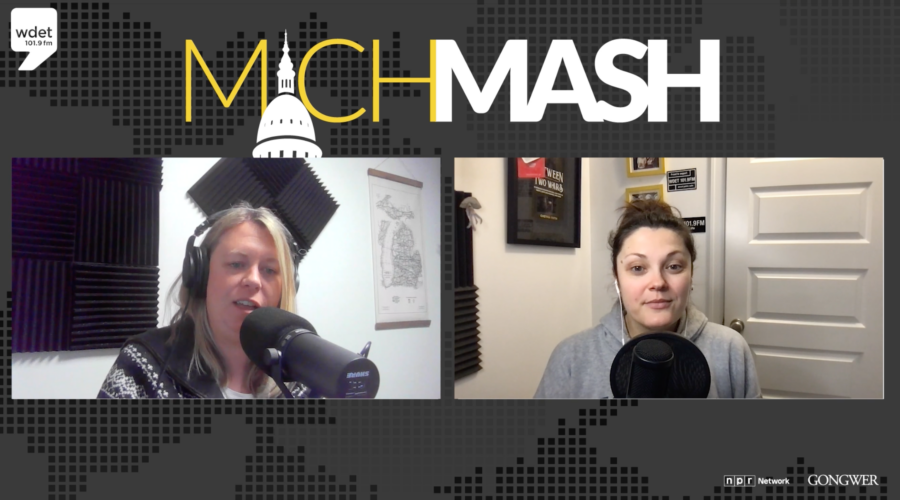
This week on MichMash, WDET’s Cheyna Roth and Gongwer News Service’s Zach Gorchow and Alethia Kasben discuss some major stories and look ahead to 2026.

Subscribe to MichMash on Apple PodcastsSpotifyNPR.org or wherever you get your podcasts.

In this episode

  • MichMash hosts’ top political moments of 2025
  • The state of major races heading into 2026.
  • What stories should we look out for in 2026?

Overview

Pluribus News politics journalist Reid Wilson said “Michigan is the ‘we matter’ state,” on MichMash last month. Zach echoes this, pointing out how things like the senate race has made “Michigan the epicenter of politics in the midterms in 2026.”  

Zach also spoke about the dynamics of the candidates.

“We’ve got the first legit Democratic primary for U.S. Senate since 1994. Three really strong, viable candidates. But then we’ve got on the Republican side, it appears they’ve consolidated support behind Mike Rogers. And for the most part, he’s just going to be waiting to see who emerges as the Democrat.” 

Beyond elections, Zach also has his eye on the Michigan legislature. He thinks recent inertia will continue because of Speaker Matt Hall’s intention to not get involved what he described as “small things”.

And although there was an agreement after the budget was decided to focus on economic development, Alethia said those plans may be falling apart. “I think the House and Senate could come together and put together [the] top wants of both. It’s just a question of…is there the willingness to get that done, especially if this is more of a Governor Gretchen Whitmer priority and less of a legislative priority?” 

The Michigan legislature will come back to session by mid January 2026.  

Support the podcasts you love.

One-of-a-kind podcasts from WDET bring you engaging conversations, news you need to know and stories you love to hear.

Keep the conversations coming. Please make a gift today.

Give now »

More from MichMash

The post MichMash: Looking back on Michigan’s top political stories of 2025 appeared first on WDET 101.9 FM.

MichMash: Senator Peters discusses his decision not to run for reelection

In this episode

  • Senator Gary Peters shares why he is not running for reelection.
  • Updates with the rank choice voting initiative

Senator Gary Peters’ announcement about not seeking reelection shocked the political world because of his favorability and success. This week on MichMash, WDET’s Cheyna Roth and Gongwer News Services’ Zach Gorchow talk with the Senator to hear his reasons behind his decision, and they discuss his plans for the remainder of his term.  

Peters shared that he never saw himself in his position for a lifetime and that he likened how the founding fathers intended political leadership positions. “…like the founding fathers…you serve for a period of time and then you go back to private life. I have served in Congress for years. When I leave at the end of next year it will be 18 years. I think that is a good run” 

Peters also noted that politics is becoming more partisan, and it’s becoming harder to find common ground.  

Cheyna and Zach also discuss the recent news on rank choice voting. The group pushing put this new voting system in Michigan said they will retarget their efforts for 2028. Cheyna noted this may have been because they didn’t have enough signatures. You need 466,000 valid signatures from registered voters to get a constitutional amendment on the ballot.  

Subscribe to MichMash on Apple Podcasts, Spotify, NPR.org or wherever you get your podcasts.

The post MichMash: Senator Peters discusses his decision not to run for reelection appeared first on WDET 101.9 FM.
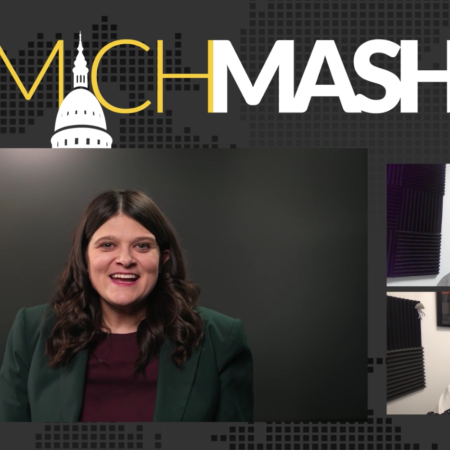
MichMash: Congresswoman Haley Stevens makes her case for US Senate seat

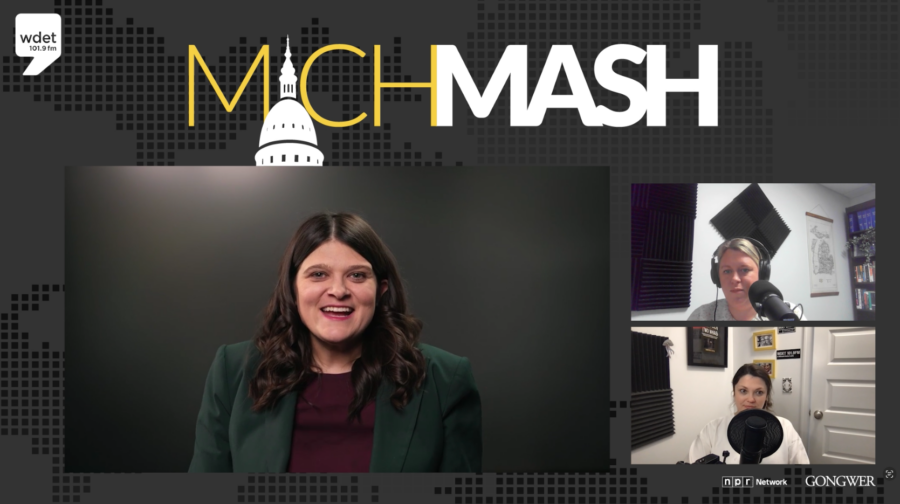
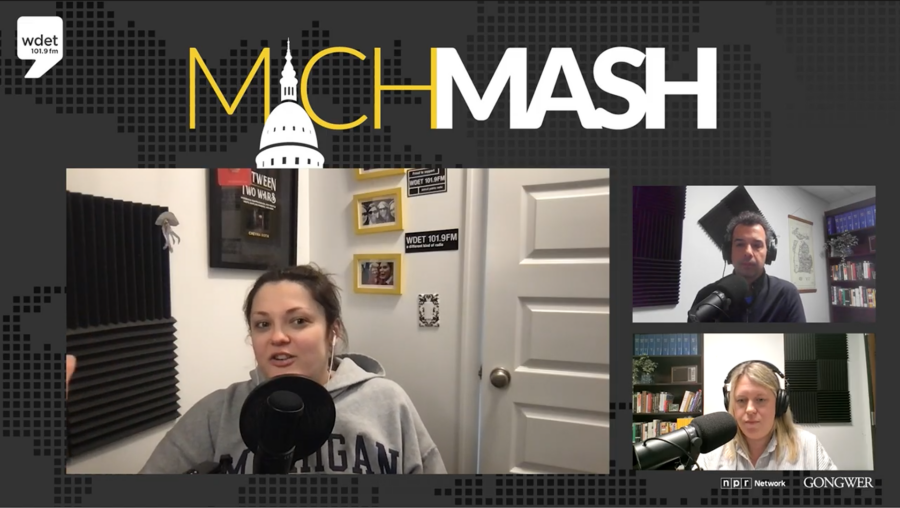
Congresswoman Haley Stevens is vying for the U.S. Senate seat in Michigan in a highly contested field. In this episode of MichMash, WDET’s Cheyna Roth and Gongwer News Service’s Alethia Kasben sit down with the representative to see what makes her different from her opponents. 

Subscribe to MichMash on Apple PodcastsSpotifyNPR.org or wherever you get your podcasts.

In this episode:

  • What sets Haley Stevens apart from the other candidates for Michigan’s U.S. Senate seat?
  • What issues are currently affecting Michigan residents?

Correction: Congresswoman Haley Stevens is endorsed by the Mayor of Highland Park, not Hamtramck.

Overview

Stevens is often compared to other established Democrats like U.S. Representative Debbie Dingell or even Governor Gretchen Whitmer. These comparisons are sometimes used to present Stevens as out of touch with the new generation of politics. Stevens says the focus should be more on meeting the needs of Michigan residents.

“I was Michigan’s first millennial to the United States House of Representatives. I’m not an ageist. I think the goal is representing all of Michigan and getting results for Michiganders.” 

She also stated that leaders like Gov. Whitmer’s popularity alongside her own ability to get things done should be embodied.  

Stevens also addressed the comparison with her fellow Democrat opponent Mallory McMorrow, and how they seemingly appeal to the same voters.

“I think poll after poll shows I’m the only Democrat who can beat (Republican opponent) Mike Rogers,”she said. “We need a dogged advocate for Michigan. And I think some of the unique attributes that I bring to this race for the United States Senate is that I am Michigan’s workhorse.” 

The election for the open Michigan U.S. Senate seat is scheduled for Nov. 3, 2026.  

Support the podcasts you love.

One-of-a-kind podcasts from WDET bring you engaging conversations, news you need to know and stories you love to hear. Keep the conversations coming. Please make a gift today.

More from MichMash

The post MichMash: Congresswoman Haley Stevens makes her case for US Senate seat appeared first on WDET 101.9 FM.
❌