
Reading view

There are new articles available, click to refresh the page.

Project ‘Restore 94’ requires major tree clearance for highway reconstruction

Restore 94 is a recent Michigan Department of Transportation project that aims to rebuild nearly 13 miles of I-94.

MDOT’s Media Representative for the Metro Region, Diane Cross, says the project requires tree removal for full reconstruction of the Ecorse interchange. 

Cross explains, “Currently, traffic comes in on the left, which is very unusual and it’s a very old style. We are going to bring that up to current industry standards… That involves rebuilding I-94 through a large, wooded median near Ecorse Road.”

MDOT already owned the patch of land where these trees were located. Cross says their plan for construction is the most time and cost effective. 

There are plans to replant trees around the new roadways once construction is finished, says Cross.  

“Obviously they’re not the same mature age and probably number of what we’re removing—that is a large, wooded area that has not been touched for 50 years or so—but that is now where we’re going to move the freeway through, which will make it much safer for drivers.”

This story is part of WDET’s ongoing series, The Detroit Tree Canopy Project.

Trusted, accurate, up-to-date.

WDET strives to make our journalism accessible to everyone. As a public media institution, we maintain our journalistic integrity through independent support from readers like you. If you value WDET as your source of news, music and conversation, please make a gift today.

Donate today »

The post Project ‘Restore 94’ requires major tree clearance for highway reconstruction appeared first on WDET 101.9 FM.

There were no reports of ‘exploding trees’ in Southeast Michigan this winter

After warnings about “exploding trees” went viral this winter, a local arborist says he did not hear any reports of it occurring.

“I have not heard or seen of any explosions happening in the woods,” arborist Luke Brunner says. He works with the Davey Tree Company.

“I think there was a lot of concern behind it….I had multiple phone calls asking about it,” Brunner continues.

However, he says if anyone did hear unusual sounds coming from a nearby tree trunk, it was likely frost cracking, a common occurrence during winter. Frost cracking occurs when sunlight warms the interior of a tree during the day, and temperatures then drop sharply at night, leading to water inside the trunk freezing and expanding, resulting in a popping sound.

Brunner says ice and snow pose a greater risk to trees. Heavy accumulation can weigh down branches, especially those with dead wood or structural weaknesses, increasing the likelihood of limbs breaking and falling.

Trusted, accurate, up-to-date.

WDET strives to make our journalism accessible to everyone. As a public media institution, we maintain our journalistic integrity through independent support from readers like you. If you value WDET as your source of news, music and conversation, please make a gift today.

Donate today »

The post There were no reports of ‘exploding trees’ in Southeast Michigan this winter appeared first on WDET 101.9 FM.
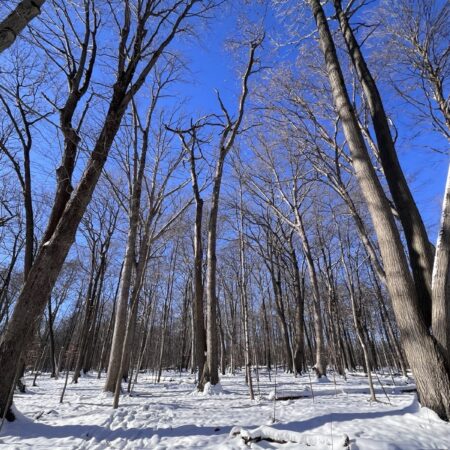
Humans thrive with trees, not computer screens, says new research

New research shows the presence of trees where people live may significantly impact human heart health.

The results find that those living in greener neighborhoods have lower risks of heart attacks, strokes, and other cardiovascular diseases.

Peter James is a lead researcher of the study at the University of California – Davis.

Using over 350 million Google Street View images analyzed with deep learning, James’s team identified street-level vegetation and linked it to long-term health data.

However, areas with more grass were linked to higher cardiovascular risk.

James says trees help by cooling neighborhoods, filtering air, reducing noise, and promoting activity and social interaction. “We’ve evolved as human beings to be in nature….this is our natural setting, not staring at a computer screen….that’s where we thrive… out in trees and nature,” James says. 

This story is a part of WDET’s ongoing series, the Detroit Tree Canopy Project.

Trusted, accurate, up-to-date.

WDET strives to make our journalism accessible to everyone. As a public media institution, we maintain our journalistic integrity through independent support from readers like you. If you value WDET as your source of news, music and conversation, please make a gift today.

Donate today »

The post Humans thrive with trees, not computer screens, says new research appeared first on WDET 101.9 FM.
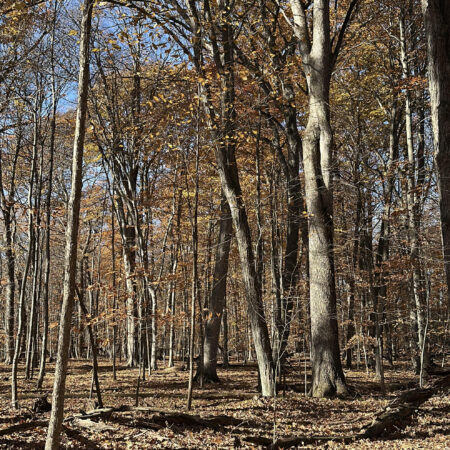
Understanding road salt damage to Detroit’s tree canopy

As temperatures drop and snowfall increases this winter, Detroit’s road commissioners break out their plows and salt trucks in order to maintain safe roadways. 

However, the most common road salt used, sodium chloride, has been known by experts and road commissioners to cause damage to surrounding trees.

Dr. Bert Cregg, a Michigan State University Professor in the Department of Horticulture, says that excessive usage of this road salt can lead to tree death. 

Cregg says protecting trees from salt exposure and selecting salt-tolerant species are the first steps to mitigating this issue. 

Identifying salt damage in trees 

Cregg describes salt damage occurring in two ways: acute damage and chronic damage.

Acute damage refers to when tree trunks, branches, and leaves are exposed to salt. 

“If we think about the white coat of salt that accumulates on our cars this time of year, trees and shrubs adjacent to roadways are experiencing the same thing,” says Cregg

Acute damage is the easiest to identify.

In evergreen trees, such as Michigan White Pines, salt damage causes needle browning and can lead to tree death.

In deciduous trees, such as Oak and Maple trees, salt damage commonly causes “witch’s brooms,” which is when the ends of branches repeatedly die and grow back due to salt exposure, Cregg explains. 

Because chronic injury refers to damage that we can’t see as easily, it can be trickier to identify. Chronic injury occurs when road salt leaches into the surrounding soil and creates high concentrations of sodium and chloride.

Cregg says these high concentrations “reduce the plant’s ability to take up water from the soil solution, resulting in a form of drought stress.”

How to reduce salt damage on trees: protection and selection

Cregg suggests de-icing alternatives, such as beet juice or calcium magnesium acetate, which pose less environmental risk than typical road salt.

While the simple solution seems to be for road commissioners and residents to abandon their usage of road salt, this is an unrealistic approach considering sodium chloride continues to be the most affordable and efficient option for de-icing, and given Michigan’s harsh winters, public safety is often prioritized over environmental concerns. 

Due to this limitation, Cregg emphasizes the importance of creating physical barriers, such as placing burlap wrap or canvas screens around existing trees, to protect them from excessive salt exposure.

These physical barriers would help mitigate damage from the inevitable salt splash caused by cars on the roadway. 

When planting new trees around roadways, it’s important to consider that some tree species are more sensitive to salt exposure than others.

To aid this, Cregg advises homeowners and city planners to select salt-tolerant trees to ensure they can survive in the given environment. 

“Some salt-tolerant trees for our area include Bald Cypress, Kentucky Coffeetree, Japanese Tree Lilac, Dawn Redwood, Horse Chestnut, Hackberry, and Swamp White Oak.”

This story is a part of WDET’s ongoing series, the Detroit Tree Canopy Project.

Support local journalism.

WDET strives to cover what’s happening in your community. As a public media institution, we maintain our ability to explore the music and culture of our region through independent support from readers like you. If you value WDET as your source of news, music and conversation, please make a gift today.

The post Understanding road salt damage to Detroit’s tree canopy appeared first on WDET 101.9 FM.

Callery Pear, Japanese barberry may be added to Michigan’s invasive species list

The Michigan Department of Agriculture and Rural Development may add six new plant species to the state’s list of invasive plants. This list could include Callery pear, Japanese barberry, and two aquatic plants.

If approved, water hyacinth and water lettuce would be considered illegal to sell or transport 30 days after they are officially listed. The Callery pear, common buckthorn, glossy buckthorn, and Japanese barberry would become restricted starting January 1, 2028. These regulations would prevent the sale or purchase of these plants but would not impact property owners who already possess them.

Officials state that these plants can pose risks to Michigan’s environment, economy, and public health. They have the potential to displace native species, damage infrastructure, and in some cases, host ticks that carry diseases.

Trusted, accurate, up-to-date.

WDET strives to make our journalism accessible to everyone. As a public media institution, we maintain our journalistic integrity through independent support from readers like you. If you value WDET as your source of news, music and conversation, please make a gift today.

Donate today »

The post Callery Pear, Japanese barberry may be added to Michigan’s invasive species list appeared first on WDET 101.9 FM.

Oakland County upgrades parks system with ‘Mission 26’

Sixty years after voters narrowly approved the first millage to establish Oakland County Parks, officials say the system is undergoing a fundamental shift. 

County officials recently unveiled a plan to revamp and grow its parks system. It’s called Mission 26 and it aims to help the county’s residents easily access the outdoors, especially in urban areas.

The focus on reshaping the county’s parks is funded by a public millage passed in 2024.

Oakland County Parks Director Chris Ward says it’s a green vision for the county’s future. “We know people are struggling financially, but the fact that they, you know, demonstrated such overwhelming support for that proposal shows how deeply people in this county value recreation and the outdoors,” Ward says. 

The county is expanding urban partnerships, including at Pontiac Oaks County Park, and plans to open Oak Park Woods at Sheppard Park and convert a Southfield golf course into a nature preserve. 

The county also launched the Co-Creation Lab to allow residents to help guide the future of the parks system through a new online portal, 

If parks are considered part of the county’s preventive health and wellness infrastructure, Ward says their success must be measured by how actively they are used.

“Empty parking lots represent a missed opportunity to reach people,” Ward says.

This story is part of WDET’s ongoing series, The Detroit Tree Canopy Project.

Support local journalism.

WDET strives to cover what’s happening in your community. As a public media institution, we maintain our ability to explore the music and culture of our region through independent support from readers like you. If you value WDET as your source of news, music and conversation, please make a gift today.

The post Oakland County upgrades parks system with ‘Mission 26’ appeared first on WDET 101.9 FM.

Old-growth forest at Independence Oaks reveals Indigenous past

An area of very old trees at Independence Oaks County Park has been recognized as part of a national network of old-growth forests, drawing attention to both rare natural features and thousands of years of human history tied to the land.

Carol Bacak-Egbo is an Oakland County Parks historian. She says the newly designated old-growth forest lies within a landscape shaped by Indigenous peoples for 5,000 to 6,000 years. The park sits near historic Native American trail routes, and contains the headwaters of the Clinton River, once a major travel route for the Anishinaabe across what is now southeast Michigan.

“This history doesn’t start with log cabins and sawmills,” Bacak-Egbo says. “People lived with and cared for this land long before Europeans arrived.”

Even in winter, Independence Oaks’ old-growth trees tower above the landscape. (Photo by Amanda LeClaire, WDET News)

Artifacts indicate the area was likely used as seasonal camps rather than permanent villages. The park also contains one of only two remaining wild rice beds in southeast Michigan, a culturally and spiritually significant food source for the Anishinaabe.

The forest largely escaped widespread logging and farming in the 19th century, almost by accident.

In the early 1900s, a wealthy Detroit businessman purchased land around Crooked Lake but left it undeveloped. Later owners also did not farm the southern portion of the property, allowing the old-growth trees to remain intact.

Park naturalist Kegan Schildberg says the designation supports efforts to protect remaining natural areas in Oakland County, which has developed rapidly during the last century.

Bacak-Egbo encourages visitors to view parks as places where natural and human history intersect.

“When people walk these trails, they aren’t just connecting with nature,” says Bacak-Egbo.  “They are walking through the same forest people walked through hundreds and even thousands of years ago.”

This story is part of WDET’s ongoing series, The Detroit Tree Canopy Project.

Trusted, accurate, up-to-date.

WDET strives to make our journalism accessible to everyone. As a public media institution, we maintain our journalistic integrity through independent support from readers like you. If you value WDET as your source of news, music and conversation, please make a gift today.

Donate today »

The post Old-growth forest at Independence Oaks reveals Indigenous past appeared first on WDET 101.9 FM.

❌