Reading view

There are new articles available, click to refresh the page.

MichMash: What is a ConCon and will it happen in Michigan?

In this episode: 

  • Why did Michigan have a ConCon? 
  • What are the chances of us having a ConCon in 2026 and if so what will it change? 

Subscribe to MichMash on Apple Podcasts, Spotify, NPR.org or wherever you get your podcasts.


For the fourth time since the 1960’s…Michigan voters will get the chance to hold a convention on whether or not they want to do a complete overhaul on the constitution. This week on MichMash, Gongwer News Service’s Alethia Kasben and Zach Gorchow discuss all the things this convention could change to Michigan’s constitutional laws. They are joined by Lynn Liberato who is the author of Michigan Con-Con 11: Women and State Constitution-making in 1961.  

Most Michiganders will have no recollection about a ConCon because of its rarity but it has the potential to change a lot of things. Liberato said that the last ConCon in 1961 was the culmination of 20-40 years of non-partisan efforts with groups like the League of Women Voters in Michigan. Liberato encourages voters to think deeply about a decision to have another ConCon. “By the time we got to 1961, we were operating under a constitution that was over 100 years old. Michigan changed from an agricultural society to a manufacturing mecca. Is that comparable to us in 2026 from the 1960’s?” 

Michiganders will have a chance to vote on whether or not we have a ConCon in the 2026 midterm elections.  

Support the podcasts you love.

One-of-a-kind podcasts from WDET bring you engaging conversations, news you need to know and stories you love to hear. Keep the conversations coming. Please make a gift today.

The post MichMash: What is a ConCon and will it happen in Michigan? appeared first on WDET 101.9 FM.

DC Water chief tied to Flint water crisis lawsuits now leads utility behind Potomac sewage spill

The head of DC Water, whose agency oversees the sewer line that collapsed and spilled more than 240 million gallons of raw sewage into the Potomac River last month, previously played a prominent role in the Flint water crisis. 

The post DC Water chief tied to Flint water crisis lawsuits now leads utility behind Potomac sewage spill appeared first on Detroit Metro Times.

New poll shows Benson pulling ahead as Duggan slips despite big spending

A new statewide poll shows Secretary of State Jocelyn Benson opening up a narrow lead in Michigan’s 2026 governor’s race, while independent candidate Mike Duggan is losing ground, even after allies and pro-Trumpers poured seven figures into boosting his campaign.

The post New poll shows Benson pulling ahead as Duggan slips despite big spending appeared first on Detroit Metro Times.

The Metro: President Trump won’t regulate pollution. Can Michigan do that on its own?

In 2023, Governor Gretchen Whitmer signed one of the most aggressive clean energy laws in the country — requiring Michigan utilities to hit 50% renewable energy by 2030 and 100% clean electricity by 2040. That plan assumed federal policy would be moving in the same direction. Things like federal tax credits, Environmental Protection Agency regulations, and infrastructure money for electric vehicles were anticipated to follow.

But that’s not what’s happening now. Last week, the Trump administration revoked the EPA’s ability to regulate pollution.

What does that decision mean for Michigan? What does it mean for DTE and Consumers Energy, which are both tasked with transitioning to clean energy sources instead of relying on things like natural gas?

Liesl Clark is the director of climate action engagement for the University of Michigan’s School for Environment and Sustainability. She also used to run the Michigan Department of Environment, Great Lakes, and Energy. 

The Metro‘s Sam Corey spoke with the director about the president’s actions and what she would recommend the state do now.


Listen to The Metro weekdays from 10 a.m. to noon ET on 101.9 FM and streaming on demand.

Subscribe to The Metro on Apple Podcasts, Spotify, NPR.org or wherever you get your podcasts.

Trusted, accurate, up-to-date.

WDET strives to make our journalism accessible to everyone. As a public media institution, we maintain our journalistic integrity through independent support from readers like you. If you value WDET as your source of news, music and conversation, please make a gift today.

Donate today »

More stories from The Metro

The post The Metro: President Trump won’t regulate pollution. Can Michigan do that on its own? appeared first on WDET 101.9 FM.

The Metro: Ann Arbor’s bid to dump DTE and go public

If you live in southeast Michigan, chances are you have a DTE story — the kind where your food spoiled during an outage, your pipes froze while you waited for power, or the number on your energy bill last month spurred disbelief.

The data backs up that frustration. According to a report from the Citizens Utility Board of Michigan, the state ranked last in 2023 for average time to restore power after an outage, taking roughly 12 hours per incident —more than double that of any neighboring state.

Energy rates, meanwhile, continue to climb. DTE Energy has filed four rate increase requests with the Michigan Public Service Commission in five years. In 2024, the company cut power to approximately 150,000 customers for nonpayment, according to a report from the Center for Biological Diversity. That same year, DTE paid more than $607 million in dividends to shareholders while its profits surged 41%.

Now, a grassroots effort in Ann Arbor is trying to change the equation.

The group Ann Arbor for Public Power has launched a petition drive to put a question on the November 2026 ballot: whether to establish a governing board for a future city-owned electric utility. The group needs approximately 6,500 signatures to qualify for the ballot.

What happens next

If approved by voters, the measure would not immediately purchase DTE’s infrastructure. Instead, it would create a nine-member public utility board to lay the groundwork for an eventual transition away from the investor-owned utility. A separate vote would be required in the future to authorize the actual acquisition of DTE’s poles and wires.

Michigan already has roughly 40 municipal utilities in cities like Lansing, Traverse City, Holland, and Wyandotte. But none of them were formed by acquiring infrastructure from a private utility. Ann Arbor would be the first city in the state to attempt it. Organizers believe success there could open the door for other Michigan cities, including Detroit, to follow.

Sean Higgins, president of Ann Arbor for Public Power, joined Robyn Vincent on The Metro to discuss why his group believes public ownership is the path to cleaner, cheaper, and more reliable energy for Ann Arbor residents.

DTE Energy has not responded to WDET’s request for comment about this effort.

Hear the full conversation using the media player above.


Listen to The Metro weekdays from 10 a.m. to noon ET on 101.9 FM and streaming on demand.

Subscribe to The Metro on Apple Podcasts, Spotify, NPR.org or wherever you get your podcasts.

Support local journalism.

WDET strives to cover what’s happening in your community. As a public media institution, we maintain our ability to explore the music and culture of our region through independent support from readers like you. If you value WDET as your source of news, music and conversation, please make a gift today.

More stories from The Metro

The post The Metro: Ann Arbor’s bid to dump DTE and go public appeared first on WDET 101.9 FM.

The Metro: A 93-year-old pipe flooded Southwest Detroit. Now GLWA wants historic rate hike

The price of water has been steadily rising in Southeast Michigan. Now, one of the steepest rate increases in the Great Lakes Water Authority’s decade-long history is up for a vote.

GLWA is proposing roughly a 7% water rate hike and a 6% sewer rate hike for the fiscal year starting July 1 — the second straight year exceeding the 4% cap the authority held for its first decade. GLWA says the money is needed to replace aging infrastructure: 83.6 miles of transmission main are past their useful life, and the system is largely funded by ratepayers.

At the authority’s January board meeting, residents pushed back. A GLWA representative acknowledged that 155,000 Detroiters are already enrolled in water assistance programs, roughly one in four residents.

Noah Kincade, who leads Detroit Documenters for Outlier Media, joined Robyn Vincent to break down what’s driving the increase, how rates are set, and what residents can do.

Listen to the full conversation above.

How to get involved

Residents can contact state lawmakers about Senate Bills 248–256, which address water affordability, or call We the People of Detroit’s water hotline at 1-844-429-2837. The GLWA board holds its public hearing and vote on Feb. 25 at the Water Board Building (735 Randolph St., Detroit) and via Zoom. Last year, public testimony led the board to reduce its proposed hike before the final vote.

Listen to The Metro weekdays from 10 a.m. to noon ET on 101.9 FM and streaming on demand.

Subscribe to The Metro on Apple Podcasts, Spotify, NPR.org or wherever you get your podcasts.

Trusted, accurate, up-to-date.

WDET strives to make our journalism accessible to everyone. As a public media institution, we maintain our journalistic integrity through independent support from readers like you. If you value WDET as your source of news, music and conversation, please make a gift today.

Donate today »

More stories from The Metro

The post The Metro: A 93-year-old pipe flooded Southwest Detroit. Now GLWA wants historic rate hike appeared first on WDET 101.9 FM.

Detroit Evening Report: Bangladesh ambassador visits Michigan

The Bangladeshi ambassador to the United States visited Hamtramck Saturday to meet with Bangladeshi Americans. Tareq Md Ariful Islam joined a town hall at the Gates of Columbus Banquet Hall to discuss U.S. – Bangladeshi relations. 

Michigan Bangladeshis hope to get a permanent consulate office in Michigan to service the thousands of Bangladeshis in the state. In October 2025 the Advisory Council in Bangladesh, chaired by Chief Adviser Muhammad Yunus, approved a proposal to open a consulate office in Michigan. It’s one of five offices scheduled to open around the world. People applauded as Ambassador Islam announced plans are moving forward to open the consulate office in Detroit.  

The Embassy has provided mobile consular services over the years. 

Additional headlines for Monday, Feb. 9, 2026

Ismael Ahmed memorial

A celebration of life memorial service was held for Arab American activist Ismael Ahmed yesterday at the Ford Community & Performing Arts Center in Dearborn. Ahmed passed away on Jan. 31.

Speakers included Congresswoman Rashida Tlaib and business leader Nasser Beydoun, who shared personal memories during the celebration of his life.

Friends talked about his commitment to public service and the arts. Ahmed co-founded the Arab Community Center for Economic and Social Services and the Concert of Colors. He also led the Michigan Department of Human Services under former Governor Jennifer Granholm. Ahmed hosted two music shows on WDET including This Island Earth. 

-Reporting by Pat Batcheller

Candidates for governor discuss education

Some candidates for governor discussed their education plans during a Michigan Education Association forum in Detroit. They generally agreed schools need more counselors and other support staff. 

Michigan Secretary of State Jocelyn Benson, a Democrat, says schools do need more money. She also says the state should stop relying on a per-student funding model. 

“Different needs meet different communities. And, as I’ve talked to educators around the state, the number one thing that keeps coming up is just that, that an x amount of money for a student in Muskegon is not going to be the same as x amount of money or the same amount of money for a student in Iron River. The needs are different. The cost model needs to be different.”

Democrat Chris Swanson, Republican Mike Cox, and now-independent former Detroit Mayor Mike Duggan also participated in the forum. 

Dearborn Night of Innovation

The City of Dearborn is accepting applications for the Night of Innovation Pitch competition. The event is presented by the American Arab Chamber of Commerce. Five businesses will pitch their ideas to a panel of judges to compete for monetary awards. First prize is $25,000; second place is $10,000; and third place is $5,00 dollars for seed funding.  

The City of Dearborn’s Director of Economic Development Jordan Twardy says the pitch competition is a way to showcase entrepreneurial talent in the city. Dearborn residents and business owners can apply by Feb. 27 by visiting BetOnDearborn.com.

The Night of Innovation will take place at the Ford Community & Performing Arts Center May 12 from 5-8 p.m. The event is free for people to attend. 

Hamtramck NEZ tax information session

The City of Hamtramck Community & Economic Development Department is hosting an information session about the Neighborhood Enterprise Zone tax. People will learn how to apply for NEZ tax abatements.

The Coffee, Tea and NEZ session is on Feb. 23 at Kitab Cafe in Hamtramck. The event is available for two sessions; one at 12 p.m. and the other at 5 p.m.     

Listen to the latest episode of the “Detroit Evening Report” on Apple Podcasts, Spotify, NPR.org or wherever you get your podcasts.

Support local journalism.

WDET strives to cover what’s happening in your community. As a public media institution, we maintain our ability to explore the music and culture of our region through independent support from readers like you. If you value WDET as your source of news, music and conversation, please make a gift today.

The post Detroit Evening Report: Bangladesh ambassador visits Michigan appeared first on WDET 101.9 FM.

Army Corps report warns of permanent wetland and cultural impacts from Line 5 tunnel

Enbridge’s proposed Line 5 oil tunnel beneath the Straits of Mackinac would permanently damage wetlands and harm an area of deep cultural and historical importance to Indigenous tribes, prompting renewed criticism from pipeline opponents, according to a new federal environmental review.

The post Army Corps report warns of permanent wetland and cultural impacts from Line 5 tunnel appeared first on Detroit Metro Times.

The Metro: The plan to fix Michigan’s teacher shortage

Most everyone wants students to have good teachers. But how do we adequately prepare educators, and keep them in the profession?

That’s a pressing question as teacher retention drops in Michigan. And it’s the most pressing in school districts with more poverty. 

Ten years ago, only a handful of Michigan school districts reported permanent teaching vacancies. Today, that number has exploded: more than 150 districts now have jobs they can’t fill.

Some in the state are trying to fix this. 

Jack Elsey leads the Michigan Educator Workforce Initiative. His nonprofit is launching a collaboration with some public universities in the state to change the way teachers are trained, and to keep them in the field. He spoke with Robyn Vincent.

Listen to The Metro weekdays from 10 a.m. to noon ET on 101.9 FM and streaming on demand.

Subscribe to The Metro on Apple Podcasts, Spotify, NPR.org or wherever you get your podcasts.

Trusted, accurate, up-to-date.

WDET strives to make our journalism accessible to everyone. As a public media institution, we maintain our journalistic integrity through independent support from readers like you. If you value WDET as your source of news, music and conversation, please make a gift today.

Donate today »

More stories from The Metro

The post The Metro: The plan to fix Michigan’s teacher shortage appeared first on WDET 101.9 FM.

The Metro: The bus is running. The question is how well

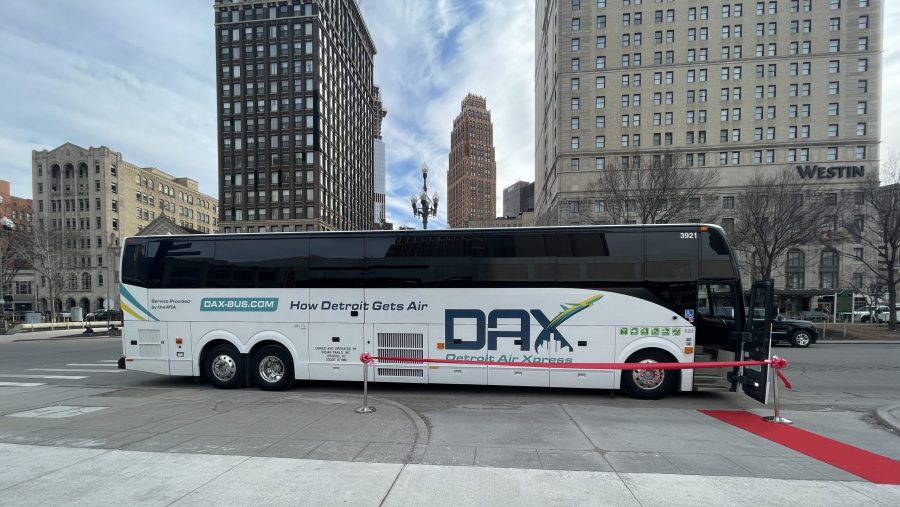
After years of pandemic disruption, driver shortages, and declining public trust, Southeast Michigan’s transit agencies say they’re finally back on their feet.

There are new labor contracts. New buses on the way. On-demand service pilots. Even a regional transit app designed to knit a fragmented system together.

But recovery doesn’t always feel like progress… especially if you’re still waiting 40 minutes for a bus that’s supposed to come every 10.

At a recent State of Transit meeting hosted by Transportation Riders United, transit leaders struck a cautiously optimistic tone. They said the crisis is over. But questions remain about access, equity, and reliability.

Noah Kincade leads Detroit Documenters, a civic journalism program where trained residents attend public meetings and take detailed notes to help the rest of us stay informed. He joined The Metro’s Robyn Vincent to examine how transit officials are framing the system’s rebound and how those claims compare with riders’ experiences.


Listen to The Metro weekdays from 10 a.m. to noon ET on 101.9 FM and streaming on demand.

Subscribe to The Metro on Apple Podcasts, Spotify, NPR.org or wherever you get your podcasts.

Trusted, accurate, up-to-date.

WDET strives to make our journalism accessible to everyone. As a public media institution, we maintain our journalistic integrity through independent support from readers like you. If you value WDET as your source of news, music and conversation, please make a gift today.

Donate today »

More stories from The Metro

The post The Metro: The bus is running. The question is how well appeared first on WDET 101.9 FM.

The Metro: Could a free market ease Michigan’s affordability crisis?

Affordability. That’s the word that’s been buzzing around politics. 

In November, Democrats across the country won on the promise of reducing the cost of living. 

But it’s not just liberals that are embracing an “affordability agenda.” Conservatives and libertarians are latching on as well. 

Jarrett Skorup is the vice president of marketing and communications at the Mackinac Center for Public Policy, which appreciates the free market and criticizes government regulation. 

In this conversation, The Metro‘s Sam Corey spoke with him about why he thinks unregulated capitalism can help free people from the burden of rising costs.

Listen to The Metro weekdays from 10 a.m. to noon ET on 101.9 FM and streaming on demand.

Subscribe to The Metro on Apple Podcasts, Spotify, NPR.org or wherever you get your podcasts.

Trusted, accurate, up-to-date.

WDET strives to make our journalism accessible to everyone. As a public media institution, we maintain our journalistic integrity through independent support from readers like you. If you value WDET as your source of news, music and conversation, please make a gift today.

Donate today »

More stories from The Metro

The post The Metro: Could a free market ease Michigan’s affordability crisis? appeared first on WDET 101.9 FM.

Michigan among top 5 U.S. states sending athletes to the Winter Olympics in Italy

No big surprise here: Snowy Michigan is home to many Team USA Winter Olympians this year. According to Team USA, the Great Lakes State is sending 15 athletes to Italy to compete in the Milano Cortina Winter Olympics, which will take place in Milan and Cortina d’Ampezzo from Feb. 6-22. That places Michigan in the […]

The post Michigan among top 5 U.S. states sending athletes to the Winter Olympics in Italy appeared first on Detroit Metro Times.

The Metro: The fight to document lasting harm of Michigan’s Native boarding schools continues

For more than a century in the United States, Native children were forcibly removed from their families and sent to boarding schools. Designed to strip students of their languages, cultures, and identities, the schools were created through federal policy, supported by state governments, and often operated by religious institutions. 

In Michigan, this system lasted longer than many people realize, with some open into the late 20th century. 

There have been some moves to reconcile this, what many consider a genocidal policy of assimilation. 

The state commissioned a study on boarding schools that was completed but never released publicly. Attorney General Dana Nessel has since launched a criminal investigation. The state, meanwhile, says it now plans to release the report.

At the same time, America is living through a moment that Native people recognize. The federal government is again separating families and using dehumanizing language to justify sweeping enforcement policies.

Leora Tadgerson’s work is pushing Michigan toward a reckoning led by Tribal nations. A citizen of Gnoozhikaaning, Bay Mills, and Wiikwemkong First Nations, Tadgerson is director of Reparations and Justice for the Episcopal Diocese of Northern Michigan. She also co-chairs the national Truth, Justice, and Healing Commission on Native Boarding Schools for The Episcopal Church

Leora Tadgerson

She joined Robyn Vincent on The Metro to discuss the history and lasting impacts of Native American boarding schools in Michigan and what justice and healing looks like.

Listen to The Metro weekdays from 10 a.m. to noon ET on 101.9 FM and streaming on demand.

Subscribe to The Metro on Apple Podcasts, Spotify, NPR.org or wherever you get your podcasts.

Trusted, accurate, up-to-date.

WDET strives to make our journalism accessible to everyone. As a public media institution, we maintain our journalistic integrity through independent support from readers like you. If you value WDET as your source of news, music and conversation, please make a gift today.

Donate today »

More stories from The Metro

The post The Metro: The fight to document lasting harm of Michigan’s Native boarding schools continues appeared first on WDET 101.9 FM.

A Republican outlook on Michigan’s 2026 elections

In this episode

  • What has Michigan businessman Perry Johnson promised in his first two months on the campaign trail?

  • How are Michigan Republican candidates positioning themselves ahead of the 2026 elections?

  • Which issues do candidates need to prioritize to attract voters?


Subscribe to MichMash on Apple Podcasts, Spotify, NPR.org or wherever you get your podcasts.


There are several major races later this year, with multiple candidates competing for governor, U.S. Congress, and state House and Senate seats. This week on MichMash, Cheyna Roth and Alethia Kasben speak with Kristin Combs, founder of Bright Sparks Strategies, about how Republican candidates are performing across these contests.

The gubernatorial race saw a major shakeup when Michigan businessman Perry Johnson entered the field. Combs said his candidacy is likely to change the race’s dynamics. “The more people out there spending money, building name ID, and talking about the issues we think will matter to voters, the more attention it brings to the race,” she said.

Combs also noted that a key factor in Republican races outside of presidential election years is whether Trump supporters will turn out to vote. She said national trends and local leadership both influence turnout. “People are struggling with gas prices and grocery prices,” Combs said. “So the things Republicans can do to try and keep costs under control — that’s going to help.”

Finally, Combs’ firm is working to gather signatures for a proof-of-citizenship ballot proposal. Supporters argue the measure would protect elections from non-citizen voting, while opponents say it could prevent some eligible citizens from casting ballots.

More from WDET:

Support the podcasts you love.

One-of-a-kind podcasts from WDET bring you engaging conversations, news you need to know and stories you love to hear.

Keep the conversations coming. Please make a gift today.

Give now »

The post A Republican outlook on Michigan’s 2026 elections appeared first on WDET 101.9 FM.

Michigan lawmaker proposes ban on state property being used for ICE detention

A Michigan lawmaker is pushing to block state-owned property from being sold or repurposed for federal detention facilities after 32 people, including children, died nationwide in the custody of Immigration and Customs Enforcement (ICE) in 2025. 

The post Michigan lawmaker proposes ban on state property being used for ICE detention appeared first on Detroit Metro Times.

Will massive data centers create large rate increase for Michigan customers?

A new report finds that the rise in requests to build huge data centers across the country could reshape the size and cost of the electric grid in Michigan.

The Union of Concerned Scientists estimates that within five years data centers could require well over half of all the new power demand in the state.

One of the report’s co-authors, Lee Shaver, specifically analyzed the likely impact of data centers on Michigan.

Shaver says the question is not how much new electricity Michigan will need, it’s who will pay for it.

Listen: Will massive data centers create large rate increase for Michigan customers?

The following interview has been edited for clarity.

Lee Shaver: The utilities have what’s called an obligation to serve. So they are going to build enough generation capacity to be able to meet the demand from data centers. The way that the system is supposed to work is that whoever causes that new demand pays for it. But the amount of demand we’re seeing from data centers kind of upsets the way that these things have been done historically. There’s a much higher likelihood that customers other than the data center would end up paying for a portion of those costs.

The big difference is just how much larger the data centers are. As an example, the total size of the data center that DTE Electric was just approved to connect to their grid in Saline Township would be 1.4 gigawatts, which is equivalent to the energy demand of over a million homes.

If could take decades for a million people to move into a new city. It’s slow growth that the utility can plan for over a long timeframe. Those costs can be spread out very easily. But when you’ve got a million homes showing up in a community in less than two years, that’s a massive amount of growth. There’s tons of new infrastructure that has to be built. And the regulation just can’t accommodate that level of growth without the way that those costs are covered being distorted.

Quinn Klinefelter, WDET News: The Michigan Public Service Commission says the agreement between the data center and DTE includes strong protections against a big rate increase for customers. I’ve also heard that some utilities require owners of data centers to pay what’s called a “large load tariff.” Just what is that?

LS: The word tariff is a bit misleading, especially since tariffs have been in the news so much. But when a utility talks about a large load tariff, they’re talking about a set of terms and conditions that data centers have to agree to in order to be provided with electric service.

And there are a lot of really good and positive things in those tariffs that utilities are proposing, like minimum contract terms, minimum monthly billing amounts. The challenge is that, especially in Michigan, especially with the DTE data center that was just approved, there’s just not enough detail that has been made public from these large load tariffs and from the applications that the data centers themselves are submitting for the public to have assurance that the costs are actually going to be covered.

QK: Is there a point where you finally find that out one way or the other? Does it have to be when the centers are operating or can it be determined while they’re constructed?

LS: There’s several points in the process at which that needs to be done. Obviously the large load tariff needs to be in place when that contract between the data center and the utility is signed. There has to be transparency. A lot of that information, though not all of it, should be public so that it can be reviewed. And there should be regular reporting on at least an annual basis. The utility and the data center should be providing information back to the regulators to say, here’s how much energy was provided, here’s how much it cost, here’s how it was paid for. And at the same time, look at how the billing of other customers changed over that same time period.

QK: Does it take until the things are actually up and going before you can really find that out? Or can you tell that during the construction process?

LS: You need both pieces. You’re not going to get assurance that it happened properly until after things are up and running. But if you don’t have a good framework in place at the beginning to collect and share that data, you would never get any reassurance that it’s been done properly.

QK: Beyond purely financial considerations, I’ve heard some concerns about the possible health or other costs that could be associated with these massive data centers. In your view, is it reasonable to be worried about some of those effects?

LS: Absolutely. What we know today is that any new data centers coming in the near term are going to result in more fossil fuels being burned to provide them with power. And when we burn fossil fuels, there’s emissions of heat trapping carbon dioxide, nitrous oxide, sulfur dioxide and other pollutants that have measurable health impacts. Our report found that due to data centers being built over the next 5-10 years, there’s close to $20 billion worth of health damages that would be caused from air pollution, most of which would happen directly in Michigan. And the global climate damages are estimated to be over $400 billion across the 2026-2050 timeframe.

QK: Having analyzed the issue, what, in your view, is the best strategy for a state like Michigan to follow in regards to where or how many data centers are allowed in?

LS: We didn’t speak to whether or not specific data centers should be allowed to operate, but we do make a couple of recommendations from the policy side.

In addition to the steps that need to be taken to ensure that data centers pay for their own costs, we also recommend what we’re calling a CO2 reduction policy. We found that’s necessary because, while Michigan does have some really progressive clean energy and renewable energy standards, with the growth in data centers, those standards are not enough to continue Michigan on the path to reaching net zero carbon emissions. A CO2 reduction policy would essentially set a limit on how much fossil fuel can be burned in the state of Michigan. And by enacting that limit, over time combustion of fossil fuels will be reduced and all of those negative health impacts would diminish.

QK: Considering the current makeup of Congress and the White House, in your view, how realistic is it that such prohibitions could actually get through?

LS: Our recommendation is actually at the state level, for exactly that reason. And our modeling shows that regardless of policies elsewhere, if Michigan were to enact a CO2 reduction policy, it would have significant impacts on reducing emissions in Michigan.

Trusted, accurate, up-to-date.

WDET strives to make our journalism accessible to everyone. As a public media institution, we maintain our journalistic integrity through independent support from readers like you. If you value WDET as your source of news, music and conversation, please make a gift today.

Donate today »

The post Will massive data centers create large rate increase for Michigan customers? appeared first on WDET 101.9 FM.

Visions: New music, classics, an local piano concert series and more

This week on Visions, I decide to take us all over the musical map. I celebrate classics and brand new music.

You hear from Art Blakey & The Jazz Messengers, Bobby Hutcherson, Buddy Rich, Nancy Wilson & Cannonball Adderley, and Antônio Carlos Jobim & Frank Sinatra. There’s also a 50th album anniversary from Earl Klugh and Alice Coltrane.

I also play new music from Joel Ross, Tomeka Reid, Craig Taborn, Melissa Aldana, and Walter Smith III, recent releases from Joshua Redman and Sessa, and a new release I’m really excited about by Flea.

Finally, I play a track by Detroit’s Ian Fink to promote a brand new concert series starting here in Detroit. You can hear Ian this Sunday, Feb. 1 at 2:00 p.m., at Fort Street Presbyterian Church.

The series was started by Detroit composer, pianist, and bandleader, Michael Malis and features five of Detroit and southeast Michigan’s most exciting pianists: Ian Fink, Andy Milne, Lisa Sung, Alvin Waddles, and Brendon Davis. Learn more here.

Check out the playlist below and listen to the episode on-demand for two weeks after it airs using the media player above.

Visions Playlist for Jan. 26, 2026

  • “Vonetta” – Earl Klugh*
  • “Be Patient” – Joel Ross
  • “Pensativa” – Art Blakey & The Jazz Messengers
  • “Oo long! (feat. Jason Roebke, Mary Halvorson & Tomas Fujiwara)” – Tomeka Reid
  • “Before the Lights Go On” – Marcello Melis
  • “Montara” – Bobby Hutcherson
  • “After Minneapolis (face toward mo[u]rning) [feat. Gabrielle Cavassa]” – Joshua Redman
  • “I Love Music” – Ian Fink*
  • “Nutville” – Buddy Rich
  • “My Ideal” – Walter Smith III
  • “La Sentencia” – Melissa Aldana
  • “Dindi” – Frank Sinatra & Antônio Carlos Jobim
  • “Bicho Lento” – Sessa
  • “When Kabuya Dances” – Craig Taborn, Tomeka Reid & Ches Smith
  • “Blue Nile” – Alice Coltrane*
  • “Never Will I Marry” – Cannonball Adderley & Nancy Wilson
  • “Traffic Lights (feat. Thom Yorke)” – Flea
  • “Blues Again” – Mulgrew Miller

* Indicates Detroit artists

Support the shows you love.

WDET’s unique music programs are dedicated to exploring the music and culture of our region and the world. Keep the music going. Please make a gift today. Give now »

The post Visions: New music, classics, an local piano concert series and more appeared first on WDET 101.9 FM.

Lions players urge Michigan lawmakers to approve ban on painful dog experiments

Detroit Lions tight end Brock Wright and his fiancée, Carley Johnston, are urging Michigan’s top lawmakers to approve legislation that would ban painful experiments on dogs at taxpayer-funded institutions, joining a growing push that has already drawn support from Wright’s teammate Sam LaPorta and several high-profile Michigan natives.

The post Lions players urge Michigan lawmakers to approve ban on painful dog experiments appeared first on Detroit Metro Times.

ICE is using crueler, more deceptive tactics to detain immigrants in Michigan

U.S. Immigration and Customs Enforcement agents have become crueler, more aggressive, and more deceptive in Michigan, increasingly making arrests that draw less public attention and leave families blindsided, immigration attorneys say. 

The post ICE is using crueler, more deceptive tactics to detain immigrants in Michigan appeared first on Detroit Metro Times.

❌