Reading view

There are new articles available, click to refresh the page.

Abdul El-Sayed runs for Michigan’s open U.S. Senate seat

In 2026, voters in Michigan will cast ballots for races involving the office of Governor, Attorney General, and Secretary of State. Gary Peters (D-MI) is opting to retire, so there’s an open U.S. Senate seat.

Democrats have three strong candidates: Abdul El-Sayed, Mallory McMorrow, and Haley Stevens. All three have raised millions of dollars for their campaigns ahead of the August primary.

Over the next few months, Detroit Public Radio will be checking in with the candidates so our listeners can make an informed decision. The focus of this first round of interviews is to set a baseline for the candidates views on policy and what separates them from their competitors.

The series continues with Dr. Abdul El-Sayed, a public health expert who has served as the health director for both Detroit and Wayne County.

He talked with All Things Considered Detroit Host Russ McNamara on Jan. 21, 2026.

Listen: Abdul El-Sayed runs for Michigan’s open US Senate seat

The following interview has been edited for clarity and length. 

Medicare for All

Russ McNamara, WDET: You’ve written a book about Medicare for All. Why do you prefer that over a public option for health insurance?

Dr. Abdul El-Sayed: We’re watching as healthcare is becoming very quickly one of the most unsustainable features on anybody’s budget sheet. You’re seeing premiums go up 10, 15, 20%—and that’s not even if you’re on one of the ACA plans, for which the Trump Administration has now pulled subsidies going into next year. The unsustainability of our system is going to be paramount, and it’s going to be top of voters’ minds.

I’ve been consistent about the need for Medicare for All.

Medicare for All is government health insurance guaranteed for everyone, regardless of what circumstances you’re in. If you like your insurance through your employer or through your union, I hope that’ll be there for you. But if you lose your job, if your factory shuts down, you shouldn’t be destitute without the health care that you need and deserve.

But Medicare for All does more than just guaranteeing health care. It also addresses the increasing costs that we’re seeing skyrocket in our system by being able to negotiate prices on behalf of all of us, and it also creates a system where doctors and hospitals and clinics can compete with each other in a truly free market system. This is what we’ve needed in America for a very long time, and like you said, I wrote a book on how to do it back in 2021.

The foundations of our system have just gotten less sustainable since then. It would free us of so many of the fears that people have every day, the $225 billion of medical debt that Americans currently hold, which is higher than the GDP of half of the states in the entire country.

And beyond that, it gives us the safety and security that would spur the economy. Too often, small businesses don’t get founded simply because people are stuck in dead end jobs, even if they have an amazing idea, because they’re afraid of losing their health insurance.

Now a public option is exactly that; it’s just an option. There is no reason why it would actually address any of the foundational problems in our system. It wouldn’t bring down the rising costs. It wouldn’t guarantee people health care, and we don’t really know how much it would cost. Plus, there’s an added thing that folks need to think a little bit about—that those of us who’ve thought about the health care system understand—if you have a public option, what happens is, the private health insurance system will try to dump all of the most expensive patients onto that public option, vastly increasing the cost of that public option and making it unsustainable.

That being said, I want to be clear about something. I think too often when we talk about health care we talk about this or that. To me, anything that increases health care access, anything that would do so by increasing the public’s capacity to provide it and would reduce the power of corporations, is something that I would vote for. But I’m not going to make the mistake of pretending like that’s the whole answer. The whole answer is we need to get to Medicare for all. But if you want to climb to Mount Everest, you got to get to base camp, and you got to climb some other hills.

So I understand that we need to take steps along the way. But anybody who wants to tell you that somehow a public option will solve our health care problems doesn’t understand how health care works, or has taken too much money from the industry that does not want Medicare for All because of what it may mean for their profits.

The growing wealth gap

RM: High health care costs are just one part of the equation when it comes to the high expenses that Americans are facing right now. There’s also a concentration of wealth in the top 1, 5, 10% How do you address the growing wealth gap in this country?

AE: You know, I’m the only person running for U.S. Senate who’s never taken a dime of corporate money to fund a campaign, and that shows up in the ways that I stand up to corporations. So there’s two pieces here.

Number one: we’ve got to make it so that corporations can no longer buy access to politicians to do their bidding—a system that every other candidate I am running against has willingly participated in but me—and that makes sure that the system is not rigged against the rest of us, so that big corporations and billionaires can continue to make yet more money off of a system that funnels money from our back pockets into theirs.

But the second part of this is that I think we finally need to start taxing billionaire wealth. I’ve been very clear about the fact that for too long, our system has allowed billionaires to pay a lower effective tax rate than you and I, who make our money the old fashioned way—working for it.

The way we should be judging our economy is not by how much wealth accumulates at the very top, how many more billionaires we spit out, but rather we should be judging our economy based on whether or not it provides everyday Americans access to the basic means of a dignified life.

And I think we need to rethink the way that we do taxation in mainly so that we’re taxing the wealth of people make $100 million or more, because guess what? If you tax a billionaire at 8%, guess what? They’re still they’re still a billionaire. They’re still going to have money their kids, kids, kids, kids are still going to be rich.

And I think that we can get along to making sure that our kids have great public schools, that we’re providing health care and good infrastructure for all of us. And if we can do that, I think we can start to bring down the massive wealth inequality that’s only growing in this country.

RM: Ethically, should billionaires exist?

AE: I don’t think that our system should be in the business of creating billionaires. I think our system should be in the business of empowering everyday folks to be able to live a life with access to the basic dignities that they need and deserve, good housing, good health care, affordable food, the experience of knowing that you’re sending your kid to a school that dignifies their brain and empowers them for a career into the future.

Too few people have access to that right now, and I think that the way we should be judging our economy is not by how much wealth accumulates at the very top, how many more billionaires we spit out, but rather we should be judging our economy based on whether or [it] not provides everyday Americans access to the basic means of a dignified life.

We are the richest, most powerful country in the world. It is a crazy thing that people are struggling to afford their groceries, struggling to afford housing, wondering whether or not if they’re under 40 they’ll ever own a home, or if they can stay in their home. If they’re under 65, worried about whether or not they are going to go bankrupt simply because they got sick. Those are choices that we make, and at the wrong end of creating an economy that spits out more and more billionaires is the opportunity to be able to solve so many of those challenges for folks.

I think we need to reorient that system. That means, yes, taxing billionaires—it also means rethinking the firewall that should exist between billionaire money and corporate money and our politics. It means standing with unions, it means empowering small businesses, and it means guaranteeing every single person the health care that they need and deserve.

Data centers and the AI boom

RM: Michiganders seem to hate data centers. The growing AI boom—if it comes to fruition—will eat up a lot of resources. How would you weigh the need to address climate change with the constant need for business growth and more jobs in this state?

AE: In the last year alone we’ve had 15 data center proposals. Each of those data centers is partnering with a corporate utility that has raised our rates without actually improving the reliability of our electricity. Our costs go up, our reliability does not and we’re watching as these huge corporations are partnering with these utilities to try and bring these projects into our communities, promising a certain number of jobs.

I understand the fears that everyday folk have about what this will mean for the price of their electricity, the water that we take for granted in a state like Michigan, whether or not they’re going to have a job in the future. And so we’ve issued a data center terms of engagement. And what these terms of engagement are meant to do is clarify what the real risks are and hold data center projects accountable to addressing those risks.

Number 1: if you’re promising jobs, you better actually create the good union jobs that you say you want to create.

Number 2: your project should not increase the price of electricity for anyone in our state.

Number 3: you should have closed loop systems that do not rely on our fresh water or stress our water infrastructure.

Number 4: there should be a community benefits agreement that is negotiated with the local community to make sure that the value of the project actually moves into the community in which it’s going to be housed.

Number 5: investments that are made should improve the reliability of our utilities.

Number 6: these should be enforceable by penalty.

And the beautiful thing about this approach is that it offers a roadmap, both for local communities to hold data center projects accountable, but also it creates the pathway for the kind of federal legislation that I’d like to get passed as a U.S. Senator.

But these are challenges that we’re facing and the kind of approach that we’ve seen on the part of the corporations and the utilities, where they try to fly by night and steamroll local municipalities to get their projects done, all it’s done is fan the flame on mis and disinformation.

So what we want is clarity. We want transparency. We want integrity. We want honesty, and we want to make sure that folks understand exactly what’s coming to their local communities.

Accountability in government, Supreme Court reform

RM: Do you support the elimination of the filibuster, and how do you feel about making significant changes to the structure of the Supreme Court, whether it’s packing it, term limits, or making sure that there’s some sort of ethical accountability?

AE: The filibuster allows senators to hide behind just one senator, in effect, veiling them from democracy itself. Because if you don’t have to take a hard vote, your public won’t hold you accountable for the hard vote that you just took.

Similarly, the Supreme Court has acted in ways that demonstrate that really it’s become just a third political arm of government. So I oppose the filibuster.

If you look at what Trump is doing, he’s doing most of it by executive fiat. Most of what he’s trying to do is he’s trying to operate through the White House itself and where checks have failed have been at the Supreme Court, and I think that we need to start talking a bit about what term limits might look like.

I don’t think that this current system serves our democracy very well. I proposed a system that says that every president should have three appointments. Every Supreme Court justice should have at least 10 years and a possible renewal for another 10 years. But what that does is it incentivizes the selection of of jurists who want to interpret the Constitution on its own terms, because all of them may not know who the person making a decision about the reappointment might be, and it addresses the fact that you don’t want jurists who are too Junior and haven’t had as much experience or too senior, and may not be at the top of their game. I do think we need Supreme Court reform. 

Foreign policy

RM: U.S. foreign policy is currently at the forefront of the global conversation with President Trump’s ongoing thirst for Greenland, his Board of Peace for Gaza and the recent attack on Venezuela for oil. As a senator, what would your ideal foreign policy for the US?

AE: I believe in international law. I read my history. I look at all the effort after World War II, to stop the next world war from happening again. And courageous leaders who watched the carnage of that war came together and said, We need international law that we all abide by.

And the frustration is that as we’ve developed as the world’s superpower, we have sometimes abided by that international law and sometimes broken it. And I think where we have abided by it, where we have stood up, for example, to protect international law in circumstances like Bosnia and Herzegovina, in circumstances like Ukraine, I think we do great good in the world, but too often, we have decided to skirt that international law. When you look at the war in Iraq, when you look at Vietnam, and right now, when you look at the unilateral funding and subsidies of a genocide in Gaza, we have been the chief violator of international law.

My vision for our foreign policy is that, yes, we are strong, but we are the first among equals to stand up for that international law, rather than being the first to break it.

Immigration and Customs Enforcement

RM: Immigration and Customs Enforcement agents have been terrorizing immigrants in communities of color – in blue states and cities – especially over the past year. Should ICE exist?

AE: No, we need to abolish ICE.

I just recently came back from my own personal fact finding mission in Minneapolis. Now I’m running for Senate in Michigan, but I also understand that if they can occupy a city like Minneapolis, they can do the same here in Michigan.

I just want to be clear about what ICE is. They tell us that this is about immigration and customs enforcement, but let’s be clear, immigration law is not criminal law, it’s civil law. So why do you need masked men carrying heavy weaponry on peaceful streets?

They tell us that this is about protecting the southern border, but I’ve looked at a map, and Minneapolis is not very close to the southern border. We can have a safe and secure southern border. We can enforce immigration law. But ICE is not about that. ICE is a paramilitary force normalizing the use of government power on peaceful streets, in thrall to one man. They are using the pretext of immigration to weaponize against the laws and norms and mores of our democracy and our Constitution itself. And I believe that it ought to be abolished.

If the idea of ICE is that they’re supposed to keep you safe, go ask Renee Good, or her widow or her orphaned child about how safe Renee Good is because of ICE.

I talked about abolishing ice back in 2018 because anybody could have seen where this is going. And now we’ve gotten here, and I shudder for our state, because they’re talking about buying a facility in Highland Park. They’ve got the facility in Baldwin. I do not want to see what I saw in Minneapolis here at home.

So when I’m in the U.S. Senate, I intend to lead the effort to abolish ICE, because I do not believe that it has anything to do with keeping our southern border secure and safe—which I intend to do—or with enforcing any of the laws when it comes to immigration, this is about normalizing paramilitary force and thrall to one man on our streets. And if there is anything that’s antithetical to the idea of America, it’s that.

Transgender rights

RM: The rights of transgender people to seek care, serve in the military or just play high school sports has been used by conservatives as a wedge issue, not just between Republicans and Democrats, but within the Democratic Party, what will you do to support that small, but disproportionately targeted part of our community?

AE: I believe that rights are rights, are rights, and when you assent to somebody taking away somebody else’s rights, you are at some point assenting to somebody coming for yours.

We have to stand together to fight for our collective rights, even when those rights are rights we may never see ourselves using. And I think that is it is critical for us to recognize where MAGA has tried to use this conversation to tear people apart, to get them into positions where we’re having a conversation about high school sports, rather than a conversation about health care or a conversation about affordable groceries or a conversation about how to make sure home ownership is possible. Those are the conversations that I’m hearing about up and down my state.

So I think it’s perfectly within the means of local communities and sporting governing bodies to lead the conversation about high school sports. I think it’s important for doctors to be able to provide the health care that their patients need in consultation with their parents if they are not of age.

But that has nothing to do with our broader public conversation in our politics. And so I want politics to be solving the problems that politics should be about solving. I want to make sure that communities and parents and families and doctors and sporting bodies get to make these decisions together, in consultation with each other, to take on these problems. Because every single moment that Republicans want us to be talking about trans kids or trans kids playing sports is a moment we’re not talking about making sure that everybody gets the health care that they need and deserve, and that people get access to housing, and those are the conversations we need to take on that they are imminent in our lives.

But rights are rights, are rights, and we need to be standing up for everybody’s rights when anybody tries to take them away.

Trusted, accurate, up-to-date.

WDET strives to make our journalism accessible to everyone. As a public media institution, we maintain our journalistic integrity through independent support from readers like you. If you value WDET as your source of news, music and conversation, please make a gift today.

Donate today »

The post Abdul El-Sayed runs for Michigan’s open U.S. Senate seat appeared first on WDET 101.9 FM.

Mallory McMorrow runs for Michigan’s open U.S. Senate Seat

In 2026, voters in Michigan will cast ballots for races involving the office of Governor, Attorney General, and Secretary of State. Gary Peters (D-MI) is opting to retire, so there’s an open U.S. Senate seat.

Democrats have three strong candidates: Mallory McMorrow, Haley Stevens, and Abdul El-Sayed. All three have raised millions of dollars for their campaigns ahead of the August primary.

Over the next few months, Detroit Public Radio will be checking in with the candidates so our listeners can make an informed decision. The focus of this first round of interviews is to set a baseline for the candidates views on policy and what separates them from their competitors.

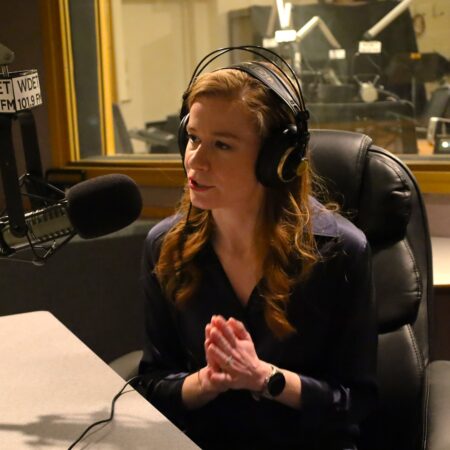
The series begins with Michigan State Senator Mallory McMorrow.

She talked with All Things Considered Detroit Host Russ McNamara on Jan. 8, 2026.

Listen: Mallory McMorrow runs for Michigan’s open U.S. Senate Seat

The following interview has been edited for length and clarity.

Healthcare access

Russ McNamara, WDET: What’s your plan to fix healthcare?

State Senator Mallory McMorrow: So I come at this from somebody who was an industrial designer, who’s solutions oriented, and our solution needs to be three fold. It needs to be universal. Everybody needs to have health care, no exceptions. It needs to be affordable. You should not be able have to break the bank or go bankrupt for a hospital visit.

So for me, that starts with a real public option, something that will force the private health insurers to compete. And I’m somebody who as a millennial, we’re around the same age, we don’t have the same job security that our parents did.

So having a real public option, there are a few states now who have implemented public options Colorado, Nevada and one other and they are starting to see real cost savings. They are starting to ensure that everybody has coverage. Vermont, on the other hand, as an example, they tried a single payer system and abandoned it 15 years ago after not being able to figure out the payment or the implementation.

RM: Just to kind of clarify on that you’re not in favor of something like Medicare for all. Vermont’s a very small sample size.

MM: I think it’s too big of a challenge. Admittedly, we are a country of more than 360 million people. When I talk to people all across the state, they don’t say that they they want one single system. They say, I want the insurance that works for me. I want to be able to see my doctor. I want to be able to go to my pediatrician, and I want it to be affordable. That, to me, requires more options, not fewer.

Abortion rights and the Supreme Court

RM: If elected as a U.S. senator, what would you do to reinstall abortion rights that were shifted back to the States by the U.S. Supreme Court?

MM: We need to codify abortion access as a fundamental right, the right that was taken away from women after 50 years of precedent with Roe [v. Wade].

I had legislation here in the state of Michigan to ensure that Medicaid covered reproductive rights abortion procedures. That was one of the things that unfortunately didn’t make it through the final version of the Reproductive Health Act. But your income should not determine whether or not you have access to the care that you need if something with your pregnancy goes wrong, and that is something that we need to fix on the federal level, and that I will fight for.

RM: Does that level of fight include eliminating the filibuster for abortion rights?

MM: Yes.

RM: Does that include packing the Court and increasing the number of justices?

MM: We have to fix the Supreme Court. I am open to any conversation on how we do that. The Supreme Court was supposed to be an independent arbiter of the Constitution. Very clearly they are not. They are now bending at the whims of this President, handing this president effectively immunity to do whatever the hell he wants. So I am talking to some constitutional experts right now, some judicial experts on whether that means term limits, whether that means oversight, whether it means reforms, or whether it means more justices. I am open to anything to ensure the Supreme Court does its job.

Affordability and wealth inequality

RM: The top one percent in this country control a third of the wealth in this country. That’s doubled since 1990. What is your plan to address the wealth gap?

MM: The average home buyer now is in their 40s. We have our population aging and declining in the state of Michigan, I talked to a lot of people who say they want to start a family. They cannot fathom how they would be able to afford to do that. So the biggest thing that we have to do is address income inequality, and one of the provisions that I just put into a piece of legislation in Lansing would prohibit companies from pursuing stock buybacks if they were to receive a state incentive. This was on the transformational brownfield legislation. We have companies continuing to pad their shareholders bottom lines instead of paying their employees. We need to raise wages. We need to create incentives so that companies are not paying their CEOs 100 times, 200 times, 300 times the average wage of their worker, and instead encourage companies to be better corporate citizens.

RM: Quick yes or no: Should billionaires exist?

MM: Yes, I think they can and should exist. And I look at somebody like Mark Cuban as an example. You can be a billionaire without being a jerk. This is somebody who goes out and says very publicly that this country, the infrastructure of this country, the educational system of this country, gave him the platform he needed to be successful. And he’s out there trying to bring medication costs down. Cost Plus drugs, I think is something that we should be taking a real hard look at it.

But you don’t need to be an Elon Musk to do it. I mean, you listen to this man who wants to become a trillionaire, trillionaire with a T, and his vision of the future is so dark and dystopian that he wants to abandon the earth and go to Mars. You should be successful in this country if you work hard, you play by the rules, but you should also be able and be forced to give back so that the next person has the same chance you did.

AI in Michigan

RM: Utilities and tech companies are pushing AI. Americans are a bit more skeptical. How do you reconcile resources required for data centers with the need to address climate change?

MM: Michigan has an opportunity to be the first state to do this right. There are some states and some companies that are getting this very wrong. And for data centers and for utility companies who are jacking up residence rates for these things to come online, they have every right to be angry.

You know, I just mentioned Elon Musk. You look at Colossus down in Memphis, that is an example of a company and a man doing everything wrong where rates are growing going up. The air quality in the surrounding neighborhood has become almost unlivable. People have asthma and they feel like they did not have a choice for what this company decided to do.

Now here in Michigan, we started by passing legislation that for a data center company to receive an incentive, they must ensure that rate payers are not subsidizing the cost of that data center. They must use at least 90% renewable energy to power that data center, and they need to be responsible with their water. That is a good start for us. I think any data center should be built with unionized labor. We need to make sure that these are good jobs. We need to make sure that it does not use Michigan’s water, that it has a closed source system that does not drain the Great Lakes or harm our water system, we need to ensure that it is bringing more renewables onto the grid.

If we do this right, we can encourage these companies and these investments to force the grid infrastructure upgrades that we have been so desperately needing for decades now in a way that can actually help create jobs and opportunity.

Finding a cure to fearmongering

RM: For the past few years, Republicans and conservative media have made it a priority to attack trans people, whether it’s trans kids playing sports, serving the military, and making their own health care decisions. What is your plan to support one of the most marginalized and at-risk segments of the population?

MM: Look for people who got to know me, maybe for the first time outside of my district and outside of Michigan, it was for a speech that I gave from the Senate floor in a moment when Republicans in our state were targeting and demonizing kids, and I am never going to run away from that. You know, whether or not a fifth grader wants to play soccer with her friends, doesn’t have any indication as to your future and your ability to start a business or raise a family.

And what the Republicans have done an incredible job of doing is by playing on people’s rightful anger and fear that they are not doing as well as they had hoped or as well as their parents did, and instead of actually solving those problems for people, they’re finding somebody to blame. First it was immigrants, then it was DEI [diversity, equity, inclusion] then it was trans kids. It is a smaller and smaller group of people.

And I fundamentally believe the way forward is that we have to be the party that solves those fundamental problems for people. If we can restore the American Dream and ensure that in Michigan and in the United States, if you work hard, you play by the rules, you can achieve that life that you wanted, then there won’t be this appetite to target and hurt vulnerable kids.

If we can restore the American Dream and ensure that in Michigan and in the United States, if you work hard, you play by the rules, you can achieve that life that you wanted, then there won’t be this appetite to target and hurt vulnerable kids.

I am really proud of the work that I’ve done in the state senate to expand Elliott Larson [Civil Rights Act] to ensure that you cannot be fired, you cannot lose housing because of who you are, how you identify or who you love. But obviously people are under attack right now, and we can’t run away from that, but we have to be very clear in telling Michiganders and Americans that this man and these Republicans don’t care about you either. They’re not doing anything to fix your problems, and you targeting a marginalized community isn’t going to make your life any better.

ICE immigration raids

RM: Immigration and Customs Enforcement has been terrorizing immigrant communities since its inception, all in the name of safety and fighting crime. That has been turned up a considerable amount since President Trump took office last year. This week, an ICE agent shot and killed a woman in Minneapolis. Bluntly, should ICE exist?

MM: Yes, and it needs to be vastly reformed. Michigan is a border state. We need Immigration and Customs Enforcement to do the work of what and who comes across the border. That should be its job. Its job should not be to be unleashed on communities to terrorize people, to go after people whose skin color isn’t exactly right, or who have an accent.

Right now, we have masked vigilantes who are being unleashed across the country, being recruited into these jobs with no experience, who are high on their own power, who are throwing American citizens in vans, deporting them. As we saw, as you mentioned, in Minneapolis this week, an American citizen is dead because she stopped her car. There is no justification for that use of force. And the U.S. Senate needs to do its job of oversight of a full investigation of what happened, not only here, but across the country, and then to reform this agency so it actually does the job of Immigrations and Customs Enforcement and not terrorizing Americans and immigrant communities.

Israel-Palestine conflict

RM: In October, you characterized the deaths of tens of thousands of Palestinians at the hands of Israeli military as genocide. Have you changed that stance at all?

MM: I am somebody who looks at the videos, the photos, the amount of pain that has been caused in the Middle East, and you can’t not be heartbroken. But I also feel like we are getting lost in this conversation, and it feels like a political purity test on a word—a word that, by the way, to people who lost family members in the Holocaust, does mean something very different and very visceral, and we’re losing sight of what I believe is a broadly shared goal among most Michiganders, that this violence needs to stop, that a temporary cease fire needs to become a permanent cease fire, that Palestinians deserve long term peace and security, that Israelis deserve long term peace and security, and that should be the role of the next U.S. senator, particularly in this primary.

We’ve got some candidates who are using this as a political weapon and fundraising off of it, and I think that that is just losing the humanity of what we’re seeing in the Middle East. And we deserve better.

RM: Should the US be giving money, weapons, military aid to Israel if they are indeed running a genocidal regime?

MM: We need to use the leverage that we have. You know, I came out in support of the Sanders resolution that would have blocked offensive weapon sales to Israel, and the more that Netanyahu pushes into Gaza, the worse this gets. And to be very clear, being in support of Israelis is not being in support of Netanyahu, in the same way that being in support of Palestinians is not the same as being in support of Hamas. And centering the humanity of what we see on the ground, and especially being sensitive to how many Michiganders are directly impacted by the impacts of the Middle East, is where we need to be.

So we need to use the leverage that we have as the United States as an ally to ensure that this war ends and that the ceasefire is a permanent ceasefire.

Campaign funding

RM: You’ve said you will not be taking campaign money from AIPAC, the powerful pro-Israel lobby. Where is the money in your campaign coming from?

MM: So far to date, we have outraised every other candidate on both sides of the aisle, and it is with zero corporate PAC dollars, and it is from people. We have raised more than $3.9 million for more than 60,000 individual donors. More than half of our donations are from people donating $200 or less. That is significantly more than any of the other candidates. In fact, I’ve got more grassroots support than my two Democratic opponents combined.

So it is by people, people who are donating $5 and $10 people who are donating what they can all across the country, and I am incredibly proud of that.

RM: So you’re turning away corporate money?

MM: Yes, no corporate PAC dollars at all.

Trusted, accurate, up-to-date.

WDET strives to make our journalism accessible to everyone. As a public media institution, we maintain our journalistic integrity through independent support from readers like you. If you value WDET as your source of news, music and conversation, please make a gift today.

Donate today »

The post Mallory McMorrow runs for Michigan’s open U.S. Senate Seat appeared first on WDET 101.9 FM.
Nessel challenges fast-tracked DTE data center deal, citing risks to ratepayers and lack of public scrutiny

Michigan Attorney General Dana Nessel is urging state utility regulators to reconsider their approval of special power contracts for a massive data center planned in Washtenaw County, warning the fast-tracked decision could leave electric customers exposed to higher costs.

The post Nessel challenges fast-tracked DTE data center deal, citing risks to ratepayers and lack of public scrutiny appeared first on Detroit Metro Times.

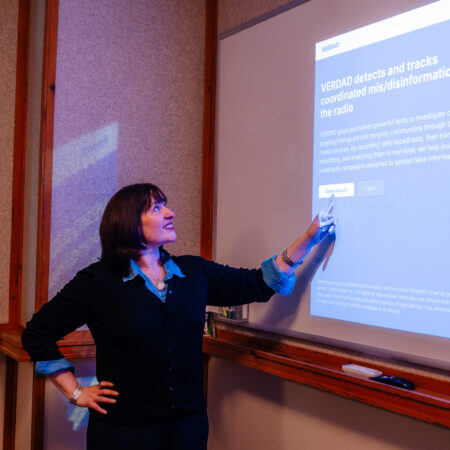
Detroit Evening Report: VERDAD disinformation monitoring tool, plus local events

Over the holidays, we’re sharing some of the stories Detroit Evening Report hosts produced for the radio this year. Today we hear a story from Nargis Rahman.   

Journalist Martina Guzman has created an AI-powered tool to monitor disinformation aimed at Spanish speakers via radio. 

The project is a part of Guzman’s work for the Damon J. Keith Center for Civil Rights at Wayne State University’s Law School. They recently received a $350,000 grant to expand VERDAD which stands for Verifying and Exposing Disinformation and Discourse. 

Guzmán told Nargis Rahman the tool will now expand to all 50 states, into multiple languages and also globally. 

Additional headlines for Friday, Jan. 2, 2026

Women’s Hockey League returns

The ladies come to hockey town tomorrow as the Professional Women’s Hockey League (PWHL) returns to Little Caesars Arena for their Takeover Tour. The Vancouver Goldeneyes play the Boston Fleet Saturday at 7 p.m.

Detroit audiences have broken PWHL attendance records at previous games. 

The league will play in Detroit again March 28 when the New York Sirens and Montreal Victoire play.

The league expanded last year from 6 teams to 8 – adding Vancouver and Seattle. No Detroit team has been announced yet. 

Fullmoon Party

The Euphoria Flow Sisters will host a Fullmoon Party Saturday evening at the Congregation. The event offers a chance to de-stress, release negative energy and shove in some self-care after the holidays.

It is free and will include an “ecstatic dance.”

Windsor tarot reading

Start the new year with appreciation for our international border and a psychic reading. GQ Tarot and Celestial Spirit Tarot are hosting Beyond Resolutions! New Year Psychic Readings at Celeste’s Café in Windsor starting at 10 a.m. Saturday.

The event is scheduled to fall on the Full Wolf Supermoon – a time for emotional release and profound clarity.

Celeste’s Café is at 1295 Ottawa Street in Windsor. Pre-booking is strongly encouraged. Call 519-256-9859.  

Listen to the latest episode of the “Detroit Evening Report” on Apple Podcasts, Spotify, NPR.org or wherever you get your podcasts.

Support local journalism.

WDET strives to cover what’s happening in your community. As a public media institution, we maintain our ability to explore the music and culture of our region through independent support from readers like you. If you value WDET as your source of news, music and conversation, please make a gift today.

The post Detroit Evening Report: VERDAD disinformation monitoring tool, plus local events appeared first on WDET 101.9 FM.

Detroit Evening Report: Dearborn receives firearm safety grant

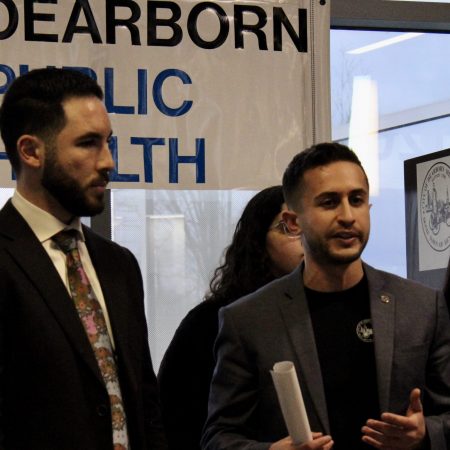
Dearborn’s Department of Public Health has been awarded a $101,000 grant to advance firearm safety. The Michigan Department of Health and Human Services funding supports collaborative efforts to educate gun owners on safe handling and storage. 

Dearborn Mayor Abdulllah Hammoud says firearm injury prevention is a public health and safety priority. 

The city’s health department will distribute firearm safety kits, including gun locks, lockboxes, and educational materials.  Dearborn Chief Public Health Officer Ali Abazeed says the grant supports evidence-based education and access to safety tools. 

Additional headlines for Monday, Dec. 22, 2025

Michigan Chief Medical Executive makes Standing Recommendation regarding children’s vaccines 

Michigan’s Chief Medical Executive, Dr. Natasha Bagdasarian, made a Standing Recommendation to continue issuing vaccinations on schedule based on recommendations by the American Academy of Pediatrics (AAP) and the American Academy of Family Physicians (AAFP). 

Bagdasarian shared that public health experts are not in agreement with new federal vaccine recommendations, prompting the announcement. One of the recent changes was dropping the Hepatitis B vaccine at birth and removing the COVID-19 vaccine recommendation for healthy children and pregnant women. 

Bagdasarian’s Standing Recommendation was made with the Michigan Department of Health and Human Services’ Division of Immunization. 

She says the recommendation does not supersede clinical judgment. She also asks health care providers to make vaccines accessible by removing barriers for patients. 

Bagdasarian says vaccines keep people safe and potentially save lives. 

EGLE renews license for hazardous waste facility 

The Michigan Department of Environment, Great Lakes, and Energy (EGLE) has renewed the license for a hazardous waste treatment and storage facility in Detroit for the next 10 years.

Hazardous Waste Management Facility Operating License to EQ Detroit Inc., which does business as US Ecology Detroit South, was issued the license after regulatory review and a public comment process. Several people strongly opposed the facility because it emits strong odors leading to health concerns like asthma. The facility also has a history of clean air violations. 

EGLE renewed the license, adding new requirements, such as expanding air and groundwater monitoring. The facility must replace six tanks beginning in January 2026 and install odor control equipment by the end of Dec 2027.

Tunnel in southwest Detroit 

The Great Lakes Water Authority has started building a sewage relief system near the Rouge River in Southwest Detroit. Crews will spend at least two years digging a tunnel to carry excess stormwater to an underused retention and treatment center. Chief Operating Officer Navid Mehram says the $87 million project should reduce the risk of flooding and sewage backups during heavy rain. 

So this is an example where we’re making an investment in our existing system by rerouting some flows, so that we can leverage an existing facility that wasn’t receiving all the flow it can treat.”

Mehram says the project will not increase customers’ sewage bills. He says state and federal funding will help pay for the tunnel. 

New tech firm in town 

Detroit is getting a new high-tech security and AI solution firm, Eccalon. The defense tech company will create 800 new jobs ranging from $25-100 per hour. 

The facility will have manufacturing operations, training programs and an innovation center. 

The company’s headquarters is moving from Maryland to become a part of the tech innovation in Detroit. Eccalon will be located at the Bedrock-owned Icon building at 200 Walker Street. 

Eccalon Chairman and CEO André Gudger says the new headquarters will develop cybersecurity and advanced manufacturing and automation. 

The company hopes to open early next year. 

Listen to the latest episode of the “Detroit Evening Report” on Apple Podcasts, Spotify, NPR.org or wherever you get your podcasts.

Support local journalism.

WDET strives to cover what’s happening in your community. As a public media institution, we maintain our ability to explore the music and culture of our region through independent support from readers like you. If you value WDET as your source of news, music and conversation, please make a gift today.

The post Detroit Evening Report: Dearborn receives firearm safety grant appeared first on WDET 101.9 FM.

Public meeting to discuss permits for Saline data center, impact on wetlands

Opposition to a proposed data center in Saline Township continues as state regulators prepare to take public comment on environmental permits tied to the project.

The Michigan Department of Environment, Great Lakes, and Energy will hold a virtual public hearing Thursday to gather input on whether to issue permits to developer Related Digital. The permits cover impacts to wetlands, streams, and nearby waterways.

Tim Bruneau, a member of Stop Saline Data Center who lives near the proposed site, raised concerns about the project’s closed-loop cooling system. He says repeated circulation concentrates contaminants such as glycol, rust inhibitors, and nitrates, which would eventually be discharged into the Saline River.

The project includes filling and excavating wetlands, installing culverts in unnamed streams, and constructing multiple stormwater outfalls that would discharge treated runoff into the Saline River, Bridgewater Drain, and other waterways. One of the outfalls would be located within the Saline River’s 100-year floodplain.

The virtual public hearing begins at 6 p.m. Information on how to attend is available at michigan.gov/egle.

Trusted, accurate, up-to-date.

WDET strives to make our journalism accessible to everyone. As a public media institution, we maintain our journalistic integrity through independent support from readers like you. If you value WDET as your source of news, music and conversation, please make a gift today.

Donate today »

The post Public meeting to discuss permits for Saline data center, impact on wetlands appeared first on WDET 101.9 FM.

Residents raise alarms over environmental risks tied to massive data center in Saline Township

State regulators are facing increasing pressure to slow down a $7 billion, 2.2-million-square-foot data center proposed for rural Saline Township, where residents and environmental groups warn the project would destroy wetlands, strain Michigan’s energy grid, and permanently reshape a farming community that opposes the development.

The post Residents raise alarms over environmental risks tied to massive data center in Saline Township appeared first on Detroit Metro Times.

❌