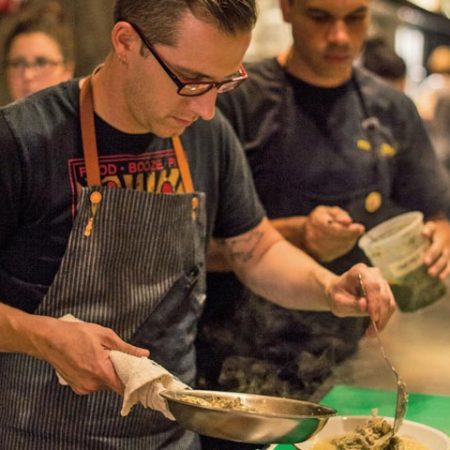
It’s easy to fall into a restaurant rut. But, it’s the new year, and that means a chance to turn the page and find some new places to eat. There’s a lot to be excited about in metro Detroit’s culinary world in 2026.
Melody Baetens, dining and entertainment reporter for Detroit News, compiled a list of new restaurant openings to look forward to in the coming year. She joined The Metro to take us through the list.
Listen to The Metro weekdays from 10 a.m. to noon ET on 101.9 FM and streaming on demand.
WDET strives to make our journalism accessible to everyone. As a public media institution, we maintain our journalistic integrity through independent support from readers like you. If you value WDET as your source of news, music and conversation, please make a gift today.
With New Year’s Day fast approaching, I want to plan on making the holiday delicious and easy. I have a one-dish lunch or dinner in mind. At my house, Jan. 1 is primarily spent relaxing in front of the TV watching the parade and football games. It’s part of our tradition.
Everyone seems to love this one-dish wonder, a baked pasta dish with sausage and black olives. You can change its personality by using a sausage that you prefer. Hot Italian sausage will yield a dish that is fiery, while mild Italian sausage makes a more kid-friendly meal. I like to use half hot and half mild. The choice is yours.
Happy New Year!
Baked Pasta with Sausage and Olives
Yield: 4 to 6 servings
INGREDIENTS
2 tablespoons extra-virgin olive oil, divided use
1 pound Italian sausage removed from casings, sweet or hot, or some of both
2 medium garlic cloves, minced
1 (28-ounce) can crushed tomatoes
1 (14.5-ounce) can diced tomatoes
3/4 cup pitted black olives, such as Kalamata, drained
Salt
1 pound penne or ziti
2 cups shredded mozzarella cheese, divided use; see cook’s notes
1/4 cup grated Parmesan cheese, divided use
2 tablespoons minced fresh parsley
Cook’s notes: Use the low-moisture style of mozzarella that is harder and often used for melting, not the fresh mozzarella.
DIRECTIONS
1. Adjust oven rack to middle position and heat oven to 400 degrees. Brush a 9-by-13-inch baking dish with 1 tablespoon oil. Cook sausage in a large, deep skillet until browned, about 5 to 6 minutes, breaking it up with spatula or wooden spoon. Transfer sausage to a bowl.
2. Drain all but 1 tablespoon fat from skillet, add the remaining 1 tablespoon oil and garlic; cook until fragrant but not brown, about 1 minute. Add crushed and diced tomatoes, return sausage to the skillet. Add olives and simmer until thickened, 15 to 18 minutes. Season to taste with salt.
3. Meanwhile, bring 4 quarts of water to boil in large pot. Add 1 tablespoon salt and pasta. Cook until slightly underdone. Reserve 1/4 cup cooking water. Drain pasta and return to pot along with reserved water. Stir in tomato sauce.
4. Pour half of pasta into prepared baking dish. Sprinkle with half of each cheese. Pour remaining pasta into dish, sprinkle with remaining cheeses and sprinkle with parsley. Bake until golden brown, about 20 minutes. Remove from oven and let it rest for 5 minutes before serving.
Source: Adapted from America’s Test Kitchen
Award-winning food writer Cathy Thomas has written three cookbooks, including “50 Best Plants on the Planet.” Follow her at CathyThomasCooks.com.
Baked Pasta with Sausage and Olives is a great dish to start the new year and can be made with either ziti pasta or penne, shown here. (Photo by Cathy Thomas)
In my childhood home, we had a leg of lamb two Sundays a month. I loved those Sundays, as did my Shetland sheepdog who was the recipient of the leftover bone. Mom’s recipe was simple. The meat was topped with olive oil, salt and pepper prior to roasting.
This recipe takes it up a notch making it the perfect entrée for special occasion holiday entertaining. This approach studs the meat with little “bouquets” made of rosemary sprigs, slivered garlic and anchovies. Don’t be put off by the anchovies; they taste delicious, offering just-right saltiness. Plan ahead when making this version; it tastes best if it is seasoned 1 to 2 days in advance and stored in the refrigerator to let the flavors meld.
My local supermarket rarely carries leg of lamb. I guess it is because it is so darn expensive. Markets such as Whole Foods, Bristol Farms and Gelson’s have them. I tested the recipe using a smaller bone-in leg, one that weighed in at a little less than 4 pounds. I used 2/3 of the amount of garlic, anchovy, rosemary and salt, and reduced the roasting time by about 25 minutes (roasting it only 48 minutes after turning the oven temperature down).
Yes, my guests will get smaller servings, but I will make up for it by providing loads of vegetables.
Roast Leg of Lamb with Anchovy, Rosemary, Garlic and Piment d’Espelette
Yield: 8 to 10
INGREDIENTS
1 whole bone-in leg of lamb, 7 to 8 pounds, preferably with hip bone removed, with 1/8-inch layer of fat, see cook’s notes
5 large garlic cloves, peeled, cut into thin slivers
4 anchovy fillets, rinsed, patted dry and cut into 20 little pieces
4 leafy sprigs rosemary, cut into twenty pieces
2 teaspoons kosher salt
2 teaspoons piment d’Espelette, see cook’s notes
1 to 2 tablespoons extra-virgin olive oil
3/4 cup dry white wine or dry vermouth
Cook’s notes: My local supermarket rarely carries legs of lamb. I guess it is because it is so darn expensive. Markets such as Whole Foods, Bristol Farms and Gelson’s have them. I tested the recipe using a smaller bone-in leg for this recipe, one that is severed at the knee, weighing only a little less than 4 pounds. I use 2/3 of the amount of garlic, anchovy, rosemary and salt, and reduced the roasting time by about 25 minutes (roasting it only 48 minutes after turning the oven temperature down). Yes, my guests will get smaller servings, but I make up for it by providing loads of vegetables.
Piment d’Espelette is a brick-red powder made from chilies from the town of Espelette in the Basque region of France. It is milder than cayenne; its light heat is nuanced with sweetness. It is available at Savory Spice Shop in Corona del Mar (928 Avocado Ave.), or from several sources online. If you prefer, substitute hot paprika (not smoked paprika).
DIRECTIONS
1. Using the tip of a paring knife, make 20 small holes on all sides of lamb. Stuff each hole with a sliVer of garlic, a bit of anchovy and a small sprig of rosemary, leaving the tips of the rosemary sticking out. (It may help to gather the seasonings into a little “bouquet” and use the point of the knife to tuck a “bouquet” into each hole.) Season surface with salt and piment d’Espelette. Set in a large baking dish and refrigerate, uncovered or loosely covered, for 1 to 2 days. Let lamb come to room temperature for about 2 hours before roasting.
2. Arrange oven rack in the lower third of oven and heat to 450 degrees (425 degrees convection).
3. Roasting: Rub surface with olive oil. Place lamb with the rounder, meatier side up in roasting pan just large enough to accommodate it (it’s fine if the top of the shank rests on the edge of the roasting pan.) Roast 25 minutes and then pour wine over lamb. Lower temperature to 325 degrees (300 degrees convection). Roast until a meat thermometer inserted in the meatiest part of the leg reaches 120 to 125 degrees for rare, about 1 hour from the time you lowered the oven heat; or 130 to 135 degrees for medium rare, about 1 1/4 hours.
4. Remove lamb to carving board, preferably one with a trough, to rest for 20 to 35 minutes. Tilt roasting pan and spoon off as much of the clear fat as you can. Using a wooden spoon, scrape up the pan drippings (if they are too stuck to the pan to scrape up, add 1/4 cup water to dissolve them). Set aside the pan drippings to drizzle over the carved lamb. Carve and serve drizzled with the pan drippings, or layer the slices in the roasting pan so they soak up the pan juices and serve family style (I really like this soak-in-the-pan approach), from the roasting pan.
Source: Adapted from “All About Roasting” by Molly Stevens (W.W. Norton, $35)
A leg of lamb is shown with “bouquets” of rosemary sprigs, garlic and anchovies inserted before roasting. (Photo by Cathy Thomas)
After carefully choosing the freshest produce at the market, people face even more choices with vegetables, fruit, meat and dairy products at home that can help prolong freshness, minimize waste and prevent foodborne illnesses.
There are several methods to store and preserve food, such as canning and pickling produce, freezing leftover ingredients and storing food in the refrigerator. Although refrigeration is effective and most households have the appliance, experts say it is safe to say most families simply set it and forget it.
“Storing perishable items in refrigerated conditions is the first step, but it is necessary to stay aware of how long certain foods have been prepared, exposed to the air, and stored. Refrigerated items are still able to develop mold and dangerous microorganisms like listeria, Salmonella, and E. coli, so consumers must stay alert and take necessary precautions,” said Emily Hilliard, press secretary for the U.S. Department of Health and Human Services.
This is especially important during the holiday season, when people buy more and expect meals to last. Planning recipes, buying less and being creative with extras and leftovers can help reduce food waste, said Diane Beckles, professor at the University of California, Davis, who studies the quality of fruits and vegetables. She said these steps can also help stretch shopper’s budgets, especially with inflation on the rise and federal food aid under threat as the government shutdown continues.
Preparing your groceries for refrigeration
Experts say proper food storage starts before groceries even reach a refrigerator. Buy products before their expiration or “sell by” dates — which tell stores how long to display their products, and are not safety dates. Follow handling instructions and place foods in the refrigerator within two hours of being at room temperature. Other tips include keeping appliances clean by wiping spills, especially from thawing meat, and discarding spoiled food. The Department of Energy recommends keeping refrigerator temperatures between 35-38 degrees Fahrenheit (1.7-3.3 degrees Celsius).
Social media offers seemingly endless tips to make food last longer, such as cleaning fruits before refrigerating and storing everything in plastic or glass containers. But experts say there isn’t just one right way to properly store many foods.
It comes down to understanding temperature and relative humidity when storing produce, said Wyatt Brown, emeritus professor at California Polytechnic State University in San Luis Obispo. After that, “it becomes more refined” and includes considerations like storage space, timing of meals and personal preference.
For Beckles, the most important thing is to eat more fruits and vegetables — not worrying so much about how they are stored. “I recommend not storing tomatoes in the fridge, but there are people who feel better doing so,” she said. “It’s not going to taste as good, but if they eat them and get the nutrients, who cares.”
Groceries lay on a kitchen counter before being sorted for storage in the pantry and refrigerator Oct. 25, 2025, in Flagstaff, Ariz. (AP Photo/Cheyanne Mumphrey)
Fruits and vegetables
Most produce, including fruits, vegetables, leafy greens and herbs, is alive. Experts say refrigerating produce can slow spoilage, if done correctly. Brown, who studied post-harvest technology and taught for 31 years, said refrigeration can also maintain nutrition and extend shelf life.
Experts recommend using your fridge’s crisper drawers to separate fruits and vegetables and control humidity. Keep berries dry and wash them just before eating. Refrigerate broccoli, carrots, and green beans, and store leafy greens in plastic or paper bags to prevent wilting.
Some produce, like tomatoes, pears and apples, emit ethylene gas as it spoils causing the surrounding fruits and vegetables to ripen more quickly, so experts say to get rid of rotting food to keep other items fresh. Onions, garlic, apples, nectarines, citrus fruits and squash can all be left on the countertop.
Brown said to consider storing onions and potatoes outside of the refrigerator to limit roots sprouting from the bulbs. “If you store potatoes in the refrigerator for a long time, the starch will break down into sugar, and the Maillard reaction could cause the sugars to produce dark pigments when cooked,” he said, explaining the reaction causes dark patches on cooked potatoes.
Groceries lay on a kitchen counter before being sorted for storage in the pantry and refrigerator Oct. 25, 2025, in Flagstaff, Ariz. (AP Photo/Cheyanne Mumphrey)
Proteins, including meats, eggs and beans
Uncooked meat should remain chilled and not left at room temperature for more than two hours, or one hour if above 90 degrees Fahrenheit (32 degrees Celsius), federal health agencies say. Avoid thawing meats on the counter, and marinate in the refrigerator, experts say. When placed in the refrigerator, meats should be stored at the bottom to prevent cross-contamination from drips or spills.
Food safety guides from the Food and Drug Administration and the Department of Agriculture’s Food and Nutrition Service suggest storing eggs on the middle or back shelves rather than the door, where the temperature is warmer. Avoid washing eggs because it removes their natural protective outer layer called the bloom. Unwashed farm-fresh eggs can be stored at room temperature, but refrigeration extends their shelf life.
Dairy products, milk and cheeses
Milk, yogurt and cheeses should all be refrigerated. Experts say yogurt is a ready-to-eat product that can be stored on the top shelves in refrigerators. On the other hand, cheeses should not be stored on top shelves or the door where air circulation could dry them out. Experts say soy, coconut and nut milks should also be refrigerated but, depending on the carton, can be stored at room temperature until opened.
Breads, grains and rice
The FDA advises against refrigerating bread, as it can dry out and become stale. However, refrigeration slows mold growth in humid climates, and freezing preserves quality for up to six months. Non-perishable foods like rice, pasta, and flour can be stored at room temperature.
Other
Ready-to-eat meals and leftovers can be stored on the top shelves for quick and convenient access, while dressings, condiments and non-dairy drinks can be kept in the door where it is warmer. The USDA says leftovers can be kept in the refrigerator for 3 to 4 days or frozen for 3 to 4 months. Alcohol storage depends on the type, whether it’s opened, and if it contains dairy or fruit. Opened wine should be refrigerated on its side to slow oxidation and keep the cork moist.
Mumphrey reported from Flagstaff, Arizona.
Groceries lay on a kitchen counter before being sorted for storage in the pantry and refrigerator Oct. 25, 2025, in Flagstaff, Ariz. (AP Photo/Cheyanne Mumphrey)
The new notice comes after the Trump administration said it would not tap roughly $5 billion in contingency funds to keep benefits through the Supplemental Nutrition Assistance Program, commonly referred to as SNAP, flowing into November. That program helps about 1 in 8 Americans buy groceries.
“Bottom line, the well has run dry,” the USDA notice says. “At this time, there will be no benefits issued November 01. We are approaching an inflection point for Senate Democrats.”
The shutdown, which began Oct. 1, is now the second-longest on record. While the Republican administration took steps leading up to the shutdown to ensure SNAP benefits were paid this month, the cutoff would expand the impact of the impasse to a wider swath of Americans — and some of those most in need — unless a political resolution is found in just a few days.
The administration blames Democrats, who say they will not agree to reopen the government until Republicans negotiate with them on extending expiring subsidies under the Affordable Care Act. Republicans say Democrats must first agree to reopen the government before negotiation.
Democratic lawmakers have written to Agriculture Secretary Brooke Rollins requesting to use contingency funds to cover the bulk of next month’s benefits.
But a USDA memo that surfaced Friday says “contingency funds are not legally available to cover regular benefits.” The document says the money is reserved for such things such as helping people in disaster areas.
It cited a storm named Melissa, which has strengthened into a major hurricane, as an example of why it’s important to have the money available to mobilize quickly in the event of a disaster.
Some states have pledged to keep SNAP benefits flowing even if the federal program halts payments, but there are questions about whether U.S. government directives may allow that to happen. The USDA memo also says states would not be reimbursed for temporarily picking up the cost.
Other states are telling SNAP recipients to be ready for the benefits to stop. Arkansas and Oklahoma, for example, are advising recipients to identify food pantries and other groups that help with food.
Sen. Chris Murphy, D-Conn., accused Republicans and Trump of not agreeing to negotiate.
“The reality is, if they sat down to try to negotiate, we could probably come up with something pretty quickly,” Murphy said Sunday on CNN’s “State of the Union.” “We could open up the government on Tuesday or Wednesday, and there wouldn’t be any crisis in the food stamp program.”
FILE – A California’s SNAP benefits shopper pushes a cart through a supermarket in Bellflower, Calif., Feb. 13, 2023. (AP Photo/Allison Dinner, File)
WASHINGTON (AP) — The Trump administration is rejecting the idea of using roughly $5 billion in contingency funds to keep food aid flowing into November amid the government shutdown, according to a Department of Agriculture memo that surfaced Friday. States temporarily covering the cost of benefits next month will not be reimbursed, the memo says.
Democratic lawmakers and various advocacy groups have been calling on the administration to use the contingency fund to provide partial benefits into November though the Supplemental Nutrition Assistance Program, commonly referred to as SNAP.
But the two-page document states that “contingency funds are not legally available to cover regular benefits.”
The prospect of SNAP benefits running out as a result of the shutdown has become a major concern in the states. Lawmakers from both political parties are blaming the other for the hardship that would ensue. The program helps about 1 in 8 Americans buy groceries.
The document states that the contingency fund is reserved for such things as helping individuals in disaster areas. It cited Tropical Storm Melissa, which could become a major hurricane in the coming days, as an example of why it’s important to have funds available to mobilize quickly in the event of a disaster. The document was obtained by The Associated Press and was first reported by Axios.
The document blames Democrats for the government shutdown that began Oct. 1 and states that November SNAP benefits would be paid on time “if not for Congressional Democrats blocking government funding.”
House Democratic leader Hakeem Jeffries earlier Friday told reporters the administration has the resources to ensure than not a single American goes hungry on Nov. 1. He accused Republicans of “trying to weaponize hunger” and called it unconscionable.
Meanwhile, Democrats in the House and Senate have written Agriculture Secretary Brooke Rollins requesting that she use the contingency fund to cover the bulk of November benefits.
“Choosing not to ensure SNAP benefits reach those in need this November would be a gross dereliction of your responsibilities to the American people,” said a letter sent Friday by 214 House Democrats.
The latest department guidance on the contingency fund appears to contrast in some respects with the department’s 55-page plan for operations in the event of a shutdown. That plan stated that it’s evident Congress has intended for SNAP operations to continue since the program has been provided with multi-year contingency funds to cover state administrative expenses and to pay for participant benefits should a funding lapse occur in the middle of the fiscal year.
The department guidance that surfaced Friday says the contingency fund is not available to support the current budget year’s benefits because “the appropriations for regular benefits no longer exists.”
The shutdown began when a short-term measure to fund the government failed to advance in the Senate. The current impasse is now the second-longest on record. The administration took steps leading up to the shutdown to ensure SNAP benefits were paid in October, with states and lawmakers looking for guidance from the administration for what would happen next month.
The SNAP program is administered by the states. Officials in Louisiana, Vermont and Virginia pledged Thursday to keep food aid flowing to recipients in their states, even if the federal program is stalled because of the shutdown. Other states have explored using their own funds to prop up the program but have run into technical roadblocks.
Some states have been telling SNAP recipients to be ready for the benefits to stop. Arkansas, for example, is advising recipients to identify food pantries and other groups that might be able to help, and to ask friends and family for aid.
Food and milk sit in a shopping cart during a Forgotten Harvest distribution event held at Woodside Bible Church, Friday, Oct. 24, 2025, in Pontiac, Mich. (AP Photo/Mike Householder)

 Login
Login