Reading view

There are new articles available, click to refresh the page.

Detroit Evening Report: MDHHS offers stipends for behavioral health interns

The Michigan Department of Health and Human Services is offering stipends for interns enrolled in a behavioral health bachelor or master’s program. MDHHS is allocating $1.25 million for the program.  

MDHHS Director Elizabeth Hertel says the funding supports mental health care workers. The Behavioral Health Internship Stipend Program is in its fourth cohort, which supported 159 students last year. The program offers money to students for unpaid internship costs such as tuition, fees, and living expenses. 

Students pursuing degrees in marriage or family therapy, behavioral analyst,  social workers and counselors are eligible to apply for the one-time stipend ranging from $5 to $15,000 each.

Applications close tonight.

Additional headlines for Monday, Jan. 26, 2026

Radon Action Month

January is Radon Action Month. Radon is an odorless, colorless, and tasteless radioactive gas that’s found in soil. It’s naturally created through the breakdown of uranium in soil around homes.

The gas can cause lung tissue damage through radiation, making it the leading cause of lung cancer in nonsmokers. 

Michigan’s Department of Environment, Great Lakes, and Energy recommends testing homes every two years for exposure. People can pick up a testing kit from their local health department.    

Al-Ikhlas Director Dr. Nadir Ahmad passes away 

Detroit’s Al-Ikhlas Training Academy’s Director and Founder, Dr. Nadir Ahmad passed away on Jan. 22. His funeral was held on Saturday.

In 2020, the Dream Storytelling oral history project interviewed Ahmad. He told the archive he moved from Virginia to Detroit to study Islam at the Wayne County Community College as part of the Muslim World Studies Program in 1980.  Ahmad taught at the Clara Muhammad School in Detroit, later serving as assistant principal and then principal. Ahmad founded the Islamic school Al-Ikhlas Training Academy in Detroit in 1991.

Community members and current and former students posted several comments on Facebook, sharing memories and commemorating the educational leader as someone who defined an era in Detroit. Ahmad was also a U.S. military veteran.  

ProsperUs Detroit hosts training program

ProsperUs Detroit is hosting an Entrepreneur Training Program for the Spring of 2026. The 12-week program provides one-on-one support for businesses to learn how to register their business, create budgets and systems for bookkeeping. The group will also learn how to write a business plan.

Participants will also study business models, target markets, and finances. Applications are due by Feb. 1. 

Outlier and Detroit-ography host trivia

The Outlier Collective is hosting a trivia event next month. Test your knowledge of Detroit with Outlier Media’s Civic Life Reporter Briana Rice and Detroit-ography’s Alex B. Hill.

Tickets are $5 a person. The event is being hosted by Outlier Media and Detroit-ography at the Brewery Faisan on Feb. 4 from 6:30-9 p.m. Register at outliermedia.org/our-events/.   

Listen to the latest episode of the “Detroit Evening Report” on Apple Podcasts, Spotify, NPR.org or wherever you get your podcasts.

Support local journalism.

WDET strives to cover what’s happening in your community. As a public media institution, we maintain our ability to explore the music and culture of our region through independent support from readers like you. If you value WDET as your source of news, music and conversation, please make a gift today.

The post Detroit Evening Report: MDHHS offers stipends for behavioral health interns appeared first on WDET 101.9 FM.

Abdul El-Sayed runs for Michigan’s open U.S. Senate seat

In 2026, voters in Michigan will cast ballots for races involving the office of Governor, Attorney General, and Secretary of State. Gary Peters (D-MI) is opting to retire, so there’s an open U.S. Senate seat.

Democrats have three strong candidates: Abdul El-Sayed, Mallory McMorrow, and Haley Stevens. All three have raised millions of dollars for their campaigns ahead of the August primary.

Over the next few months, Detroit Public Radio will be checking in with the candidates so our listeners can make an informed decision. The focus of this first round of interviews is to set a baseline for the candidates views on policy and what separates them from their competitors.

The series continues with Dr. Abdul El-Sayed, a public health expert who has served as the health director for both Detroit and Wayne County.

He talked with All Things Considered Detroit Host Russ McNamara on Jan. 21, 2026.

Listen: Abdul El-Sayed runs for Michigan’s open US Senate seat

The following interview has been edited for clarity and length. 

Medicare for All

Russ McNamara, WDET: You’ve written a book about Medicare for All. Why do you prefer that over a public option for health insurance?

Dr. Abdul El-Sayed: We’re watching as healthcare is becoming very quickly one of the most unsustainable features on anybody’s budget sheet. You’re seeing premiums go up 10, 15, 20%—and that’s not even if you’re on one of the ACA plans, for which the Trump Administration has now pulled subsidies going into next year. The unsustainability of our system is going to be paramount, and it’s going to be top of voters’ minds.

I’ve been consistent about the need for Medicare for All.

Medicare for All is government health insurance guaranteed for everyone, regardless of what circumstances you’re in. If you like your insurance through your employer or through your union, I hope that’ll be there for you. But if you lose your job, if your factory shuts down, you shouldn’t be destitute without the health care that you need and deserve.

But Medicare for All does more than just guaranteeing health care. It also addresses the increasing costs that we’re seeing skyrocket in our system by being able to negotiate prices on behalf of all of us, and it also creates a system where doctors and hospitals and clinics can compete with each other in a truly free market system. This is what we’ve needed in America for a very long time, and like you said, I wrote a book on how to do it back in 2021.

The foundations of our system have just gotten less sustainable since then. It would free us of so many of the fears that people have every day, the $225 billion of medical debt that Americans currently hold, which is higher than the GDP of half of the states in the entire country.

And beyond that, it gives us the safety and security that would spur the economy. Too often, small businesses don’t get founded simply because people are stuck in dead end jobs, even if they have an amazing idea, because they’re afraid of losing their health insurance.

Now a public option is exactly that; it’s just an option. There is no reason why it would actually address any of the foundational problems in our system. It wouldn’t bring down the rising costs. It wouldn’t guarantee people health care, and we don’t really know how much it would cost. Plus, there’s an added thing that folks need to think a little bit about—that those of us who’ve thought about the health care system understand—if you have a public option, what happens is, the private health insurance system will try to dump all of the most expensive patients onto that public option, vastly increasing the cost of that public option and making it unsustainable.

That being said, I want to be clear about something. I think too often when we talk about health care we talk about this or that. To me, anything that increases health care access, anything that would do so by increasing the public’s capacity to provide it and would reduce the power of corporations, is something that I would vote for. But I’m not going to make the mistake of pretending like that’s the whole answer. The whole answer is we need to get to Medicare for all. But if you want to climb to Mount Everest, you got to get to base camp, and you got to climb some other hills.

So I understand that we need to take steps along the way. But anybody who wants to tell you that somehow a public option will solve our health care problems doesn’t understand how health care works, or has taken too much money from the industry that does not want Medicare for All because of what it may mean for their profits.

The growing wealth gap

RM: High health care costs are just one part of the equation when it comes to the high expenses that Americans are facing right now. There’s also a concentration of wealth in the top 1, 5, 10% How do you address the growing wealth gap in this country?

AE: You know, I’m the only person running for U.S. Senate who’s never taken a dime of corporate money to fund a campaign, and that shows up in the ways that I stand up to corporations. So there’s two pieces here.

Number one: we’ve got to make it so that corporations can no longer buy access to politicians to do their bidding—a system that every other candidate I am running against has willingly participated in but me—and that makes sure that the system is not rigged against the rest of us, so that big corporations and billionaires can continue to make yet more money off of a system that funnels money from our back pockets into theirs.

But the second part of this is that I think we finally need to start taxing billionaire wealth. I’ve been very clear about the fact that for too long, our system has allowed billionaires to pay a lower effective tax rate than you and I, who make our money the old fashioned way—working for it.

The way we should be judging our economy is not by how much wealth accumulates at the very top, how many more billionaires we spit out, but rather we should be judging our economy based on whether or not it provides everyday Americans access to the basic means of a dignified life.

And I think we need to rethink the way that we do taxation in mainly so that we’re taxing the wealth of people make $100 million or more, because guess what? If you tax a billionaire at 8%, guess what? They’re still they’re still a billionaire. They’re still going to have money their kids, kids, kids, kids are still going to be rich.

And I think that we can get along to making sure that our kids have great public schools, that we’re providing health care and good infrastructure for all of us. And if we can do that, I think we can start to bring down the massive wealth inequality that’s only growing in this country.

RM: Ethically, should billionaires exist?

AE: I don’t think that our system should be in the business of creating billionaires. I think our system should be in the business of empowering everyday folks to be able to live a life with access to the basic dignities that they need and deserve, good housing, good health care, affordable food, the experience of knowing that you’re sending your kid to a school that dignifies their brain and empowers them for a career into the future.

Too few people have access to that right now, and I think that the way we should be judging our economy is not by how much wealth accumulates at the very top, how many more billionaires we spit out, but rather we should be judging our economy based on whether or [it] not provides everyday Americans access to the basic means of a dignified life.

We are the richest, most powerful country in the world. It is a crazy thing that people are struggling to afford their groceries, struggling to afford housing, wondering whether or not if they’re under 40 they’ll ever own a home, or if they can stay in their home. If they’re under 65, worried about whether or not they are going to go bankrupt simply because they got sick. Those are choices that we make, and at the wrong end of creating an economy that spits out more and more billionaires is the opportunity to be able to solve so many of those challenges for folks.

I think we need to reorient that system. That means, yes, taxing billionaires—it also means rethinking the firewall that should exist between billionaire money and corporate money and our politics. It means standing with unions, it means empowering small businesses, and it means guaranteeing every single person the health care that they need and deserve.

Data centers and the AI boom

RM: Michiganders seem to hate data centers. The growing AI boom—if it comes to fruition—will eat up a lot of resources. How would you weigh the need to address climate change with the constant need for business growth and more jobs in this state?

AE: In the last year alone we’ve had 15 data center proposals. Each of those data centers is partnering with a corporate utility that has raised our rates without actually improving the reliability of our electricity. Our costs go up, our reliability does not and we’re watching as these huge corporations are partnering with these utilities to try and bring these projects into our communities, promising a certain number of jobs.

I understand the fears that everyday folk have about what this will mean for the price of their electricity, the water that we take for granted in a state like Michigan, whether or not they’re going to have a job in the future. And so we’ve issued a data center terms of engagement. And what these terms of engagement are meant to do is clarify what the real risks are and hold data center projects accountable to addressing those risks.

Number 1: if you’re promising jobs, you better actually create the good union jobs that you say you want to create.

Number 2: your project should not increase the price of electricity for anyone in our state.

Number 3: you should have closed loop systems that do not rely on our fresh water or stress our water infrastructure.

Number 4: there should be a community benefits agreement that is negotiated with the local community to make sure that the value of the project actually moves into the community in which it’s going to be housed.

Number 5: investments that are made should improve the reliability of our utilities.

Number 6: these should be enforceable by penalty.

And the beautiful thing about this approach is that it offers a roadmap, both for local communities to hold data center projects accountable, but also it creates the pathway for the kind of federal legislation that I’d like to get passed as a U.S. Senator.

But these are challenges that we’re facing and the kind of approach that we’ve seen on the part of the corporations and the utilities, where they try to fly by night and steamroll local municipalities to get their projects done, all it’s done is fan the flame on mis and disinformation.

So what we want is clarity. We want transparency. We want integrity. We want honesty, and we want to make sure that folks understand exactly what’s coming to their local communities.

Accountability in government, Supreme Court reform

RM: Do you support the elimination of the filibuster, and how do you feel about making significant changes to the structure of the Supreme Court, whether it’s packing it, term limits, or making sure that there’s some sort of ethical accountability?

AE: The filibuster allows senators to hide behind just one senator, in effect, veiling them from democracy itself. Because if you don’t have to take a hard vote, your public won’t hold you accountable for the hard vote that you just took.

Similarly, the Supreme Court has acted in ways that demonstrate that really it’s become just a third political arm of government. So I oppose the filibuster.

If you look at what Trump is doing, he’s doing most of it by executive fiat. Most of what he’s trying to do is he’s trying to operate through the White House itself and where checks have failed have been at the Supreme Court, and I think that we need to start talking a bit about what term limits might look like.

I don’t think that this current system serves our democracy very well. I proposed a system that says that every president should have three appointments. Every Supreme Court justice should have at least 10 years and a possible renewal for another 10 years. But what that does is it incentivizes the selection of of jurists who want to interpret the Constitution on its own terms, because all of them may not know who the person making a decision about the reappointment might be, and it addresses the fact that you don’t want jurists who are too Junior and haven’t had as much experience or too senior, and may not be at the top of their game. I do think we need Supreme Court reform. 

Foreign policy

RM: U.S. foreign policy is currently at the forefront of the global conversation with President Trump’s ongoing thirst for Greenland, his Board of Peace for Gaza and the recent attack on Venezuela for oil. As a senator, what would your ideal foreign policy for the US?

AE: I believe in international law. I read my history. I look at all the effort after World War II, to stop the next world war from happening again. And courageous leaders who watched the carnage of that war came together and said, We need international law that we all abide by.

And the frustration is that as we’ve developed as the world’s superpower, we have sometimes abided by that international law and sometimes broken it. And I think where we have abided by it, where we have stood up, for example, to protect international law in circumstances like Bosnia and Herzegovina, in circumstances like Ukraine, I think we do great good in the world, but too often, we have decided to skirt that international law. When you look at the war in Iraq, when you look at Vietnam, and right now, when you look at the unilateral funding and subsidies of a genocide in Gaza, we have been the chief violator of international law.

My vision for our foreign policy is that, yes, we are strong, but we are the first among equals to stand up for that international law, rather than being the first to break it.

Immigration and Customs Enforcement

RM: Immigration and Customs Enforcement agents have been terrorizing immigrants in communities of color – in blue states and cities – especially over the past year. Should ICE exist?

AE: No, we need to abolish ICE.

I just recently came back from my own personal fact finding mission in Minneapolis. Now I’m running for Senate in Michigan, but I also understand that if they can occupy a city like Minneapolis, they can do the same here in Michigan.

I just want to be clear about what ICE is. They tell us that this is about immigration and customs enforcement, but let’s be clear, immigration law is not criminal law, it’s civil law. So why do you need masked men carrying heavy weaponry on peaceful streets?

They tell us that this is about protecting the southern border, but I’ve looked at a map, and Minneapolis is not very close to the southern border. We can have a safe and secure southern border. We can enforce immigration law. But ICE is not about that. ICE is a paramilitary force normalizing the use of government power on peaceful streets, in thrall to one man. They are using the pretext of immigration to weaponize against the laws and norms and mores of our democracy and our Constitution itself. And I believe that it ought to be abolished.

If the idea of ICE is that they’re supposed to keep you safe, go ask Renee Good, or her widow or her orphaned child about how safe Renee Good is because of ICE.

I talked about abolishing ice back in 2018 because anybody could have seen where this is going. And now we’ve gotten here, and I shudder for our state, because they’re talking about buying a facility in Highland Park. They’ve got the facility in Baldwin. I do not want to see what I saw in Minneapolis here at home.

So when I’m in the U.S. Senate, I intend to lead the effort to abolish ICE, because I do not believe that it has anything to do with keeping our southern border secure and safe—which I intend to do—or with enforcing any of the laws when it comes to immigration, this is about normalizing paramilitary force and thrall to one man on our streets. And if there is anything that’s antithetical to the idea of America, it’s that.

Transgender rights

RM: The rights of transgender people to seek care, serve in the military or just play high school sports has been used by conservatives as a wedge issue, not just between Republicans and Democrats, but within the Democratic Party, what will you do to support that small, but disproportionately targeted part of our community?

AE: I believe that rights are rights, are rights, and when you assent to somebody taking away somebody else’s rights, you are at some point assenting to somebody coming for yours.

We have to stand together to fight for our collective rights, even when those rights are rights we may never see ourselves using. And I think that is it is critical for us to recognize where MAGA has tried to use this conversation to tear people apart, to get them into positions where we’re having a conversation about high school sports, rather than a conversation about health care or a conversation about affordable groceries or a conversation about how to make sure home ownership is possible. Those are the conversations that I’m hearing about up and down my state.

So I think it’s perfectly within the means of local communities and sporting governing bodies to lead the conversation about high school sports. I think it’s important for doctors to be able to provide the health care that their patients need in consultation with their parents if they are not of age.

But that has nothing to do with our broader public conversation in our politics. And so I want politics to be solving the problems that politics should be about solving. I want to make sure that communities and parents and families and doctors and sporting bodies get to make these decisions together, in consultation with each other, to take on these problems. Because every single moment that Republicans want us to be talking about trans kids or trans kids playing sports is a moment we’re not talking about making sure that everybody gets the health care that they need and deserve, and that people get access to housing, and those are the conversations we need to take on that they are imminent in our lives.

But rights are rights, are rights, and we need to be standing up for everybody’s rights when anybody tries to take them away.

Trusted, accurate, up-to-date.

WDET strives to make our journalism accessible to everyone. As a public media institution, we maintain our journalistic integrity through independent support from readers like you. If you value WDET as your source of news, music and conversation, please make a gift today.

Donate today »

The post Abdul El-Sayed runs for Michigan’s open U.S. Senate seat appeared first on WDET 101.9 FM.

The Metro: Detroit’s new neighborhood safety office will lead with community residents

Safety continues to improve in Detroit. 

Recent numbers suggest that homicides fell well below 200 last year. That was the first time that happened in six decades. 

There are a number of things that are given credit for the decline. Community violence interventionists who are preventing harm, and police officers that focus on de-escalation and complete their homicide investigations. It can also be attributed to increased surveillance with things like Project Green Light. 

Now, Mayor Mary Sheffield is creating an Office of Neighborhood & Community Safety, which will focus on mental health issues, after-school programs and resident access to jobs to further increase safety. 

What exactly will the office do? And why is a holistic approach needed to increase resident safety?

Shantay Jackson is the Director of the National Offices of Violence Prevention Network at the National Institute for Criminal Justice Reform, which will help establish Detroit’s office. She spoke with The Metro‘s Sam Corey.


Listen to The Metro weekdays from 10 a.m. to noon ET on 101.9 FM and streaming on demand.

Subscribe to The Metro on Apple Podcasts, Spotify, NPR.org or wherever you get your podcasts.

Support local journalism.

WDET strives to cover what’s happening in your community. As a public media institution, we maintain our ability to explore the music and culture of our region through independent support from readers like you. If you value WDET as your source of news, music and conversation, please make a gift today.

More stories from The Metro

The post The Metro: Detroit’s new neighborhood safety office will lead with community residents appeared first on WDET 101.9 FM.

The Metro: ROSE offers moms support before and after the postpartum period

Being a mom can mean a lot of different things. For people experiencing pregnancy, the whole ordeal can be stressful, daunting and quite scary.

And without the proper tools and resources, moms are often at risk after giving birth during the postpartum period, which can lead to dangerous outcomes for mom and baby. 

ROSE or The Reach Out, Stay Strong, Essentials program is for birthing parents. It provides pregnant people with the skills and information they need to have better outcomes after giving birth. 

Dr. Jennifer E. Johnson is the founding Chair of the Charles Stewart Mott Department of Public Health at Michigan State University. Dr. Johnson is a University Distinguished Professor, and the first C. S. Mott Endowed Professor of Public Health at MSU. 


Listen to The Metro weekdays from 10 a.m. to noon ET on 101.9 FM and streaming on demand.

Subscribe to The Metro on Apple Podcasts, Spotify, NPR.org or wherever you get your podcasts.

Support local journalism.

WDET strives to cover what’s happening in your community. As a public media institution, we maintain our ability to explore the music and culture of our region through independent support from readers like you. If you value WDET as your source of news, music and conversation, please make a gift today.

More stories from The Metro

The post The Metro: ROSE offers moms support before and after the postpartum period appeared first on WDET 101.9 FM.

The Metro: As environmental rules roll back, a religious authority remains silent

For more than half a century, the American environmental movement has struck a familiar rhythm: alarm, action, and industry backlash.

The first Earth Day in 1970 helped launch the modern movement, and by the end of that year, the Environmental Protection Agency was born. It was a promise that government had a crucial role to play, that it could protect our air and water from industry polluters.

Over the decades, that promise has ebbed and flowed: environmental rules were expanded under presidents from both parties, then pared back under others, only to be reinforced again as new science and public pressure emerged.

Critics — including historian Douglas Brinkley and former EPA administrators from both parties — argue the rollback push is an attempt to turn back decades of federal environmental protections.

Meanwhile, a striking silence is showing up in a place with massive moral reach. A new large-scale study of more than 700,000 Catholic parish sermons finds that climate change is rarely mentioned, even after the late Pope Francis issued some of the strongest language on climate change written by a religious leader.

Harvard historian of science Naomi Oreskes led that research. She joined The Metro’s Robyn Vincent to discuss the price of that silence.


Listen to The Metro weekdays from 10 a.m. to noon ET on 101.9 FM and streaming on demand.

Subscribe to The Metro on Apple Podcasts, Spotify, NPR.org or wherever you get your podcasts.

Trusted, accurate, up-to-date.

WDET strives to make our journalism accessible to everyone. As a public media institution, we maintain our journalistic integrity through independent support from readers like you. If you value WDET as your source of news, music and conversation, please make a gift today.

Donate today »

More stories from The Metro

The post The Metro: As environmental rules roll back, a religious authority remains silent appeared first on WDET 101.9 FM.

Detroit Evening Report: Dearborn receives firearm safety grant

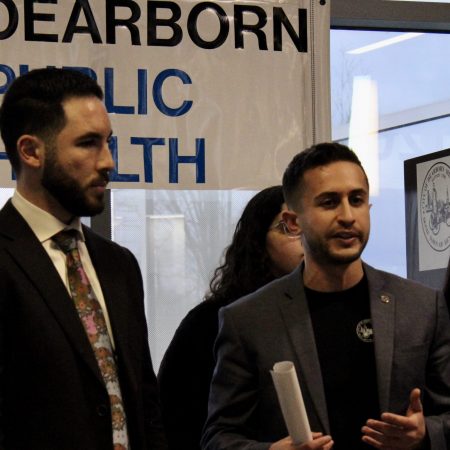
Dearborn’s Department of Public Health has been awarded a $101,000 grant to advance firearm safety. The Michigan Department of Health and Human Services funding supports collaborative efforts to educate gun owners on safe handling and storage. 

Dearborn Mayor Abdulllah Hammoud says firearm injury prevention is a public health and safety priority. 

The city’s health department will distribute firearm safety kits, including gun locks, lockboxes, and educational materials.  Dearborn Chief Public Health Officer Ali Abazeed says the grant supports evidence-based education and access to safety tools. 

Additional headlines for Monday, Dec. 22, 2025

Michigan Chief Medical Executive makes Standing Recommendation regarding children’s vaccines 

Michigan’s Chief Medical Executive, Dr. Natasha Bagdasarian, made a Standing Recommendation to continue issuing vaccinations on schedule based on recommendations by the American Academy of Pediatrics (AAP) and the American Academy of Family Physicians (AAFP). 

Bagdasarian shared that public health experts are not in agreement with new federal vaccine recommendations, prompting the announcement. One of the recent changes was dropping the Hepatitis B vaccine at birth and removing the COVID-19 vaccine recommendation for healthy children and pregnant women. 

Bagdasarian’s Standing Recommendation was made with the Michigan Department of Health and Human Services’ Division of Immunization. 

She says the recommendation does not supersede clinical judgment. She also asks health care providers to make vaccines accessible by removing barriers for patients. 

Bagdasarian says vaccines keep people safe and potentially save lives. 

EGLE renews license for hazardous waste facility 

The Michigan Department of Environment, Great Lakes, and Energy (EGLE) has renewed the license for a hazardous waste treatment and storage facility in Detroit for the next 10 years.

Hazardous Waste Management Facility Operating License to EQ Detroit Inc., which does business as US Ecology Detroit South, was issued the license after regulatory review and a public comment process. Several people strongly opposed the facility because it emits strong odors leading to health concerns like asthma. The facility also has a history of clean air violations. 

EGLE renewed the license, adding new requirements, such as expanding air and groundwater monitoring. The facility must replace six tanks beginning in January 2026 and install odor control equipment by the end of Dec 2027.

Tunnel in southwest Detroit 

The Great Lakes Water Authority has started building a sewage relief system near the Rouge River in Southwest Detroit. Crews will spend at least two years digging a tunnel to carry excess stormwater to an underused retention and treatment center. Chief Operating Officer Navid Mehram says the $87 million project should reduce the risk of flooding and sewage backups during heavy rain. 

So this is an example where we’re making an investment in our existing system by rerouting some flows, so that we can leverage an existing facility that wasn’t receiving all the flow it can treat.”

Mehram says the project will not increase customers’ sewage bills. He says state and federal funding will help pay for the tunnel. 

New tech firm in town 

Detroit is getting a new high-tech security and AI solution firm, Eccalon. The defense tech company will create 800 new jobs ranging from $25-100 per hour. 

The facility will have manufacturing operations, training programs and an innovation center. 

The company’s headquarters is moving from Maryland to become a part of the tech innovation in Detroit. Eccalon will be located at the Bedrock-owned Icon building at 200 Walker Street. 

Eccalon Chairman and CEO André Gudger says the new headquarters will develop cybersecurity and advanced manufacturing and automation. 

The company hopes to open early next year. 

Listen to the latest episode of the “Detroit Evening Report” on Apple Podcasts, Spotify, NPR.org or wherever you get your podcasts.

Support local journalism.

WDET strives to cover what’s happening in your community. As a public media institution, we maintain our ability to explore the music and culture of our region through independent support from readers like you. If you value WDET as your source of news, music and conversation, please make a gift today.

The post Detroit Evening Report: Dearborn receives firearm safety grant appeared first on WDET 101.9 FM.

The Metro: Measles case confirmed in Oakland County

A child has been diagnosed with measles in Oakland County. DMC Huron Valley-Sinai Hospital in Commerce Township has been identified as the likely site of exposure.

People who were in the Emergency Department of the hospital on Dec.  7, 2025  between 7:20 p.m. and 11:10 p.m. may have been exposed.

Kate Guzman, Oakland County Health Officer, told The Metro the child was not vaccinated for measles and had recently traveled domestically.

Vaccine recommendations changing at CDC, FDA

This follows a series of major changes to federal vaccine recommendations and guidelines, made under the leadership of Robert F. Kennedy Jr., Secretary of Health and Human Services.

Kennedy is a vaccine skeptic and his views are becoming policy at the Centers for Disease Control (CDC) and the Food and Drug Administration (FDA) both of which are under his supervision.

These changes include loosening recommendations for infants and toddlers regarding hepatitis B, chickenpox, measles, mumps, and rubella (MMR).

At the FDA, Vinay Prasad, the chief medical officer and head of evaluation and testing, issued a statement forecasting a more time and cost-intensive process for new vaccine approvals. Members of the medical community including former FDA officials, have shared concerns for public health, saying the proposed changes would make thoroughly tested and safe annual vaccines like the flu shot too expensive and time consuming to adapt to new versions of the virus.

Guests:

  • Dr. Teena Chopra is a professor of infectious diseases and Assistant Dean of professional development in the School of Medicine at Wayne State University .
  • Kate Guzman  is Oakland County’s health officer.

Listen to The Metro weekdays from 10 a.m. to noon ET on 101.9 FM and streaming on demand.

Subscribe to The Metro on Apple Podcasts, Spotify, NPR.org or wherever you get your podcasts.

Trusted, accurate, up-to-date.

WDET strives to make our journalism accessible to everyone. As a public media institution, we maintain our journalistic integrity through independent support from readers like you. If you value WDET as your source of news, music and conversation, please make a gift today.

Donate today »

More stories from The Metro

The post The Metro: Measles case confirmed in Oakland County appeared first on WDET 101.9 FM.

U.S. Representative Haley Stevens files articles of impeachment against RFK Jr.

Michigan Congresswoman Haley Stevens introduced articles of impeachment against Health and Human Services Secretary Robert F. Kennedy Jr. on Wednesday.

“Enough is enough. We cannot allow a public official to weaponize misinformation while cutting the very research that saves lives. It’s time today to impeach RFK Jr.,” says Stevens. 

She initially stated her intention to file articles of impeachment against the Make America Healthy Again Secretary in September.

Like many other Democrats, Stevens says Kennedy’s attempts to delegitimize vaccinations and promotion of pseudo-science makes him unqualified for the job.

Kennedy Jr. has taken heat from epidemiologists for turning anti-vaccination misinformation into policy, disregarding decades of research that points to the effectiveness of vaccines. Public health officials also condemn his promotion of conspiracy theories around autism.

Rep. Stevens says he has violated his oath, citing how how cuts implemented and supported by Kennedy Jr. have made insurance less accessible and hurt research institutions, like those at Michigan universities. “I’ve heard from Republican doctors in Michigan who’ve been calling me to thank me for standing up for science,” says Stevens.

Kennedy Jr. oversaw the firing of thousands of public health experts from the Centers for Disease Control and the National Institutes of Health.

Stevens’ impeachment attempt likely won’t go far in the Republican-controlled U.S. House. It’s unclear whether the move is backed by Democratic leadership.

When asked if House Minority Leader Hakeem Jeffries backed the impeachment bid, Stevens said she’d let Jeffries speak for himself.


Trusted, accurate, up-to-date.

WDET strives to make our journalism accessible to everyone. As a public media institution, we maintain our journalistic integrity through independent support from readers like you. If you value WDET as your source of news, music and conversation, please make a gift today.

Donate today »

The post U.S. Representative Haley Stevens files articles of impeachment against RFK Jr. appeared first on WDET 101.9 FM.

New flu variant, vaccine guidance worry MDHHS’s top doctor

The Michigan Department of Health and Human Services is urging people who can get this season’s flu shot to do so.

So far, the agency says about 20% of those eligible to receive the vaccine have been immunized.

New strain appears in the UK

Dr. Natasha Bagdasarian is the state’s chief medical executive. She says a new variant of H3N2 influenza is causing severe cases of flu in England.

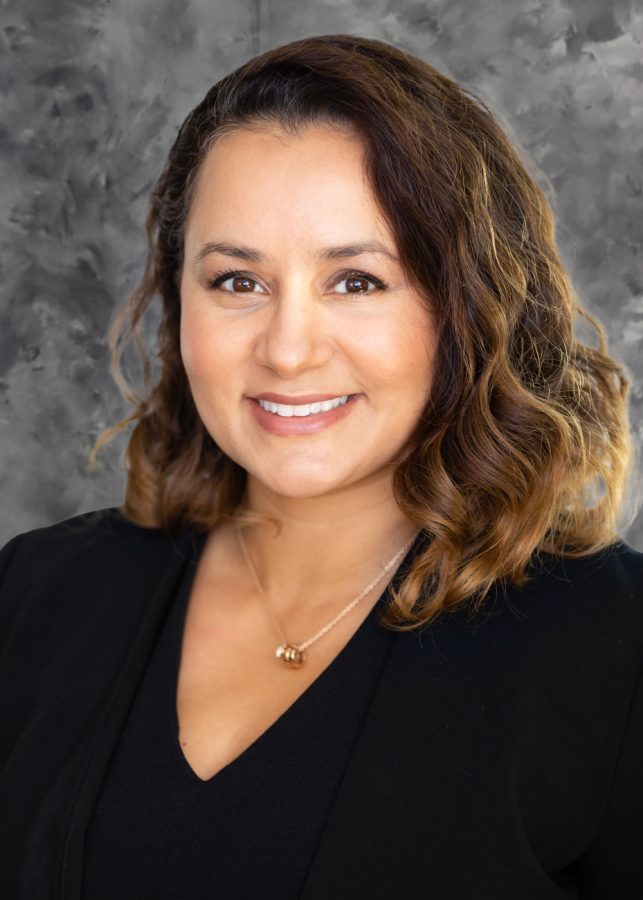
A photo of Natasha Bagdasarian wearing a black top standing against a gray background.
Dr. Natasha Bagdasarian

“What’s happening in Europe and England is sometimes a harbinger of what’s to come in places like Michigan,” she says. “And what we’ve been seeing [there] is an early flu season and a more severe flu season.”

Early studies have shown that this season’s flu vaccine offers some protection against the new variant.

“In England, they’ve seen that in folks under 18, the vaccine is about 75% protective in terms of keeping them out of the emergency department and the hospital,” Bagdasarian says. “It’s about 40% effective in those over 18.”

While the vaccine does not prevent all cases, Bagdasarian says it does reduce one’s chances of getting really sick.

“What we’re trying to do here is not stop all cases of the flu, but we want to keep people out of the hospital, the ICU, and stop them from dying,” she says.

Vaccinations have been declining since COVID

As for the low vaccination rate this season, Bagdasarian says it’s a trend. Fewer people have been getting annual flu shots since the start of the COVID-19 pandemic in 2020. She worries that an outbreak of severe flu might overwhelm Michigan’s hospitals.

“When our health systems are full of people with influenza, that means there’s less care to go around,” she says. “None of us want to see a health system that’s overwhelmed with flu cases.”

Bagdasarian says fewer children are receiving routine vaccinations for other diseases such as measles and polio. She fears that recent developments at the Centers for Disease Control and Prevention could make that worse.

Skeptics turn health policy on its head

For example, the CDC’s Advisory Committee on Immunization Practices (ACIP) recently recommended that children should only receive the hepatitis B vaccine if their mothers have tested positive or their status is unknown. Decades of research have shown that immunizing newborns against the virus is safe and has drastically reduced childhood cases of hepatitis B and other liver disease.

Bagdasarian attended the ACIP meeting virtually. She questions the qualifications of many who spoke.

“There were not enough scientists,” she says. “There were not enough health professionals, pediatricians, physicians.”

Instead, Bagdasarian notes that some of the presenters had non-medical backgrounds and don’t understand health care. She says that jeopardizes America’s health policies.

“The recommendations they voted on are liable to cause increased confusion and hesitancy and maybe put obstacles in people’s place when they’re trying to get vaccines,” she says.

Bagdasarian’s specialty is infectious disease. She says she’s treated patients with end stage liver disease, measles, and other preventable illnesses. She does not want the U.S. to go back to the time when these things were common.

“Many of these vaccines are things that we took when we were kids,” she says. “To deprive our own children of these life-saving benefits is sad.”

Trusted, accurate, up-to-date.

WDET strives to make our journalism accessible to everyone. As a public media institution, we maintain our journalistic integrity through independent support from readers like you. If you value WDET as your source of news, music and conversation, please make a gift today.

Donate today »

The post New flu variant, vaccine guidance worry MDHHS’s top doctor appeared first on WDET 101.9 FM.

❌