
โŒ

Reading view

There are new articles available, click to refresh the page.

Why the loss of sleep during Daylight Saving Time hits metro Detroit harder than other parts of the country

In just a few days, we spring forward. Hundreds of millions of Americans will lose an hour of sleep. But for many of us here in Michigan, the impact of that change may hit even harder than it does in other parts of the country.

Watch Keenan's report below

Why the loss of sleep during Daylight Saving Time hits metro Detroit harder than other parts of the country

Thats because of something most people never think about: where we sit inside our time zone.

New parents Jim and McKenzie are looking forward to the time change.
"(We're) not too concerned about the baby. He's only two and a half months old, so he's not into much of a routine," McKenzie said.
"It feels like extra time. You have more options at night or right after work," Jim said.

But others disagree, like one daycare worker I spoke with.
"Childcare is really difficult to switch back and forth for the kids' schedules. And so picking one and sticking with it would be really great," said Jessica from Royal Oak.
Dr. Abdulghani Sankari, a sleep specialist with the Detroit Medical Center, says we all struggle with resetting our internal clocks with the time change.

"When we spring forward, we abruptly advance the clock one hour," Dr. Sankari said. "But the internal clock that is the biological clock in our brain is very powerful, (and) does not instantly shift."

But Michiganders have an extra challenge. We live on the western edge of the Eastern Time Zone. That means all year long, our sun rises and sets are later than for people living on the East Coast. For instance, sunrise in Detroit when we spring forward is 7:02 a.m., but in Boston it's 47 minutes earlier at 6:15 a.m.

Our later sunrise delays our natural "wake signals," and the bright evenings delay the release of natural sleep-promoting melatonin. That robs us of sleep.

"And that has significant effects over a long period of time," said Dr. Sankari.

Studies comparing time-zone borders find:

Less average sleep on the western side of time zones Higher rates of obesity & heart disease Increased rates of cancer across time zones

Large population studies comparing counties across time-zone borders have found that people living on the later-sunset side tend to get less sleep on average and show higher rates of obesity, diabetes, and heart disease.

Other research has found cancer rates increase gradually from the eastern edge of a time zone to the western edge.

"But now we're advancing the hour also. So that compounded even further," Dr. Sankari said.

Morning light is the strongest signal that tells our body its time to wake up and be alert. When sunrise happens later, but work and school start times stay the same, our internal clock can fall out of sync with our social clock.

Scientists call that circadian misalignment or social jet lag. And this weekend, we face the double threat of being on the western edge of the eastern time zone and the shift to daylight saving time.

Kids and teens face another challenge: pushing bedtimes later while alarms stay the same.

"They basically prefer to go to bed late and wake up late. Natural, that's physiological," Dr. Sankari said. "I would call it triple threat, and that is not good for overall health and optimum performance."

Many sleep experts suggest switching to permanent standard time to better align our social & biological clocks. There have been efforts in Congress, and metro Detroiter Carlo says hes heard it all before.
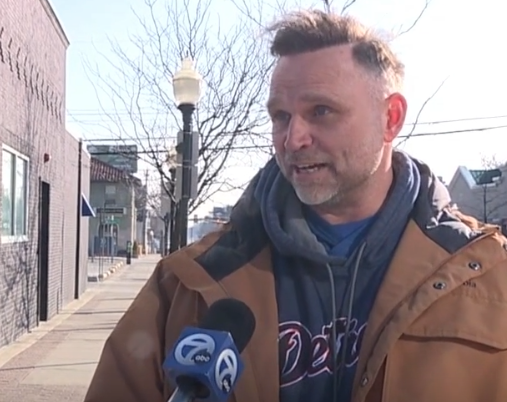
"It's been an ongoing topic. Nothing ever gets done, just like politics," Carlo said.

So, what can we do?

Shift bedtime 10-15 minutes a day starting now Limit screen time Keep a consistent morning wake-up through the weekend, and expose yourself to sunlight as early as possible to reset your natural biological clock.

So as we get ready to spring forward this weekend, the takeaway is simple. Our bodies are regulated by sunlight, not social schedules. One researcher describes it as "eastern timezone social clocks with central timezone biological clocks". And here in Michigan, that mismatch can feel even stronger 8 months of the year with the switch to daylight saving time.

Where Your Voice Matters

What's bugging metro Detroit as spring nears? We check in with local doctors

If you feel like there's still a lot of coughing and sneezing at work, school and at home you're not wrong.

Doctors across metro Detroit say winter viruses are sticking around longer than usual this season, and some symptoms are lingering for weeks.

See the full report in the video below

What's bugging metro Detroit as spring nears? We check in with local doctors

At Orchard Primary Care in Farmington Hills, Dr. Brandon Karmo said it has been a busy cold and flu season. Karmo is also the president-elect of the Michigan Academy of Family Physicians.

"A lot more than we're normally used to. Flu, COVID, the common cold," he said.

Karmo said one of the biggest trends he's seeing isn't a brand-new illness. Instead, it's what happens after you recover.

"You've seen people where this cough just lingers, weeks, sometimes even months. And really, what it is, it's a hypersensitivity in the airways," Karmo said.

Also, a lot of inflammation, despite you not being sick or contagious. Nearly 40% of patients develop a post-infectious cough after COVID, the flu or even a simple cold. The best treatment is old-school basics.

And a lot of inflammation. But youre not sick or contagious. Nearly four in ten patients develop a post-infectious cough after COVID, flu, or even a simple cold. The best treatment? Old-school basics.

"It's just fluids, supportive care. Tea with honey and just giving it time," Karmo said.

The flu is still circulating, too, even though the peak may have passed. Karmo's advice for travel and crowded spaces.

Flu is still circulating too, even though the peak may have passed.

His advice for travel and crowded spaces?

"Wash your hands. If you don't feel well, just for the courtesy of others, stay home. Wear a mask in crowded areas," Karmo said.

At Corewell Health in Novi, Dr. Asha Shajahan saw a swell of the flu this season.

"Especially influenza A. That has kind of come down a little bit. There is still the cough and cold going around, sinusitis, that type of thing," Shajahan said.

Sinusitis is the inflammation of the sinus lining, commonly caused by viral infections like colds, allergies, or bacterial infections that block mucus drainage.

Symptoms include facial pressure or pain, thick nasal discharge, headache, and congestion. Treatment usually involves rest, fluids, saline rinses, and decongestants. Shes also seeing GI bugs like norovirus.

"We're indoors more, gathering around people indoors more, then those bugs kind of circulate and we can get infected easier," Shajahan said.

Also, she said the icy conditions are sending more people to the doctor.

"A lot of bruising, back pain, like a lot more falls this year than before. So I would definitely say be careful," she said.

Her advice? Wear boots with grips and take it slow.

Meanwhile, Wayne State University pediatric and internal medicine specialist Dr. Eric Ayers says flu is still spreading quickly, especially among kids and older adults.

"Are you seeing it remain unchanged and still spreading pretty rapidly?" I asked.

"I would say that the latter, that it's unchanged in spreading very rapid," Ayers said.

That's in both in Detroit and across metro Detroit. Wastewater surveillance by The Wigginton-Eisenberg Laboratory at the University of Michigan shows Mount Clemens being hit hard by Influenza A & B, RSV, and COVID.

Ayers says parents should trust their instincts and watch sick kids closely for signs of distress.

"So they're not getting enough oxygen. So then they become fatigued, tired, sleepy; not as energetic, or not as active as they should be," Ayers said.

Then its time to get help. Hes seeing RSV hit adults harder than before and norovirus and other stomach bugs popping up in schools and workplaces.

His message to people is "hand-washing, hand-washing, hand-washing; is very important."

The good news is that spring is just over a month away and with the warmer weather, these seasonal viruses will fall off, just in time for allergy season.

Healthcare resources aim to help those who are uninsured or underinsured in Michigan

The start of 2026 came with a tough choice for many Michigan families ย pay higher healthcare premiums or pay the bills.

That choice has led many to go without coverage. For Byron Kelley, that reality hit years ago when he lost insurance. Instead of skipping care, he found another option.

See the full story in the video below

Healthcare resources aim to help those who are uninsured or underinsured in Michigan

"Everything that you actually need is right here at MyCare," Kelley said.

MyCare Health Center is a federally-qualified health center with locations in Center Line, Mt. Clemens and Clinton Township. Kelley has been a patient since 2012.

"What keeps you coming back?" I asked.

"The doctors. They show love. They show interest in my health, so why go somewhere else?" Kelley said.

MyCare Health Center CEO Karen Wood said when times are tough, more metro Detroiters turn to healthcare centers like hers, where growth is up 127% since 2010.

"What do you attribute that growth to? I asked.

"I think high-quality care and the need. The need is out there," Wood said. "We will not turn people away based on ability to pay."

MyCare is one of dozens of federally qualified health centers across the state charged with filling the gaps in healthcare services. These centers can provide medical, dental, behavioral health, and even case management, all under one roof. Most accept commercial insurance, marketplace plans, Medicare, and a discounted sliding scale for some out-of-pocket customers.

"The work that we do, I honestly believe, is healthcare's best kept secret," Wood said.

It's not just cost that makes these health centers a great option. University of Michigan Physician Dr. Mark Fendricks said it's also about the quality.

"FQACS are very well qualified to provide much primary care, from preventive services to management of common chronic diseases," Fendricks said.

For everyone from babies to seniors. According to the Michigan Primary Care Association, these centers already provide care to 1 in 11 U.S. residents, 1 in 8 children, and 1 in 4 people without health insurance. In Michigan, they serve more than 715,000 patients annually.

"It's not unusual for people to go without prescriptions or maybe take it every other day just because they simply can't afford to pay for it," Wood said.

MyCare uses a federal discount program to lower medication costs. Fendrick says families can also look for four-dollar generics from some big box retailers and major grocers, and assistance programs from drug manufacturers. There are also online options.

"GoodRX and Mark Cuban's Cost Plus Drugs are well known, but there are several," Fendrick said.

You can find a Federally Qualified Health Center closest to you here.

You can find more information on the Michigan RX Prescription Drug Discount Program here.

โŒ