Reading view

There are new articles available, click to refresh the page.

5 years since the January 6 insurrection

Tuesday marks the fifth anniversary of the attack on the Capitol on Jan. 6, 2021.  A large group protesting the results of the 2020 election— claiming Joe Biden’s win was fraudulent—broke into the capitol building, destroying property, assaulting officers, and threatening elected officials. 

The events of January 6 resulted in several deaths and over a thousand arrests.

President Donald Trump pardoned most insurrectionists when reentering office in the past year, saying that the Biden administration over-prosecuted the group.

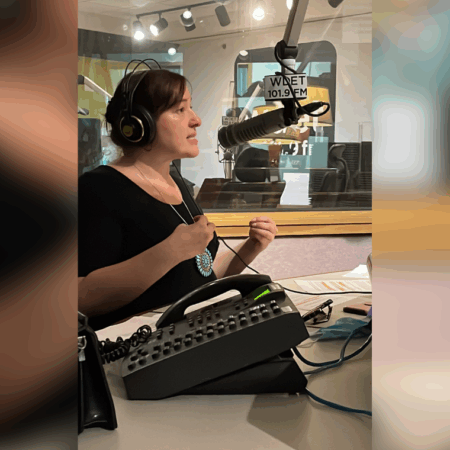
Melissa Nann-Burke was the Washington Bureau Chief for the Detroit News at that time of the insurrection.  She was working in the House chamber on January 6 and witnessed events from the inside. 

She spoke with WDET’s Jake Neher about it later that week on MichMash.

Trusted, accurate, up-to-date.

WDET strives to make our journalism accessible to everyone. As a public media institution, we maintain our journalistic integrity through independent support from readers like you. If you value WDET as your source of news, music and conversation, please make a gift today.

Donate today »

The post 5 years since the January 6 insurrection appeared first on WDET 101.9 FM.

Michigan university’s banished words list is perfect, full stop

Lake Superior State University has the perfect way to celebrate 2026, by banishing the word “perfect” and nine other terms from the English language.

The school in Sault Ste. Marie, MI has collected submissions from around the world since publishing its first “banished words” list in 1976. 

What started as a fun New Year’s Eve party suggestion has become an annual tradition.

University President David Travis says faculty members sifted through 1,400 submissions to curate its 50th list.

“What they look for are classic examples of overuse, misuse, and simply words that are useless,” he says. “And they come up with the top ten.”

The judges don’t limit their choices to words. They also consider choice phrases, such as “6-7,” which caught on in 2025.

Dr. Travis says “6-7” has no clear definition.

“It’s simply a fun word that people get excited about when they see the two numbers together,” he says.

Let’s get cooking

Here’s the complete list for 2025, with comments from people who nominated them:

  1. 6-7 (six seven): “There are six or seven reasons why this phrase needs to be stopped,” says Paul E. from Wisconsin. The volume of submissions for this one could have taken up the whole list, at least slots 6-7. Scott T. from Utah adds, “it’s time for “6-7” to be 86’ed.”
  2. Demure: “It’s very said more than very done, and we’re all very done hearing it!” remarks Tammy S. Often used in the phrase ‘very demure, very mindful,’ Madison C. shares that the overuse “waters down the real meaning.”
  3. Cooked: “Hearing it…my brain feels ‘cooked,’” groans Zac A. from Virginia. Parents and guardians led the charge on this one, with some feeling this isn’t enough.
  4. Massive: “Way overused! (often incorrectly),” exclaim Don and Gail K. from Minnesota. This word’s massive overuse has secured its place on this year’s list.
  5. Incentivize: In the longstanding effort to turn nouns into verbs, this is another culprit. Two separate submissions likened hearing this word to “nails on a chalkboard.”
  6. Full stop: “For the same reason ‘period’ was banished…redundant punctuation,” explains Marybeth A. from Oregon.
  7. Perfect: “There are very few instances when the word actually applies,” notes Jo H. from California.
  8. Gift/gifted (as a verb): “I found this on the 1994 list, but it will make me feel better to recommend that it be included once again,” reveals James S. from Oklahoma. Another case of a noun being used as a verb.
  9. My bad: In the 1998 banishment, Elizabeth P. from Michigan suggested, “students and adults sound infantile when using this to apologize.”
  10. Reach out: First banished in 1994, this saying has strayed from the positive message it once intended to deliver. “What started as a phrase with emotional support overtones has now become absurdly overused,” asserts Kevin B. from the United Kingdom.

It’s all in fun

The good news is no one’s going to arrest you if you use any of these words or phrases. Dr. Travis says it’s supposed to be tongue-in-cheek. But he admits not everyone takes it that way.

“We sometimes get a nasty letter from someone saying, ‘I refuse to stop saying that word,'” he says. “And we just kind of smile and chuckle because they thought we were being really serious.”

Support local journalism.

WDET strives to cover what’s happening in your community. As a public media institution, we maintain our ability to explore the music and culture of our region through independent support from readers like you. If you value WDET as your source of news, music and conversation, please make a gift today.

The post Michigan university’s banished words list is perfect, full stop appeared first on WDET 101.9 FM.

Best music of 2025 on WDET

Beginning Friday, December 12, Ryan Patrick Hooper kicks off a week-long celebration for the best music of 2025 on In The Groove.

Each day, a different WDET music host will join Ryan to share their favorite releases of the year and reflect on the artists, albums and sounds that shaped 2025. From jazz to hip-hop, indie, electronic and beyond, experience the full spectrum of the music that defined the year, all through the ears of WDET’s trusted music hosts.

  • Friday, Dec. 12: Ryan Patrick Hooper from In The Groove noon to 3 p.m

Tune in »


A year of community and creativity

2025 was a year of remarkable community commitment for WDET. When government funding for Detroit Public Radio was cut, our listeners showed up in force. We reached our fall fundraising goals and welcomed more than 250 new members in the first week of December alone. Detroit once again demonstrated that this community stands up for independent media, storytelling, music and culture when it matters most.

And let’s be honest — Detroit is a music city. As global audiences released unforgettable work across every genre, Detroit’s own music scene continued to thrive, innovate and put out some of its strongest recordings yet. From celebrated artists to emerging talent, the city’s creative energy remains unmatched.

Celebrating sound together

In The Groove is rooted in no genres — just good music, and this year’s “Best Of” series is a celebration of the artists, recordings and musical moments across the full spectrum of sound that moved us in 2025. It’s a musical reflection of the year we just lived through and a reminder of the power of music to connect and inspire us.

And the celebration wouldn’t be complete without you! Let us know your favorite songs of 2025, and we’ll share your picks on the air. Leave us a message on the Groove Hotline at 313-577-3414, or use the “Open Mic” feature in the WDET mobile app before Dec. 19 to be included.

Join us all week long as we honor the art, artists and listeners who made 2025 unforgettable.

See the Best of 2025 playlists »

Listen to the full playlist:

Tune in starting Friday, Dec. 12 on 101.9 WDET FM, stream anytime at wdet.org — and follow along online for daily Best Of playlists and reflections from our music hosts.

See the Best of 2025 playlists »

Support the shows you love.

WDET’s unique music programs are dedicated to exploring the music and culture of our region and the world. Keep the music going. Please make a gift today. Give now »

The post Best music of 2025 on WDET appeared first on WDET 101.9 FM.

VERDAD disinformation monitoring AI tool receives grant to expand services

Wayne State University Law School’s Damon J. Keith Center for Civil Rights received a $350,000 grant to expand a disinformation tool, “VERDAD: Verifying and Exposing Disinformation and Discourse.”

The AI-powered tool monitors U.S.-based ethnic radio stations for disinformation in Latino media.

VERDAD Founder and journalist Martina Guzmán says the tool will expand to all 50 states in multiple languages and also globally.

“Oftentimes, people think there’s going to be like, this commercial that’s complete disinformation. And what happens is on Latino radio stations, on ethnic radio stations, people have talk shows. And on those talk shows, it is often those people that host the talk shows that are spreading disinformation,” she says. 

Guzmán says the tool began monitoring Latino radio stations in battleground states ahead of the 2024 election.

“We felt that the election would be won or lost in those states at the time. And that was the capacity we had that we could do these eight battleground states and maybe a few more,” she says. 

The grant was awarded to the Wayne State University Law School’s Damon J. Keith Center for Civil Rights by the John D. and Catherine T. MacArthur Foundation to expand its reach of languages and locations.

Guzmán says the tool works as a civil rights safeguard to empower voters.

“The tool records 24 hours a day, and once it hears misinformation, right? And it hears it based on hundreds and hundreds of disinformation keywords that we’ve uploaded into its system. And once it hears one of those words, it begins to really focus… it has an analysis component,” she says.

Since the VERDAD tool’s inception last year, more than 320 academics and journalists have registered to use the free tool on Verdad.app to write articles and research trends of LatinX voters.

The tool will add several languages, including Arabic, Haitian Creole, and Vietnamese to inform voters.

Trusted, accurate, up-to-date.

WDET strives to make our journalism accessible to everyone. As a public media institution, we maintain our journalistic integrity through independent support from readers like you. If you value WDET as your source of news, music and conversation, please make a gift today.

Donate today »

The post VERDAD disinformation monitoring AI tool receives grant to expand services appeared first on WDET 101.9 FM.

Macomb executive says county thrives despite economic uncertainty

The head of Macomb County’s government says the economic uncertainty felt in some sections of Michigan has yet to truly impact his area.

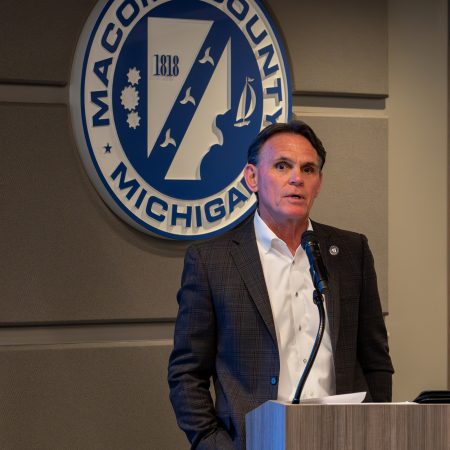
County Executive Mark Hackel summed up the situation in his annual State of Macomb County speech.

Hackel says the county is not just weathering the ebbs and flows of the overall U.S. economy but thriving in the midst of them.

Listen: Macomb executive says county thrives despite economic uncertainty

The following interview has been edited for length and clarity.

Mark Hackel: With our financial situation, our economic foundation, we’re in a great place. I know the things that you’re hearing across the country are challenging. But there’s so many things that kind of help lift us up. We’re pretty diverse too, though we rely heavily upon the automotive and defense industries and manufacturing. But the reality is Macomb is in a very sound place.

Quinn Klinefelter, WDET News: President Trump’s tariffs have impacted various segments of the U.S. economy, including the auto sector, which does have a pretty significant presence in Macomb County. Some of the prices for vehicles are starting to climb now. Do you have any concerns about how tariffs or the overall economic outlook are going to impact jobs or other parts of Macomb County’s economy?

MH: We’re always concerned about what happens at the federal and or state level that may have an impact on our economy. But look at what happened in 2010. There was a huge challenge with manufacturing, job losses, housing shortages that we faced back then. And we doubled down on manufacturing. By doing so, we’ve seen our economy continue to grow here.

Macomb County is a $54.2 billion economy. That’s bigger than the states of Vermont and Wyoming. We are right now at an all-time high. There’s never been a better time in Macomb County with our economy being as robust as it is right now. So whatever might happen with some of these tariffs or other economic concerns, we’re not seeing it directly have an impact right now. We’re in a good place with that.

QK: There is some financial stress in other parts of the country, other parts of Michigan, other parts of metro Detroit, for that matter. In your view, why is Macomb County doing well when some of these other places are having a bit of a struggle?

MH: We decided to double down on manufacturing. We retooled some of our manufacturing facilities. They’re different than they once were. We upgraded them. We really put a full-court press on making sure people understood that with our workforce, from concept to consumer, no one does it better than right here in southeast Michigan. And Macomb County is a major part of that. We are the defense capital of the Midwest. More contracts are awarded to Macomb County, as far as the actual number and the money associated with them, than anywhere else in the entire Midwest. So we keep promoting that, we keep pushing that.

And I think all the attention that we’ve been trying to drive has really helped us. We used a protecting growth strategy when we first got in and worked with the state on that. And we’ve done so well that we’re not really as worried about protecting anymore because we’re seeing that continuous growth. So we’re fortunate. Working with everybody has really had an impact on where we’re at today.

QK: In last year’s State of the County speech, you said that Macomb needed to focus on partnerships instead of partisanship. There was a line about not reaching across the aisle but getting in the aisle. How’s that bipartisan effort been going for you?

MH: Aside from a certain election here or there, for the most part, partisanship is not our conversation. None of that drives what we do here in Macomb County. People are willing to work with each other. You’ve heard that phrase, “Us versus everybody.” Some sports teams use it sometimes, municipalities or communities use it, as a sense of pride, a sense of esprit de corps. But when I look back on 15 years of how Macomb County has got to where it’s at and how we’ve evolved, we’ve kind of flipped the narrative on that. We look at it as, “Macomb with everybody.”

We’re trying to partner at the local, state and federal level. And never do we look at it as, “We can’t talk to them because they’re Democrats or Republicans. We can’t let their idea soak through or let them get successful because their party may get credit for it.” We don’t talk about that, don’t think about it. It’s a call for everybody who wants to come to be part of the solution. And if somebody looks more like they’re wanting to be part of the problem or be just a naysayer, we accept that. But the reality is we continue to forge ahead with people that want to provide solutions and help us get to where we need to go.

QK: When you talk about bipartisan cooperation, there are elections next year that could be pretty significant on a number of fronts. Michigan U.S. Rep. John James, for one, is running for governor and leaving a seat open that represents part of Macomb County. And there is a gubernatorial race underway. Whoever ultimately wins, what would you like to see from Lansing that you think could really affect Macomb County?

MH: That same willingness to partner and work with us rather than figure out how they could get credit by giving support to one particular area or segment of the state as opposed to somewhere else. Ensuring they are not ignoring any community within the state of Michigan. Specifically for Macomb County, whoever the governor is needs to realize they’re not the governor on behalf of the party, they’re the governor on behalf of the people. So govern on behalf of the people. That’s all I ask from whoever the next governor is. Work together on projects that matter, whether it’s in Macomb County, southeast Michigan or beyond.

QK: In terms of the partnerships that you’ve had, are there specific projects that you would like to see either the state or the federal government partner with Macomb on? Or projects that you’re pleased that they have partnered with you on to date?

MH: I’ll go with the ones I’m pleased that they have done to date. We got some support from the state because they realized the importance of our new jail project. It isn’t just about a jail. It’s about dealing with people that are going to be assessed for mental health or substance abuse when they’re brought in at the first point of contact. Every municipality now is partnered-in on this particular facility. We make a determination whether there’s any substance abuse, then decide what we need to do. The state partnered with us with some financial contributions because it impacts the state prison system too. When people are leaving our facility and sentenced on a felony, they’re going to the state facility. We look at what happened with Mound Road, a quarter of a billion dollar project. We got some state funding to help support that as well as federal and local. And then look what happened with Selfridge Air National Guard Base and us pushing the defense industry here in Macomb County. We are the defense capital of Midwest. And I do declare that at some point in time we’re going to be the defense capital of America.

There’s so much happening and we’re so excited about that. But there’s more to be done. We’re partnering on trying to figure out how we retool a facility or find a new use for the Romeo Ford engine plant. We’re looking at the Romeo airport. There’s a lot more that we need to do with our water quality. The support we get from Candice Miller and her team at Public Works. I’m telling you, there’s another trusted voice and a fierce advocate for cleaning our waterways and making sure we’re addressing underground issues. So, a lot has been happening. We’re going to continue those conversations and hopefully wherever the next governor is, they’re willing to address the issues that we’re talking about as opposed to politics.

The whole issue of where we’re headed as a region and even as a state is incredibly important. The biggest thing is that we all need to come together because we need to be competitive with other regions around the globe. And southeast Michigan is a major player. But our biggest challenge right now is our workforce, making sure that we’re attracting people to this area so they take on these jobs. That provides better opportunities for these manufacturers or companies that do the things that they do here in southeast Michigan. Us all coming together to promote the region as one.

Trusted, accurate, up-to-date.

WDET strives to make our journalism accessible to everyone. As a public media institution, we maintain our journalistic integrity through independent support from readers like you. If you value WDET as your source of news, music and conversation, please make a gift today.

Donate today »

The post Macomb executive says county thrives despite economic uncertainty appeared first on WDET 101.9 FM.

❌