Gov. Tim Walz has put the Minnesota National Guard on notice in the event of unrest following the fatal shooting of a 37-year-old woman in Minneapolis by an Immigration and Customs Enforcement officer.
Walz says he’s issued a warning order to prepare the Minnesota National Guard in the event of civil unrest. It’s a first step that alerts 13,000 guard members that they may need to be called upon in the event of an emergency.
Addressing reporters on the situation during a Wednesday briefing, Walz said he supported the rights of demonstrators but urged them to engage in peaceful protest.
“What we’re seeing is the consequences of governance designed to generate fear, headlines and conflict,” Walz said. “It’s governing by reality TV, and today, that recklessness cost someone their life.”
He added: “We won’t let them tear us apart. We’ll not turn against each other. To Minnesotans, they say this, I feel your anger. I’m angry. They want a show. We can’t give it to them.”
Like a number of other Democrats in Minnesota, Walz called for federal law enforcement authorities to leave the state.
“I have a very simple message, we do not need any further help from the federal government,” he said. “To Donald Trump and Kristi Noem: you have done enough.”
Meanwhile, state Department of Public Safety Commissioner Bob Jacobson urged “safe and lawful” protests and warned that actions like blocking freeways or damaging property could result in fines and arrest.
“We fully expect that the community will want to peacefully demonstrate their anger or frustration. Minnesota residents and visitors have the right to peacefully demonstrate,” Jacobson said. “Our focus is keeping demonstrators, community members, drivers and law enforcement safe, especially during moments of heightened tension or uncertainty.”
Reactions
A number of statements via social media and email from politicians ranged outrage over ICE’s actions and presence in the Twin Cities to support for federal law enforcement.
President Donald Trump, in a social media post, described the victim as a “professional agitator” and said video of the incident shows the ICE agent acting in self-defense.
“Based on the attached clip, it’s hard to believe he’s still alive” Trump said. He went on to blame “The Radical Left” for threatening law enforcement.
State Attorney General Keith Ellison, in a statement, said he was “very angry.”
“Like so many Minnesotans, I’m heartbroken. I’m also angry. Very angry. For weeks, we’ve watched the Trump administration deliberately brutalize our communities, and now an ICE agent has fatally shot one of our neighbors,” Ellison said. “The president is deliberately weaponizing the federal government against the people of Minnesota to inflict pain and instill terror. We must stand up to this horrendous injustice, and in doing so, we must not stoop to Donald Trump’s level. We’re right to be heartbroken and angry, but we cannot give Donald Trump the excuse he wants to continue escalating this violence against Minnesotans.”
Ellison said residents should “protest peacefully, organize your communities, and stand up for one another. I will continue to do everything in my power to oppose this brutality, ensure justice is served, and keep Minnesotans safe. Right now, I think nothing would keep Minnesotans safer than seeing ICE leave our state, and take their chaos, pain, and violence with them.”
U.S. Sen. Amy Klobuchar, in a statement, said the incident was “the result of the administration sending federal agents onto our streets against the wishes of local law enforcement, including our respected (Minneapolis) Police Chief Brian O’Hara. We need full transparency and an investigation of what happened, and I am deeply concerned that statements made by (the U.S. Department of Homeland Security) do not appear to reflect video evidence and on-the-ground accounts. While our immigration enforcement should be focused on apprehending and prosecuting violent criminals to make our communities safer, these ICE actions are doing the opposite and making our state less safe.”
U.S. Rep. Betty McCollum, a Democrat from St. Paul, called on ICE agents to leave the state.
“ICE must immediately cease and desist their actions in Minnesota to allow state and local law enforcement officials to restore order, prevent further violence, and conduct a full, independent, and transparent investigation into ICE’s actions and conduct which caused this horrific shooting,” McCollum said. “Minnesotans are justified in their anger. As Minnesotans, we demand accountability and justice. We have a fundamental right to express our first amendment freedoms through peaceful protest. We must not fall into Trump’s trap of division and violence. We can show the world the best of Minnesota values – our compassion, our respect for the dignity of each of our neighbors, and our belief in justice for all.”
In a social media post U.S. Tom Emmer, a Sixth District Republican, posted on X his support for federal law enforcement.
“I pray that every federal law enforcement officer on the ground in Minnesota right now remains safe as they carry out their vital mission. Tim Walz and Jacob Frey are cowards who are inciting violence to distract from their own failures. It’s dangerous. Stay safe, @ICEgov.”
St. Paul mayor, others
St. Paul Mayor Kaohly Her said in a social media post that she was monitoring the situation in Minneapolis.
“My heart is broken for the victim, their family, and our community as a whole,” Her said. “I join Mayor Frey in demanding that ICE leave our cities immediately before they cause any further harm.”
Senate Majority Leader Erin Murphy, DFL- St. Paul, in a statement, said she was “devastated and furious.”
“A weak president sent ICE agents to Minnesota to sow chaos without regard for human life, and today’s killing is the predictable outcome,” Murphy said. “This federal government is using violence to force us into fearful silence and compliance, and a woman is dead because of it. ICE should never have been in Minnesota, and they need to leave now.
“I denounce these actions, and I will fight with all I have for our freedom and safety. I urge us all, even as we feel our rage and our grief, to remain calm; more innocent people cannot be hurt. We demand accountability — and the truth — from the President, Secretary Noem, ICE officials, and those involved in the shooting.”
Senate Minority Leader Mark Johnson, R-East Grand Forks, in a statement, said “peaceful protest is a cornerstone of our democracy and must be protected, but endangering law enforcement officers is never acceptable.”
Johnson added: “I offer my condolences to the family grieving the loss of a loved one and urge everyone to step back, de-escalate, and let investigators fully examine the facts of what occurred.”
David Titus, Minnesota Police and Peace Officers Association’s interim executive director, said the association stands “firmly behind law enforcement officers, accountability under the law, and the safety of every Minnesota community.
“Irresponsible, reckless rhetoric from political leaders attacking law enforcement has real and dangerous consequences for officers on the street,” he said in a statement. “When officers are vilified, demonized, or used as political props, it fuels hostility, emboldens bad actors, and puts lives directly at risk.”
People protest as law enforcement officers attend to the scene of the shooting involving federal law enforcement agents, Wednesday, Jan. 7, 2026, in Minneapolis. (AP Photo/Tom Baker)
A motorist fatally shot by an immigration officer in Minneapolis is at least the fifth person to die since the Trump administration launched its aggressive immigration crackdown last year.
The Department of Homeland Security said the woman killed Wednesday was trying to run over officers with a vehicle. But Minneapolis Mayor Jacob Frey said video of the incident showed it was reckless and unnecessary.
Last September, Immigration and Customs Enforcement agents in suburban Chicago shot and killed a Mexican man during a traffic stop.
Two men have died after being struck by vehicles while fleeing immigration authorities — one in California and another in Virginia. In July, a California farmworker fell from a greenhouse roof and broke his neck during an ICE raid.
Minneapolis Public Schools will be closed Thursday and Friday “due to safety concerns related to today’s incidents around the city,” the district announced Wednesday night after a fatal ICE shooting earlier in the day in Minneapolis.
Minnesota Public Radio received a report that armed U.S. Border Patrol officers entered Minneapolis Roosevelt high school property during Wednesday’s dismissal period.
All district programs, activities and athletics were also cancelled. The district won’t move to e-learning, as that is only allowed in cases of severe weather.
The district said it will collaborate with the city on “emergency preparedness and response.”
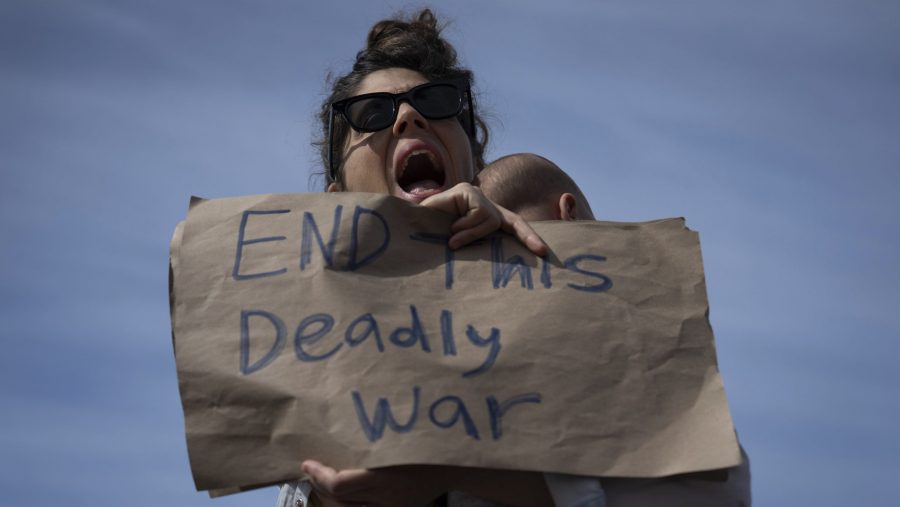
Some 500 people gathered around “The Triumph of the Human Spirit” in Foley Square Wednesday night to protest the Minneapolis shooting of Renee Nicole Good.
Protestors chanted “Say her name: Renee Nicole Good” just hours after Immigration and Customs Enforcement officers opened fire at close range on the 37-year-old mother as she attempted to flee in a car.
President Trump claimed that Good, whom he called a “professional agitator,” attempted to run the agents down with her car and that officers fired in self-defense.
“What happened in Minneapolis was unbelievable,” Jordan Harald, 57, a retired film industry worker from Manhattan, told a Daily News reporter at the protest. “It’s critical that we’re here. What our country is doing is abhorrent and untenable. We have to fight and stand strong.”
Some 500 people gathered in Foley Square on Jan. 7, 2026 to protest the Minneapolis shooting of Renee Nicole Good. (Kerry Burke/NYDN)
The crowd chanted “We want ICE off our streets,” “No Justice no peace“ and “ No ICE, no KKK, no fascist USA” as protesters marched around Foley Square and streets surrounding the nearby US Immigration and Customs Enforcement building at 26 Federal Plaza.
“I’m here to support the movement,” said Carlos Bogaert, 34, a bike messenger from Queens. “I’m a proud immigrant from the Dominican Republic and I’m really frustrated about what happened in Minneapolis.
“It didn’t seem like she was endangering the agents. It was an injustice,” Bogaert said.
Some New Yorkers spoke out against U.S. adventurism in Venezuela, where President Nicolas Maduro and his wife were snatched in a military operation. They are currently being held at the Metropolitan Detention Center in Brooklyn.
“What they did in Venezuela is illegal,” said Mattias Rich, a 32-year-old waiter from Brooklyn. “It was basically a kidnapping. I understand Venezuelans don’t like Maduro. But this is no way to handle it.”
A banner strung across the crowd read: “the fascist Trump regime must go”
“This is a symbol,” said Jessica Bloom, 68, a social worker from Manhattan. “We’re grieving the death of Renee Nicole Good. They were totally out of control. She was just scared.”
Some 500 people gathered in Foley Square on Jan. 7, 2026 to protest the Minneapolis shooting of Renee Nicole Good. (Kerry Burke/NYDN)
Some 500 people gathered around “The Triumph of the Human Spirit” in Foley Square Wednesday night to protest the Minneapolis shooting of Renee Nicole Good.
Protestors chanted “Say her name: Renee Nicole Good” just hours after Immigration and Customs Enforcement officers opened fire at close range on the 37-year-old mother as she attempted to flee in a car.
President Trump claimed that Good, whom he called a “professional agitator,” attempted to run the agents down with her car and that officers fired in self-defense.
“What happened in Minneapolis was unbelievable,” Jordan Harald, 57, a retired film industry worker from Manhattan, told a Daily News reporter at the protest. “It’s critical that we’re here. What our country is doing is abhorrent and untenable. We have to fight and stand strong.”
Some 500 people gathered in Foley Square on Jan. 7, 2026 to protest the Minneapolis shooting of Renee Nicole Good. (Kerry Burke/NYDN)
The crowd chanted “We want ICE off our streets,” “No Justice no peace“ and “ No ICE, no KKK, no fascist USA” as protesters marched around Foley Square and streets surrounding the nearby US Immigration and Customs Enforcement building at 26 Federal Plaza.
“I’m here to support the movement,” said Carlos Bogaert, 34, a bike messenger from Queens. “I’m a proud immigrant from the Dominican Republic and I’m really frustrated about what happened in Minneapolis.
“It didn’t seem like she was endangering the agents. It was an injustice,” Bogaert said.
Some New Yorkers spoke out against U.S. adventurism in Venezuela, where President Nicolas Maduro and his wife were snatched in a military operation. They are currently being held at the Metropolitan Detention Center in Brooklyn.
“What they did in Venezuela is illegal,” said Mattias Rich, a 32-year-old waiter from Brooklyn. “It was basically a kidnapping. I understand Venezuelans don’t like Maduro. But this is no way to handle it.”
A banner strung across the crowd read: “the fascist Trump regime must go”
“This is a symbol,” said Jessica Bloom, 68, a social worker from Manhattan. “We’re grieving the death of Renee Nicole Good. They were totally out of control. She was just scared.”
Some 500 people gathered in Foley Square on Jan. 7, 2026 to protest the Minneapolis shooting of Renee Nicole Good. (Kerry Burke/NYDN)
By MICHAEL BIESECKER and JIM MUSTIAN The Associated Press
WASHINGTON (AP) — The woman shot and killed by a U.S. Immigration and Customs Enforcement officer in Minneapolis on Wednesday was Renee Nicole Macklin Good, a 37-year-old mother of three who had recently moved to Minnesota.
She was a U.S. citizen born in Colorado and appears to never have been charged with anything involving law enforcement beyond a traffic ticket.
In social media accounts, Macklin Good described herself as a “poet and writer and wife and mom.” She said she was currently “experiencing Minneapolis,” displaying a pride flag emoji on her Instagram account. A profile picture posted to Pinterest shows her smiling and holding a young child against her cheek, along with posts about tattoos, hairstyles and home decorating.
Her ex-husband, who asked not to be named out of concern for the safety of their children, said Macklin Good had just dropped off her 6-year-old son at school Wednesday and was driving home with her current partner when they encountered a group of ICE agents on a snowy street in Minneapolis, where they had moved last year from Kansas City, Missouri.
Video taken by bystanders posted to social media shows an officer approaching her car, demanding she open the door and grabbing the handle. When she begins to pull forward, a different ICE officer standing in front of the vehicle pulls his weapon and immediately fires at least two shots into the vehicle at close range.
In another video taken after the shooting, a distraught woman is seen sitting near the vehicle, wailing, “That’s my wife, I don’t know what to do!”
Calls and messages to Macklin Good’s current partner received no response.
Trump administration officials painted Macklin Good as a domestic terrorist who had attempted to ram federal agents with her car. Her ex-husband said she was no activist and that he had never known her to participate in a protest of any kind.
He described her as a devoted Christian who took part in youth mission trips to Northern Ireland when she was younger. She loved to sing, participating in a chorus in high school and studying vocal performance in college.
She studied creative writing at Old Dominion University in Virginia and won a prize in 2020 for one of her works, according to a post on the school’s English department Facebook page. She also hosted a podcast with her second husband, who died in 2023.
Macklin Good had a daughter and her son from her first marriage, who are now ages 15 and 12. Her 6-year-old son was from her second marriage.
Her ex-husband said she had primarily been a stay-at-home mom in recent years but had previously worked as a dental assistant and at a credit union.
Donna Ganger, her mother, told the Minnesota Star Tribune the family was notified of the death late Wednesday morning.
“Renee was one of the kindest people I’ve ever known,” Ganger told the newspaper. “She was extremely compassionate. She’s taken care of people all her life. She was loving, forgiving and affectionate. She was an amazing human being.”
Ganger did not respond to calls or messages from the AP.
___
Mustian reported from New York.
People gather for a vigil after an Immigration and Customs Enforcement officer shot and killed a woman earlier in the day, Wednesday, Jan. 7, 2026, in Minneapolis. (AP Photo/Bruce Kluckhohn)
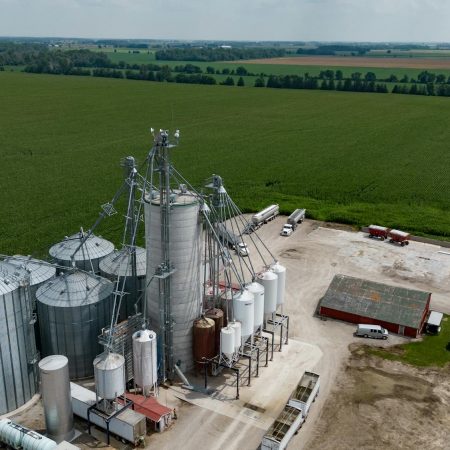
The Trump administration recently announced $12 billion in bailout money in an effort to prop up the farming industry. That comes as farmers around the country have complained about trade wars and general economic conditions making it tough for them to do business.
What that money looks like by the time it makes its way to local farmers remains to be seen. Michigan Farmers Union president, Bob Thompson, says there are still questions surrounding the distribution.
Listen: Bob Thompson discusses issues facing Michigan farmers
“The Administration,” says Thompson, “still has to decide how much money is going to corn, versus wheat, versus soy beans, versus 15 different row crops.”
Thompson says about $11 billion of the $12 billion in the bailout will be dedicated to row crops. That means farmers growing specialty crops, like apples and cherries, will share the remaining funds.
Thompson warns the funding may not be enough to offset the challenges facing Michigan’s farms.
“The financial problems that a lot of farmers, particularly our smaller family farmers are experiencing, is a direct result of a lot of policies of the new administration,” Thompson explains, “ Particularly the tariff policies.”
He says the Trump administration’s crackdown on immigration has also hurt farmers in the state. About three-quarters of the seasonal workforce on farms comes from immigrant labor programs.
The Michigan Farmers Union says it may take a new long-term farm bill to stabilize the industry.
Trusted, accurate, up-to-date.
WDET strives to make our journalism accessible to everyone. As a public media institution, we maintain our journalistic integrity through independent support from readers like you. If you value WDET as your source of news, music and conversation, please make a gift today.
President Donald Trump’s administration announced on Tuesday that it’s freezing child care funds to Minnesota after a series of fraud schemes in recent years.
Deputy Secretary of Health and Human Services Jim O’Neill said on the social platform X that the step is in response to “blatant fraud that appears to be rampant in Minnesota and across the country.”
Minnesota Gov. Tim Walz pushed back in a post on X, saying fraudsters are a serious issue that the state has spent years cracking down on but that this move is part of “Trump’s long game.”
“He’s politicizing the issue to defund programs that help Minnesotans,” Walz said.
O’Neil called out a right-wing influencer who had posted a video Friday claiming he found that day care centers operated by Somali residents in Minneapolis had committed up to $100 million in fraud. O’Neill said he has demanded Walz submit an audit of these centers that includes attendance records, licenses, complaints, investigations and inspections.
“We have turned off the money spigot and we are finding the fraud,” O’Neill said.
The announcement comes one day after U.S. Homeland Security officials were in Minneapolis conducting a fraud investigation by going to unidentified businesses and questioning workers.
There have been years of fraud investigation that began with the $300 million scheme at the nonprofit Feeding Our Future, for which 57 defendants in Minnesota have been convicted. Prosecutors said the organization was at the center of the country’s largest COVID-19-related fraud scam, when defendants exploited a state-run, federally funded program intended to provide food for children.
A federal prosecutor alleged earlier in December that half or more of the roughly $18 billion in federal funds that supported 14 programs in Minnesota since 2018 may have been stolen. Most of the defendants are Somali Americans, they said.
O’Neill, who is serving as acting director of the Centers for Disease Control and Prevention, also said in the social media post Tuesday that payments across the U.S. through the Administration for Children and Families, an agency within the U.S. Health and Human Services Department, will now require “justification and a receipt or photo evidence” before money is sent. They have also launched a fraud-reporting hotline and email address, he said.
The Administration for Children and Families provides $185 million in childcare funds annually to Minnesota, according to Assistant Secretary Alex Adams.
“That money should be helping 19,000 American children, including toddlers and infants,” he said in a video posted on X. “Any dollar stolen by fraudsters is stolen from those children.”
Adams said he spoke Monday with the director of Minnesota’s child care services office and she wasn’t able to say “with confidence whether those allegations of fraud are isolated or whether there’s fraud stretching statewide.”
Walz, the 2024 Democratic vice presidential nominee, has said fraud will not be tolerated and his administration “will continue to work with federal partners to ensure fraud is stopped and fraudsters are caught.”
Walz has said an audit due by late January should give a better picture of the extent of the fraud. He said his administration is taking aggressive action to prevent additional fraud. He has long defended how his administration responded.
Minnesota’s most prominent Somali American, Democratic U.S. Rep. Ilhan Omar, has urged people not to blame an entire community for the actions of a relative few.
Protesters march through frigid conditions, with temperatures near 10 degrees Fahrenheit (minus 12 Celsius), in a neighborhood in Minneapolis, Minnesota, on December 20, 2025, where many Somali, Latino and Hispanic immigrants live and work, during the “MN Love Our Immigrant Neighbors – ICE Out of MN!” rally calling for the removal of US Immigration and Customs Enforcement from Minnesota. (Photo by Kerem YUCEL / AFP via Getty Images)
Hundreds of people from South Sudan may be able to live and work in the United States legally, while a federal judge on Tuesday weighs whether President Donald Trump’s move to revoke temporary protected status for immigrants from the East African country was illegal.
The termination was set to take effect on January 6, 2026, at which point the roughly 300 South Sudanese nationals living and working in the U.S. under the program — or who otherwise have pending applications — would be eligible for deportation.
Civil rights groups sued the Department of Homeland Security in late December, writing in a complaint that the change violated administrative procedure and was unconstitutional because it aimed to “significantly reduce the number of non-white and non-European immigrants in the United States” on the basis of race.
The court order written by U.S. District Judge Angel Kelley in Massachusetts temporarily bars the federal government from initiating deportation while the final decision is pending.
“These significant and far-reaching consequences not only deserve, but require, a full and careful consideration of the merits by the Court,” Kelley wrote, adding that the changes could potentially cause irreversible harm to the East African migrants.
DHS blasted the decision in a statement on Tuesday.
“Yet another lawless and activist order from the federal judiciary who continues to usurp the President’s constitutional authority. Under the previous administration Temporary Protected Status was abused to allow violent terrorists, criminals, and national security threats into our nation,” DHS Assistant Secretary Tricia McLaughlin wrote.
Temporary protected status is granted to foreign nationals from countries devastated by war or natural disaster. Successful applicants must already reside in the U.S. and pass extensive background checks and vetting through DHS.
Without providing evidence, McLaughlin claimed there is “renewed peace in South Sudan” and pointed to “their demonstrated commitment to ensuring the safe reintegration of returning nationals, and improved diplomatic relations.”
“Now is the right time to conclude what was always intended to be a temporary designation,” McLaughlin wrote.
According to U.N. experts, “Years of neglect have fragmented government and opposition forces alike,” the panel said, “resulting in a patchwork of uniformed soldiers, defectors and armed community defense groups.”
South Sudanese people were made eligible for temporary protected status in 2011. The East African’s embattled government still struggles to deliver many of the basic services of a state. Years of conflict have left the country heavily reliant on aid, which has been hit hard by the Trump administration’s sweeping cuts in foreign assistance. Many South Sudanese people face hunger, and this year a hunger monitor said parts of conflict-hit South Sudan were heading toward famine conditions.
“I don’t know how DHS can say with a straight face that it’s safe for South South Sudanese TPS holders to return to South Sudan when their own State Department, albeit another government agency, says is not safe to travel there,” said Dorian Spence, litigation coordinator Communities United for Status and Protection, one of the groups that filed the December 22 lawsuit.
“This is only one prong in their multi-pronged attack into making America whiter,” Spence added, noting Trump’s willingness to accept white South Africans as refugees.
Critics of the Trump administration in South Sudan said that the move was political retaliation for South Sudan’s decision to stop accepting deportees from the U.S. as part of a program to deport migrants to third countries. At least eight men were deported to South Sudan from the U.S. earlier in the year.
“This has angered the Trump administration (and) the Trump administration has reached this decision now, where it is ending protections available for South Sudanese who fled the war,” he said.
The Trump administration has attempted to withdraw various protections that have allowed immigrants to remain in the U.S. and work legally, including ending temporary status for hundreds of thousands of Venezuelans and Haitians who were granted protection under President Joe Biden.
Protected status for immigrants from Ethiopia, Cameroon, Afghanistan, Nepal, Burma, Syria, Nicaragua and Honduras is also in jeopardy.
Kramon contributed to this report from Atlanta and Riddle from New York.
FILE – Motorists pass outside Bor State Hospital in Bor, South Sudan, Monday, Aug. 18, 2025. (AP Photo/Caitlin Kelly, File)
Joselyn Walsh was working from her Pilsen home last month when her phone began to ring. It was a special agent from the FBI, the caller said, and they needed to speak with her.
Unfamiliar with the number, the 31-year-old part-time researcher, part-time garden store worker dismissed the call as spam. But then her cell sounded again. This time, Walsh googled the 10 digits flashing up at her.
Sure enough, it was the FBI headquarters in Chicago. And they had a warrant out for her arrest.
“How is this possible?” Walsh wondered.
Walsh is among six protesters facing federal conspiracy charges in one of the most high-profile cases to emerge from Operation Midway Blitz, the Trump administration’s mass deportation mission in Chicago this fall. They are accused of conspiring to forcibly impede a federal immigration agent at a September protest at the U.S. Immigration and Customs Enforcement facility in Broadview.
Charged alongside four Democratic politicians and one political staffer, Walsh is arguably the least known of the group, known as the ‘Broadview Six.’ She said she doesn’t know her co-defendants and still doesn’t know why, among the hundreds that went to protest outside of the west suburban processing center during the two-month operation, she’s been singled out in federal court.
The case stands to test the impact and bounds of protest in the second Trump administration.
“I think (conviction),” said Steven Heyman, a law professor with the Chicago-Kent College of Law, “would send a real strong message that the government is capable of taking severe measures to suppress, I would say, legitimate dissent.”
Walsh remains confident in her innocence. But she’s keenly aware of what’s at stake.
“There’s the reality of wow, years in prison are on the line here,” she said. Still, the charges have also sharpened her resolve, spurring her to speak louder.
Weeks after her indictment, she continues to use her voice, often performing as part of a protest music collective and sometimes, returning to Broadview. Her co-defendants, by themselves and through attorneys, have denounced the charges as an attack on the First Amendment and maintained they will not be deterred. They’re not alone.
After an arraignment hearing in the case outside of the Dirksen U.S. Courthouse downtown just over a month ago, dozens of protesters gathered under the red sculpted arches of Federal Plaza.
The conspiracy charges against Walsh and her co-defendants stem from a protest outside the building nearly three months ago. Alongside Walsh, charged are congressional candidate Katherine “Kat” Abughazaleh, Cook County Board candidate Catherine “Cat” Sharp, 45th Ward Democratic Committeeman Michael Rabbit, Oak Park Trustee Brian Straw, and Andre Martin, who is Abughazaleh’s deputy campaign manager.
The group is accused of surrounding and damaging an ICE vehicle during a Broadview protest on the morning of Sept. 26. An 11-page indictment alleges the group “crowded together in the front and side of the Government Vehicle” and pushed against it “to hinder and impede its movement.”
Protesters surround a federal SUV and try to prevent it from driving to the U.S. Immigration and Customs Enforcement facility in Broadview on Sept. 26, 2025. (Stacey Wescott/Chicago Tribune)
Prosecutors further allege protesters scratched the car’s body, broke a side mirror and a rear windshield wiper and etched the word “PIG” into the paint.
The indictment includes the conspiracy count — which carries a maximum sentence of six years in federal prison — as well as several other counts of impeding a federal officer, each punishable by up to one year in federal prison.
Walsh started protesting in Broadview early on into the blitz. She flocked to the facility to sing.
A lifelong musician from rural Missouri, Walsh said she’d often read about the goings-on in the world growing up. But she was inspired to start taking action after 18-year-old Michael Brown was killed by a police officer in Ferguson, Missouri, while she was at college in St. Louis.
“(It) was this moment of, I think, recognizing how … power and control works in our country and in our world,” she said.
Since moving to Chicago six years ago, Walsh has grown into her advocacy. After working at a food and farming nonprofit in the city — work Walsh says was, and still is, important to her — she found herself wanting to delve into community organizing. She hit her stride through music.
Dave Martin, from left, Joselyn Walsh and Joseph Ozment sing pro-Palestinian carols with other activists near the State/Lake CTA station, Dec. 14, 2025, in Chicago. In October, a federal grand jury indicted six people, including Walsh, on conspiracy charges stemming from a protest outside the Broadview Immigration and Customs Enforcement facility. (Armando L. Sanchez/Chicago Tribune)
For the past two years, Walsh has performed in a citywide collective of people working to bring “the power of music to protests,” she said. Called Songs for Liberation, the group includes musicians and non-musicians alike (even “shower singers,” Walsh noted). The group started as Songs for Ceasefire in support of Palestine but has grown to encompass a broader mission to dissent through song.
“Protests don’t necessarily have a lot of music,” Walsh said. “But (we think it’s) a really powerful thing.”
The collective often performs at events and protests, sometimes by invitation and sometimes just by members’ interest, with appearances ranging from marches outside the Democratic National Convention last year to caroling outside Christkindlmarket.
The Broadview protests, which became a flash point against the Trump administration’s crackdown, were a natural fit for the collective. For weeks through the blitz, and even still today as immigration enforcement continues, some amalgamation of members would travel out to the facility and through the clashes and commotion and force, perform.
“No human is illegal here,” Walsh sang with the collective one morning in Broadview, her performance captured in a video posted online. A gas mask hung around Walsh’s arm as she strummed a guitar. “We refuse to be controlled by fear.”
Andrew Walsh isn’t surprised by his daughter’s activism. While she was a shy kid, he recalled that she’s always been fiercely compassionate. And she’s long been privy to conversations about morality and politics. Her mother is a minister. Andrew is a religion professor at a small college in Missouri, whose research focuses on the intersection of religion and social issues.
Andrew said he’s proud of his daughter. And terrified.
“(But) we can’t simply submit in fear,” he said. “Because if we all submit in fear, we’ve seen in history how that turns out.”
Sept. 26 started out just like any other day of protesting and singing, Walsh recalled, but what did stick out to her was that it felt like “there was a whole other level of random impunity.” That morning, federal agents fired baton rounds, tear gas and other less-lethal ammunition at about 200 people gathered outside the Broadview processing center, the Tribune reported at the time.
Walsh remembered leaving early after a foam baton round struck and put a hole in her guitar.
“We’re just singing and then all of a sudden, I feel this impact,” she said. After a moment of disbelief, Walsh walked away, drank water, spoke with some friends and ultimately, went home.
Joselyn Walsh, right, and other musicians play and sing in the protest area near the U.S. Immigration and Customs Enforcement holding facility on Oct. 10, 2025, in Broadview. (Stacey Wescott/Chicago Tribune)Joselyn Walsh holds her guitar on Oct. 10, 2025, near a hole she said was caused by federal agents shooting pepper balls and baton rounds at musicians, protesters and reporters near the Immigration and Customs Enforcement holding facility in Broadview. (Stacey Wescott/Chicago Tribune)
Walsh, on the advice of her attorney, couldn’t speak to the crux of the indictment, though she did call the government’s allegations “totally baseless.”
In a video of the confrontation cited by the Department of Justice, a black SUV is seen slowly rolling through a crowd of people as they chant, “up, up with liberation, down, down with deportation!” As the car inches forward, footage shows some protesters hitting the hood and windows as they try to block its movement. In another video that has circulated widely online, a guitar briefly flashes into frame.
A request for comment sent to the Department of Justice was forwarded to an assistant U.S. attorney in Chicago, who declined to comment because the case was pending.
“Federal agents perform dangerous, essential work every single day to enforce our immigration laws and keep our communities safe,” Deputy Attorney General Todd Blanche said in an October statement when charges were announced. “When individuals resort to force or intimidation to interfere with that mission, they attack not only the agents themselves but the rule of law they represent.”
The FBI called Walsh a month later. She’d been continuing to protest, while balancing her research job and taking shifts at a Humboldt Park garden store. Also due to get married in June, Walsh and her partner have been planning a wedding and had a tasting set for the day the FBI rang. They canceled their appointment.
The news of her arrest warrant left Walsh shocked and confused.
“I’m just sitting here, wracking my brain, like what possibly could have happened?” she said.
There’s been a growing trend in protests giving way to conspiracy charges.
Last year, San Francisco prosecutors charged 26 protesters with federal conspiracy after they allegedly blocked the Golden Gate Bridge for hours to demand a ceasefire in Gaza. Amid the immigration protests in Los Angeles this summer, an activist was indicted on a federal conspiracy charge after he was accused of handing out face shields during an anti-ICE demonstration, though the charges have since been dropped. In Washington, nine people are facing a federal conspiracy charge tied to an immigration protest outside a Spokane DHS office earlier this year.
The First Amendment protects individuals’ right to express their views on the government, said Heyman, the Chicago-Kent College of Law professor. Those protections do not extend to “true threats of violence” or false and defamatory statements — but they do extend to sharp criticism, Heyman said.
In his estimation, “most of the kinds of criticisms that these protesters are making about ICE and the Trump administration (are) 100% protected by the First Amendment,” Heyman said.
Where problems arise is that, generally, conduct is not constitutionally protected, he said.
“If they’re physically blocking an ICE vehicle and surrounding it and trying to prevent it from passing and so forth, basically that’s not protected under the First Amendment,” he said. Still, he said he believes that prosecuting the protesters for felonies, especially for conspiracy, is “an extreme overreaction.”
But with Walsh’s case, there’s also the matter that two criminal laws are at issue — impeding by force and conspiracy — and the burden is on the government to prove the statutes were violated, Heyman said.
Recent weeks have seen other cases out of the blitz fail to hold up in court. Last month, a federal judge dismissed charges against a woman shot by a Border Patrol agent after she allegedly rammed his vehicle in Brighton Park. And this month, a case was dismissed against Lakeview comedy club manager whom federal authorities had accused of slamming the door on the leg of a Border Patrol agent during an October immigration arrest.
For the higher charge against the Broadview protesters, prosecutors would have to show that they actually engaged in a conspiracy, Heyman said. That could be done in two ways, by demonstrating protesters had an outright agreement to conspire or had reached an implicit understanding they were going to commit a crime, according to Heyman. He noted the latter is vague and could be hard to prove.
Joshua Herman, who is representing Abughazaleh in the case, wrote in an email statement to the Tribune that the particular statute invoked by prosecutors in their conspiracy charge also does not require proof of an “overt act” — only an unlawful agreement.
“How these specific individuals,” he stated, “who were amongst a crowd of other (protesters) could spontaneously form such an unlawful agreement is a question the government will need to answer.”
He added that the statute cited is also rarely used and, to his knowledge, hasn’t been employed to prosecute protest activity in this way, despite it being on the books for well over a century.
Heyman said it’s unlikely Walsh and her co-defendants would receive the maximum sentence should they be convicted. But the case in itself, he added, conveys intimidation.
“The Trump administration is trying to send the message that they will tolerate no opposition to their immigration crackdown,” Heyman said.
He compared the case to prosecuting political opponents.
At a status hearing for the legal battle earlier this month, defense attorneys asked federal prosecutors to turn over White House communications related to a “selective prosecution” argument.
Brad Thomson, Walsh’s attorney, contends that with this case, the government is prosecuting people for protesting together.
“That’s a real danger,” he said, “when you’re trying to have a society that has a robust discourse about the actions of the government.”
When the indictment against Walsh came to light, “it definitely rocked our community,” said Jack Sundstrom, a musician who’s performed with Songs for Liberation for the past six months. Sundstrom, like Walsh, performed with the collective in Broadview.
“It’s scary and terrifying, and it would be a lie to say that this isn’t something that keeps me up at night sometimes,” the 25-year-old Glenview resident said. But in his circle, he went on, there’s also “very much a sense of we’re going to keep doing this work.” He especially intends to keep organizing through music.
“As the song goes, the people united will never be defeated,” he said. “So I am going to continue doing what I do for as long as I can.”
Walsh hopes this doesn’t keep people from speaking out.
For her and her fiancé Joseph Ozment, it’s been a surreal few weeks since her charges were unsealed. But while scary, it’s been motivating, said Ozment, who’s also involved with Songs for Liberation.
“If they’re angry at us for this,” he said, “I think it’s for a good cause.”
They’ve also been reconciling what they’re facing with what they’re fighting for.
“I get to sleep in a warm bed,” Ozment said. “I know that … I’m not going to be whisked away in the middle of the night, and my family aren’t going to know where I am.”
The parallel, Walsh said, has only emboldened her more.
“It’s great that some of us have these rights,” she said, “and it’s awful that not all of us do. We need to keep fighting for that.”
Joselyn Walsh at her apartment on Dec. 10, 2025, in Chicago. Walsh is a musician and activist who plays with a group of musicians called Songs of Liberation. Walsh is among six protesters facing federal conspiracy charges in one of the highest-profile cases to emerge from Operation Midway Blitz. (Stacey Wescott/Chicago Tribune)
A Kansas tribe said it has walked away from a nearly $30 million federal contract to come up with preliminary designs for immigrant detention centers after facing a wave of online criticism.
The Prairie Band Potawatomi Nation ‘s announcement Wednesday night came just over a week after the economic development leaders who brokered the deal with U.S. Immigration and Customs Enforcement were fired.
With some Native Americans swept up and detained in recent ICE raids, the deal was derided online as “disgusting” and “cruel.” Many in Indian Country also questioned how a tribe whose own ancestors were uprooted two centuries ago from the Great Lakes region and corralled on a reservation south of Topeka could participate in the Trump administration’s mass deportation efforts.
Tribal Chairman Joseph “Zeke” Rupnick nodded to the historic issues last week in a video address that called reservations “the government’s first attempts at detention centers.” In an update Wednesday, he announced that he was “happy to share that our Nation has successfully exited all third-party related interests affiliated with ICE.”
The Prairie Band Potawatomi has a range of businesses that provide health care management staffing, general contracting and even interior design. And Rupnick said in his latest address that tribal officials plan to meet in January about how to ensure “economic interests do not come into conflict with our values in the future.”
A tribal offshoot hired by ICE — KPB Services LLC — was established in April in Holton, Kansas, by Ernest C. Woodward Jr., a former naval officer who markets himself as a “go-to” adviser for tribes and affiliated companies seeking to land federal contracts.
The Prairie Band Potawatomi Nation said in 2017 that Woodward’s firm advised it on its acquisition of another government contractor, Mill Creek LLC, which specializes in outfitting federal buildings and the military with office furniture and medical equipment.
Woodward also is listed as the chief operating officer of the Florida branch of Prairie Band Construction Inc., which was registered in September.
Attempts to locate Woodward were unsuccessful. A spokesperson for KPB said Woodward is no longer with the LLC but she declined to say whether he was terminated. Woodward did not respond to an email sent to another consulting firm he’s affiliated with, Virginia-based Chinkapin Partners LLC.
A spokesperson for the Prairie Band Potawatomi Nation said the tribe divested from KPB. While that company still has the contract, “Prairie Band no longer has a stake,” the spokesperson said.
The spokesperson said Woodward is no longer with the tribe’s limited liability corporation, but she declined to say whether he was terminated.
The ICE contract initially was awarded in October for $19 million for unspecified “due diligence and concept designs” for processing centers and detention centers throughout the U.S., according to a one-sentence description of the work on the federal government’s real-time contracting database. It was modified a month later to increase the payout ceiling to $29.9 million.
Sole-source contracts above $30 million require additional justification under federal contracting rules.
Tribal leaders and the U.S. Department of Homeland Security haven’t responded to detailed questions about why the firm was selected for such a big contract without having to compete for the work as federal contracting normally requires. It’s also unclear what the Tribal Council knew about the contract.
“That process of internal auditing is really just beginning,” the tribal spokesperson said.
Hollingsworth reported from Mission, Kansas, and Goodman from Miami.
A sign on a road off of U.S. Highway 75 welcomes motorists to the Prairie Band Potawatomi reservation, outside Mayetta, Kan., Thursday, Dec. 11, 2025. (AP Photo/John Hanna)
Immigration enforcement in the United States has escalated sharply this year. Under the Biden administration, the daily number of people detained by Immigration and Customs Enforcement (ICE) peaked at just under 40,000. In President Trump’s second term, that number has surged to more than 65,000.
A striking majority of those detainees — nearly three-quarters — have no criminal convictions.
Michigan has felt this shift acutely. Longtime residents with work authorization, U.S.-citizen children, and active immigration cases are increasingly being detained. One of them is Ernesto Cuevas Enciso.
Who Ernesto is
Ernesto came to the United States from Mexico in 1995. He was three years old. His baby sister, Miriam, was one. They grew up in Detroit one grade apart, sharing classrooms, milestones, and daily life.
As an adult, Ernesto became a DACA recipient. That protection was later revoked when prior, nonviolent misdemeanors surfaced during a renewal screening—a common outcome even for minor offenses from many years earlier.
Today, Ernesto has legal work authorization through a different process and is pursuing a marriage-based green card application. He is a construction worker, a husband, and a father to a one-year-old daughter.
Arrest in Ypsilanti
Last week, Ernesto and another construction worker were near a job site in Ypsilanti when an unmarked vehicle approached. ICE detained both men.
Ernesto Cuevas Enciso with his wife Andrea and one-year-old daughter.
Ernesto is now being held more than three hours from home at the North Lake Processing Center in Baldwin — currently the largest immigration detention facility in the Midwest.
Ernesto is awaiting an immigration hearing on December 17.
Family and lawmakers call for his release
Ernesto’s family and several Michigan lawmakers are urging ICE to release him on bond. They describe him as not a safety risk, a man who has been following the legal process, supporting his family, and working toward lawful permanent residency.
His sister, Miriam Stone, spoke with The Metro’s Robyn Vincent about the impact of this detention on their family and why they believe Ernesto should come home while his case proceeds.
What comes next
To understand the legal and policy context behind Ernesto’s case and why so many longtime Michigan residents are being detained this year, The Metro also spoke with Christine Suave of the Michigan Immigrant Rights Center, who explains the legal landscape and what options remain for someone in Ernesto’s position, and State Sen. Stephanie Chang, who discusses what Michigan lawmakers can and cannot do in response to federal immigration enforcement decisions.
The Metro contacted Detroit’s office of Immigration and Customs Enforcement. We asked why they detained Ernesto, given his legal work authorization and his pending marriage-based green card, and if ICE considers a person with two nonviolent misdemeanors, which occurred over a decade ago, to fall within its priority categories of enforcement.
The agency has not yet responded.
Listen to The Metro weekdays from 10 a.m. to noon ET on 101.9 FM and streaming on demand.
WDET strives to make our journalism accessible to everyone. As a public media institution, we maintain our journalistic integrity through independent support from readers like you. If you value WDET as your source of news, music and conversation, please make a gift today.
Aggressive immigration enforcement has intensified nationwide. As of early this month, more than 200,000 people had been arrested by ICE agents, including about 75,000 with no criminal record at all.
Lue Yang doesn’t technically fit into this context. But his case is close.
Lue Yang (second from left) with his family, including his wife, Ann Vue, and their six children in traditional White Hmong attire.
He was born in a Thai refugee camp after his family fled Laos. The Hmong refugee has lived in Michigan since he was 8 months old. While he is here legally, Yang previously had a 1997 criminal conviction, which was expunged in Michigan, but isn’t recognized by federal immigration law.
That resulted in ICE agents arresting Yang in July at his work. He was in prison until last week when he was released with the help of Michigan Republican Congressman Tom Barrett.
WDET strives to make our journalism accessible to everyone. As a public media institution, we maintain our journalistic integrity through independent support from readers like you. If you value WDET as your source of news, music and conversation, please make a gift today.
The federal government was holding an average of more than 66,000 people in November, the highest on record.
During the first Trump administration, families were forcibly separated at the border and authorities struggled to find children in a vast shelter system because government computer systems weren’t linked. Now parents inside the United States are being arrested by immigration authorities and separated from their families during prolonged detention. Or, they choose to have their children remain in the U.S. after an adult is deported, many after years or decades here.
The Trump administration and its anti-immigration backers see “unprecedented success” and Trump’s top border adviser Tom Homan told reporters in April that “we’re going to keep doing it, full speed ahead.”
Three families separated by migration enforcement in recent months told The Associated Press that their dreams of better, freer lives had clashed with Washington’s new immigration policy and their existence is anguished without knowing if they will see their loved ones again.
For them, migration marked the possible start of permanent separation between parents and children, the source of deep pain and uncertainty.
A family divided between Florida and Venezuela
Antonio Laverde left Venezuela for the U.S. in 2022 and crossed the border illegally, then requested asylum.
He got a work permit and a driver’s license and worked as an Uber driver in Miami, sharing homes with other immigrants so he could send money to relatives in Venezuela and Florida.
Laverde’s wife Jakelin Pasedo and their sons followed him from Venezuela to Miami in December 2024. Pasedo focused on caring for her sons while her husband earned enough to support the family. Pasedo and the kids got refugee status but Laverde, 39, never obtained it and as he left for work one early June morning, he was arrested by federal agents.
Pasedo says it was a case of mistaken identity by agents hunting for a suspect in their shared housing. In the end, she and her children, then 3 and 5, remember the agents cuffing Laverde at gunpoint.
“They got sick with fever, crying for their father, asking for him,” Pasedo said.
Laverde was held at Broward Transitional Center, a detention facility in Pompano Beach, Florida. In September, after three months detention, he asked to return to Venezuela.
Pasedo, 39, however, has no plans to go back. She fears she could be arrested or kidnapped for criticizing the socialist government and belonging to the political opposition.
She works cleaning offices and, despite all the obstacles, hopes to reunify with her husband someday in the U.S.
They followed the law
Yaoska’s husband was a political activist in Nicaragua, a country tight in the grasp of autocratic married co-presidents Daniel Ortega and Rosario Murillo.
She remembers her husband getting death threats and being beaten by police when he refused to participate in a pro-government march. Yaoska spoke on condition of anonymity and requested the same for her husband to protect him from the Nicaraguan government.
The couple fled Nicaragua for the U.S. with their 10-year-old son in 2022, crossing the border and getting immigration parole. Settling down in Miami, they applied for asylum and had a second son, who has U.S. citizenship. Yaoska is now five months pregnant with their third child.
The two-year-old son of pregnant, asylum-seeker Yaoska hunts for a snack in the mini fridge of the Miami-area motel room where he lives with his mother and brother, after their father was deported to Nicaragua, Thursday, Nov. 13, 2025. (AP Photo/Rebecca Blackwell)
In late August, Yaoska, 32, went to an appointment at the South Florida office of U.S. Immigration and Customs Enforcement. Her family accompanied her. Her husband, 35, was detained and failed his credible fear interview, according to a court document.
Yaoska was released under 24-hour supervision by a GPS watch that she cannot remove. Her husband was deported to Nicaragua after three months at the Krome Detention Center, the United States’ oldest immigration detention facility and one with a long history of abuse.
Yaoska now shares family news with her husband by phone. The children are struggling without their father, she said.
“It’s so hard to see my children like this. They arrested him right in front of them,” Yaoska said, her voice trembling.
They don’t want to eat and are often sick. The youngest wakes up at night asking for him.
Two brothers are reflected in a ceiling mirror as they pass the time in the Miami-area motel room where they are living with their pregnant mother Yaoska after their father was deported to Nicaragua, Thursday, Nov. 13, 2025. (AP Photo/Rebecca Blackwell)
“I’m afraid in Nicaragua,” she said. “But I’m scared here too.”
Yaoska said her work authorization is valid until 2028 but the future is frightening and uncertain.
“I’ve applied to several job agencies, but nobody calls me back,” she said. “I don’t know what’s going to happen to me.”
He was detained by local police, then deported
Edgar left Guatemala more than two decades ago. Working construction, he started a family in South Florida with Amavilia, a fellow undocumented Guatemalan migrant.
The arrival of their son brought them joy.
Guatemalan migrant Amavilia, 31, holds her infant son, whose father Edgar was detained days after his birth and later deported to Guatemala, inside the South Florida apartment where she lives with her two children and a roommate, Wednesday, Oct. 8, 2025. (AP Photo/Rebecca Blackwell)
“He was so happy with the baby — he loved him,” said Amavilia, 31. “He told me he was going to see him grow up and walk.”
But within a few days, Edgar was detained on a 2016 warrant for driving without a license in Homestead, the small agricultural city where he lived in South Florida.
She and her husband declined to provide their last names because they are worried about repercussion from U.S. immigration officials.
Amavilia expected his release within 48 hours. Instead, Edgar, who declined to be interviewed, was turned over to immigration officials and moved to Krome.
“I fell into despair. I didn’t know what to do,” Amavilia said. “I can’t go.”
Edgar, 45, was deported to Guatemala on June 8.
After Edgar’s detention, Amavilia couldn’t pay the $950 rent for the two-bedroom apartment she shares with another immigrant. For the first three months, she received donations from immigration advocates.
Today, breastfeeding and caring for two children, she wakes up at 3 a.m. to cook lunches she sells for $10 each.
She walks with her son in a stroller to take her daughter to school, then spends afternoons selling homemade ice cream and chocolate-covered bananas door to door with her two children.
Amavilia crossed the border in September 2023 and did not seek asylum or any type of legal status. She said her daughter grows anxious around police. She urges her to stay calm, smile and walk with confidence.
“I’m afraid to go out, but I always go out entrusting myself to God,” she said. “Every time I return home, I feel happy and grateful.”
Pregnant asylum-seeker Yaoska, 32, comforts her two-year-old son who was not feeling well, inside the Miami-area motel room where she and her children are living after her husband was deported to Nicaragua, Thursday, Nov. 13, 2025. (AP Photo/Rebecca Blackwell)
WASHINGTON (AP) — Foreigners who are allowed to come to the United States without a visa could soon be required to submit information about their social media, email accounts and extensive family history to the Department of Homeland Security before being approved for travel.
The notice published Wednesday in the Federal Register said Customs and Border Protection is proposing collecting five years worth of social media information from travelers from select countries who do not have to get visas to come to the U.S. The Trump administration has been stepping up monitoring of international travelers and immigrants.
The announcement refers to travelers from more than three dozen countries who take part in the Visa Waiver Program and submit their information to the Electronic System for Travel Authorization, which automatically screens them and then approves them for travel to the U.S. Unlike visa applicants, they generally do not have to go into an embassy or consulate for an interview.
DHS administers the program, which currently allows citizens of roughly 40 mostly European and Asian countries to travel to the U.S. for tourism or business for three months without visas.
The announcement also said that CBP would start requesting a list of other information, including telephone numbers the person has used over the past five years or email addresses used over the past decade. Also sought would be metadata from electronically submitted photos, as well as extensive information from the applicant’s family members, including their places of birth and their telephone numbers.
The application that people are now required to fill out to take part in ESTA asks for a more limited set of questions such as parents’ names and current email address.
The public has 60 days to comment on the proposed changes before they go into effect, the notice said.
CBP officials did not immediately respond to questions about the new rules.
The announcement did not say what the administration was looking for in the social media accounts or why it was asking for more information.
But the agency said it was complying with an executive order that Republican President Donald Trump signed in January that called for more screening of people coming to the U.S. to prevent the entry of possible national security threats.
Travelers from countries that are not part of the Visa Waiver Program system are already required to submit their social media information, a policy that dates back to the first Trump administration. The policy remained during Democratic President Joe Biden’s administration.
But citizens from visa waiver countries were not obligated to do so.
Since January, the Trump administration has stepped up checks of immigrants and travelers, both those trying to enter the U.S. as well as those already in the country. Officials have tightened visa rules by requiring that applicants set all of their social media accounts to public so that they can be more easily scrutinized and checked for what authorities view as potential derogatory information. Refusing to set an account to public can be considered grounds for visa denial, according to guidelines provided by the State Department.
U.S. Citizenship and Immigration Services now considers whether an applicant for benefits, such as a green card, “endorsed, promoted, supported, or otherwise espoused” anti-American, terrorist or antisemitic views.
The heightened interest in social media screening has drawn concern from immigration and free speech advocates about what the Trump administration is looking for and whether the measures target people critical of the administration in an infringement of free speech rights.
Travelers wait in a TSA checkpoint at Detroit Metropolitan Wayne County Airport Wednesday, Nov. 26, 2025, in Romulus, Mich. (AP Photo/Ryan Sun)
Four Republican states have agreed to help the Trump administration gain access to state driver’s license data through a nationwide law enforcement computer network as part of the administration’s hunt for alleged noncitizen voters.
The Trump administration said as recently as October that federal officials wanted to obtain driver’s license records through the network.
The commitment from officials in Florida, Indiana, Iowa and Ohio comes as part of a settlement agreement filed on Friday in a federal lawsuit. The lawsuit was originally brought by the states last year alleging the Biden administration wasn’t doing enough to help states verify voter eligibility.
The settlement, between the states and the U.S. Department of Homeland Security, requires the federal department to continue its development of a powerful citizenship verification program known as SAVE. Earlier this year, federal officials repurposed SAVE into a program capable of scanning millions of state voter records for instances of noncitizen registered voters.
In return, the states have agreed to support Homeland Security’s efforts to access the National Law Enforcement Telecommunications System, an obscure computer network that typically allows law enforcement agencies to search driver’s license records across state lines. Nlets — as the system is known — lets police officers easily look up the driving records of out-of-state motorists.
The Trump administration and some Republican election officials have promoted the changes to SAVE as a useful tool to identify potential noncitizen voters, and Indiana had already agreed to provide voter records. Critics, including some Democrats, say the Trump administration is building a massive database of U.S. residents that President Donald Trump or a future president could use for spying or targeting political enemies.
Stateline reported last week, before the settlement agreement was filed in court, that Homeland Security publicly confirmed it wants to connect Nlets to SAVE.
A notice published Oct. 31 in the Federal Register said driver’s licenses are the most widely used form of identification, and that by working with states and national agencies, including Nlets, “SAVE will use driver’s license and state identification card numbers to check and confirm identity information.”
A federal official also previously told a virtual meeting of state election officials in May that Homeland Security was seeking “to avoid having to connect to 50 state databases” and wanted a “simpler solution,” such as Nlets, according to government records published by the transparency group American Oversight.
The new settlement lays out the timeline for how the Trump administration could acquire the four states’ records.
Within 90 days of the execution of the agreement, the four states may provide Homeland Security with 1,000 randomly selected driver’s license records from their state for verification as part of a quality improvement process for SAVE.
According to the agreement, the states that provide the records will “make best efforts to support and encourage DHS’s efforts to receive and have full use of state driver’s license records from the National Law Enforcement Telecommunications System” and state driver’s license agencies.
The language in the agreement is open-ended and doesn’t make clear whether the pledge to help Homeland Security obtain access to Nlets is limited to drivers from those four states or is intended to require the states to help the agency acquire the records of drivers nationwide.
An agreement to help
The agreement could pave the way for Republican officials in other states to provide access to license data.
Nlets is a nonprofit organization that facilitates data sharing among law enforcement agencies across state lines. States decide what information to make available through Nlets, and which agencies can access it. That means the four states could try to influence peers to share Nlets data with the Trump administration.
“They’re not just talking about driver’s license numbers, they’re talking about the driver’s records. What possible reason would DHS have in an election or voting context — or any context whatsoever — for obtaining the ‘full use of state driver’s license records,’” said David Becker, executive director of the nonpartisan Center for Election Innovation & Research.
Iowa Secretary of State Paul Pate, a Republican, said in a statement to Stateline that the settlement agreement provides another layer of election integrity and protection as officials seek to ensure only eligible voters are registered. He didn’t directly address questions about Nlets access.
“The SAVE program provides us with critical information, but we must also continue to utilize information from other state and federal partners to maintain clean and accurate lists,” Pate said in the statement.
Two weeks before the Nov. 5, 2024, election, Pate issued guidance to Iowa county auditors to challenge the ballots of 2,176 registered voters who were identified by the secretary of state’s office as potential noncitizens. The voters had reported to the state Department of Transportation or another government entity that they were not U.S. citizens in the past 12 years and went on to register to vote, according to the guidance.
In March, Pate said his office gained access to the SAVE database and found 277 of those people were confirmed to not have U.S. citizenship — just under 12% of the individuals identified as potential noncitizens.
Homeland Security and the U.S. Department of Justice didn’t immediately respond to requests for comment Monday.
Matthew Tragesser, a spokesperson for U.S. Citizenship and Immigration Services — the agency under Homeland Security that oversees SAVE — told Stateline last week that USCIS was committed to “eliminating barriers to securing the nation’s electoral process.”
“By allowing states to efficiently verify voter eligibility, we are reinforcing the principle that America’s elections are reserved exclusively for American citizens,” Tragesser said in a statement.
The SAVE program — Systematic Alien Verification for Entitlements — was originally intended to help state and local officials verify the immigration status of individual noncitizens seeking government benefits. In the past, SAVE could search only one name at a time. Now it can conduct bulk searches; federal officials in May also connected the program to Social Security data.
“It’s a potentially dangerous mix to put driver’s license and Social Security number and date of birth information out there … where we really don’t know yet how and when and where it’s going to be used,” Minnesota Democratic Secretary of State Steve Simon said in an interview on Monday.
Democratic states object
As the Trump administration has encouraged states to use SAVE, the Justice Department has also demanded states provide the department with unredacted copies of their voter rolls. The Trump administration has previously confirmed the Justice Department is sharing voter information with Homeland Security.
The Justice Department has sued six, mostly Democratic, states for refusing to turn over the data. Those lawsuits remain pending.
On Monday, 12 state secretaries of state submitted a 29-page public comment, in response to SAVE’s Federal Register notice, criticizing the overhaul. The secretaries wrote that while Homeland Security claims the changes make the program an effective tool for verifying voters, the modifications are “likely to degrade, not enhance” states’ efforts to ensure free, fair and secure elections.
“What the modified system will do … is allow the federal government to capture sensitive data on hundreds of millions of voters nationwide and distribute that information as it sees fit,” the secretaries wrote.
The secretaries of state of California, Connecticut, Massachusetts, Maine, Michigan, Minnesota, New Jersey, New Mexico, Oregon, Rhode Island, Vermont and Washington signed on to the comment.
The settlement agreement purports to make this year’s changes to SAVE legally binding.
The agreement asks that a federal court retain jurisdiction over the case for 20 years for the purposes of enforcing it — a move that in theory could make it harder for a future Democratic president to reverse the changes to SAVE.
But Becker, of the Center for Election Innovation & Research, said he doesn’t expect the settlement agreement would make it more difficult for a future administration to undo the overhaul.
“Should a different administration come in that disagrees with this approach,” Becker said, “I would expect that they would almost certainly completely change how the system operates and how the states can access it and what data the federal government procures.”
Iowa Capital Dispatch reporter Robin Opsahl contributed to this report.Stateline reporterJonathan Shormancan be reached atjshorman@stateline.org.
Stateline is part of States Newsroom, a national nonprofit news organization focused on state policy.
Delray Beach police officer, Matt Warne, informs a driver that the road to the beach is only open to residents as Hurricane Dorian continues to make its way toward the Florida coast on Sept. 2, 2019, in Delray Beach, Florida. (Joe Raedle/Getty Images/TNS)
WASHINGTON (AP) — Since last week’s shooting of two National Guard members in the nation’s capital by a suspect who is an Afghan national, the Trump administration announced a flurry of policies aimed at making it harder for some foreigners to enter or stay in the country.
The administration said it was pausing asylum decisions, reexamining green card applications for people from countries “of concern” and halting visas for Afghans who assisted the U.S. war effort.
Days before the shooting, a memo obtained by The Associated Press said the administration would review the cases of all refugees who entered the U.S. during the Biden administration.
The stepped up effort to restrict immigration has been harshly criticized by refugee advocates and those who work with Afghans, saying it amounts to collective punishment. Critics are also saying it is a waste of government resources to reopen cases that have already been processed.
The Trump administration says the new policies are necessary to ensure that those entering the country — or are already here — do not pose a security threat.
Here’s a look at the major changes announced over roughly a week:
All asylum decisions suspended
The director of U.S. Citizenship and Immigration Services, Joseph Edlow, said on the social platform X last week that asylum decisions will be paused “until we can ensure that every alien is vetted and screened to the maximum degree possible.”
Besides the post, no formal guidance has been put forward, so details remain scarce about the planned pause.
People seeking asylum must show to U.S. officials a threat of persecution if they were sent back to their home country, whether because of race, nationality or other grounds. If they’re granted asylum, they’re allowed to stay in the U.S. and eventually apply for a green card and then citizenship.
The Afghan suspect in the National Guard shooting was granted asylum earlier this year, according to advocate group #AfghanEvac.
The right to apply for asylum was already restricted by the Trump administration. In January, Trump issued an executive order essentially halting asylum for people who have come into the country through the southern border. Those cases generally go through immigration courts which are overseen by the Department of Justice.
USCIS oversees the asylum process for foreigners the government isn’t trying to remove via immigration courts. While Trump’s January order didn’t affect those cases, Edlow’s social media post suggests they will now come under additional scrutiny. Edlow did not say how long the agency’s pause on asylum decisions would last or what happens to people while those decisions are paused.
Caseloads have been rising for all types of asylum applications. The number of asylum cases at USCIS rose from 241,280 in 2022 to a record 456,750 in 2023, according to the Office of Homeland Security Statistics.
A focus on countries ‘of concern’
On Nov. 27, Edlow said his agency was conducting a “full scale, rigorous reexamination” of every green card for people he said come from “every country of concern.”
“American safety is non negotiable,” Edlow said.
The agency said in a press release that same day that it was issuing new guidance that could make it tougher for people from 19 countries the administration considers “high-risk,” including Afghanistan, when they apply for immigration benefits such as applying for green cards or to stay in the U.S. longer.
The administration had already banned travel to the U.S. for citizens from 12 of those countries and restricted access for people from seven others.
No visas for Afghans
Other stricter stricter measures are also directed at Afghans.
On Nov. 26, USCIS said it would be suspending all “immigration requests relating to Afghan nationals.” That would affect Afghans already living in the U.S. who are applying for green cards or work permits or permission to bring family members to the U.S.
Separately, Secretary of State Marco Rubio announced late Friday on X that the State Department has temporarily stopped issuing visas for all people traveling on Afghan passports.
The Trump administration had already severely limited travel and immigration from Afghanistan. The one avenue that had remained open was the Special Immigrant Visa program. Created by Congress, it allowed Afghans who closely supported the U.S. war effort in Afghanistan and faced retribution because of their work to emigrate to America.
According to #AfghanEvac, a group that advocates for Afghans coming to the U.S., about 180,000 Afghans were in the process of applying for the SIV program.
FILE – Police officers block a street as demonstrators march at a protest opposing “Operation Midway Blitz” and the presence of ICE, Sept. 9, 2025, in Chicago. (AP Photo/Erin Hooley, File)
A review of refugees admitted under the Biden administration
Even before the shooting of two National Guard members, the Trump administration was planning a sweeping review of tens of thousands of immigrants who entered the U.S. during the Biden administration as part of the U.S. Refugee Assistance Program.
That program, first launched in 1980, oversees the process by which people fleeing persecution can come to the U.S. Refugees are distinct from people seeking asylum, although they meet the same criteria. Refugees have to apply and wait outside the U.S. to be admitted while asylum-seekers do so once they reach the U.S.
Trump suspended the refugee program the day he took office and only a trickle of refugees have been admitted since then, either white South Africans or people admitted as part of a lawsuit seeking to restart the refugee program.
Then on Nov. 21, Edlow said in a memo obtained by The Associated Press that the administration was going to review all refugees admitted to the U.S. during the Biden administration. That’s nearly 200,000 refugees.
Advocates say refugees already undergo rigorous vetting.
FILE – Gerardo Santos lifts his son Xavier, 5, on his shoulders during a protest in reaction to immigration raids, July 11, 2025, in Oxnard, Calif. (AP Photo/Jae C. Hong, File)
CONCORD, N.H. (AP) — A Massachusetts woman who was once engaged to the brother of White House press secretary Karoline Leavitt remains in ICE custody two weeks after being arrested on her way to pick up the son she shares with her former fiancé.
Bruna Ferreira, 33, was driving to her son’s school in New Hampshire on Nov. 12 when she was pulled over in Revere, Massachusetts, her attorney, Todd Pomerleau, said Wednesday.
“She wasn’t told why she was detained,” he said. “She was bounced from Massachusetts, to New Hampshire, to Vermont, to Louisiana on this unconstitutional merry-go-round.”
Pomerleau said Ferreira’s 11-year-old son lives with her former fiancé, Michael Leavitt, in New Hampshire, but they have shared custody and maintained a co-parenting relationship for many years since their engagement broke off.
“She was detained for no reason at all. She’s not dangerous. She’s not a flight risk. She’s not a criminal illegal alien,” he said. “She’s a business owner who pays taxes and has a child who was wondering where mommy was after school two weeks ago.”
Michael Leavitt did not respond to a message sent to his workplace. The White House press secretary declined comment. Karoline Leavitt grew up in New Hampshire, and made an unsuccessful run for Congress from the state in 2022 before becoming Trump’s spokesperson for his 2024 campaign and later joining him at the White House.
Pomerleau said his client was 2 or 3 when she and her family came to the U.S. from Brazil, and she later enrolled in the Deferred Action for Childhood Arrivals program, the Obama-era policy that shields immigrants who were brought to the U.S. as children. He said she was in the process of applying for a green card.
The Department of Homeland Security said Ferreira entered the U.S. on a tourist visa that required her to leave in 1999. A department spokesperson said Ferreira had a previous arrest for battery, an allegation her attorney denied.
An online search of court cases in several Massachusetts locations where she has lived found no record of such a charge.
“They’re claiming she has some type of criminal record we’ve seen nowhere. Show us the proof,” Pomerleau said. “She would’ve been deported years ago if that was true. And yet, here she is in the middle of this immigration imbroglio.”
A DHS spokesperson confirmed Ferreira is being held in Louisiana.
President Donald Trump’s efforts to broadly reshape immigration policy have included changing the approach to DACA recipients. Homeland Security Assistant Secretary Tricia McLaughlin recently issued a statement saying that people “who claim to be recipients of Deferred Action for Childhood Arrivals (DACA) are not automatically protected from deportations. DACA does not confer any form of legal status in this country.”
White House press secretary Karoline Leavitt speaks with reporters at the White House, Monday, Nov. 24, 2025, 2025, in Washington. (AP Photo/Evan Vucci)
BANGKOK (AP) — Rights groups on Tuesday slammed the Trump administration’s decision to end protected status for Myanmar citizens due to the country’s “notable progress in governance and stability,” even though it remains mired in a bloody civil war and the head of its military regime faces possible U.N. war crimes charges.
In her announcement Monday ending temporary protection from deportation for citizens of Myanmar, also known as Burma, Homeland Security Secretary Kristi Noem cited the military’s plans for “free and fair elections” in December and “successful ceasefire agreements” as among the reasons for her decision.
“The situation in Burma has improved enough that it is safe for Burmese citizens to return home,” she said in a statement.
The military under Senior Gen. Min Aung Hlaing seized power from democratically-elected Aung San Suu Kyi in 2021 and is seeking to add a sheen of international legitimacy to its government with the upcoming elections. But with Suu Kyi in prison and her party banned, most outside observers have denounced the elections as a sham.
“Homeland Secretary Kristi Noem is treating those people just like her family’s dog that she famously shot down in cold blood because it misbehaved — if her order is carried out, she will literally be sending them back to prisons, brutal torture, and death in Myanmar,” Phil Robertson, the director of Asia Human Rights and Labor Advocates, said in a statement.
“Secretary Noem is seriously deluded if she thinks the upcoming elections in Myanmar will be even remotely free and fair, and she is just making things up when she claims non-existent ceasefires proclaimed by Myanmar’s military junta will result in political progress.”
The military takeover sparked a national uprising with fierce fighting in many parts of the country, and pro-democracy groups and other forces have taken over large swaths of territory.
FILE – Smoke rises from debris and corrugated roofing of a school structure that was burned to the ground in Taung Myint village in the Magway region of Myanmar on Sunday, Oct. 16, 2022. (AP Photo, File)
The military government has stepped up activity ahead of the election to retake areas controlled by opposition forces, with airstrikes killing scores of civilians.
In its fight, the military has been accused of the indiscriminate use of landmines, the targeting of schools, hospitals and places of worship in its attacks, and the use of civilians as human shields.
An arrest warrant was also requested last year for Min Aung Hlaing by International Criminal Court prosecutors accusing him of crimes against humanity for the persecution of the country’s Rohingya Muslim minority before he seized power.
The shadow National Unity Government, or NUG, established by elected lawmakers who were barred from taking their seats after the military took power in 2021, said it was saddened by Homeland Security’s decision.
NUG spokesperson Nay Phone Latt said the military is conducting forced conscription, attacking civilians on a daily basis, and that the elections were excluding any real opposition and would not be accepted by anybody.
“The reasons given for revoking TPS do not reflect the reality in Myanmar,” Nay Phone Latt told The Associated Press.
In her statement, Noem said her decision to remove the “TPS” protection was made in consultation with the State Department, though its latest report on human rights in Myanmar cites “credible reports of: arbitrary or unlawful killings; disappearances; torture or cruel, inhuman, or degrading treatment or punishment; arbitrary arrest or detention.”
And the State Department’s latest travel guidance for Americans is to avoid the country completely.
“Do not travel to Burma due to armed conflict, the potential for civil unrest, arbitrary enforcement of local laws, poor health infrastructure, land mines and unexploded ordnance, crime, and wrongful detentions,” the guidance reads.
According to the Assistance Association for Political Prisoners, more than 30,000 people have been arrested for political reasons since the military seized power, and 7,488 have been killed.
Still, Homeland Security said that “the secretary determined that, overall, country conditions have improved to the point where Burmese citizens can return home in safety,” while adding that allowing them to remain temporarily in the U.S. is “contrary to the national interest.”
John Sifton, the Asia advocacy director at Human Rights Watch, said that “extensive reporting on Myanmar contradicts almost every assertion” in the Homeland Security statement.
The decision could affect as many as 4,000 people, he said.
“Homeland Security’s misstatements in revoking TPS for people from Myanmar are so egregious that it is hard to imagine who would believe them,” he said in a statement.
“Perhaps no one was expected to.”
FILE -Myanmar’s Military leader Senior Gen. Min Aung Hlaing speaks during a session at the World Atomic Week forum at the Exhibition of Achievements of National Economy (VDNKh) in Moscow, Russia, Sept. 25, 2025. (Evgenia Novozhenina/Pool Photo via AP, File)

 Login
Login