Reading view

There are new articles available, click to refresh the page.

AARP: Here’s why loneliness increased in adults 45-59 years old

A recent study by the American Association of Retired Persons (AARP) found that 46% of adults aged 45 to 59 reported feeling lonely in 2025, compared to 35% of adults aged 60 and up. 

Heather Nawrocki is Vice President of Fun and Fulfillment at AARP. 

She says there are risk factors for lonely people.

“It’s important to keep an eye out for people around you that you know are spending a lot of time alone. They are going to be at a higher risk than someone who’s not. Mental and physical health challenges are also a big one,” she says.

Nawrocki says people who have physical health challenges may have difficulty getting out of the house to meet people in real life.

She says people who live in lower-income and rural areas also have higher risks for loneliness.

Get on the phone?

People can feel lonelier during the holiday season. 

Nawrocki says the study found adults 45 and older are engaging with fewer people in social settings. 

She says, however, that those who use technology usually have positive outcomes. 

“What the study shows is 6 in 10 really rely on tech, those who are not lonely. And they actually say they have more friends as a result of technology,” she says, although it depends on each person’s individual experience. 

Nawrocki says social health is just as important as mental and physical health to create the happiest, healthiest, longest life possible.

AARP offers 14,000 events online and in person nationwide for people to connect at aarp.org/connect.

Gender disparity

She says men have higher rates of loneliness compared to women.

 “They’re just not getting out of the house as much. They don’t have as many close friends and they’re not joining community organizations, clubs or pursuing interests with others the same way as perhaps they did before,” she says. 

The social interactions one can make doing volunteering, for example, are a great way to combat feelings of isolation.

Nawrocki says it’s important to check on friends and loved ones to rekindle relationships for social health, which also impacts health, happiness, and longevity.

Trusted, accurate, up-to-date.

WDET strives to make our journalism accessible to everyone. As a public media institution, we maintain our journalistic integrity through independent support from readers like you. If you value WDET as your source of news, music and conversation, please make a gift today.

Donate today »

The post AARP: Here’s why loneliness increased in adults 45-59 years old appeared first on WDET 101.9 FM.


National poll finds older adults do not seek accommodations for disabilities as often as others

The National Poll on Healthy Aging found many older adults have disabilities. However, they do not identify with being disabled, nor do they request accommodations, in part due to stigma. 

The poll found 19% of adults 50 years old and older have a disability but, they are less likely to ask for accommodations. 

Dr. Michelle Mead is a professor in the Department of Physical Medicine and Rehabilitation and Family Medicine at the University of Michigan.  

She says many older adults look at disabilities as a natural part of aging rather than a disability, and don’t want to be stigmatized. 

“Even though the groups who are 65 and older are more likely to actually have a disability, they were less likely to identify as having one,” she says. 

The survey is part of the National Opinion Research Center, conducted at the University of Chicago for the Institute for Healthcare Policy and Innovation at the University of Michigan. 

Mead says despite older adults not seeking accommodations, half of older adults may legally qualify for accommodations, especially for those who are 65 and up.

 “This is what the Americans with Disabilities Act, the Rehabilitation Act, Section 504, and this other legislation was about doing. It’s about including, providing opportunities, ensuring that a functional limitation, a diagnosis or impairment doesn’t stop people. But the stigma is that it still does,” she explains. 

Mead says older adults face stigma and barriers to living healthy lives.

“The stigma is one built into our society. We have ageism that says it’s bad to get older. That does not value the various skills and strengths that you learn and the different ways of doing things that are required through experience,” she explains.

Clinician support

The survey hopes to educate clinicians on how to serve older adults better.

“Many of the individuals with disabilities, I know, are fantastic problem solvers. They have to be. But unfortunately, the world still isn’t set up to work with, to consider, to involve people with disabilities. So, until that happens, we need to develop workarounds,” she shares.

The University of Michigan Center for Disability Health and Wellness, where Mead is the founding director, created several tip sheets for clinicians to gather relevant information to serve older adults with disabilities.

“I think what I’m hoping to do with this research is to increase awareness about the importance of asking the right questions, developing processes to allow the best care to occur, and making sure that we connect the dots to both reduce healthcare costs and improve lives,” she says. 

The poll surveyed over 3,800 adults 50 and up by phone and online. 

Trusted, accurate, up-to-date.

WDET strives to make our journalism accessible to everyone. As a public media institution, we maintain our journalistic integrity through independent support from readers like you. If you value WDET as your source of news, music and conversation, please make a gift today.

Donate today »

The post National poll finds older adults do not seek accommodations for disabilities as often as others appeared first on WDET 101.9 FM.

Detroit Evening Report: Civil rights group responds to Dearborn march

Advocates push back on candidate’s Dearborn march

A Muslim civil rights organization is advising Dearborn residents to ignore what it calls an “Islamophobic publicity stunt” by a Republican gubernatorial candidate. Anthony Hudson says he plans to march through Dearborn Tuesday “to protect Americans from Sharia law.” At an October debate for Republicans running for Governor, the Genesee County man said he would deploy the National Guard to Dearborn if elected.

The Michigan chapter of the Council on American Islamic Relations says it has responded to a number of threats against Michigan Muslims and mosques lately. This week, an Illinois man who allegedly made threats against a Dearborn Heights mosque was arrested. A Virginia man faces terrorism charges for allegations he threatened to kill Muslims at a Michigan mosque and law enforcement officials identified a Texas man they say made threatening calls to the Islamic Institute of America in Dearborn Heights.

The national CAIR office says it distributed a formal memo to every member of Congress last month, warning of the “anti-Sharia hoax” as a part of anti-Islamic propaganda.

Additional headlines for November 14, 2025

DTE seeks gas rate increase

DTE is asking to raise residential gas rates by almost 8 percent. Planet Detroit reports the request comes a year after the utility raised prices more than 2 percent and as federal money to help utility customers is in doubt. The Michigan Public Service Commission has 10 months to decide on the rate hike.

https://planetdetroit.org/2025/11/dte-gas-rate-hike-proposal/ 

Michigan launches MIVeteran app

The state has launched a tool aimed at supporting veterans and service members transitioning back to civilian life. MIVeteran is an app designed to help veterans navigate benefits and resources available to them. Resources and information on the app include: DD-214 requests, state benefits, employment, education, housing, and healthcare resources, and a guide to benefits for transitioning service members. The Michigan Veterans Affairs Agency says it created the app as a part of its work to make Michigan a great place for veterans and their families. The MIVeteran app is free and can be downloaded from the Apple and Google app stores.

State seeks input on services for older adults

The state is wrapping up its series of community conversations around gaps in services for older adults next week. None of the remaining events are in Southeast Michigan, but a survey will be live until December 15th. The Bureau of Aging Community Living and Supports is collecting input for a new state plan on aging. The survey can be completed online or downloaded and mailed in.

Download and mail the survey about older adults in Michigan

Complete the survey online

Threads of Time market returns to the Fisher Building

More than 20 vendors will offer their wares at the Threads of Time: Vintage Market Saturday. The free event is set against the backdrop of the Fisher Building’s timeless beauty. Visitors can shop for apparel, accessories and housewares. Food and drink will also be for sale. The event runs from 11 a.m. until 5 p.m. It is hosted by the Peacock Room.

Listen to the latest episode of the “Detroit Evening Report” on Apple Podcasts, Spotify, NPR.org or wherever you get your podcasts.

Support the podcasts you love.

One-of-a-kind podcasts from WDET bring you engaging conversations, news you need to know and stories you love to hear. Keep the conversations coming. Please make a gift today.

The post Detroit Evening Report: Civil rights group responds to Dearborn march appeared first on WDET 101.9 FM.

Detroit Evening Report: Older adults outnumber children in nearly half of US counties, data shows

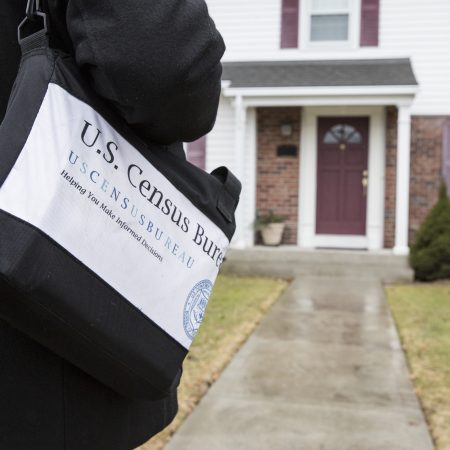
The U.S. Census Bureau released new data showing the population of adults 65 and older is increasing, while the population of people 18 and younger is decreasing.  

Subscribe to the Detroit Evening Report on Apple Podcasts, Spotify, NPR.org or wherever you get your podcasts.

The population of adults age 65 and older rose by 3.1% (to 61.2 million) while the population of those under 18 decreased 0.2% (to 73.1 million) from 2023 to 2024, the data shows.

Lauren Bowers, chief of the Census Bureau’s Population Estimates Branch, says those changes affect communities of color most among the 4.4 million people who live in cities like Detroit, Warren and Dearborn.  

“The data in 2024 is showing that the non-Hispanic white population is the only population in the Detroit metro area where younger adults are outnumbered by older adults,” she said.

Bowers says nationally, the number of older adults and children 18 and younger now are similar. 

Other headlines for Monday, July 14, 2025:

  • Seventeen nonprofits, businesses and community groups working to reduce food waste will receive support through the state-funded NextCycle Michigan initiative.
  • The Michigan Department of Health and Human Services (MDHHS) says federal funding cuts could strip 300,000 Medicaid recipients of their health insurance. Medicaid is the largest insurer in the state, covering one in four residents. Health department director Elizabeth Hertel says the cuts will also affect her agency’s efforts to protect public health.
  • A city building in Dearborn was renamed last week in honor of Dearborn’s first Arab American councilmember, Suzanne Sareini. Sareini served as a council member six terms, from 1989 to 2013. The city’s senior housing building — formerly called the Hubbard Manor East — will now be called the Suzanne Sareini Manor.
  • The Detroit Documenters, a program which trains and pays people to attend city meetings, is hosting a photo documenting workshop this week. Cydni Elledge, senior photographer and editor at Outlier Media, will lead the workshop, set for 2 p.m. on Tuesday, July 15.

Do you have a community story we should tell? Let us know in an email at detroiteveningreport@wdet.org.

Trusted, accurate, up-to-date.

WDET strives to make our journalism accessible to everyone. As a public media institution, we maintain our journalistic integrity through independent support from readers like you. If you value WDET as your source of news, music and conversation, please make a gift today.

Donate today »

The post Detroit Evening Report: Older adults outnumber children in nearly half of US counties, data shows appeared first on WDET 101.9 FM.

Older adults should take extra precautions during extreme heat this summer

Michigan has seen some extreme weather the past few weeks, with temperatures rising recently into the upper 90s and a heat index pushing 100 degrees.

Older adults are more susceptible to heat exhaustion or heat stroke during these periods of extreme heat.

Temperatures are expected to remain high this week in metro Detroit. The National Weather Service is projecting a high of 88 degrees on the Fourth of July, and a high of 94 degrees over the holiday weekend. 

Dr. Pragnesh Patel, chief of the Division of Geriatrics at Wayne State University and the Detroit Medical Center, says older adults are some of the most vulnerable to becoming ill from extreme heat.

“With aging, there are changes, and they have multiple comorbid conditions that can put them at risk from higher temperature,” he said. “That can lead to some serious consequences if they don’t take precautions.”

Some of these illnesses include heat exhaustion, which can then lead to heat stroke, a dangerous condition where the body can no longer control its temperature’

Symptoms of heat stroke:

  • Confusion, slurred speech
  • Hot, dry skin
  • Absent or profuse sweating
  • Very high body temperature
  • Loss of consciousness 
  • Fatal if treatment delayed

Heat exhaustion symptoms include headaches, dizziness, lightheadedness, cramps and elevated body temperature. Patel says in addition to these symptoms, people with heat stroke can run a high fever of 104 degrees or more and not perspire.

“Despite the excessive high temperatures, you’re not able to dissipate that heat through the sweating mechanism. And they also become very confused, become disoriented, have rapid heartbeat, palpitations and shallow breathing — just a severe form of exhaustion,” he said.

Heat stroke is the most serious heat-related illness, according to the Centers for Disease Control and Prevention. If left untreated, it can cause permanent disability or death.

Staying hydrated is among the best ways to prevent heat-related illnesses. Patel says older adults should stay hydrated even if they may not feel thirsty. He also suggested that people stay indoors in cool areas, wear lighter, loose-fitting clothing, and reduce caffeine intake.

He says older adults are often hospitalized for dehydration, which is why they should take extra precautions during extreme heat events.

“They come with symptoms of heat stroke, and a lot of older folks are susceptible to this because they also have other conditions, or they may be taking medications that puts them at higher risk,” Patel said.

People can call 2-1-1 or their local health department to find a nearby cooling center.

Trusted, accurate, up-to-date.

WDET strives to make our journalism accessible to everyone. As a public media institution, we maintain our journalistic integrity through independent support from readers like you. If you value WDET as your source of news, music and conversation, please make a gift today.

Donate today »

The post Older adults should take extra precautions during extreme heat this summer appeared first on WDET 101.9 FM.

❌