Reading view

There are new articles available, click to refresh the page.

The Metro: She looked at the waste stream and saw a lifeline

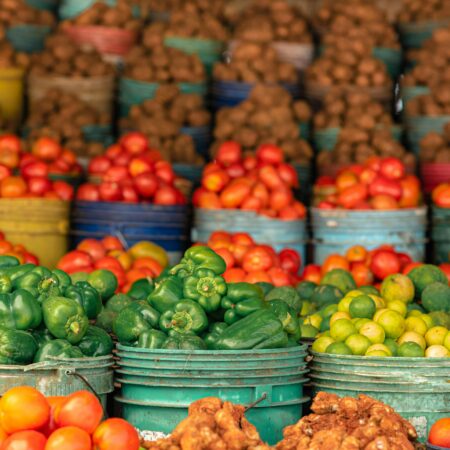
The recent pause in SNAP benefits has pushed hunger back into the headlines. Families who were already stretching every dollar suddenly had to stretch the impossible. At the same time, grocery stores, stadiums, airports, and restaurants were still throwing away food that could have fed them.

Jasmine Crowe-Houston has spent years thinking about that contradiction, and she built her company, Goodr, to close the gap

The idea is simple but radical: hunger is not about having too little food. Instead, it is about wasting too much of it, and failing to get it to the people who need it.

Goodr is her answer. It is a tech-driven system that turns surplus food into meals, waste streams into climate wins, and food access into something dignified. 

What started in her one-bedroom apartment in Atlanta has now grown into a national model that keeps millions of pounds of food out of landfills and puts millions of meals on dinner tables.

Jasmine Crowe-Houston joined Robyn Vincent to discuss how the SNAP pause has magnified the urgency of feeding Americans—and what scaling the system she has built really looks like in American cities.


Listen to The Metro weekdays from 10 a.m. to noon ET on 101.9 FM and streaming on demand.

Subscribe to The Metro on Apple Podcasts, Spotify, NPR.org or wherever you get your podcasts.

Trusted, accurate, up-to-date.

WDET strives to make our journalism accessible to everyone. As a public media institution, we maintain our journalistic integrity through independent support from readers like you. If you value WDET as your source of news, music and conversation, please make a gift today.

Donate today »

More stories from The Metro

The post The Metro: She looked at the waste stream and saw a lifeline appeared first on WDET 101.9 FM.
The Metro: Federal government shutdown ripples through Detroit’s food systems

Update: Just hours after this segment aired, the Michigan Senate passed a measure that would put $71 million toward food assistance. Supporters say it wouldn’t take effect by Nov. 1 or cover all SNAP benefits, but it would help food banks bridge the gap in the meantime. The measure still needs approval from the House. (Reporting by Colin Jackson, MPRN)

The politics of food is personal, especially now.

It’s day 30 of the federal government shutdown, and key programs are grinding to a halt. One such program is the Supplemental Nutrition Assistance Program, or SNAP, which helps more than 40 million Americans keep food on the table.

In Michigan, roughly 1.4 million residents rely on those benefits to stretch their grocery budgets. The federal pause means November’s payments could be delayed — a disruption that would ripple through the entire food system. Families will face the prospect of empty dinner tables, while local grocers, food co-ops, and urban farms brace for reduced spending. 

In Detroit, one person working to keep the city’s food systems healthy amid the uncertainty is Amanda Brezzell, co-founder and creative director of Fennigan’s Farms, an urban agriculture and community design studio devoted to food access, sustainability, and resilience.

Brezzell joined Robyn Vincent on The Metro to describe what she’s hearing from residents and what advocates are doing in real time.


Listen to The Metro weekdays from 10 a.m. to noon ET on 101.9 FM and streaming on demand.

Subscribe to The Metro on Apple Podcasts, Spotify, NPR.org or wherever you get your podcasts.

Support local journalism.

WDET strives to cover what’s happening in your community. As a public media institution, we maintain our ability to explore the music and culture of our region through independent support from readers like you. If you value WDET as your source of news, music and conversation, please make a gift today.

More stories from The Metro

The post The Metro: Federal government shutdown ripples through Detroit’s food systems appeared first on WDET 101.9 FM.

❌