Walk through Detroit long enough and the city starts talking to you — in murals, in corner bars, in the way old streets bend and break.
A new puzzle collection tries to put that experience on the page.
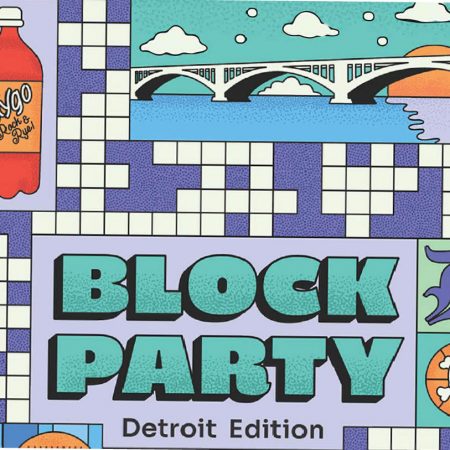
On Saturday night, people who love this city enough to puzzle over it will gather at The Congregation in Detroit for the release of the new crossword book Block Party: Detroit Edition.
There are many things in Detroit to be surprised by — a block you thought you knew. A memory stirred by the sound of a bus rolling by. A building with an unexplored hallway.
This new crossword book leans into all of that. Every puzzle carries a bit of the city.
At the center of it all are two friends: Sala Wanetick and Emily Biegas. They write with curiosity, tease with wordplay, and hide little nods to the places they grew up and the corners they still wander. Their clues feel like conversations at a bar you’ve been going to for years.
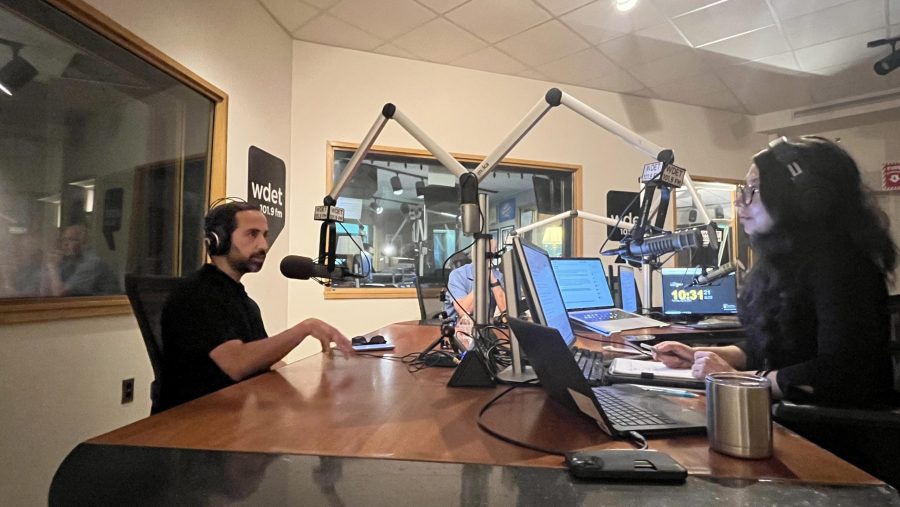
They joined Cary Junior II on The Metro to discuss how a crossword becomes a portrait of a place, and why Detroit is perfect for this kind of puzzle.
Listen to The Metro weekdays from 10 a.m. to noon ET on 101.9 FM and streaming on demand.
WDET strives to cover what’s happening in your community. As a public media institution, we maintain our ability to explore the music and culture of our region through independent support from readers like you. If you value WDET as your source of news, music and conversation, please make a gift today.
Authors, readers and publishing industry experts lament the underrepresentation of Hispanic stories in the mainstream world of books, but have found new ways to elevate the literature and resolve misunderstandings.
“The stories now are more diverse than they were ten years ago,” said Carmen Alvarez, a book influencer on Instagram and TikTok.
Some publishers, independent bookstores and book influencers are pushing past the perception of monolithic experience by making Hispanic stories more visible and discoverable for book lovers.
The rise of online book retailers and limited marketing budgets for stories about people of color have been major hurdles for increasing that representation, despite annual celebrations of Hispanic Heritage Month from Sept. 15 to Oct. 15 in the U.S. There’s been a push for ethnically authentic stories about Latinos, beyond the immigrant experience.
“I feel like we are getting away from the immigration story, the struggle story,” said Alvarez, who is best known as “tomesandtextiles” on bookstagram and booktok, the Instagram and TikTok social media communities. “I feel like my content is to push back against the lack of representation.”
However, the National Hispanic Media Coalition estimates Latinos only represent 8% of employees in publishing, according to its Latino Representation in Publishing Coalition created in 2023.
Book are on display at Palabras Bilingual Bookstore Monday, Oct. 6, 2025, in Phoenix. (AP Photo/Ross D. Franklin)
Brenda Castillo, NHMC president and CEO, said the coalition works directly with publishing houses to highlight Latino voices and promote their existing Latino employees.
The publishing houses “are the ones that have the power to make the changes,” Castillo said.
Some Hispanic authors are creating spaces for their work to find interested readers. Award-winning children authors Mayra Cuevas and Alex Villasante co-founded a book festival and storytellers conference in 2024 to showcase writers and illustrators from their communities.
“We were very intentional in creating programming around upleveling craft and professional development,” Cuevas said. “And giving attendees access to the publishing industry, and most importantly, creating a space for community connection and belonging.”
Villasante said the festival and conference allowed them to sustain themselves within the publishing industry, while giving others a road map for success in an industry that isn’t always looking to mass produce their work.
“We are not getting the representation of ourselves,” Villasante said. “I believe that is changing, but it is a slow change so we have to continue to push for that change.”
Breaking into the mainstream
New York Times bestselling author Silvia Moreno-Garcia, a Mexican-Canadian novelist known for the novels “Mexican Gothic” and “The Daughter of Doctor Moreau,” is one of few Hispanic authors that has been able to break to mainstream. But she said it wasn’t easy.
A free books trolley sits in front of Palabras Bilingual Bookstore, Monday, Oct. 6, 2025, in Phoenix. (AP Photo/Ross D. Franklin)
Moreno-Garcia recalled one of her first publisher rejections: The editor complimented the quality of the story but said it would not sell because it was set in Mexico.
“There are systems built within publishing that make it very difficult to achieve the regular distributions that other books naturally have built into them,” Moreno-Garcia said. “There is sometimes resistance to sharing some of these books.”
Cynthia Pelayo, an award-winning author and poet, said the marketing campaign is often the difference maker in terms of a book’s success. Authors of color are often left wanting more promotional support from their publishers, she said.
“I’ve seen exceptional Latino novels that have not received nearly the amount of marketing, publicity that some of their white colleagues have received,” Pelayo said. “What happens in that situation (is) their books get put somewhere else in the bookstore when these white colleagues, their books will get put in the front.”
Hispanic Heritage Month, however, helps bring some attention to Hispanic authors, she added.
Independent bookstores
Independent bookstores remain persistent in elevating Hispanic stories. A 2024 report by the American Booksellers Association found that 60 of the 323 new independent bookstores were owned by people of color. According to Latinx in Publishing, a network of publishing industry professionals, there are 46 Hispanic-owned bookstores in the U.S.
The back reading room of Palabras Bilingual Bookstore is seen Monday, Oct. 6, 2025, in Phoenix. (AP Photo/Ross D. Franklin)
Online book retailer Bookshop.org has highlighted Hispanic books and provided discounts for readers during Hispanic Heritage Month. A representative for the site, Ellington McKenzie, said the site has been able to provide financial support for about 70 Latino bookstores.
“People are always looking to support those minority owned bookstores which we are happy to be the liaison between them,” McKenzie said.
Chawa Magaña, the owner of Palabras Bilingual Bookstore in Phoenix, said she was inspired to open the store because of what she felt was a lack of diversity and representation in the books that are taught in Arizona schools.
The main entrance of Palabras Bilingual Bookstore shows off colorful artwork, a theme throughout the bookstore, Monday, Oct. 6, 2025, in Phoenix. (AP Photo/Ross D. Franklin)
“Growing up, I didn’t experience a lot of diversity in literature in schools.” Magaña said. “I wasn’t seeing myself in the stories that I was reading.”
Of the books for sale at Palabras Bilingual, between 30% to 40% of the books are Latino stories, she said.
Magaña said having heard people say they have never seen that much representation in a bookstore has made her cry.
“What has been the most fulfilling to me is able to see how it impacts other people’s lives,” she said. “What motivates me is seeing other people get inspired to do things, seeing people moved when they see the store itself having diverse books.”
Chawa Magaña, owner of Palabras Bilingual Bookstore, poses with a few of her favorite books Monday, Oct. 6, 2025, in Phoenix. (AP Photo/Ross D. Franklin)
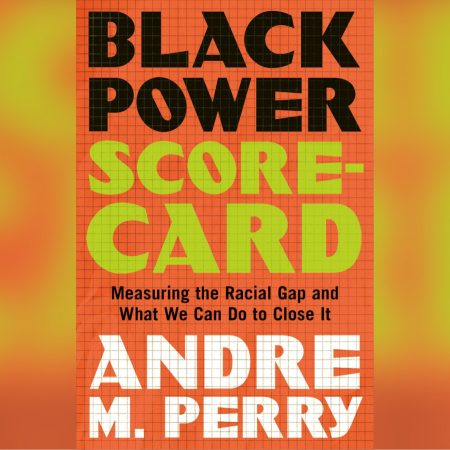
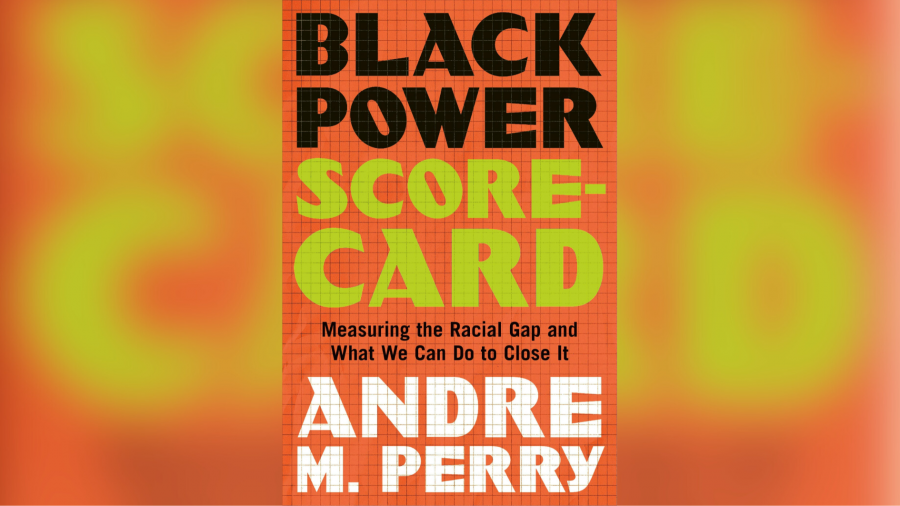
“Black Power” is widely known as a political slogan — a rallying cry to mobilize Black Americans to attain social, political and economic power and fuel a sense of self-determination.
Those factors are important indicators. But could directing attention to the gains Black people have made and replicating those circumstances offer better outcomes than comparing overall wealth?
Perry joined The Metro on Wednesday for a deep dive into the mentality behind this book.
Use the media player above to hear the full conversation.
Listen to The Metro weekdays from 10 a.m. to noon ET on 101.9 FM and streaming on-demand.
Trusted, accurate, up-to-date.
WDET strives to make our journalism accessible to everyone. As a public media institution, we maintain our journalistic integrity through independent support from readers like you. If you value WDET as your source of news, music and conversation, please make a gift today.
Public media began as classroom radio in the 1920s. It was dry, instructional, and pretty boring. Most only thought of news as newspapers or the anchors you see on your parents’ favorite channel every morning.
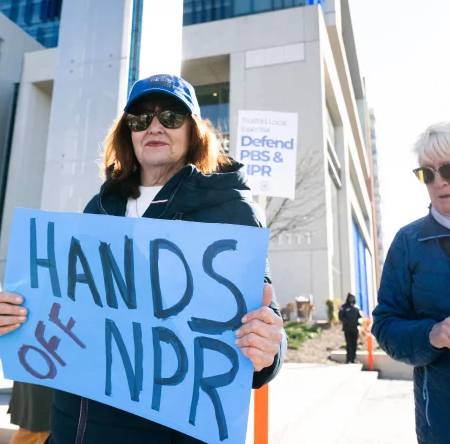
But it evolved to combine entertainment, education, and lessons in democracy. That evolution helped shape National Public Radio and the Public Broadcasting Service into platforms that elevate untold community stories and give us and our kids the tools to live better lives. NPR and PBS not only tells us the news happening locally and nationally, they give children a safe avenue for early learning.
Josh Shepperd is a historian and author specializing in public media at the University of Colorado Boulder.
He joined The Metro to talk about the history of public media in the United States, and the Trump administration’s current attacks on public broadcasting.
President Donald Trump has asked Congress to pass a rescission package that would claw back funding for foreign aid programs and for the Corporation for Public Broadcasting. The package has already passed the House and now the Senate has until July 18 to approve it.
Use the media player above to hear the full conversation.
Listen to The Metro weekdays from 10 a.m. to noon ET on 101.9 FM and streaming on-demand.
Trusted, accurate, up-to-date.
WDET strives to make our journalism accessible to everyone. As a public media institution, we maintain our journalistic integrity through independent support from readers like you. If you value WDET as your source of news, music and conversation, please make a gift today.
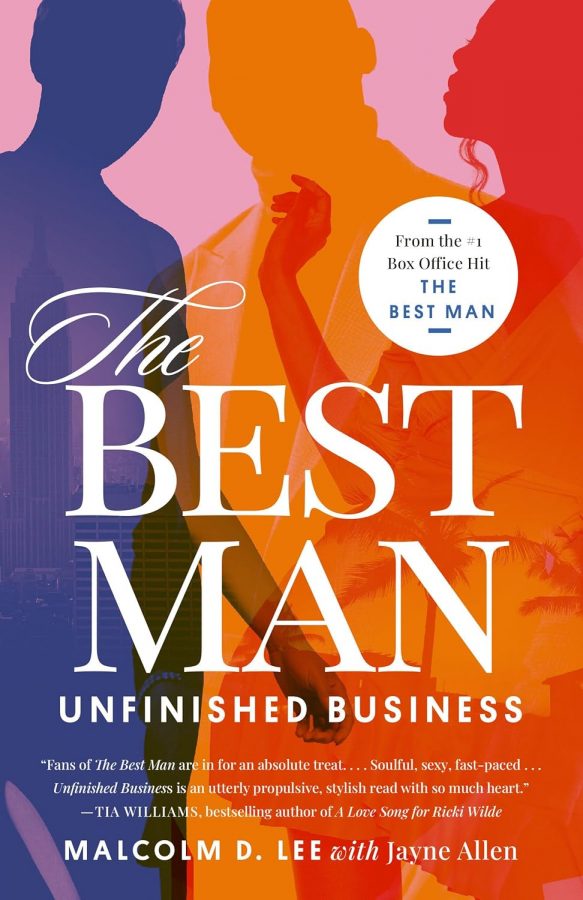
In the 1999 film, “The Best Man,” we were introduced to novelist Harper Stewart (Taye Diggs), whose writes a book loosely based on his friend group that causes chaos and tests relationships amid a close friend’s wedding — for which he served as best man.
“The Best Man” was a staple film in the Black community. The friendships highlight the struggles of young adults trying to get their careers off the ground, early marriage stages and more. The bonds between those characters are so nuanced, it’s one of the reasons it became a hit.
“The Best Man: Unfinished Business” by Malcolm D. Lee and Jayne Allen.
For many it showed a multitude of different characters that we typically don’t see in film and television. That’s one of the reasons writer and director of the film, Malcolm D. Lee, says he created the film.
Now, 27 years later, after a second film and a series on Peacock, those characters are transitioning from the screen to a new book, “The Best Man: Unfinished Business,” co-written by Lee and author Jayne Allen.
Use the media player above to hear the full conversation.
Listen to The Metro weekdays from 10 a.m. to noon ET on 101.9 FM and streaming on-demand.
Trusted, accurate, up-to-date.
WDET strives to make our journalism accessible to everyone. As a public media institution, we maintain our journalistic integrity through independent support from readers like you. If you value WDET as your source of news, music and conversation, please make a gift today.

 Login
Login