Reading view

There are new articles available, click to refresh the page.

MichMash: Looking ahead at the remainder of 2025

During Thanksgiving weekend, the MichMash hosts got together to look at issues and stories we should look out for in the month of December. In this episode, WDET’s Cheyna Roth and Gongwer News Service’s Zach Gorchow and Alethia Kasben discuss topics such as data centers, the Michigan gubernatorial race, and what items on the legislature’s to-do list are likely to get accomplished.

Subscribe to MichMash on Apple PodcastsSpotifyNPR.org or wherever you get your podcasts.

Data centers

The Michigan Public Service Commission is planning on addressing the increasing amount of data centers in the state in a public hearing this week.

Open AI, the company behind ChatGPT, is opening a data center in Saline Township. Bridge Michigan recently reported there are nine other communities where companies have proposed building these large-scale data centers.

This surge is a result of a 2024 law that expanded the exemption from the state’s 6% sales tax purchases for the equipment inside these data centers. But despite economic opportunity, there is concern among residents. Questions about environmental impact came up when the legislature passed those bills.

The hearing is set for Dec. 3.

Michigan gubernatorial race

The team also spoke about a major shift coming up in the state gubernatorial race.

Detroit Mayor and gubernatorial candidate Mike Duggan is going to lose a huge asset in having the mayoral megaphone to command attention once Mayor-Elect Mary Sheffield takes office. That means he could be losing a lot of news coverage starting Jan. 1. On the other hand, he’ll be able to dedicate his full effort to his campaign efforts. We’ll see how that plays out.

Support the podcasts you love.

One-of-a-kind podcasts from WDET bring you engaging conversations, news you need to know and stories you love to hear. Keep the conversations coming. Please make a gift today.

The post MichMash: Looking ahead at the remainder of 2025 appeared first on WDET 101.9 FM.
MichMash: Bipartisan approaches to Violent Crime Clearance Act, privacy, and more 

Michigan lawmakers are working on bipartisan approaches to ensure crimes are accounted for and increase privacy for lawmakers.

WDET’s Cheyna Roth and Gongwer News Service’s Alethia Kasben talk with State Senator Stephanie Chang and State Representative Sarah Lightner. They discuss the Violent Crime Clearance Act, shielding of addresses for certain public officials, and more. 

Subscribe to MichMash on Apple PodcastsSpotifyNPR.org or wherever you get your podcasts.

Murder-solve rate in Michigan

According to a Michigan State Police report, the murder-solve rate is at 31.7% as of March of 2025. State Rep. Lightner said there could be more done to help law enforcement solve crimes.

She says a bill she introduced with State Senator Stephanie Chang will, “allow more for technical assistance for forensics or more people to investigate. [This bill] would help utilize those dollars better and have better access to labs.” 

Privacy for public officials

Another proposal both lawmakers were unified on was a bill that shields the addresses of certain public officials. Due to the increased climate of political violence over the past several years, both legislators want to help ensure safety for lawmakers.

State Sen. Chang said, “We are in a different time with the heightened risk of political violence. The judicial protection act was spurred by the killing of a judge’s son. Having personal identifying information puts everyone at further risk.” 

State Sen. Chang said now that the state budget is done, these bills have a better change of being addressed  

Support the podcasts you love.

One-of-a-kind podcasts from WDET bring you engaging conversations, news you need to know and stories you love to hear. Keep the conversations coming. Please make a gift today.

More MichMash

The post MichMash: Bipartisan approaches to Violent Crime Clearance Act, privacy, and more  appeared first on WDET 101.9 FM.
MichMash: State House Speaker Matt Hall wants more H.E.A.T. and less ‘pork’

Michigan House Speaker Matt Hall makes his MichMash debut this week to share his take on recent events involving the Michigan legislature. In this episode, he joins hosts Cheyna Roth and Zach Gorchow to talk about funding, Governor Gretchen Whitmer, the state budget, Republican candidates for governor and more.

Subscribe to MichMash on Apple PodcastsSpotifyNPR.org or wherever you get your podcasts.

Bringing the H.E.A.T.

Speaker Hall says his H.E.A.T. plan (short for the Hall Ethics, Accountability and Transparency plan) aims to bring more transparency to spending in the legislature. He says that people need to know where money from the state budget is going.

“Let’s get public documents a long time in advance that tells us what is the public purpose, what is the project, so we can look into these ‘pork’ spending projects and say which ones are good and which ones are bad,” Hall said.

Republican candidates for governor

Hall also spoke about the current candidates for governor. He said that there were a lot of strong republican contenders, but he also complimented independent candidate Mike Duggan.

“Mike Duggan and I get along very well,” Hall said. “I’ve done many deals with him. The Public Safety Trust fund… We have a great relationship. But he’s more of a democrat than a republican.”

The Michigan gubernatorial elections will be held on Nov. 3, 2026.

Support the podcasts you love.

One-of-a-kind podcasts from WDET bring you engaging conversations, news you need to know and stories you love to hear. Keep the conversations coming. Please make a gift today.

The post MichMash: State House Speaker Matt Hall wants more H.E.A.T. and less ‘pork’ appeared first on WDET 101.9 FM.

MichMash: After mayoral win, is Sheffield the second most powerful Democrat in Michigan?

Mayor-elect Mary Sheffield had a historic win on Tuesday, becoming the first woman to be elected Mayor of Detroit. In this episode of MichMash, Gongwer News Service’s Zach Gorchow and Alethia Kasben are joined by BridgeDetroit reporter Malachi Barrett and Detroit One Million founder Sam Robinson to discuss how Sheffield might govern in her new role.

Subscribe to MichMash on Apple PodcastsSpotifyNPR.org or wherever you get your podcasts.

In this episode:

  • What makes Sheffield’s win so significant?
  • What does Sheffield’s trajectory look like?

Historic win

Not only is Sheffield the first woman to become mayor for the city of Detroit, but she had record turnout in comparison to her predecessor.

“Duggan is talked about as this electoral juggernaut, especially in his re-election campaigns. He never had above 75% or even hit 75,000 votes,” Barrett said. “Sheffield had both.”

Barrett also said Sheffield was more present in the community and had better relationships than her opponent, Rev. Solomon Kinloch Jr.

Sheffield’s trajectory

From here, Sheffield’s career could go in many different directions. But according to Robinson, Detroit is the main focus for the young politician.

He recounted stories from her election night afterparty and says he believes she aspires to be a candidate like former Detroit Mayor Coleman Young. Robinson also said that her representation as an African American woman has inspired a lot of people.

Support the podcasts you love.

One-of-a-kind podcasts from WDET bring you engaging conversations, news you need to know and stories you love to hear. Keep the conversations coming. Please make a gift today.

The post MichMash: After mayoral win, is Sheffield the second most powerful Democrat in Michigan? appeared first on WDET 101.9 FM.
MichMash: How does the state budget affect the cannabis industry?

In this episode, cannabis attorney Lance Boldrey joins the show. He chats with WDET’s Cheyna Roth and Gongwer News Service’s Alethia Kasben about how the 2026 state budget affects the cannabis industry.

Plus, Republican gubernatorial candidates had their first debate this week. We discuss a notable absence and the major themes of the debate.

Subscribe to MichMash on Apple PodcastsSpotifyNPR.org or wherever you get your podcasts.

In this episode:

  • How does the wholesale tax on the marijuana industry affect businesses of different sizes?
  • Reviewing the first Republican debate for Michigan’s 2026 gubernatorial race
  • Which gubernatorial candidates have raised the most money so far?

Cannabis in the state budget

The 2026 state budget included a 24% tax increase on the marijuana market. The tax will be applied to the retailer’s sales regardless of other taxes already listed in the line of items of any marijuana invoice.

Boldrey, who focuses on cannabis cases at the law firm Dykema, says small businesses will be hit the hardest.

“I think the folks that get the most negatively impacted are the micro businesses, which are the social equity part of the industry, which are people that come in as craft producers. They don’t have any wholesale activity at all because everything is grown, processed and sold in the exact same location.”

Boldrey says these micro businesses can’t make a wholesale purchase or a wholesale sale, but they will have a wholesale tax on their production.

Reviewing the gubernatorial debate

At the Republican gubernatorial debate this week, there was a notable absence from U.S. Representative John James, who said he would not participate in these debates until the field was more settled. As of now, James is perceived as the frontrunner, but there may be risk with his approach.

He’s already upset some GOP delegates mad by skipping a different event organized by the state party. If he does win the primary, he may have to win those delegates back heading into the general election.

Also, campaign finance reports were due this week from all parties. Republican John James, Democrat Jocelyn Benson and Independent Mike Duggan have raised the most from donors in their campaigns so far.

Support the podcasts you love.

One-of-a-kind podcasts from WDET bring you engaging conversations, news you need to know and stories you love to hear. Keep the conversations coming. Please make a gift today.

The post MichMash: How does the state budget affect the cannabis industry? appeared first on WDET 101.9 FM.
MichMash: What are earmarks? A breakdown of the 2026 state budget

Even though Michigan’s 2026 state budget was already passed and signed into law, the drama continues as the Senate and House disagree about a bill calling for more transparency with enhancement grants known as “earmarks.” This week on MichMash, WDET’s Cheyna Roth and Gongwer News Service’s Zach Gorchow explain what earmarks are and what role they play in the recently-passed budget.

Then, they sit down with Budget Director Jen Flood to dig into the details of what was included in the state budget.

Subscribe to MichMash on Apple PodcastsSpotifyNPR.org or wherever you get your podcasts.

In this episode:

  • How are earmarks used in Michigan state politics?
  • What went into the 2026 state budget? 
  • How big is the 2026 state budget?

Explaining earmarks

There’s a long history of earmarks being used as a way for lawmakers to bring new projects and resources to their districts. Some have gone to organizations to carry out a specific function, and some have been the center of controversy.

The purpose of these new transparency bills is to establish earmark guidelines before the next budget season. This past season, earmark guidelines were being established at the same time as lawmakers were working on the budget.

Unpacking the state budget

Flood shared that there were a lot of obstacles to overcome when making the 2026 state budget.

“We had a lot of things working against us,” she said. “We had a divided legislature for the first time in 15 years, we were facing a road funding shortfall, and last summer, Congress blew a $1 billion hole in our state budget with the One Big Beautiful Bill Act. And so we had our work cut out for us.”

Flood added that the budget includes $2 billion in road funding, which she says will protect jobs in the construction industry.

Support the podcasts you love.

One-of-a-kind podcasts from WDET bring you engaging conversations, news you need to know and stories you love to hear. Keep the conversations coming. Please make a gift today.

The post MichMash: What are earmarks? A breakdown of the 2026 state budget appeared first on WDET 101.9 FM.
MichMash: How are Michigan’s 2026 congressional races looking?

With a little more than a year to go until Michigan’s next congressional election, we take a look at the current state of affairs for congressional candidates in Michigan. This week on MichMash, WDET’s Cheyna Roth and Gongwer News Service’s Alethia Kasben explore who’s running in the state’s US House and Senate races, and where their fundraising stands.

Later on, Charles Griffith from the Ecology Center stops by to discuss how a recently passed gas tax will impact electric vehicles.

Subscribe to MichMash on Apple PodcastsSpotifyNPR.org or wherever you get your podcasts.

Support the podcasts you love.

One-of-a-kind podcasts from WDET bring you engaging conversations, news you need to know and stories you love to hear. Keep the conversations coming. Please make a gift today.

The post MichMash: How are Michigan’s 2026 congressional races looking? appeared first on WDET 101.9 FM.
MichMash: Unpacking Michigan’s ‘Citizen Only’ ballot initiative

Although there are already laws barring non-citizens from voting in Michigan elections, a group is pushing a ballot initiative to have voters show proof of citizenship. This week on MichMash, WDET’s Cheyna Roth and Gongwer News Service’s Zach Gorchow unpack the issue with supporter Paul Jacob of Americans for Citizen Voting and opponent Melinda Billingsley of Voters Not Politicians.

Subscribe to MichMash on Apple PodcastsSpotifyNPR.org or wherever you get your podcasts.

In this episode:

  • Why do supporters think we need a ballot initiative that ensures only citizens vote in Michigan elections?
  • Why are opponents concerned about potential barriers to voting that the ballot measure may cause for citizens?

This measure would require citizens to present photo identification to be able to vote. There is no evidence that votes by non-citizens have affected the results of an election. Jacob agrees and says that this ballot initiative is to enforce the law that bars non-citizens from voting.  

“Our position is that it’s important that voters get to decide, should non-citizens be voting in our elections or not? I think voters are going to decide not,” he said. “We’re looking to have every U.S. citizen in Michigan who wants to vote be able to vote, but we’re also looking for non-citizens not to be put on the rolls and not to vote.” 

There is concern that the proposed ballot may bar some citizens from voting who don’t have proper identification on hand. Billingsley says the laws that are already in place are adequate to ensure security in our voting system.  

“We had the policies that had been set in place by the Secretary of State’s office, by the Department of Elections to be constantly checking and reviewing our elections to make sure that our elections are secure,” she said. “We don’t see a problem with it, because the problem doesn’t exist. There is a problem with the proposals being put forward by these petitions, because they would actually make voting harder for everyone.” 

Advocates of the proposal are currently gathering signatures for the ballot measure. They need 446,198 signatures to get this measure on the ballot.

Support the podcasts you love.

One-of-a-kind podcasts from WDET bring you engaging conversations, news you need to know and stories you love to hear. Keep the conversations coming. Please make a gift today.

The post MichMash: Unpacking Michigan’s ‘Citizen Only’ ballot initiative appeared first on WDET 101.9 FM.
MichMash: Lansing passes the 2026 state budget 3 days late

When we started working on MichMash this week, it was past the Oct. 1 deadline and a state budget for the 2026 fiscal year had yet to be passed. In this week’s first episode, WDET’s Cheyna Roth and Gongwer News Service’s Alethia Kasben speculate when a budget might get passed and what would happen in the meantime.


Then early Friday morning, Michigan lawmakers finally passed the budget — 3 days late. So in this bonus episode, Cheyna and Alethia discuss the details of the budget with Crain’s Detroit Senior Reporter Dave Eggert.

Subscribe to MichMash on Apple PodcastsSpotifyNPR.org or wherever you get your podcasts.

Support the podcasts you love.

One-of-a-kind podcasts from WDET bring you engaging conversations, news you need to know and stories you love to hear. Keep the conversations coming. Please make a gift today. Give now »

The post MichMash: Lansing passes the 2026 state budget 3 days late appeared first on WDET 101.9 FM.
MichMash: Recapping the Mackinac Republican Leadership Conference

The Michigan GOP held their biennial leadership conference at Mackinac Island this past weekend. In this episode of MichMash, WDET’s Cheyna Roth and Gongwer News Service’s Alethia Kasben sit down with Baldy Bipartisan’s John Selleck to discuss whether the conference is still beneficial for the Michigan Republican party.

Plus, Cheyna and Alethia discuss a proposal to move the state’s primary election from early August to May.

Subscribe to MichMash on Apple PodcastsSpotifyNPR.org or wherever you get your podcasts.

In this episode:

  • How important is the Mackinac Republican Leadership Conference?
  • Should Michigan’s primary election be moved up to earlier in the year?
  • Where are we with the state budget?

Support the podcasts you love.

One-of-a-kind podcasts from WDET bring you engaging conversations, news you need to know and stories you love to hear. Keep the conversations coming. Please make a gift today. Give now »

The post MichMash: Recapping the Mackinac Republican Leadership Conference appeared first on WDET 101.9 FM.
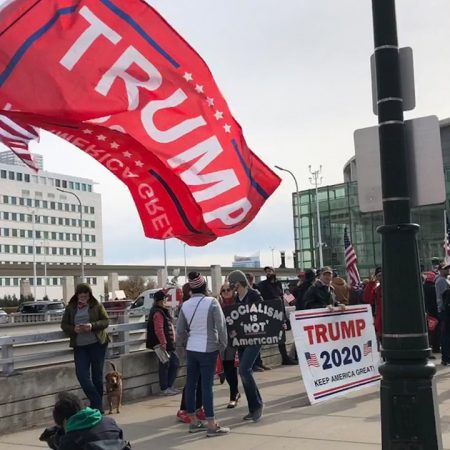
MichMash: October 1 state budget deadline looms

With less than two weeks until the budget deadline, there is still no state budget in sight. In this episode of MichMash, host Cheyna Roth and Gongwer News Service’s Alethia Kasben break down what could still be done before October 1.

They sit down with State Senator Sarah Anthony, the Senate Appropriations chair, as well as State Representative Ann Bollin, the House Appropriations chair, to hear the game plan for the remainder of the month.

Subscribe to MichMash on Apple PodcastsSpotifyNPR.org or wherever you get your podcasts.

Support the podcasts you love.

One-of-a-kind podcasts from WDET bring you engaging conversations, news you need to know and stories you love to hear. Keep the conversations coming. Please make a gift today. Give now »

The post MichMash: October 1 state budget deadline looms appeared first on WDET 101.9 FM.
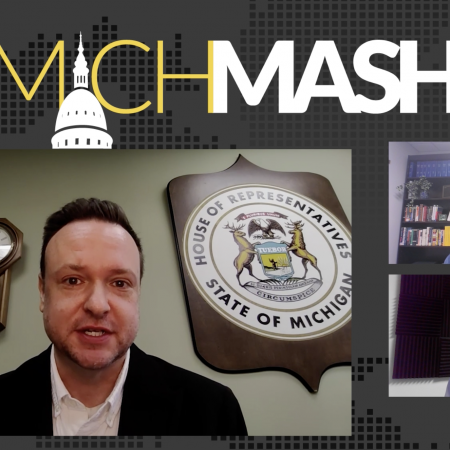
MichMash: Unpacking the dismissed 2020 case against Michigan electors + how state budget affects local governments

In 2020, 15 Republicans tried to cast Michigan’s electoral votes for President Trump, even through President Biden won the state by 154,000. In this episode of MichMash, WDET’s Cheyna Roth and Gongwer News Service’s Zach Gorchow break down how the legal case against these electors unraveled.

Then, Executive Director of the Michigan Association of Counties Steve Currie joins the show to talk about how the state budget affects local governments.

Subscribe to MichMash on Apple PodcastsSpotifyNPR.org or wherever you get your podcasts.

Support the podcasts you love.

One-of-a-kind podcasts from WDET bring you engaging conversations, news you need to know and stories you love to hear. Keep the conversations coming. Please make a gift today. Give now »

The post MichMash: Unpacking the dismissed 2020 case against Michigan electors + how state budget affects local governments appeared first on WDET 101.9 FM.
MichMash: State budget countdown to October 1 deadline

As Michigan schools return to classes this week, the uncertainty of the state budget is causing some schools to cut programs just in case there are any issues with funding. In this episode of MichMash, Gongwer News Service’s Zach Gorchow and Alethia Kasben discuss what needs to be done in order for the legislature to make the October 1 deadline.

Then, Robert McCann, Executive Director for the K-12 Alliance of Michigan, joins the show to talk about how the uncertainty of the budget is affecting school districts.

Subscribe to MichMash on Apple PodcastsSpotifyNPR.org or wherever you get your podcasts.

In this episode: 

  • How is budget uncertainty affecting schools across Michigan?
  • How do educational benchmarks affect school budgets?

Support the podcasts you love.

One-of-a-kind podcasts from WDET bring you engaging conversations, news you need to know and stories you love to hear. Keep the conversations coming. Please make a gift today. Give now »

The post MichMash: State budget countdown to October 1 deadline appeared first on WDET 101.9 FM.
MichMash: State budget reaches new phase + Michigan selects new state superintendent

Nearly two months after the original deadline, House Republicans passed a budget giving the legislature a month to negotiate ahead of the new fiscal year on Oct. 1. In this episode of MichMash, WDET’s Cheyna Roth and Gongwer News Service’s Alethia Kasben discuss what was included in this version of the budget. 

Then, they’re joined by Gongwer News Service’s administration reporter Lily Guiney to talk about the new state superintendent and drama within the Michigan Department of Natural Resources. 

Subscribe to MichMash on Apple PodcastsSpotifyNPR.org or wherever you get your podcasts.

In this episode: 

  • As the Oct. 1 deadline approaches, how’s the state budget looking?
  • Why was Dr. Glenn M. Maleyko chosen to be Michigan’s next state superintendent?
  • What’s going on with Michigan DNR leadership?

Support the podcasts you love.

One-of-a-kind podcasts from WDET bring you engaging conversations, news you need to know and stories you love to hear. Keep the conversations coming. Please make a gift today.

The post MichMash: State budget reaches new phase + Michigan selects new state superintendent appeared first on WDET 101.9 FM.

MichMash: Changes ahead for Michigan mental health care

In this episode

  • Reasons behind the change with from the Michigan Department of Health and Human Services.
  • Supporters and Opponents share their thoughts on the change. 

Subscribe to MichMash on Apple Podcasts, Spotify, NPR.org or wherever you get your podcasts.

The Whitmer administration is moving forward with changes to Michigan’s behavioral health system. As part of the weekly series MichMash, WDET’s Cheyna Roth and Gongwer News Service’s Zach Gorchow discuss how the proposal is being received by supporters and opponents, including Daniel Cherrin and Robert Sheehan.

Daniel Cherrin leads the MI Care Council, the Michigan Association of Substance Addiction Providers, and the MI Behavioral Health and Wellness Collaborative. He supports the changes, arguing they will make the system more accountable and efficient.

“Right now there are too many layers of behavioral services in the state of Michigan and too many conflicts of interest,” he says. “We support the state’s efforts because now they are asking Prepaid Inpatient Health Plans if they want to be a service provider or a funder. We want them to make a choice.”

Cherrin says the changes would also remove unnecessary gatekeepers in the system.

Robert Sheehan, executive director of the Community Mental Health Association of Michigan, takes the opposite view.

He believes the fundamental structure should not be dismantled in the name of reform. “There is a lack of uniformity with Medicaid benefits. Uniformity has a cost,” he says.

“If a town is told to do it a certain way but they have an innovative practice, they won’t be able to pursue it.” Sheehan argues the state needs a balance of uniformity and innovation.

Roth and Gorchow also spoke with Elizabeth Hertel, director of the Michigan Department of Health and Human Services, who explained the reasoning behind the changes.

The goal is to have the new system in place by October 1, 2026.

More from WDET:

Support the podcasts you love.

One-of-a-kind podcasts from WDET bring you engaging conversations, news you need to know and stories you love to hear.

Keep the conversations coming. Please make a gift today.

Give now »

The post MichMash: Changes ahead for Michigan mental health care appeared first on WDET 101.9 FM.
MichMash: Abdul El-Sayed shares why he’s running for US Senate + other race updates

In this episode

  • The current state of the U.S. Senate Race in Michigan. 
  • Reasons why state representative Joe Tate dropped out of the U.S. Senate Race. 
  • Abdul El-Sayed makes his case for the open U.S. Senate seat. 

Subscribe to MichMash on Apple Podcasts, Spotify, NPR.org or wherever you get your podcasts.

In this episode of MichMash, WDET’s Cheyna Roth and Gongwer News Service’s Alethia Kasben are joined by the former director of Wayne County’s Department of Health, Human, and Veterans Services, Abdul El-Sayed. He discusses why he’s running for Michigan’s open U.S. Senate seat and what qualifies him for the role. 

Plus, now that State Representative Joe Tate has dropped out of the US Senate race, we explore how this affects the rest of the field. 

El-Sayed, who ran for governor in 2018, announced his run for Michigan’s open U.S. Senate seat this spring. El-Sayed spoke to the current state of politics and how he feels his party has not responded to the current administration’s actions properly.

“We’ve got a lot of talking heads in the party that people seem to respect because they did something back in the 90s who are telling us that we just need to roll over and play dead,” commented El-Sayed. “I’m so sorry, but democracy means too much to me, America means too much to me to be willing to roll over and play dead.” 

The other two major Democratic candidates are Mallory McMorrow, state senator, and Haley Stevens, U.S. representative. 

On the Republican side, U.S. Rep. Mike Rogers appears to be the sole candidate from his party running for the seat.

Kasben said the President seems to support Rogers’ uncontested run.

“Republican U.S. Senate leadership backed Mike Rogers out of the gate. And President Donald Trump has now endorsed him. And he essentially asked Huizenga not to run,” said Kasben. “So strategically, it appears the GOP has made the decision that avoiding a primary here gives them the best chance to win the seat.” 

The elections of the open US Senate seat will be held Nov. 3rd 2026.  

More from WDET:

Support the podcasts you love.

One-of-a-kind podcasts from WDET bring you engaging conversations, news you need to know and stories you love to hear.

Keep the conversations coming. Please make a gift today.

Give now 

The post MichMash: Abdul El-Sayed shares why he’s running for US Senate + other race updates appeared first on WDET 101.9 FM.

MichMash: Detroit mayoral primary results; Michigan Public Service Commission shake-up

The 2025 Detroit primary election has concluded, and now we have a two-person sprint to November’s general election to determine who will be the city’s next mayor. In this episode of MichMash, Gongwer News Service’s Zach Gorchow breaks down the results with WDET’s Russ McNamara (host of All Things Considered Detroit weekdays at 4 p.m.).

Plus, Gorchow and host Cheyna Roth discuss a shake-up in the Michigan Public Service Commision.

Subscribe to MichMash on Apple PodcastsSpotifyNPR.org or wherever you get your podcasts.

In this episode: 

  • Why was there a personnel change in the Michigan Public Service Commission?
  • What does the Detroit mayoral race look like now that the primary is over?

Highlights

On Mary Sheffield’s majority

McNamara said Mary Sheffield’s clear lead in the mayoral primary results didn’t surprise him too much.

“It always seemed like Mary Sheffield, especially over the past couple of years, was being groomed as the heir apparent to Mike Duggan,” he said. “And nothing in the run-up to this election swayed my opinion on that. And then nothing in the results would shake that either.”

Sheffield and Solomon Kinloch now advance to November’s general election.

On Alessandra Carreon’s replacement

Governor Gretchen Whitmer recently removed Alessandra Carreon, a clean energy advocate, from serving on the Michigan Public Service Commision, which regulates the state’s energy utilities monopoly. Whitmer replaced Carreon with Shaquila Myers, who critics call an industry ally.

Gorchow said the motive to remove Carreon is still unknown.

“The Governor’s press office has refused to answer questions about why Whitmer didn’t reappoint Carreon, saying only that she takes the appointments process seriously and there’s nothing that’s come out of these PSC meetings,” he said.

Besides Myers, the other two members of the PSC are Katherine L. Peretick and Chairman Daniel C. Scripps.

Support the podcasts you love.

One-of-a-kind podcasts from WDET bring you engaging conversations, news you need to know and stories you love to hear. Keep the conversations coming. Please make a gift today.

The post MichMash: Detroit mayoral primary results; Michigan Public Service Commission shake-up appeared first on WDET 101.9 FM.
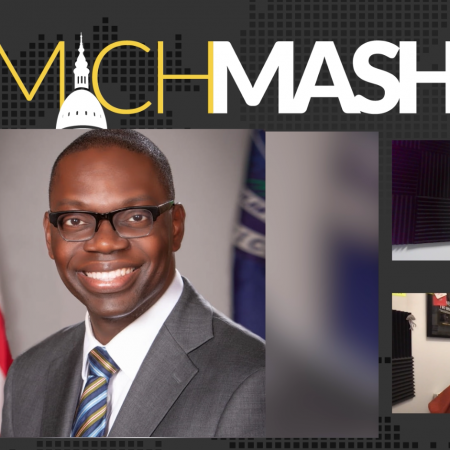
MichMash: Former State House Speaker Tom Leonard talks gubernatorial run; state budget updates

Michigan’s 2026 gubernatorial race is underway, and MichMash is talking to all of the major candidates. In this week’s episode, WDET host Cheyna Roth and Gongwer News Service’s Alethia Kasben sit down with Former State House Speaker Tom Leonard to learn why he’s running and what sets him apart from other candidates.

Plus, Cheyna and Alethia explain the current status of Michigan’s 2026 fiscal budget.

Subscribe to MichMash on Apple PodcastsSpotifyNPR.org or wherever you get your podcasts.

In this episode: 

  • Why wasn’t the 2026 fiscal budget approved by the July 1 deadline?
  • Why is Tom Leonard running for governor?

Highlights

On Duggan running as an Independent

One of the outliers of the 2026 gubernatorial race is Detroit Mayor Mike Duggan running as an Independent. Leonard says that despite Duggan’s party affiliation change, not much else has.

“Ultimately, at the end of the day, the mayor is a Democrat. He is not an Independent,” Leonard told MichMash. “If somebody were to ask him right now where he breaks away from the Democrats on any major issue, I don’t think he could give one.”

Leonard went on to say that he believes Duggan in the race affects Democrats more than Republicans.

On the state budget’s delay

It’s been a month since the July 1 deadline, and the Michigan legislature still hasn’t approved the budget for the 2026 fiscal year. What’s causing the state capitol to fall behind schedule?

“A disagreement over unrelated legislation … led to Republican House Speaker Matt Hall kicking the ranking Democrat Rep. Albus Farhat of Dearborn off of the Appropriations Committee,” Alethia explained. “He was the lead Democrat trying to help negotiate this budget deal.”

As the academic year draws closer, many schools and are creating contingency plans in case the budget isn’t approved before the state fiscal year starts in October.

Support the podcasts you love.

One-of-a-kind podcasts from WDET bring you engaging conversations, news you need to know and stories you love to hear. Keep the conversations coming. Please make a gift today.

The post MichMash: Former State House Speaker Tom Leonard talks gubernatorial run; state budget updates appeared first on WDET 101.9 FM.

MichMash: Lt. Gov. Gilchrist talks gubernatorial campaign; fundraising updates from other candidates

This week on MichMash, gubernatorial candidate and Lt. Gov. Garlin Gilchrist II sat down with WDET’s Cheyna Roth and Gongwer News Service’s Alethia Kasben to explain why he’s running for governor of Michigan and how his engineering background could help.

Plus, we take a look at fundraising progress from the rest of the gubernatorial candidates.

Subscribe to MichMash on Apple PodcastsSpotifyNPR.org or wherever you get your podcasts.

In this episode:

  • Why is Lt. Gov. Gilchrist running for governor?
  • How much money have Michigan gubernatorial candidates raised so far?

Engineering change

Gilchrist graduated with two engineering degrees from the University of Michigan. Now as he runs to be the next governor of Michigan while still serving as lieutenant governor of Michigan, he views both jobs as serving the same purpose.

“I have one job, and that is to have as many conversations as possible with people across Michigan every single day … and then to take what they tell me and go make something happen,” he told MichMash. “People need a problem solver in office and that’s what I do as an engineer. I make systems work for people.”

Fundraising updates

All gubernatorial candidates, including Gilchrist, were required to report their first fundraising hauls this week. But despite this major milestone, the race is far from determined.

Democratic candidates include Secretary of State Jocelyn Benson, Genesee County Sheriff Chris Swanson and Lt. Gov. Garlin Gilchrist II. Benson has raised $3.5 million in the first six months of her campaign, Swanson has raised $1 million and Gilchrist has raised $750,000. 

While the Democratic field has appeared to settle, the Republican field seems more in flux. Former House Speaker Tom Leonard entered the race just a month ago, and a few weeks ago, 2022 Republican Gubernatorial Nominee Tudor Dixon announced she would not be running in 2026. Other candidates may still enter the race, and it’s possible that U.S. Rep. John James may back out of his gubernatorial bid amid pressure from President Donald Trump to maintain his congressional seat.

But for now, the main Republican candidates are Leonard, Senate Republican Leader Eric Nesbitt, James and former Attorney General Mike Cox. As the deadline to submit fundraising reports isn’t until 5 p.m. on Friday, we didn’t have all the data at the time this episode was recorded on Thursday afternoon. But we do know that Cox has raised $1.4 million and and that James moved $500,000 from his congressional committee to his gubernatorial committee earlier this month.

Detroit Mayor Mike Duggan is also running for governor as an Independent, and his fundraising report had not yet been submitted at the time of this recording.

Support the podcasts you love.

One-of-a-kind podcasts from WDET bring you engaging conversations, news you need to know and stories you love to hear. Keep the conversations coming. Please make a gift today.

The post MichMash: Lt. Gov. Gilchrist talks gubernatorial campaign; fundraising updates from other candidates appeared first on WDET 101.9 FM.

❌