Reading view

There are new articles available, click to refresh the page.

Detroit Evening Report: Recount affirms Alharbi’s Hamtrack mayoral win

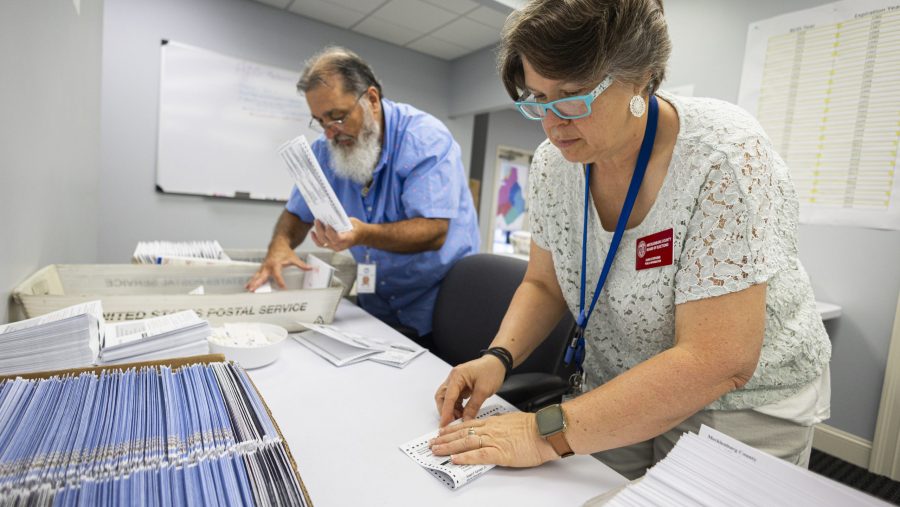
A recount in the Hamtramck race for mayor shows that Adam Alharbi has won the election.  Alharbi beat City Councilman Muhith Mahmood by just 11 votes.   Muhith requested a recount because the initial margin of victory was so small.  The Wayne County Board of Canvassers recounted just over 4,000 ballots by hand Tuesday. 

Legal action continues in the case, though.  Mahmood has sued, claiming that 37 ballots found in the City Clerk’s office after the election should be counted. 

Additional headlines from Wednesday, December 3, 2025

Master Plan Meetings 

The City of Detroit is holding a series of meetings this week to give residents more information on its 20-year master plan.

The meetings, held by the Planning and Development Department, will also give Detroiters a chance to provide their input on proposals for land use in parts of the city. 

There’s a meeting for east siders tonight from 6 to 8 p.m. at the Farwell Recreation Center on East Outer Drive.  Another takes place at 6 p.m. Thursday in Southwest Detroit at the Patton Recreation Center on Woodmere.  A virtual Zoom meeting will be held on Monday, December 9th.  Passcode: 900187

Detroit voter suppression sentence 

Two conservative political operatives have been sentenced to probation in a scheme to discourage Black Detroiters from voting by mail in the 2020 presidential election.

This week’s sentencing was the last court hearing for Jacob Wohl and Jack Burkman in a multistate effort to generate and distribute thousands of robocalls. The pair were accused of creating robocalls that warned people they could be questioned by police, debt collectors and vaccine advocates if they voted by mail.

Wohl and Burkman pleaded no contest to several crimes after unsuccessfully challenging the charges on free speech grounds.

Ambassador Bridge fee rises 

The price for crossing the Ambassador Bridge will rise next year. 

Tolls for passenger vehicles traveling across the international bridge between Detroit and Windsor will rise to $10 each way starting January first.  That’s up from $9 right now. 

For motorists paying in Canadian funds, the toll jumps from $12 CDN to $14. 

State of Macomb address 

Macomb County Executive Mark Hackel will deliver his State of the County address tonight. He’ll speak to an invitation-only crowd at the Macomb Center for the Performing Arts in Clinton Township. 

He’s expected to review events of the past year and preview the year to come.  Macomb County’s Black population is now at 12.4%.  That’s up from just around 1% in 1970.  Tonight’s speech is scheduled to begin at 6 p.m.  You can watch it live at WDET.org

Cold spell coming 

Detroiters should brace for a deep cold spell over the next few days. 

The National Weather Service says the worst of it in the short run will be now through Friday night.  Lows tonight are forecasted to be around 15 degrees.  Highs tomorrow and Friday will only rise into the mid-20s.  Lows Thursday night will drop to around 6 degrees with wind chills of -2.  

If you’re headed outside, dress in layers.  Make sure you have a hat and gloves to keep you warm and avoid frostbite.

Listen to the latest episode of the “Detroit Evening Report” on Apple Podcasts, Spotify, NPR.org or wherever you get your podcasts.

Support local journalism.

WDET strives to cover what’s happening in your community. As a public media institution, we maintain our ability to explore the music and culture of our region through independent support from readers like you. If you value WDET as your source of news, music and conversation, please make a gift today.

The post Detroit Evening Report: Recount affirms Alharbi’s Hamtrack mayoral win appeared first on WDET 101.9 FM.

The Metro: She looked at the waste stream and saw a lifeline

The recent pause in SNAP benefits has pushed hunger back into the headlines. Families who were already stretching every dollar suddenly had to stretch the impossible. At the same time, grocery stores, stadiums, airports, and restaurants were still throwing away food that could have fed them.

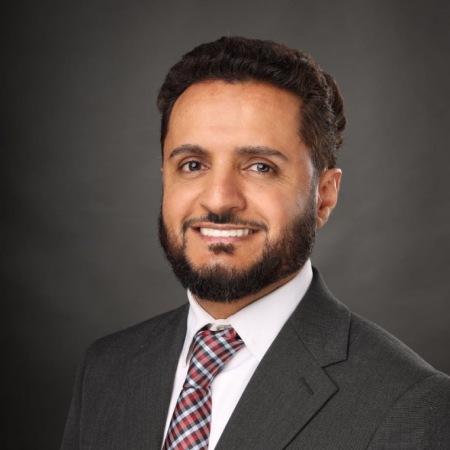
Jasmine Crowe-Houston has spent years thinking about that contradiction, and she built her company, Goodr, to close the gap

The idea is simple but radical: hunger is not about having too little food. Instead, it is about wasting too much of it, and failing to get it to the people who need it.

Goodr is her answer. It is a tech-driven system that turns surplus food into meals, waste streams into climate wins, and food access into something dignified. 

What started in her one-bedroom apartment in Atlanta has now grown into a national model that keeps millions of pounds of food out of landfills and puts millions of meals on dinner tables.

Jasmine Crowe-Houston joined Robyn Vincent to discuss how the SNAP pause has magnified the urgency of feeding Americans—and what scaling the system she has built really looks like in American cities.


Listen to The Metro weekdays from 10 a.m. to noon ET on 101.9 FM and streaming on demand.

Subscribe to The Metro on Apple Podcasts, Spotify, NPR.org or wherever you get your podcasts.

Trusted, accurate, up-to-date.

WDET strives to make our journalism accessible to everyone. As a public media institution, we maintain our journalistic integrity through independent support from readers like you. If you value WDET as your source of news, music and conversation, please make a gift today.

Donate today »

More stories from The Metro

The post The Metro: She looked at the waste stream and saw a lifeline appeared first on WDET 101.9 FM.

The Metro: Big Tech eyes Michigan, but at what cost for residents?

Michigan is racing toward the data center boom that powers artificial intelligence and cloud computing. Lawmakers have approved generous tax breaks, and utilities are courting multi-billion-dollar projects, including a proposed $7 billion “hyperscale” campus in rural Saline Township, backed by tech giants OpenAI and Oracle. 

Supporters promise investment and new tax revenue. But critics warn that these vast, windowless buildings could come with higher electric bills, heavy demands on local water supplies, and pressure to keep fossil fuel plants running long past Michigan’s clean energy deadlines. 

So who really pays for Michigan’s data-center gold rush, and who gets to decide?

Brian Allnutt, a senior reporter and contributing editor at Planet Detroit, has been following Michigan’s data center deals from the state capitol to township board meetings and courtroom settlements. He joined Robyn Vincent to help make sense of the choices Michigan faces.


Listen to The Metro weekdays from 10 a.m. to noon ET on 101.9 FM and streaming on demand.

Subscribe to The Metro on Apple Podcasts, Spotify, NPR.org or wherever you get your podcasts.

More stories from The Metro

The post The Metro: Big Tech eyes Michigan, but at what cost for residents? appeared first on WDET 101.9 FM.
The Metro: What’s downstream for dam removal in Michigan’s rivers?

Southeast Michigan’s streams and rivers are studded by shadows of our industrial past. Henry Ford brought mass production of vehicles to the world, and he needed energy to power his industry. 

Old hydroelectric dams are still installed along the Rouge and Huron Rivers, but they’re crumbling and it’s becoming time to repair them, or remove them. 

In Michigan, the fate of these aging dams is still hotly debated in town halls and city council meetings. One of those place is Flat Rock, MI, where residents and local officials urged Huron-Clinton Metroparks not to remove the dam.

While the fate of Flat Rock Dam is still uncertain, 120 dams have been removed in Michigan, according to a database published by American Rivers, a river restoration nonprofit.

And dam removal brings a number of benefits for the waterway and surrounding areas, including: biodiversity and fish passage, water quality, and mitigation of catastrophic flooding in the case of dam failure.

So, what’s next for Michigan’s dams and rivers? What options do residents and lawmakers have? And, what opportunities are ahead for the Great Lakes state?

Elizabeth Riggs, the Great Lakes Regional Director for American Rivers, joined Robyn Vincent on the Metro to discuss.

Listen to The Metro weekdays from 10 a.m. to noon ET on 101.9 FM and streaming on demand.

Subscribe to The Metro on Apple Podcasts, Spotify, NPR.org or wherever you get your podcasts.

Trusted, accurate, up-to-date.

WDET strives to make our journalism accessible to everyone. As a public media institution, we maintain our journalistic integrity through independent support from readers like you. If you value WDET as your source of news, music and conversation, please make a gift today.

Donate today »

The post The Metro: What’s downstream for dam removal in Michigan’s rivers? appeared first on WDET 101.9 FM.

❌