Reading view

There are new articles available, click to refresh the page.

Washtenaw County sheriff says cooperating with ICE puts community members at risk

The impact of the recent series of fatal encounters between some Minnesota residents and agents from Immigration and Customs Enforcement is being felt in metro Detroit.

Several law enforcement officials in the region say they do not want to cooperate with deportation operations conducted by ICE.

That includes Washtenaw County Sheriff Alyshia Dyer.

She says Washtenaw sheriff deputies and ICE agents often have very different agendas.

Listen: Washtenaw County Sheriff says cooperating with ICE puts community members at risk

The following interview has been edited for clarity.

Alyshia Dyer: It really puts [police] in conflict with the communities they serve. It’s our responsibility, regardless of immigration status, to keep everyone safe. We need our local communities to trust us. As local police, we rely on the public trust that we build in the communities we serve. The way that immigration enforcement operates is completely different.

And it’s not our duty or responsibility to enforce federal immigration law. We don’t ask about immigration status. We don’t get involved in immigration matters. And especially in this climate, where people are so afraid to even leave their homes, we don’t want to be involved in that.

Quinn Klinefelter, WDET News: As a lay person, it has always seemed to me that federal issues would take precedence over local policing matters. Is it legal for your deputies to basically avoid helping a federal agency like ICE?

AD: Absolutely. The Michigan constitution, as well as our state and local laws, make it very clear that we have a duty to protect and serve all residents of the county. We take an oath as well to do that. And it doesn’t say only if they have valid immigration status. Constitutional rights apply to everyone. And we are not trained nor given resources, nor is it our priority, to look into immigration matters.

The 287 (g) program [which allows local police to act as immigration enforcement agents] is a voluntary program. It is a choice to enter into that program or not. There is no mandate that we have to do it. So we are exercising our discretion and not entering into that agreement. We are going to stay focused on local public safety issues. And, honestly, our resources are already stretched thin.

QK: I would imagine there’s additional costs, financial and otherwise, that a department has to bear when it is working with ICE.

AD: There have been a number of rulings that basically say holding somebody in jail after a judge has ordered them released so that ICE can come pick them up, is a serious issue. It raises liability concerns for the county. Agencies have been sued for doing that. And it’s not our responsibility.

My responsibility as sheriff is to make sure we enforce local and state law, keep the county safe and run the county jail. If a judge orders somebody to be released, they are to be released. And it is not a mandate nor, in my opinion, good practice to keep them in jail pending transfer to immigration officials. If we were to hold somebody in jail solely based on an immigration detainer, which is not a judicial warrant, and we keep them past the release date, then we risk liability for the entire county.

QK: At this point many people have seen the viral videos of ICE tactics in action. They seem to create fear, even among those who have not broken the law. Victims are afraid to call 911, witnesses don’t want to talk, crimes are not reported. Beyond not cooperating with ICE, what can be done by departments like yours to try to restore that trust with the public?

AD: What we have done is made it very clear to the community where our values lie and that we will not be working with ICE. We have maintained a clear separation. We also do not ask about immigration status. So when anyone needs help, they can call 911. But because the national administration remains obsessed with mass deportation, it’s hard for local police. People are fearful. And I have no doubt in my mind that people are not calling the police when they need help because they’re worried. Regardless of what we say, there’s still that fear.

People have confused us with ICE. Them wearing masks and hiding their identities and the tactics they use are not best practices. That’s not what we do at the local level. We try really hard to support all residents. We work closely with immigrant rights groups. I’ve done a number of education town halls, making sure people understand their rights.

Honestly, it puts local law enforcement in an impossible situation. They need the trust of the public to effectively do their job. And when federal immigration agents come in and take someone and detain them, they’re not dealing with the aftermath, right? I’ve had residents in Washtenaw County, people with legal status or who are citizens even, that have said, “Should I carry a birth certificate with me? Is it safe to send my kid to school?”

It is really hard to be sheriff and be responsible for the public safety of a county and know that, unfortunately, there are people in the county that are going to be targeted by immigration enforcement, sometimes solely for just existing. This idea that they’re only going after people with violent felonies or serious criminal records is not true. I have seen the opposite. I’ve also seen cases where they have mistaken someone because they were Latino and they assumed that they were someone undocumented.

Over the years law enforcement has pushed back on that. It’s racial profiling. Seeing these situations play out, not just in Washtenaw County but across the country, is really troubling. I think that local law enforcement and sheriffs have a responsibility to be a voice of reason and assure the public that we are not going to operate how ICE is operating.

QK: You’d raised concerns recently on your personal Facebook page about ICE targeting parents at school bus stops and reportedly detaining a mother in front of her child. Spokespeople for ICE dispute that account, calling it one of the “lies” that put their agents at risk. You later said the report you posted was inaccurate. But you say that doesn’t diminish your worries about how ICE typically operates now compared to a few years ago.

AD: There was a point in time where there was a separation between just focusing on enforcement removal operations and the work that Homeland Security was doing. And there were important things they were doing involving human trafficking and ensuring survivors of violent crime could get citizenship status. Now all of the resources are focused on deporting as many people as possible. I know people that have since retired from some of these agencies, that have said there’s a pressure for quotas. They are told, “You need to deport this many people a month.” That is abhorrent. That’s also a problem.

Trusted, accurate, up-to-date.

WDET strives to make our journalism accessible to everyone. As a public media institution, we maintain our journalistic integrity through independent support from readers like you. If you value WDET as your source of news, music and conversation, please make a gift today.

Donate today »

The post Washtenaw County sheriff says cooperating with ICE puts community members at risk appeared first on WDET 101.9 FM.

Will massive data centers create large rate increase for Michigan customers?

A new report finds that the rise in requests to build huge data centers across the country could reshape the size and cost of the electric grid in Michigan.

The Union of Concerned Scientists estimates that within five years data centers could require well over half of all the new power demand in the state.

One of the report’s co-authors, Lee Shaver, specifically analyzed the likely impact of data centers on Michigan.

Shaver says the question is not how much new electricity Michigan will need, it’s who will pay for it.

Listen: Will massive data centers create large rate increase for Michigan customers?

The following interview has been edited for clarity.

Lee Shaver: The utilities have what’s called an obligation to serve. So they are going to build enough generation capacity to be able to meet the demand from data centers. The way that the system is supposed to work is that whoever causes that new demand pays for it. But the amount of demand we’re seeing from data centers kind of upsets the way that these things have been done historically. There’s a much higher likelihood that customers other than the data center would end up paying for a portion of those costs.

The big difference is just how much larger the data centers are. As an example, the total size of the data center that DTE Electric was just approved to connect to their grid in Saline Township would be 1.4 gigawatts, which is equivalent to the energy demand of over a million homes.

If could take decades for a million people to move into a new city. It’s slow growth that the utility can plan for over a long timeframe. Those costs can be spread out very easily. But when you’ve got a million homes showing up in a community in less than two years, that’s a massive amount of growth. There’s tons of new infrastructure that has to be built. And the regulation just can’t accommodate that level of growth without the way that those costs are covered being distorted.

Quinn Klinefelter, WDET News: The Michigan Public Service Commission says the agreement between the data center and DTE includes strong protections against a big rate increase for customers. I’ve also heard that some utilities require owners of data centers to pay what’s called a “large load tariff.” Just what is that?

LS: The word tariff is a bit misleading, especially since tariffs have been in the news so much. But when a utility talks about a large load tariff, they’re talking about a set of terms and conditions that data centers have to agree to in order to be provided with electric service.

And there are a lot of really good and positive things in those tariffs that utilities are proposing, like minimum contract terms, minimum monthly billing amounts. The challenge is that, especially in Michigan, especially with the DTE data center that was just approved, there’s just not enough detail that has been made public from these large load tariffs and from the applications that the data centers themselves are submitting for the public to have assurance that the costs are actually going to be covered.

QK: Is there a point where you finally find that out one way or the other? Does it have to be when the centers are operating or can it be determined while they’re constructed?

LS: There’s several points in the process at which that needs to be done. Obviously the large load tariff needs to be in place when that contract between the data center and the utility is signed. There has to be transparency. A lot of that information, though not all of it, should be public so that it can be reviewed. And there should be regular reporting on at least an annual basis. The utility and the data center should be providing information back to the regulators to say, here’s how much energy was provided, here’s how much it cost, here’s how it was paid for. And at the same time, look at how the billing of other customers changed over that same time period.

QK: Does it take until the things are actually up and going before you can really find that out? Or can you tell that during the construction process?

LS: You need both pieces. You’re not going to get assurance that it happened properly until after things are up and running. But if you don’t have a good framework in place at the beginning to collect and share that data, you would never get any reassurance that it’s been done properly.

QK: Beyond purely financial considerations, I’ve heard some concerns about the possible health or other costs that could be associated with these massive data centers. In your view, is it reasonable to be worried about some of those effects?

LS: Absolutely. What we know today is that any new data centers coming in the near term are going to result in more fossil fuels being burned to provide them with power. And when we burn fossil fuels, there’s emissions of heat trapping carbon dioxide, nitrous oxide, sulfur dioxide and other pollutants that have measurable health impacts. Our report found that due to data centers being built over the next 5-10 years, there’s close to $20 billion worth of health damages that would be caused from air pollution, most of which would happen directly in Michigan. And the global climate damages are estimated to be over $400 billion across the 2026-2050 timeframe.

QK: Having analyzed the issue, what, in your view, is the best strategy for a state like Michigan to follow in regards to where or how many data centers are allowed in?

LS: We didn’t speak to whether or not specific data centers should be allowed to operate, but we do make a couple of recommendations from the policy side.

In addition to the steps that need to be taken to ensure that data centers pay for their own costs, we also recommend what we’re calling a CO2 reduction policy. We found that’s necessary because, while Michigan does have some really progressive clean energy and renewable energy standards, with the growth in data centers, those standards are not enough to continue Michigan on the path to reaching net zero carbon emissions. A CO2 reduction policy would essentially set a limit on how much fossil fuel can be burned in the state of Michigan. And by enacting that limit, over time combustion of fossil fuels will be reduced and all of those negative health impacts would diminish.

QK: Considering the current makeup of Congress and the White House, in your view, how realistic is it that such prohibitions could actually get through?

LS: Our recommendation is actually at the state level, for exactly that reason. And our modeling shows that regardless of policies elsewhere, if Michigan were to enact a CO2 reduction policy, it would have significant impacts on reducing emissions in Michigan.

Trusted, accurate, up-to-date.

WDET strives to make our journalism accessible to everyone. As a public media institution, we maintain our journalistic integrity through independent support from readers like you. If you value WDET as your source of news, music and conversation, please make a gift today.

Donate today »

The post Will massive data centers create large rate increase for Michigan customers? appeared first on WDET 101.9 FM.

Detroit Auto Show steers towards hands-on content

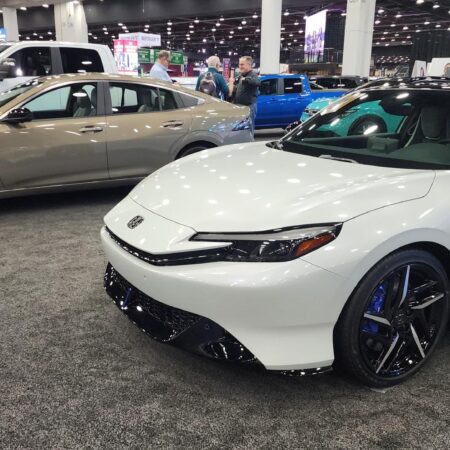
The Detroit Auto Show roars into Huntington Place this week for media previews and other events before opening to the public this weekend.

Organizers say this year’s car extravaganza differs from the others in its more-than-a-century history.

Executive Director Sam Klemet says the auto show is filled with the kinds of hands-on activities customers simply cannot duplicate using the internet.

Listen: Detroit Auto Show steers towards hands-on content

The following interview has been edited for clarity.

Sam Klemet: It’s something for everyone. We’ve talked about the various iterations of what the show has been over the last number of years. And I think it was originally considered more of a media show and then it’s been identified as a consumer show. And I’m really looking at it now as more of a content show.

We’re still going to have some special reveals from some of our OEM partners and some other specialty vehicles. We’re going to have some great news conferences as part of our Mobility Global Forum with newsmakers from all over the world. Of course, we have the charity preview where we’ll raise millions of dollars for local children’s charities. And then we open to the public.

It’s a chance for everyone to come under one roof and see kind of what the auto industry is about, where it’s going, and also what the city of Detroit is about.

Quinn Klinefelter, WDET News: You have a section this year that deals with off-road vehicles and experiences connected with them. What is that all about?

SK: It’s called our Michigan Overland Adventure. Obviously in the state of Michigan there’s a great culture, particularly in the northern part of the state, where people want to do off-roading. There’s a lot of camping. There’s a lot of trails. And we want to tap into that heritage and show off the modern vehicles that really are tapping into that type of lifestyle.

The Michigan Overland adventure has all kinds of support from OEMs like Ford, General Motors and Toyota, among others. We also have a group called the AEV, which has these incredible modified vehicles that go off-road. It’s a really exciting space. It’ll be a cool setup in terms of the display. It really showcases that outdoor culture.

QK: Back in the day people would come to the auto show, look at the vehicles and see if maybe there was one they wanted to buy. Is there more of a thrust now to give people these “experiences” as opposed to them just looking and going, “Man, that’s a cool car?”

SK: Absolutely. I think that’s how people’s relationships with cars are now. They want to see every intricacy of it. They want to see the technology and the dashboard. They want to get under the hood, they wanna see the tires, they wanna see every bit of the vehicle. And our show offers them that access. Not only to see the ones that are being displayed on the floor, but to get into them on our test tracks and feel what they’re like to a degree. The show is very much more hands-on than think what it’s traditionally been, a lot more activations and engagement.

QK: You yourself were a bit hands-on recently, riding along with a caravan of custom cars coming to the Detroit Auto Show from California.

SK: This is the centennial of Route 66 and we kicked off the auto show in Santa Monica. We have nine historic vehicles, Detroit-based vehicles, that made the drive all the way along Route 66. They’re ending the trip in Detroit, which isn’t a part of Route 66. But we’re the Motor City and we’ve got a great partnership with the group that’s doing the drive, America’s Automotive Trust.

Those vehicles that are coming across country will be on display in our concourse at the auto show. We’ll have videos from the entire ride. If you follow us on social media, you can see the day-to-day recaps of what that experience has been like.

And I think that’s been great because it connects our auto show across the country. And along the way, we’re telling these incredible stories of people’s relationships with vehicles, their relationship with driving and how it all connects back to Detroit. It’s been an exciting way to kick off the auto show this year.

QK: It’s no secret that the automotive industry has faced some uncertainty over the past year with President Trump’s use of tariffs and rolling back some regulations. Some consumers used to say that they thought of the auto show as kind of a one-stop gigantic dealer showroom. They would actually buy vehicles after they saw them there. In this current climate, do you see those kinds of sales continuing now at the auto show? Or is there a different purpose for such an event?

SK: I think this is a place first and foremost where people can come and see the cars that are on the market and see what’s coming in 2026 and beyond. Having an event like our Mobility Global Forum is a perfect stage to get a pulse on the industry, where people from all over the world come and talk about the direction automakers are going. And consumers get to interact with these vehicles, whether they’re in the market to buy one or they just want to see how the technology is evolving. I think that’s what an auto show is all about.

But as we evolve, we also want to be a place where people can come down even if they’re not in a market for a car, to learn about the vehicles and also have some fun. That’s why we added so much more entertainment, so much more arts and culture to the show, just kind of on the periphery of what we have on the main floor with our vehicles.

One of the new elements we have this year is our Visit Detroit interactive experience. That’s intended to engage young people with the auto industry. We’ve had people like Ford’s CEO talk about the need to have more auto technicians across the country. And we see this as an opportunity to engage young people in the science, technology, engineering, and math skills that are needed for those careers. So we serve a multipurpose, not only to showcase vehicles, but hopefully to uplift the industry at large through workforce development and other things.

QK: Some people I’ve spoken with say the auto show sounds nice, but they can look up all the details about the vehicles on the internet. So, they say, why even have an auto show? What’s your response to that?

SK: You can get all the information in the world online, there’s no doubt about that. But to actually interact and see the vehicles in person, I think, really does change a perspective. So I think the more that people can engage with these vehicles, the better. And actually I would encourage people to do some research about them before they come down to the auto show. It’ll give them a fuller picture and then they can most closely identify the vehicles that they want to key-in on when they get there. So I think that you can blend all of those things.

I know there’s a big push for nostalgia nowadays. But I would tell people that the 2026 auto show is not a show like we’ve had before. It’ll be very unique, a very different positive engagement experience that we haven’t had in a number of years. I think it’ll be a show that really resets the tone of what a Detroit Auto Show is all about.

We’ve paid attention to every single detail. From the minute people walk into the concourse to the minute they get to the back of the hall, everything is much more immersive. We have more brands on the floor. We have more vehicles. We have more opportunities for people to engage with content. I just think it’s bigger. It’s more robust. There’s more to do. There’s more to see. And there’s more information to be gathered.

Support local journalism.

WDET strives to cover what’s happening in your community. As a public media institution, we maintain our ability to explore the music and culture of our region through independent support from readers like you. If you value WDET as your source of news, music and conversation, please make a gift today.

The post Detroit Auto Show steers towards hands-on content appeared first on WDET 101.9 FM.

Gun violence prevention groups caution securely storing firearms is key to having a safe holiday season

The non-profit gun violence prevention group Brady United estimates about 4.6 million children live in homes with unlocked and loaded firearms.

And guns are now the leading cause of death among children.

Michigan recently took steps to help stop injuries from firearms by enacting a law requiring owners to keep guns safely stored and secured.

But the president of Brady United, Kris Brown, says gun owners must use extra caution during the holidays when large numbers of family members often gather together.

Listen: Gun violence prevention group says securely storing firearms is key to a safe holiday season

The following interview has been edited for length and clarity.

Kris Brown, Brady United: If you look at all of the different causes of gun violence in this country, unintentional shootings in a home kill or injure eight kids a day. About 76% of school shooters get their gun from a home where it’s not safely stored. And two-thirds of gun deaths are from suicide. The hugest risk factor for suicide in the home is the presence of a loaded and unsecured firearm.

Taken together, those statistics show us that preventing “family fire,” the unintentional injury or death of a loved one with an unsecured fire in a home, has to be a top priority if we’re really going to lessen the rate of gun violence in this country in a material way. It starts in everyone’s home and it starts with safe storage.

Quinn Klinefelter, WDET News: In Michigan, there was a tragic school shooting a few years ago at Oxford High School. It was one of the many that have happened across the country, sadly. A law was passed around the time of the Oxford shooting mandating safe storage of firearms. And in that case they also held the parents liable for the gun crimes committed by their son because they said that it wasn’t stored safely. From what your group has seen, are those kinds of laws widespread across the country? And do they seem to have any effect on limiting unintended shootings?

KB: They’re not widespread yet. There are a number of states that, after the Oxford shooting and others like it that have, unfortunately, occurred in states like Georgia, has created more of a groundswell to seek support for those kinds of laws. Child access prevention laws and similar laws of that ilk.

Brady United has mixed feelings about it. We believe the critical thing is to prevent these kinds of shootings from happening in the first place. Throwing parents in jail after the fact because they’ve been grossly negligent, that’s what the law we do believe should require. But it doesn’t bring back the innocent victims. It doesn’t stop the harm from happening in the first place.

That’s why we think child access prevention laws that ensure if you choose to have a firearm in the home it is safely stored are important compliments to public safety laws. They should be adopted across the country.

QK: In your view, does it seem that “threatening” parents, for lack of a better word, actually makes an impact? Or is it something where they just need to have this top of mind to begin with? There’s been shootings where people had a gun stuck in a shoe box that they seemed to think was fine because it stored away. And still a kid was able to get to it.

KB: I think there needs to be a complement of effort, sort of in the same way that getting a ticket when you’re speeding is a way to remind you that you shouldn’t have a lead foot. It compliments education in driver’s ed about why speeding is potentially very dangerous. The same sort of approach should apply here. This isn’t a unique area of human experience, though it’s a uniquely deadly area of human experience.

We at Brady have done a lot on our website so that families can find absolutely crystal clear guidance on safe storage options. And even how to talk to family members when you’re at the dining table over the holidays about the kinds of things that they can be doing, if they choose to have firearms in the home, to protect those who live there and those who visit the home.

We at Brady believe that it’s on each of us to have these conversations and to normalize something that’s as old as our nation, older than the Second Amendment, which is safe storage of firearms. Back in the colonial times it was mandated and enforced in terms of muskets. Why should it be different today, when eight kids a day are killed or injured by guns that those parents and most gun owners brought in with the idea that they should protect their families? And unless they’re safely stored, it’s tragic that that is exactly the opposite of what’s happening.

QK: I’ve heard some firearm owners and people that say they’re fighting for the Second Amendment who mention some of the recent mass shootings, the tragedy in Australia, for example. They’ll say that country had some of the toughest gun laws around and still that tragedy occurred. They argue restrictions on firearms really don’t make any huge difference, whether it’s children in the home or people out and about. What is your reaction to those kinds of comments?

KB: There was a mass shooting in Australia at Port Arthur. Immediately following that, I think it was a matter of days or weeks, not months, Australia banned various assault style weapons. And they greatly strengthened the regulation of the sale and ownership of firearms in their country. There was a significant reduction in mass shootings.

If you look at U.S. history, we have a distinguishing feature. Here guns are the number one killer of our kids. We experience 26 times the gun violence of every other industrialized country. The five states with the strongest gun laws in this country have a 70% or more reduced experience of gun death and injury compared to the states with the five weakest laws.

Will they prevent every gun death and injury? No, just like speeding limits didn’t stop every automobile fatality. But they reduced them a lot. This is in our hands. This is in the hands of gun owners across this country. That means guns locked, unloaded, and stored separately from ammunition. Doesn’t need a vote at the ballot box. It doesn’t need a better enforcement agency. It needs an individual taking an action that will ensure that a firearm is not used unintentionally to harm someone in their home.

Trusted, accurate, up-to-date.

WDET strives to make our journalism accessible to everyone. As a public media institution, we maintain our journalistic integrity through independent support from readers like you. If you value WDET as your source of news, music and conversation, please make a gift today.

Donate today »

The post Gun violence prevention groups caution securely storing firearms is key to having a safe holiday season appeared first on WDET 101.9 FM.

Tariffs take bite out of Christmas tree business

Holiday decorators in Michigan are facing a Grinch stealing part of the Christmas tree business.

The American Christmas Tree Association says most U.S. families use artificial trees that are imported and subject to heavy tariffs.

That could help Michigan real tree growers who provide millions of trees nationwide annually.

But the founder and CEO of artificial tree company Balsam Hill, Mac Harman, says tariffs are forcing price hikes for much of the season’s holiday décor.

Listen: Tariffs take bite out of Christmas tree business

The following interview has been edited for length and clarity.

Mac Harman: For artificial trees, pre-lit trees, all of those are made in Southeast Asia. 87 % of artificial trees imported to the U.S. last year came from China. It’s going to be lower this year because we and many others have diversified our supply chains to other parts of Southeast Asia. But there’s a tremendous amount of labor that goes into a pre-lit artificial tree.

Most of the reasons that people choose artificial trees are around convenience and longevity. What’s really convenient is you don’t have to spend an hour or more stringing the lights on the tree. And that’s a job that Americans don’t like doing when they set up their farm-grown trees.

And it’s a job that Americans didn’t want to do in factories, which is why pre-lit artificial trees were never made in the United States. That’s why we see them coming in from overseas.

From a farm-grown tree standpoint this year, maybe they have some increased costs affecting something they use on the farm. The price of the tree may not change as much.

But you still need the lights and the tree stand. And those are generally imported as well. Certainly the lights are all imported. And so those costs are up even more because, unfortunately, Christmas lights are tariffed even higher than pre-lit Christmas trees.

Quinn Klinefelter, WDET News: When you were looking at what was going on with tariffs as you were plotting your sales for the holidays this year, how difficult was it? Tariffs would go up, they’d go down again. Is it possible, even with diversifying supply chains, that there could be a shortage of trees?

MH: This year has been the most difficult running a business in my 25 years being a CEO, more difficult than COVID. And it is exactly because of trying to manage the tariffs. Literally the day after the presidential election, we started shipping as many products in as we could because it was talked about that there was going to be a so-called Day One tariff on Inauguration Day. So we and most major retailers shipped-in a lot. Then, on Day One, there wasn’t any tariffs.

There was an announcement that there would be a change on April 2nd. So we all scrambled and manufactured as many goods as we could and shipped them in before April 2nd. Everyone kind of independently made a decision to cut back around 15%-20%. So across the industry about 15% fewer trees were imported this year. We don’t have official data yet because the data was shut down during the government shutdown and they haven’t caught up. But we also think demand is going to be a little bit slower because the prices have gone up.

I think what we’re going to see is that there won’t be as many trees available at clearance. There are consumers who say, “Hey, an artificial tree lasts me 10 years. I can get by with the one I have this year. I’m going to wait ‘till after Christmas and buy one next year.” I don’t think we’re going to see as many of those deals this year. And we’re starting to see across the major retailers, as well as Balsam Hill, that we’re running out of stock on the most popular models because there just aren’t as many to go around this year.

QK: Let me play devil’s advocate. President Trump has long argued that the reason he wants to use tariffs is because he wants to have products made in the U.S. Obviously I’m paraphrasing, but if you’re making something and you’re depending on imports, well, you should be making it in the U.S. instead. So there might be a little bit of short-term pain, but suck it up and start building your stuff in the U.S. What’s your reaction to that argument?

MH: I think it’s fantastic that the president wants to bring strategic good manufacturing back to the U.S. I’d love it if my cell phone, telecommunications equipment, ships, things that we need for our defenses could be made in the U.S. What I don’t think needs to be made in the U.S. are non-strategic goods. And certainly Christmas trees are a non-strategic good, meaning that they don’t have any national security interest.

And they’ve actually never been made in the US. So it’s not even a matter of bringing it back. When the idea for the pre-lit artificial tree came about, the workers in the factories that made unlit artificial trees said they literally did not want to get paid to put lights on a tree. They said they were going to go find another job. And the entire industry moved in the early 1990s over to Thailand at the time.

We are in discussions with the Trump administration in D.C. Pretty much every official I’ve talked to, and I’ve had the privilege to talk to many, agrees with that. We’re hoping that, once things settle down with the U.S. Supreme Court case over IEEPA authority for tariffs, we will see more targeted tariffs. Just like we’ve seen these carve-outs for things that don’t grow here, like bananas and coffee and chocolate, I think we’re going to start to see that for some other non-strategic industries. So I’m hoping that we will see some tariff relief for the Christmas industry in the coming months.

QK: If you did want to try to start making them in the U.S. in some fashion, would that even be possible?

MH: We looked at that back during the first Trump administration. The only way we could manufacture artificial Christmas trees, pre-lit artificial trees in the United States would be if we could invent ways that reduce the labor costs. And we got to a point where a tree that we sell today for $800 would need to sell for about $3,000, back when we looked at this six or seven years ago. And that just isn’t feasible. We have taken another look at it now and not enough things have changed to make any difference in that.

I’ve spent a lot of this year in Washington, D.C., talking with the administration as well as Congress about this holiday decor issue. What we’re hoping for and what we think is going to happen is that President Trump’s going to do something like he did back in 2019, when he was putting the 301 tariffs on China in place. He delayed them until after Christmas to help Christmas retail. That’s public, he spoke about it. At the same time, many Christmas decorations were placed on list 4B, which was tariffed at 0%. So pre-lit Christmas trees have not been tariffed above 0% until this year.

I do think we are going to see some kind of relief from the administration. Going into the mid-term elections next year, you want consumers to be really happy. If everyone goes into Christmas and the conversation around the dinner table is about how expensive the mashed potatoes and the roast beef are, or whatever you’re eating, that’s not going to be a super Merry Christmas from at least an economic standpoint. For us, even though we’ve already imported all the goods we’re going to sell this year, if we know relief is coming next year, there are ways we can cut costs even more. We could potentially lower prices as we’re selling things for the rest of this season.

Right now we’re staring at even higher tariffs next year because the tariffs would be in place for the whole year. Whereas this year they’ve been in place only part of the year. And we brought a lot of our inventory in before those tariffs went into place.

Trusted, accurate, up-to-date.

WDET strives to make our journalism accessible to everyone. As a public media institution, we maintain our journalistic integrity through independent support from readers like you. If you value WDET as your source of news, music and conversation, please make a gift today.

Donate today »

The post Tariffs take bite out of Christmas tree business appeared first on WDET 101.9 FM.

❌