Detroit is a frontrunner to get a new Professional Women's Hockey League team when the league announces its next expansion, according to multiple reports.
The city just hosted its fourth PWHL Takeover Tour game in three seasons, and set a new Little Caesars Arena record for the PWHL with 15,938 fans attending the game between the Montreal Victoire and New York Sirens.
Also, last week, University of Michigan Regent Denise Ilitch said on her podcast, "I believe we'll be getting a team in Detroit soon, which really excites me."
According to The Athletic, PWHL Advisory Board Member Stan Kasten said that the league was going to have news about expansion "in the next few weeks."
The Athletic said that Detroit is the leader in the clubhouse for a new team after the four games in the city. The latest game was also the first nationally televised game on ION, which is owned by WXYZ's parent company, E.W. Scripps, and sponsored by Ally Financial, which is based in Detroit.
"At this point, it would be shocking if Detroit werent one of the leagues newest teams by next season," The Athletic wrote.
During the latest Takeover Tour game, there was a segment where signs were showcased from fans, all of which expressed the passion of fans wanting to bring a team to Hockeytown.
The league, which now consists of eight teams, expanded last season to the West Coast by adding teams in Seattle and Vancouver. The teams are in Boston, Minnesota, Montreal, New York, Ottawa, Toronto, Seattle and Vancouver.
Short's Brewing is planning to open a third location in Northern Michigan, this one in Traverse City.
According to the brewery, Short's and Keen Energy Inc. have teamed up to redevelop the Logan's Landing East property on S. Airport Rd., on the south side of Boardman Lake.
Tim and I have known each other for a long time and weve talked about working together. Recently, Ive been joining mountain bike rides where he talks about the trails, city, and how the Boardman loop is this hub for connection and community. Logans Landing is right in the middle of it," Short's Founder and Owner Joe Short said in a statement.
We were looking for the right partners to take on a project this crazy. Keen Energy partner Tim Pulliam, added in a statement. Joe and Scott are very tenacious business partners, are heavily invested in the area, and are known for making the impossible happen. We share the same vision of community and see this as a real opportunity to make something great.
The 16,000 square-foot space will be reconfigured and revitalized for the brewery, according to the owners, with Short's acting as an anchor tenant. The former owner, Vincent Amroian of Vince's Fine Jewelers, will plan to stay in the building as well.
Short's said the location will have food, beer, live music and events, and is expected to open as soon as April 2027.
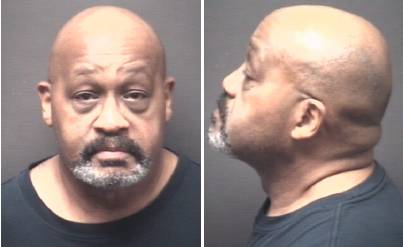
A former Detroit police sergeant who spent nearly 30 years on the force allegedly led a double life as an officer and a serial rapist, according to Wayne County Prosecutor Kym Worthy.
Benjamin Wagner, 68, is now facing charges in five separate sexual assaults of girls and women between the ages of 15 and 23 from 1999 and 2003 in Northwest Detroit.
The details were laid out at a press conference on Thursday by Worthy, Detroit Police Chief Todd Bettison, as well as other prosecutors and police officers.
"The deplorable fact in this case is that the person we are charging has led a double life as a law enforcement officer and serial rapist," Worthy said.
See the entire press conference from the prosecutor's office in the video below
Prosecutors announce charges against ex-DPD sergeant who was allegedly a serial rapist
According to Worthy, Wagner "utilized isolation and force, armed with a handgun," and threatened the girls' lives as he sexually assaulted them.
According to the prosecutor's office, Wagner was employed by the Detroit Police Department from 1989 until he retired in 2017. He then moved to Greenville, N.C. and that's where he was arrested. Police said he was taken into custody on Tuesday, March 17, and is expected to be back in Detroit next week to face charges.
Wagner reportedly worked in both the 10th and 2nd precincts, as well as investigative operations, tactical services, commercial auto theft unit and more, where he received several awards and commendations.
In all, Wagner is facing 14 separate charges in the five cases. Five counts of kidnapping, eight counts of first-degree criminal sexual conduct and one count of third-degree criminal sexual conduct.
Worthy is asking anyone who believes they may have been a victim of Wagner to report it to the Detroit Police Sex Crimes Unit by calling 313-596-1950
The breakdown of the charges and cases are below.
Case 1 - Nov. 10, 1999
Prosecutors say a 17-year-old took a bus to a bus stop near the home of a friend in the area of Chalfont and Mark Twain on the city's northwest side.
According to Worthy, Wagner reportedly approached her, pointed a gun at her, ordered her from the scene and sexually assaulted her.
He's charged with one count of kidnapping and three counts of first-degree criminal sexual conduct in this case.
Case 2 - Jan. 31, 2000
Prosecutors say a 23-year-old woman left her home to walk to a store in the 184000 block of Wyoming. When she was walking, Wagner repotedly walked toward her, pointed a gun at her, ordered her from the scene and sexually assaulted her.
In this case, he's charged with one count of kidnapping and one count of first-degree criminal sexual conduct.
Case 3 - Sept. 28, 2000
According to prosecutors, a 15-year-old girl was on her way to school and walking to the bus in the 19800 block of Florence when Wagner grabbed her arm, put a gun in her face and moved her from the scene, assaulting her.
In that case, he's facing charges of kidnapping, first-degree criminal sexual conduct and third-degree criminal sexual conduct.
Case 4 - Nov. 19, 2000
In this case, prosecutors say a 20-year-old woman was walking to a friend's house in the 8500 block of W. McNichols when Wagner walked past her, attacked her from behind and put a gun to her back. He then moved her to another area and sexually assaulted her.
He's charged with one count of kidnapping and one count of first-degree criminal sexual conduct.
Case 5 - April 15, 2003
Prosecutors say a 16-year-old girl was walking to catch a bus to school in the 19000 block of Ferguson when Wagner approached her, had a handgun and removed her from the scene, raping her.
He's charged with one count of kidnapping and one count of first-degree criminal sexual conduct.
According to the prosecutor's office, despite having a firearm in all the alleged sexual assaults, there are no felony firearm charges because of Michigan's statute of limitations.
As spring approaches in Michigan, the Michigan Department of Natural Resources is reminding residents of several important things as bears emerge from their dens.
According to the DNR, there are an estimated 12,450 black bears across the state, and they'll be emerging from their dens over the next few weeks - many with cubs tagging along.
The DNR said that bears have an extraordinary sense of smell and memory, and can smell food from a mile away and remember that location for years. That includes backyard bird feeders or even a grease-spattered grill.
"When bears get used to human-associated food sources, they are more apt to roam neighborhoods not flee when harassed by people and even break into homes and outbuildings for food," the DNR wrote.
The DNR did say that you don't have to request the animal be relocated if a bear is raiding your birdfeeder; however, you can remove the feeder for at least two weeks and the bears should stop coming around.
"Michigan is bear country, said Jared Duquette, human-wildlife interactions specialist for the DNR. And as bears come out of their winter dens, its important to remember that we can live responsibly with these magnificent animals and avoid conflicts by following some basic best practices. Take down bird feeders, especially in the spring and summer, clean grills after use, dont leave pet food outside and wait until collection day to put your trash out.
In high-density bear areas, you should consider using a bear-resistant trash bin.
The DNR said there are an estimated 10,350 black bears throughout the Upper Peninsula, and around 2,100 bears in the Lower Peninsula. The Lower Peninsula's population is concentrated mainly in the northern part, however, bears have been pushing south into urban areas of mid-Michigan.
According to the DNr, some black bears leave their dens in March to walk around and stretch before going back to sleep. However, others leave their dens for good.
"Eventually, bears will go searching for more substantial meals, so now is a good time to make sure anything around your home and property that could possibly attract a hungry bear is stored out of sight, smell and reach," the DNR said.
If you see a bear and it notices you, stand still, don't approach, and then move away quietly in the opposite direction. Do not run, as it may trigger a chase response.
According to the DNR, bears typically give birth to two or three cubs in January or February, and the dubs typically stay with their mother for 16-18 months. As the cubs get older, mother bears leave the cubs to forage for food, as fa as two miles away.
Friday in Detroit isnt just the second straight Friday the 13th - its also 313 Day, which celebrates the Motor City and its iconic area code.
To celebrate the day, plenty of restaurants, shops and more are doing celebrations across the city, offering discounts on items, food, drinks and more.
Watch the video report below: Celebrating 313 Day in Detroit
Check out some of the celebrations below.
Detroit Pistons
The Pistons are hosting their annual 313 Day celebration as the team welcomes the Memphis Grizzlies to town.
The celebration kicks off at 5:30 p.m. in the Chevy Plaza with a variety of activities. Then, the first 3,130 fans will receive a special Pistons 313 Day chain.
Several Detroit artists have also teamed up with the Pistons for a special DETailed Design capsule that will be available at the team store and Pistons313Shop.com.
Finally, there will be a special halftime performance from Skilla Baby and the Detroit Youth Choir.
StockX
StockX is celebrating its 10-year anniversary this month with a three-day celebration in Downtown Detroit, kicking off on 313 Day.
According to the company, which is a global marketplace for cultural products, the immersive experience will take place at the 1001 Woodward Ave. building in Downtown Detroit, just steps from StockX's global headquarters.
The first floor of the building will transform into a fully shoppable, community-centered destination from March 13-15.
In all, the three-day experience will feature nearly 700 shoppable products from top brands like Jordan, adidas, Supreme, New Balance and more. Inventory will be priced as much as 20% below its market value. The first 100 guests each day will also receive a special promo code for $25 off a $125 purchase at the pop-up or on a future purchase.
Belle Isle Conservancy
The Belle Isle Conservancy is celebrating the grand reopening of the Belle Isle Casino with a full day of free activities on 313 Day.
There will be an exclusive merchandise drop, an opportunity to donate to name a baby sturgeon at the aquarium and much more.
The night will end with a special house party at the Casino from DJ Bruce Bailey from 6 p.m. to 8 p.m. and it's limited to the first 313 guests.
Shinola and Soho House
For the second straight year, Shinola and Soho House are teaming up for an afternoon celebrating live performances from local artists and more.
It's taking place at the flagship store in Midtown from 3:13 p.m. to 6:13 p.m.
There will also be a matcha and coffee pop-up, Faygo cocktails, a Better Made chips and caviar bar, custom merch and more.
City Bird & Nest
The two stores in the Cass Corridor are giving away the City Bird-exclusive "Detroit Things" print with any purchase.
Mootz Pizzeria + Bar
Along Library Street in Downtown Detroit, Mootz is offering $3.13 pizza slices at their slice house during normal business hours. It's from 11 a.m. to 11 p.m.
Mezcal Mexican Restaurant
Mezcal on Forest Ave. in Midtown is offering its premium margarita for $13.13 all day long, plus flavor shots for an additional $3.13.
My Big Fat Shawarma
The restaurant is offering guests who order a build-your-own shawarma bowl or wrap a second bowl or wrap for $3.13.
The Brakeman and Penny Red's
The bar and restaurant are offering select local beers for $3.13 and all sides for $3.13 at Penny Red's.
Bon Bon Bon
Bon Bon Bon is selling Detroit's favorite chocolates for $3.13 each, plus $3.13 for ground shipping within Michigan.
Greyson Detroit
The golf and athletic store is celebrating 313 Day in Downtown Detroit with drinks, giveaways and more at its store. Also, they're doing 3-1-free Day where people who buy three items can get a fourth for free.
If you have an event you'd like us to add, please email webteam@wxyz.com.
A new spot to sauna and cold plunge has officially opened on Detroit's east side. Islandview Sauna Club is a rustic sauna destination in the woods just off of E. Lafayette.
The rustic sauna camp includes three wood-burning saunas, outdoor cold plunges and a fire pit for people to hang around.
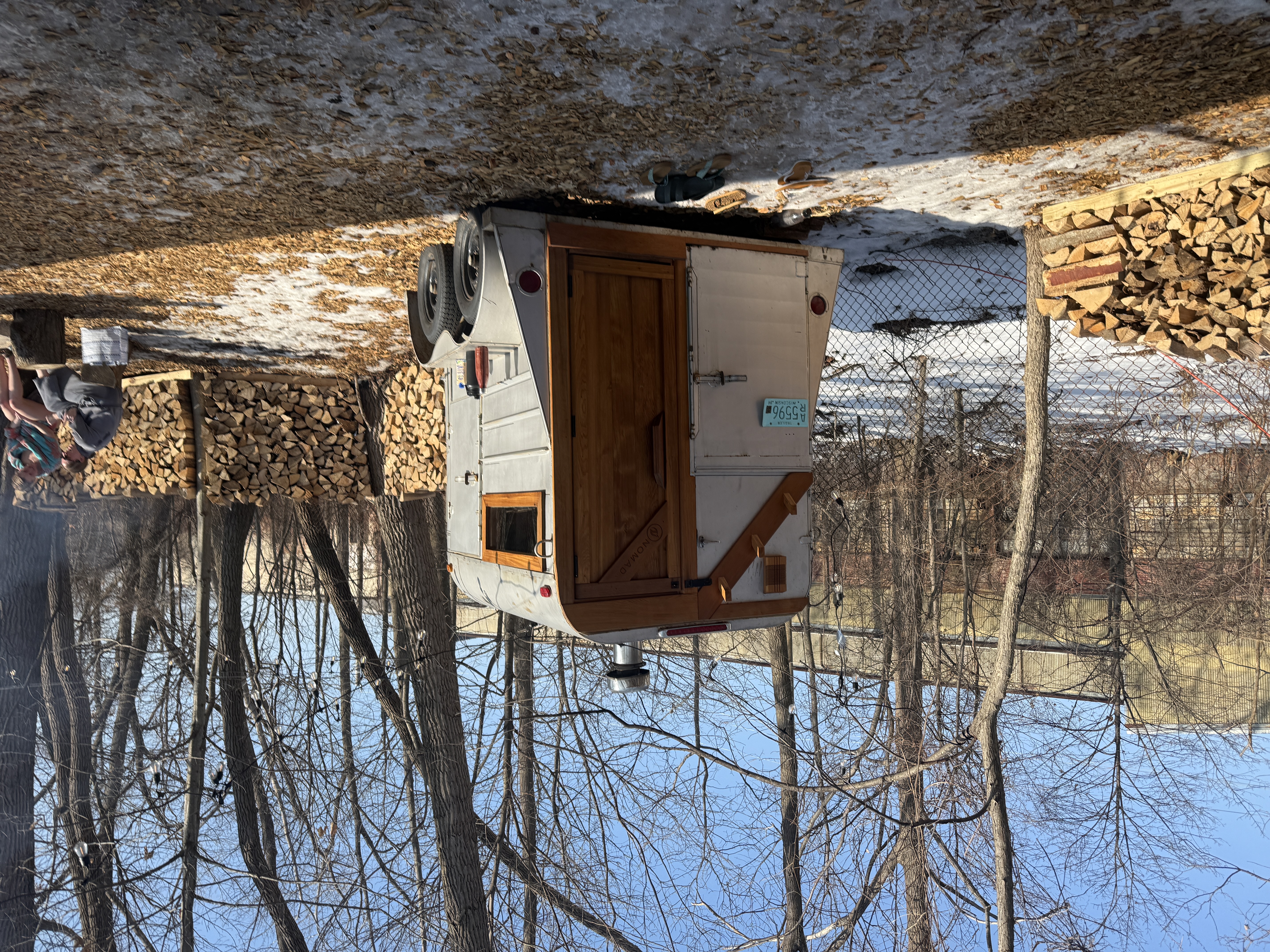
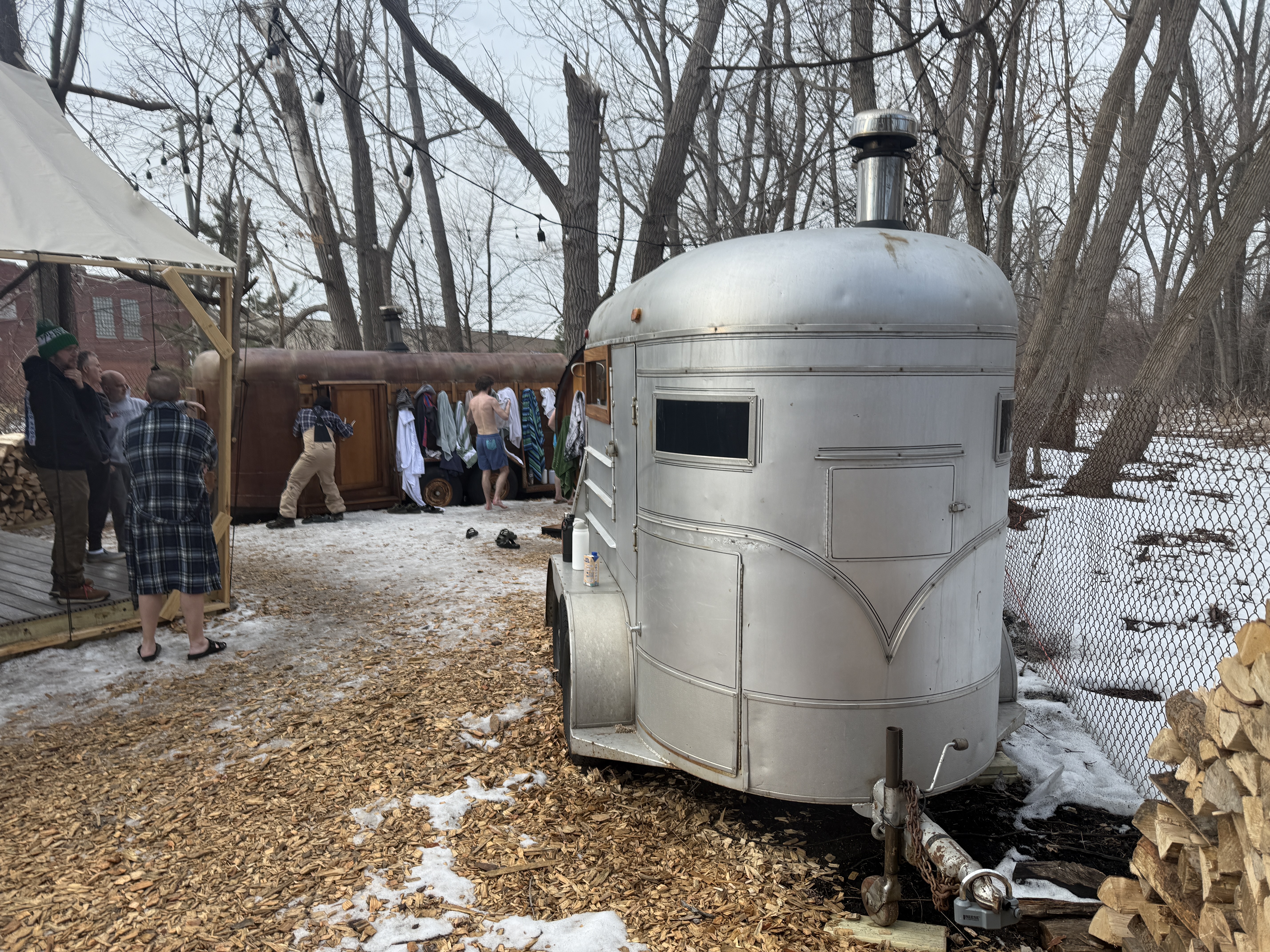
The saunas themselves are unique. There's a wood barrel sauna, a converted cattle trailer and a converted horse trailer, all of which seat anywhere from four to more than a dozen people inside.
When I visited on Sunday, the temperatures inside the saunas ranged from 160 to more than 200 in the converted horse trailer. There are also two large cold plunges for people to hop in after their sauna. They were at 38 on Sunday.
The wood-fired saunas were built in Minneapolis following research by the owners. Islandview Sauna Club is co-owned by Jacque and Christine Driscoll, who also operate Yellow Light Coffee and Donuts, Green Dot Stables and others. It's also co-owned by Tamas and Gail von Staden, who own von Staden Architecture in Royal Oak.
We wanted to make sure that when guests cross into the sauna grounds, they feel like they are in a Northern Michigan camp with wood smoke in the air, a fire crackling at the entrance, and heat rising from our handcrafted saunas, Jacques said in a statement.
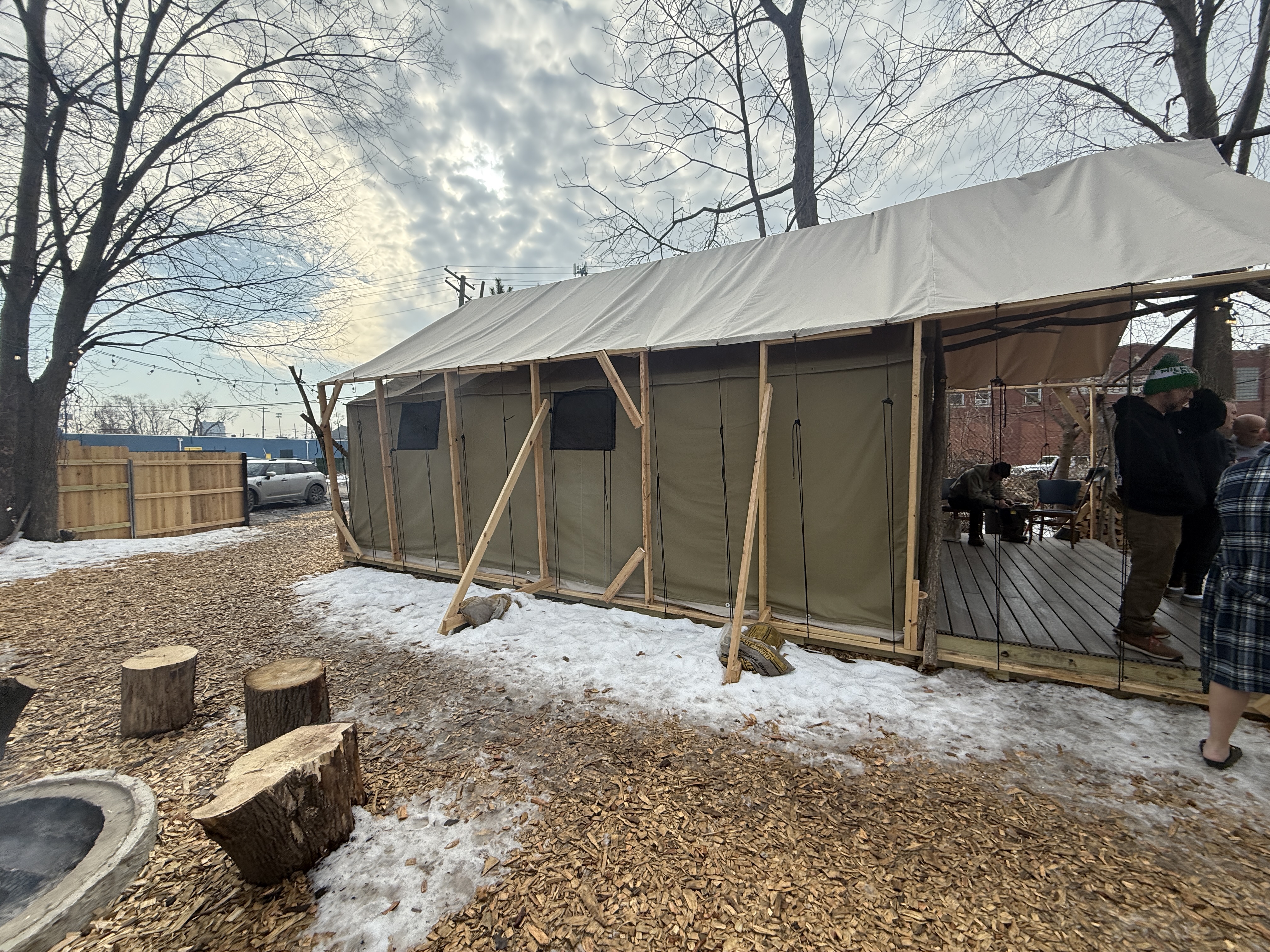
Guests can change inside a canvas tent, where you also check in for your sauna session. You feel as if you're transported to Northern Michigan while being just two miles from Downtown Detroit.
The one-hour sessions cost $25, and appointments are necessary. You can book your session at islandviewsauna.com. When you book your session, you're encouraged to arrive 15 minutes before to get settled, change and hear safety guidelines.
Guests should also bring a robe or towel to wrap in, a bathing suit, a towel to sit on and flip flops or slides. After your session, you can hang around the bonfire or in the basecamp tent where you've changed.
Currently, Islandview Sauna Club is open from 4 p.m. to 8 p.m. on Friday, and 1 p.m. to 5 p.m. on Saturdays and Sundays. It's located at 1000 Beaufait, just north of Lafayette and across from Brewery Faisan. They are also offering private bookings on the website.
A new tiki cocktail bar from the team behind James Beard Award-nominated Echelon Kitchen & Bar in Ann Arbor officially opened on Thursday.
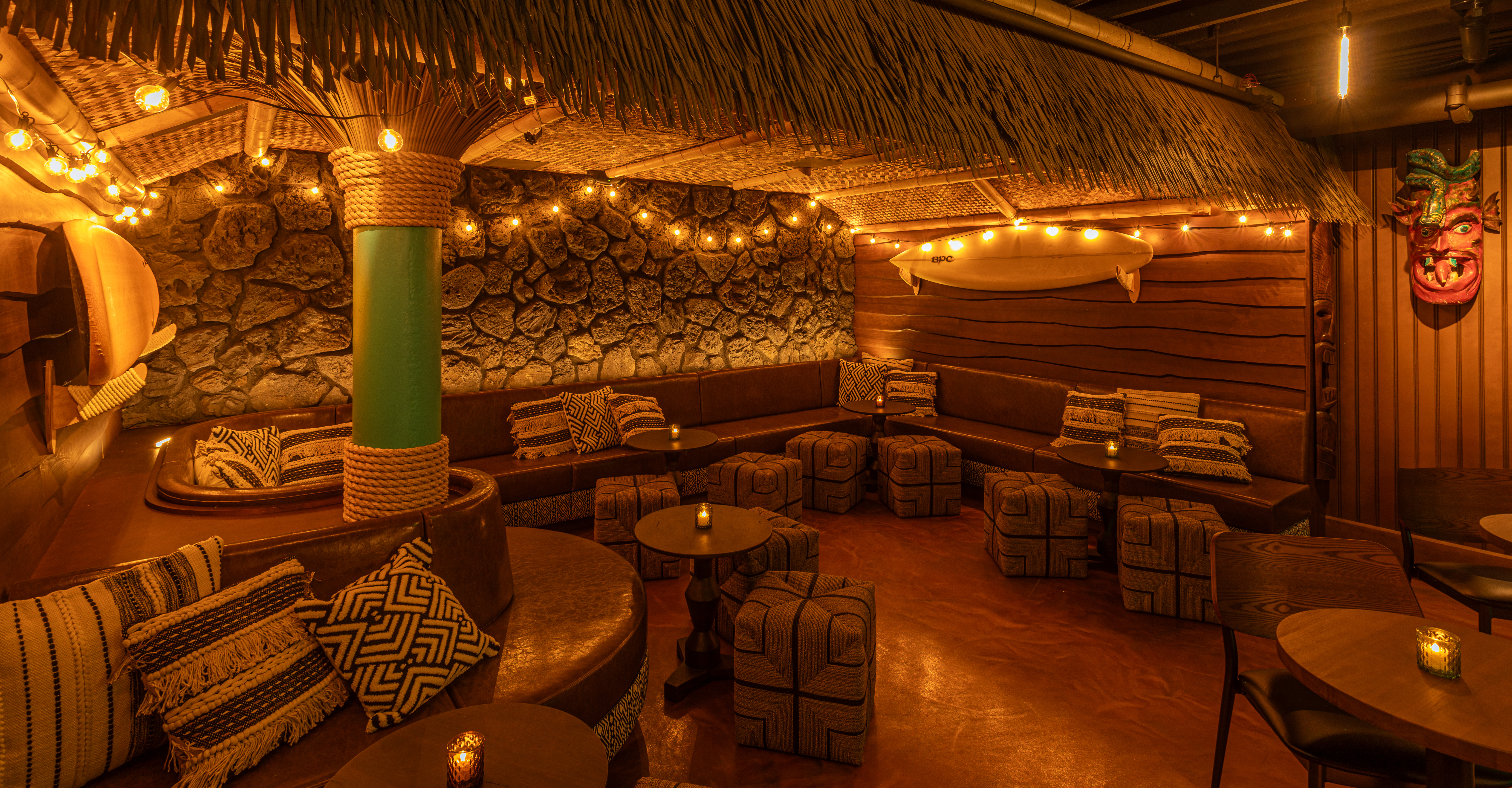
Hun is a modern reimagining of the tiki tradition, bringing together a hidden speakeasy and tropical hideaway.
It's located at 200 S. Main St. in Downtown Ann Arbor, and will feature a new take on iconic classic cocktails, original creations, large-format shareable drinks, wines, non-alcoholic offerings and more. The program is being led by Bar Manager Max Schikora.
Hun will also offer food from Chef Joseph Van Wagner with a selection of island-inspired small plates and desserts.
The 78-seat bar is designed with bamboo and thatched elements, warm lighting, greenery and stone accents. To get to it, you have to go through the discreet door on Washington St., just west of South Main Street.
Drinks include a Mai Tai with passion fruit foam, a Pia Colada with Amaro Montenegro, and other rum-forward drinks.
House creations include the Iguana, which is inspired by the Green Negroni with gin, midori, dry vermouth, green chartreuse and salers aperitivo; or the Strong Island, a spirit-driven cocktail with gin, rum, vodka, lemon, cinnamon, curacao, grapefruit soda and bitters.
Hun will also offer a Tiki Club membership program that will include members-only nights, skip-the-line entry, a member's lounge, priority reservations and more.
The bar will be open from 7 p.m. to 2 a.m. on Thursday, Friday and Saturday. It's walk-in only, except for members who will have special access.

 Login
Login