Login
Meet Michigan's governor candidates in 2026 election: Douglas Campbell
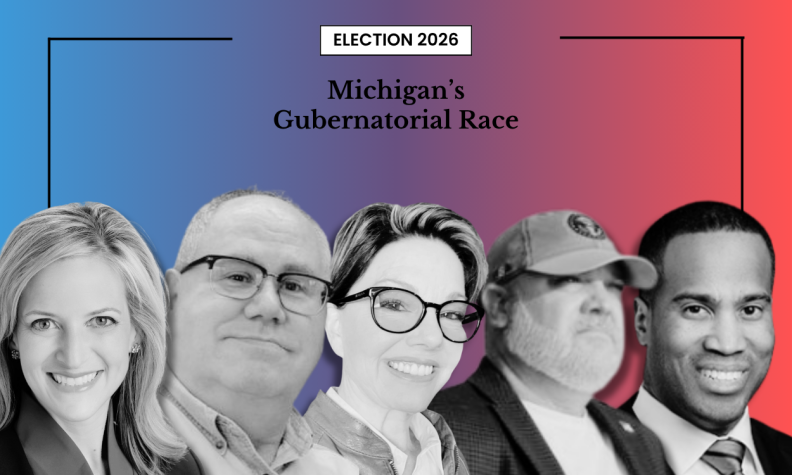
As Gov. Gretchen Whitmer wraps up two terms in office, Michigan voters will elect a new governor this fall. As part of our election coverage, Michigan Public is bringing you interviews with the candidates for Michigan’s top office.
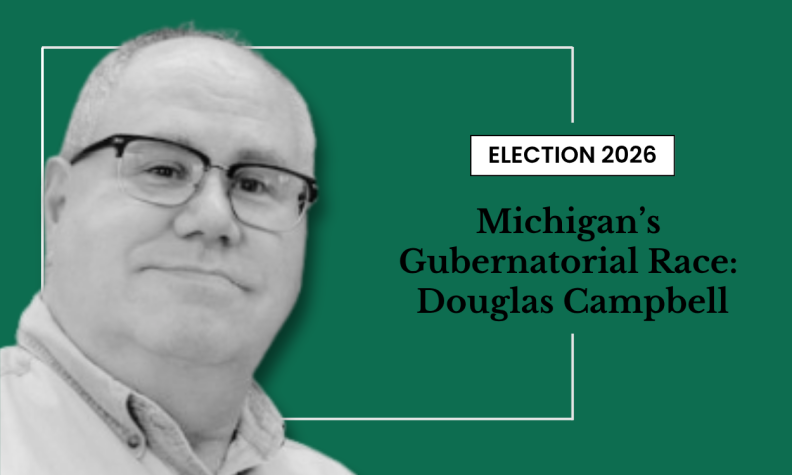
Doug Campbell is running as the Green Party’s candidate for Michigan governor. Campbell is a retired engineer and works as a substitute teacher. He’s run for Congress in four prior elections, and this is his third run for Governor. Campbell sat down with Stateside host April Baer to discuss his plans for the state if elected.
April Baer: Will you tell us a little bit more about what brought you back to the ballot this year?
Doug Campbell: Much like being in the Army Reserves, I was drafted by my party. Last term, I had announced my retirement from politics, and there was a popular consensus that that was premature, and that I should run one more time.
AB: Is there anything that you would like people to know about what the Green Party represents in this consensus model?
DC: There are two things that distinguish us from the other parties in the United States. First of all, the Green Party has parties in 76 countries throughout the globe and 11 affiliate organizations in countries that have not yet established themselves as a political party on the ballot.
The other thing is that Green Party candidates reject soft money, dark money, corporate contributions, 527(C) money, and earmarked money. We have unilaterally implemented the campaign finance reform that almost everybody says they want to see happening. But the paradox is that while we have implemented it, and almost everybody says that that's what they want in public offices, almost everybody reverts to the evil of two lessers when they're actually in the ballot booth.
AB: Let's talk a little bit about your platform. What is one thing that you would like to do if elected governor that would relieve the financial pressures on Michiganders from the costs that are rising, both nationally and internationally?
DC: Okay. A lot of people are going to say they have a new proposal, but I have an old one. Let me read it to you.
“We stand for a living wage. Wages are subnormal if they fail to provide a living for those who devote their time and energy to industrial occupations. The monetary equivalent of a living wage varies according to local conditions, but it must include enough to secure the elements of a normal standard of living – a standard high enough to make morality possible, to provide for education and recreation, to care for immature members of family, to maintain the family during periods of sickness, and to permit a reasonable saving for old age.”
Now, I didn't write that. President Roosevelt wrote that and delivered it in 1912 in his campaign speech in Chicago. And I encourage everybody else to read the entire speech. It's online in any number of historical websites. We need to finish the job that he started. We need to implement a living wage. We need to not only raise the minimum wage, but we need to index it for inflation. The federal minimum wage, which admittedly the governor has very little authority over, hasn't been adjusted since 2009. It's still at $7.25 an hour. In 2009, you could buy lunch with an hour's wage. Today, you can't even buy a sandwich.
I think this is deliberate. That inflation is the insidious theft from the working class. So I recommend that we index it and make the federal minimum wage one ten-thousandth of the total compensation of the highest paid member of Congress.
AB: This is a tenet that you've run on many times before, and talked about through several of the campaigns that you've run. At this moment, the highest paid member of Congress is the House speaker, who's currently paid $223,500. So if we were to follow your logic, one ten-thousandth of that would be $22.35 an hour.
DC: Yes!
AB: That may get a lot of people's attention. It would raise the minimum wage significantly – higher than any other state. How do you propose Michigan's employers would bear that cost?
DC: I imagine Michigan's employers would whine and kvetch about it a lot. But at the end of the day, every time the minimum wage has been raised, either federally or locally, prosperity has gone up. Employment has gone up because employment is based on demand. And if people don't have any income, they don't have any demand. And that is a drag on the overall economy.
AB: Many of the businesses that employ minimum wage workers historically, our service industry businesses, our grocery stores, and others, tend to be very low margin. And anyone who has spent some time in these businesses lately can tell you that their staffing is already pretty stretched at this point. You say you think that there's more juice to be squeezed?
DC: Absolutely. We're now in a situation where the 5% highest net wealth individuals own more than half of everything in the country. We need to stop issuing tax cuts for the rich. The period from roughly 1942 to 1982 was America's most productive and most prosperous era. We need to go back to some of the principles that were implemented during that time which caused that prosperity, including high marginal tax rates on high-income earners. At the time, it was millionaires. Of course, millionaire doesn't mean what it used to. Millionaire today just means you might be able to retire without resorting to eating dog food.
But we now have the world's first trillionaire, and we need to remedy the wealth and income inequity in our society. And the most direct approach is through taxation and redistribution.
AB: It strikes me that the top-tier earners may not be associated with those businesses that do employ workers at minimum wage. Would you tell us a little bit about the tax structure that you envision?
DC: Pretty much the very same tax structure that we had during the Eisenhower administration. Ultrawealthy individuals were taxed at, if I recall correctly, 86% after deductions. Corporations were taxed on profits, not on revenue. We've swallowed the propaganda that somehow not taxing people who are taking a significant amount of America's wealth is somehow going to lead to prosperity for all the rest of us, and it's just not the case.
The other thing we need to do is acknowledge that jobs are going away. Automation is a fact of life, and we need to adapt our society to that fact. There's an excellent documentary and kind of a look into the future [called] “Humans Need Not Apply.” Starting with how horses are no longer employed, except in the most niche markets, and likewise, in the near future, humans are not going to be employed. So we need to restructure our society so that the productivity reaches everybody. We need to start with raising the bottom. That's the minimum wage. And when minimum wage jobs go away, it needs to be replaced with a universal basic income.
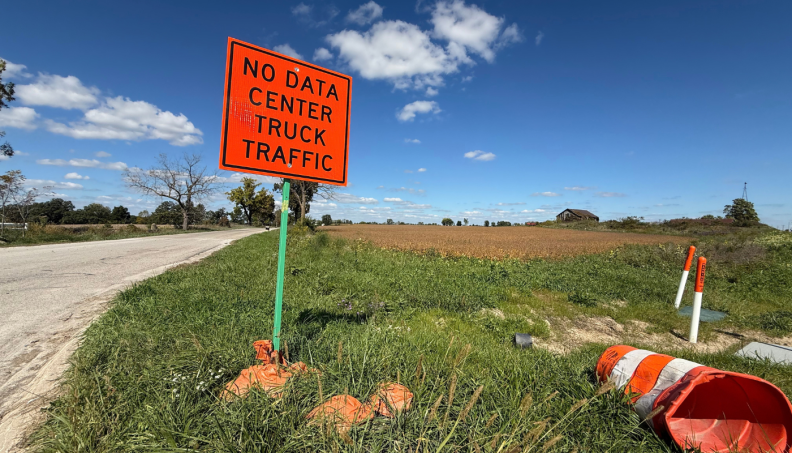
AB: Michiganders have been pushing back on the development of data centers in their communities. How do you see the governor of Michigan addressing this backlash? Tell us about what you would do if elected.
DC: We need to impose a moratorium on any new data center that's larger than one acre and one megawatt. The next thing we need to do is ask, “What is the purpose of this data center?” One hundred years ago, when we granted corporate charters, we asked, “What will this corporation do? How will the public benefit from this entity being incorporated?” We need to start with that.
We also need to prepare ourselves for the bursting of the large language model bubble. In the 90s, we saw the “dot-com” bubble burst, and about 10% of what was hyped became reality. The fundamental difference there is that the dot-com bubble didn't require a lot of investment in infrastructure.
For-profit utilities are more than happy to expand their transmission and distribution to your facility if you're going to pay for the electricity that you consume. In the past, they've typically amortized this construction over a 50-year period. In the case of a data center, they need to amortize it over a five-year period in anticipation of the bubble bursting. Otherwise, we're going to be left with a tremendous amount of physical infrastructure going unused, and you and I are going to be paying for it through our utility rates.
AB: What do you see as the greatest threat to democracy right now?
DC: Ignorance and empathy. A lot of people don't understand, and a lot of people don't care. It's somewhat unusual for elections to have more than a 50% turnout. People have quit participating. They have swallowed the propaganda that this is the best that we can expect.
I’m not going to criticize most of the people who have quit voting as lazy. I recognize that these folks are disillusioned. We need to liberate ourselves from the idea that there are two parties. There are six candidates for governor. I think there are seven parties on the Michigan ballot in total. We just need to let go of the old ideas. We need to let go of the idea that you are a Democrat or you are a Republican by birthright, and that is a choice that you can make. And I'm here to offer people a real alternative.
I'm not bought and paid for by corporations. There are one or two other candidates in the race who are claiming the same thing, and I wish them the best, and I hope that they will be able to actually follow through on being elected with one of the major parties. They will encounter incredible pressure to either assimilate or or give up.
____________
Editor's note: Quotes in this article have been lightly edited for length and clarity. You can play the full audio of this interview near the top of this page.