❌

Reading view

There are new articles available, click to refresh the page.

Michigan sues state's largest health insurer, Blue Cross Blue Shield, claiming it's a monopoly
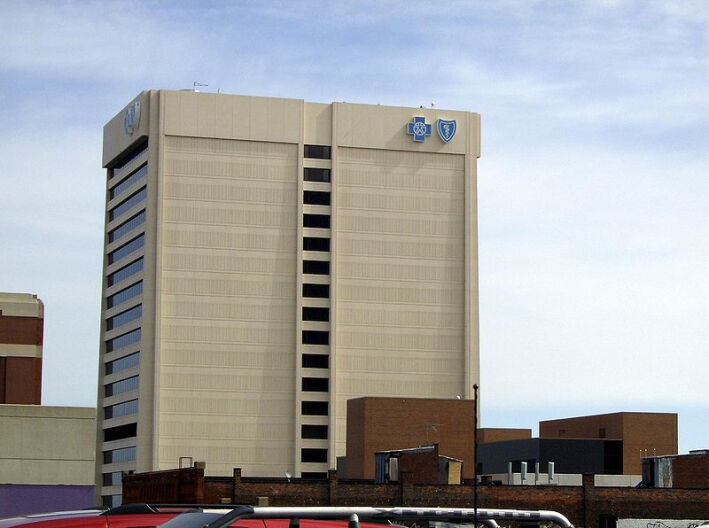
Blue Cross Blue Shield building on Lafayette in Detroit.
Blue Cross Blue Shield building on Lafayette in Detroit.(Mikerussell / <a href="https://commons.wikimedia.org/wiki/File:BlueCrossBuildingonLafayetteDetroit.jpg" target="_blank" link-data="{&quot;cms.site.owner&quot;:{&quot;_ref&quot;:&quot;00000179-84c8-d933-ad7f-f5f846b10000&quot;,&quot;_type&quot;:&quot;ae3387cc-b875-31b7-b82d-63fd8d758c20&quot;},&quot;cms.content.publishDate&quot;:1791501709976,&quot;cms.content.publishUser&quot;:{&quot;_ref&quot;:&quot;0000017d-95e3-dada-a9ff-fdeb3d1e0000&quot;,&quot;_type&quot;:&quot;6aa69ae1-35be-30dc-87e9-410da9e1cdcc&quot;},&quot;cms.content.updateDate&quot;:1791501709976,&quot;cms.content.updateUser&quot;:{&quot;_ref&quot;:&quot;0000017d-95e3-dada-a9ff-fdeb3d1e0000&quot;,&quot;_type&quot;:&quot;6aa69ae1-35be-30dc-87e9-410da9e1cdcc&quot;},&quot;cms.directory.paths&quot;:[],&quot;anchorable.showAnchor&quot;:false,&quot;link&quot;:{&quot;cms.directory.paths&quot;:[],&quot;attributes&quot;:[],&quot;linkText&quot;:&quot;&lt;i class=\&quot;rte2-style-italic\&quot;&gt;wikimedia commons&lt;/i&gt;&quot;,&quot;target&quot;:&quot;NEW&quot;,&quot;attachSourceUrl&quot;:false,&quot;url&quot;:&quot;https://commons.wikimedia.org/wiki/File:BlueCrossBuildingonLafayetteDetroit.jpg&quot;,&quot;_id&quot;:&quot;000001a1-1dd2-da7a-a3f7-fdd2a52d0000&quot;,&quot;_type&quot;:&quot;ff658216-e70f-39d0-b660-bdfe57a5599a&quot;},&quot;_id&quot;:&quot;000001a1-1dd2-da7a-a3f7-fdd2a52d0001&quot;,&quot;_type&quot;:&quot;809caec9-30e2-3666-8b71-b32ddbffc288&quot;}">Wikimedia Commons</a>)

Michigan Attorney General Dana Nessel sued the state’s biggest health insurance company in federal court Thursday. She accused Blue Cross Blue Shield of Michigan of forming an illegal monopoly

The lawsuit argues BCBSM worked with Blue Cross Blue Shield Association companies in other states to keep competition out. The complaint cites license agreements and territorial rights deals as ways BCBSM built influence.

Nessel said that’s illegal under state and federal antitrust laws.

“Competition is good, not just for the quality of care but of course to bring down prices. And that’s the purpose of the antitrust laws in the first place, that it allows us to break up these big monopolies that are so harmful,” Nessel told reporters during a press conference in Lansing Thursday morning.

While the lawsuit names several Blue-branded companies in other states as coconspirators, only BCBSM is listed as a defendant. The attorney general is suing in her capacity as both a representative of the state government and of Michigan residents.

Blue Cross Blue Shield of Michigan serves state employees. Assistant Attorney General Jonathan Comish said the company’s size and power made it the only realistic option for the state to contract with.

“They’re able to charge us, what we would call in the antitrust world, as supracompetitive fee. That is an unlawfully large amount of money per employee, per head, and with the size of the state workforce, that adds up to a real drain on the state’s resources,” Comish said.

A 2025 American Medical Association study found BCBSM controlled around 65% of the state’s healthcare insurance market. That was among the highest market concentrations in the country.

When asked for a comment on the lawsuit Thursday afternoon, BCBSM said it hadn’t yet been served and could not comment on the “specific merits” of the case. In a written statement, the company sided it was “blindsided.”

“We fundamentally disagree with the Attorney General’s characterization of an uncompetitive insurance market in Michigan. Competition exists everywhere in our state’s insurance markets, with strong local and national insurers competing with us every day. For nearly 90 years, Blue Cross has provided coverage for citizens across Michigan, in every county, without exception. This heritage, and the quality of products and services we provide, is foundational to our success in Michigan,” the company said.

The state alleges BCBSM used its power to negotiate unsustainably low reimbursement rates for care providers. Earlier this year, the company went to battle with Michigan Medicine over those concerns.

The health insurer and the University of Michigan’s health system eventually worked out a deal. But southeast Michigan father Andrew Bashi said the dispute put critical care for his infant son at risk.

“When one company holds all that power, it doesn’t have to worry about what happens to us in a negotiation, we have nowhere else to go, and they know it. Patients stop being customers. We become leverage,” Bashi said.

The lawsuit was filed in District Court for the Eastern District of Michigan. Federal cases often take months or years to play out.

Nessel, who is term-limited, is leaving office after December. She said she hopes her successor decides to keep pursuing the matter.

Keith Schipper is a campaign spokesperson for Republican Attorney General nominee Doug Lloyd. He said Lloyd would consider it.

"Since the case was just filed, Doug hasn't been privy to all the facts and evidence, but he is committed to protecting Michigan consumers, just as he protected Eaton County consumers as its prosecutor," Schipper said in a statement.

"Under Doug's leadership, the Eaton County Prosecutor's Office started the Eaton County Economic Crimes Unit to go after fraud and other illegal business practices that hurt Eaton County residents. When Doug is Attorney General, he will review this case to understand all the facts and evidence and make a determination,” said Schipper.

Naina Agrawal-Hardin is with Democratic nominee Eli Savit.

“Eli has not yet had an opportunity to review the case or the evidence, but as with any matter he will inherit, he will make a determination based on the facts, the law, and the best interest of the people of Michigan. More broadly, Eli is committed to using every available tool to lower costs for Michiganders who are struggling, just as he has done throughout his career,” Agrawal-Hardin said in an email.

The attorney general's court filing demands a trial by jury. The state is seeking monetary damages and an end to what it described as Blue Cross Blue Shield of Michigan's monopoly on the market.

Stateside: Thursday, Oct. 8, 2026

A black and white portrait of April Baer--a white woman with brown curly hair and a white blazer. The photo is against a green and blue ombre background. Text on the photo reads "Stateside with April Baer. Weekdays at 3pm and 8pm. On demand on your favorite podcast platform."

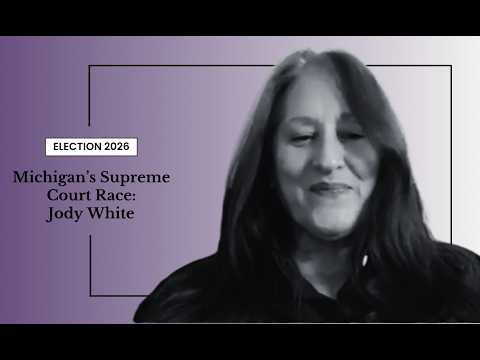
Today on Stateside, a conversation with Michigan Supreme Court candidate Jody White. White is a longtime real estate broker in Southeast Michigan.

See all our interviews with the candidates for Michigan Supreme Court here.

Then, Interlochen Public Radio brought us a story about how Northern Michigan tribes are trying to bring back the Arctic grayling. The freshwater fish species was once abundant in the region’s rivers and streams.

We also learned about scientists' unique methods for detecting the invasive spotted lanternfly, plus ways you can help mitigate lanternfly populations at home.

And, state leaders have gone back and forth on the issue of resident IDs, or the ability for anyone living in the state to get a driver's license, regardless of citizenship. Two reporters discussed the history of resident IDs and its connection to local police department's collaboration with immigration enforcement officers.

Plus, we revisited a conversation with Irene Butter, a public health scholar and Holocaust survivor who lived in Ann Arbor. Her experience as a child led to decades of teaching and activism around global human rights. Butter passed away on Friday, Oct. 2.

Finally, we revisited a conversation with Anne Carson in celebration of her recently announced Nobel Prize for Literature.

GUESTS ON TODAY'S SHOW:

  • Jody White, Michigan Supreme Court candidate and real estate broker
  • Vivian La, climate solutions reporter at Interlochen Public Radio
  • Kate Furby, senior environment reporter at Michigan Public
  • Adam Yahya Rayes, data reporter at Michigan Public
  • Koby Levin, senior reporter at Outlier Media
  • Irene Butter, retired public health scholar and human rights activist
  • Anne Carson, poet, translator, and essayist

Here are 28 things to do in Michigan this weekend, October 9-11

Have you made it to a cider mill yet? Or maybe celebrated the season with a fall festival? If not, Michigan Public has you covered. We’ve gathered some of our favorite events, including some of the exciting fall festivities, happening around the state this weekend. Whether you want to celebrate or just need an idea for how to spend your weekend, you’re in the right place. Check out some of these fun, interesting, and timely events, handpicked from event calendars by Michigan Public.

Planning to go to any of these events this weekend? Let us know how much you enjoyed it by emailing digital@michiganpublic.org.

Across Michigan

Giants among the Trees
10/9 | 7 p.m.
Dow Gardens - 1809 Eastman Ave., Midland, MI
$15

Tawas Point Harvest Festival
10/9-10/10 | All Day
Tawas Point State Park - 686 Tawas Beach Road, East Tawas, MI
Free

Leaf Pile Pedal
10/9-10/11 | All Day
Camp Douglas Smith - 5706 Federal Forest Road, Free Soil, MI
Free to Watch

Charlevoix Apple Festival
10/9-10/11 | All Day
Downtown - Charlevoix, MI
Free

Ann Arbor & Ypsi

Sister Act
10/8-10/18 | Times Vary
Encore Theatre - 7714 Ann Arbor Street, Dexter, MI
Prices Vary

Harvest Festival Weekend 2
10/9-10/11 | All Day
Waterloo Recreation Area - 8200 Loveland Road, Chelsea, MI
Free

Maestro
10/9-10/18 | Times Vary
Theatre NOVA - 410 W. Huron St, Ann Arbor, MI
$33

A2 Artoberfest
10/10-10/11 | All Day
Downtown - Ann Arbor, MI
Free

Metro Detroit

The Wright Gala
10/10 | 6 p.m.
Charles Wright Museum of African History - 315 E. Warren Ave., Detroit, MI
Prices Vary

Davisburg Antique Festival
10/10-10/11 | All Day
12451 Andersonville Road, Davisburg, MI
$12

Glass Pumpkin Fest
10/10-10/11 | All Day
Glass Academy - 25331 Trowbridge St., Dearborn, MI
Free

Michigan Fashion Week
10/10-10/17 | All Day
Downtown - Detroit, MI
Prices Vary

Grand Rapids

Grand Rapids Improv Festival
10/8-10/10 | All Day
Downtown - Grand Rapids, MI
Prices Vary

Autumn Weekends at Meijer Gardens
10/9-10/31 | All Day
Frederik Meijer Gardens & Sculpture Park - 1000 E. Beltline Avenue NE, Grand Rapids, MI
$25

Cranberry Harvest Day
10/10 | All Day
DeGrandchamp Farms - 76241 14th Ave., South Haven, MI
$10

EGR Harvest & Beer Festival
10/10 | All Day
Gaslight Village - 2181 Wealthy St. SE, East Grand Rapids, MI
$30

Kalamazoo

Some Enchanted Evening: The Songs of Rodgers and Hammerstein
10/9-10/11 | 7:30 p.m.
Kalamazoo Civic Theatre - 405 W. Lovell St., Kalamazoo, MI
$35

Ghosts of Kalamazoo Walking Tour
10/9-10/10 | 6 p.m.
1015 Gull Road, Kalamazoo, MI
$10

Boos in the Zoo
10/10 | 12 p.m.
Downtown - Kalamazoo, MI
Free

Geek Fest
10/10 | 11 a.m.
Kalamazoo County Expo Center - 2900 Lake St., Kalamazoo, MI
Free

Lansing

East Main Music Fest
10/10 | 3 p.m.
Downtown - Mason, MI
Free

Haunted Pub Crawl
10/10 | 6:30 p.m.
Downtown - Charlotte, MI
$10

Hot Cider Hustle
10/10 | 7 a.m.
Downtown - Lansing, MI
Prices Vary by Race

Boo at the Zoo
10/10-10/11| All Day
Potter Park Zoo - 1301 S. Pennsylvania Ave., Lansing, MI
$15

Upper Peninsula

Fall on the Island festival
10/9-10/10 | All Day
Drummond Island Ball Fields - 33800 S. Townline Road, Drummond Island, MI
$25

Macktoberfest
10/9-10/11 | All Day
Ice House BBQ - 6966 Main St., Mackinac Island, MI
$60

Leif Erikson Festival
10/10 | All Day
Downtown - Norway, MI
Free

Dryland Dash
10/10-10/11 | All Day
Negaunee Township Hall - 42 M-35, Negaunee, MI
Free to Watch

Meet the Michigan Supreme Court candidates: Jody White

In November, Michigan voters will choose two justices to serve on the state Supreme Court. Michigan Public's Morning Edition is featuring interviews with the six candidates.

Jody White is a long-time real estate broker in Southeast Michigan. She also ran as a candidate for the state Senate in 2022 and the state House of Representatives in 2018.

White spoke with Michigan Public's Morning Edition host Doug Tribou.

Doug Tribou: As we get started here, I want to note for our listeners that judicial candidates in Michigan are listed without any party affiliation on the ballot. However, parties do nominate candidates for the court, and the U.S. Taxpayers Party of Michigan selected you as one of its nominees. There are currently six Democratic nominees and one Republican nominee on the court.

You're a real estate broker. You used to own your own firm. You've run for other offices, weren't elected, but ran for a couple of offices. So you've been a candidate before, but you are not an attorney. And Michigan law requires Supreme Court justices to be licensed to practice law in Michigan, and to have been admitted to the practice of law for at least five years. You don't meet either of those requirements. So if you won the election, you wouldn't be able to serve on the court. Why are you running?

Jody White: I am part of the National Association of Realtors and the Michigan Association of Realtors. Those are memberships. I get a membership card. And I actually have a state license to practice the field of real estate, which is ownership, title work, lending. If you can show me a bar license, that'd be great. If you look at their P-number on their little card, it's called membership.

Why I'm running is because of the close network of bar members that have been running the judiciary for many decades. I've been very much an advocate in the civil end of it, which is what really real estate is about, making sure that we're protecting your ownership or protecting your liberty and the rights to have property. And then we end up in probate court where these attorneys are working in probate court and are able to take what is your inheritance or your generational wealth.

A note from Michigan Public:

During our interview, Jody White told us about a complex probate case in her own family. We did not have time to go into detail about that case for this interview, but it included charges of embezzlement against a relative. As the conversation continued, Doug Tribou read her the requirements to take office as a Supreme Court justice.

DT: A person must be a registered and qualified elector of the state of Michigan by the filing deadline — that means an eligible voter — licensed to practice law in Michigan, and at the time of the election or appointment, be less than 70 years of age. In addition, the individual must have been admitted to the practice of law for at least five years.

We checked with the Secretary of State, and it's perfectly valid for you to be on the ballot. Those things only have to happen by the time you're in office, but you can't practice law for five years between now and January...

JW: I've never stopped practicing law. You know, we are all supposed to be lawful, legal, and compliant people. We're supposed to follow traffic signals and 55 miles per hour. But there's been a membership of people, this closed cultural profession, that are able to basically rule our judiciary.

And if you look at my background and when I ran for state representative and state Senate, it was about the credibility of the courts. And our goal is to make sure that maybe laypeople who are not part of this membership get a fair chance. Nobody is of nobility. There's no king in America. We are all created equal. And I do love Judge [Michael] Warren because he's very good at quoting things verbatim.

DT: He's one of the Republican nominees in this cycle.

JW: Right. And he was talking about our inalienable rights. And one of them is we are all created equal. And by being created equal doesn't mean just because you're an esquire, that you get more privilege or more power over the rest of us.

DT: But Judge Warren is an attorney. I'm sorry to cut you off.

JW: He's a bar member. He's a member of the bar.

DT: He's a member of the bar, which makes him an attorney who has practiced law and then become a judge. And he is one of the candidates running. He's currently a judge in Oakland County and running [for the Supreme Court].

But to go back to one of your points there, you referenced the people being in charge of the courts, but we elect the members of the court. So the election is the voice of the people. A constitutional change would be another matter. But it's clearly stated "the practice of law." And I think it's fair to say that that means actually being an attorney who is doing the work of assisting clients with the law, not just being a good standing citizen who follows the law as hopefully we all try to do.

JW: See, that's the thing. A lawyer does not have different standards. There is a systemic issue going on in the courts. We have wrongful convictions. We have plea bargains that are being coerced by this profession of cultural professionals who have put themselves above the people. So I just want to be one of those justices that continue to be that public functionary to work for the people.

DT: Under Michigan law and in the state Constitution, followed by a 1997 opinion from the state attorney general, it is legal for you to run for the Michigan Supreme Court, and you can qualify for the statewide ballot, which you've done, even if you don't meet the requirement of five years of legal practice. But you have to meet that requirement by the time you're sworn in. And again, since you don't practice law, it would appear that you are not able to be sworn in if you're elected. But I want to ask...

JW: And again, I'm going to argue that because I do practice the law and I'm telling you...

DT: But not as an attorney, you don't.

JW: We are a law-abiding group of people. I want everybody to go back and look at the Republican organization, the Democrat organization, and the lawyers' organization. They are all trade organizations, no different than the real estate organization.

DT: It's not hard to imagine someone getting into the voting booth who's interested in third-party candidates and either read or heard about your name or your fellow party nominee, Tom Howe, and chooses you on their ballot assuming that you might actually take office, which again, it appears you cannot. Do you have any concerns about confusing voters? At the very least, you're acknowledging that it will be a contentious point if you were to be elected.

JW: Well, and again, I'm going to go back to the Michigan Code of Judicial Conduct that says that the court is...

DT: Do you have any worry about confusing voters? You've made...

JW: No, we're going to go back to the rules of what the judiciary is supposed to be for: for the people and the litigants, and not these club members that are really overtaking our state of Michigan. And I think Michigan deserves better. I think the people deserve better. And I do believe that the people want better. I hope if anybody is confused that they do their own research about what I said about the different trade organizations; we're just not going to follow the status quo.

DT: Thank you very much for your time.

JW: Thank you, Doug.

Jody White emailed us shortly after our interview. In that email, she acknowledged the state's constitutional requirements to become a Supreme Court justice.

She added, "My candidacy asks voters to examine whether exclusive professional control over eligibility and judicial administration continues to serve the public interest."
____________
Editor's note: Quotes in this article have been lightly edited for length and clarity. You can play the full audio of this interview near the top of this page.

Michigan traffic stops are leading to deportations. This law is a big reason why

A collage shows U.S. Border Patrol and Taylor Police SUVs, a Border Patrol agent, a redacted document and someone in a car’s driver’s seat.
(Cydni Elledge/Outlier Media)

Late on a cool evening in spring 2025, Brownstown Township police officer Matthew Lyles stopped a black SUV as it exited a parking lot.

One headlight was out, he wrote in a police report. But when the driver provided a Colombian license, Lyles called Border Patrol to “validate” it. Federal agents arrested the driver.

Brownstown police didn’t have to turn this minor traffic violation into a federal immigration enforcement operation. Local police generally are not required to assist with immigration enforcement.

Attorneys and some police chiefs argue officers should instead issue a citation or impound the car without involving Border Patrol. Michigan generally recognizes driver’s licenses from foreign countries.

But some police advocates argue that officers need to call federal immigration enforcement to verify identities, check for warrants and ensure road safety.

State policy helped create this dynamic. Since the driver in Brownstown lacked legal status, she wasn’t able to get a Michigan driver’s license. Just a month earlier, in March 2025, state lawmakers shot down a bill that would have expanded driver’s license eligibility for migrants.

Immigrant advocates had spent years making a public safety case for such legislation. They argued that licenses allow migrants to take driving tests and appear in state databases. Without licenses, they warned, routine police interactions could escalate into federal enforcement actions.

Those warnings were well-founded. An investigation by Outlier Media and Michigan Public found that local police reported migrants to Border Patrol at least 388 times since 2021. In most cases, migrants’ lives were upended for minor violations that could have easily resulted in a warning or ticket.
“Usually, my clients get detained because they’re driving and a local police officer will pull them over,” said Shahad Atiya, an immigration attorney in metro Detroit. “Let’s say they run a stop sign. When they cannot produce the driver’s license, usually that’s used as evidence that someone might have a legal status issue.”

More than a dozen states give migrants access to driver’s licenses. Some have also adopted policies designed to separate local policing from federal immigration enforcement.

What the law says 

For decades, Michigan politicians have debated whether migrants should be allowed to obtain driver’s licenses.

In 1995, Democratic Attorney General Frank Kelley gave everyone access to licenses as long as they could pass a driving test and prove they lived in the state. Michigan was one of only a handful of states with such a policy.

In 2007, Republican Attorney General Mike Cox issued an opinion that reversed Kelley’s decision, citing implications for state and national security and the potential for fraud.

Lawmakers followed suit with a 2008 law requiring applicants to provide proof of a valid immigration status. Today, a person with a visa can get a driver’s license, but a person who entered the country without authorization cannot, even if they’ve applied for asylum.

Bipartisanship and ‘cowardice’ 

Some Michigan police chiefs warn that involving local departments in federal immigration enforcement discourages people from reporting crimes. Others — particularly those politically aligned with the Trump administration — view assisting immigration agents as part of their job.

While Michigan lawmakers have left those decisions to municipalities, other states have created guardrails.

Some put direct limits on cooperation between local police and immigration agents. A 2017 Illinois law forbids police from transferring people to U.S. Immigration and Customs Enforcement without a criminal warrant signed by a judge.

When Democrats won full control of Michigan government in 2022, immigration advocates renewed their focus on driver’s licenses.

The coalition backing the reforms called the campaign Drive SAFE, arguing that unlicensed drivers are a danger to everyone on the road.

The bills stalled in the state House along with a long list of Democratic priorities that failed during a dysfunctional session in late 2024.

State Senator Stephanie Chang (D-Detroit) is part of a group of lawmakers who’ve continued to introduce driver’s license legislation during each legislative session. She said Drive SAFE didn’t pass because some Democrats saw it as too “controversial.”

“I don’t know if there’s a way to know exactly how many people have been deported ... because of our failure as a state to get this done in 2024,” Chang said.

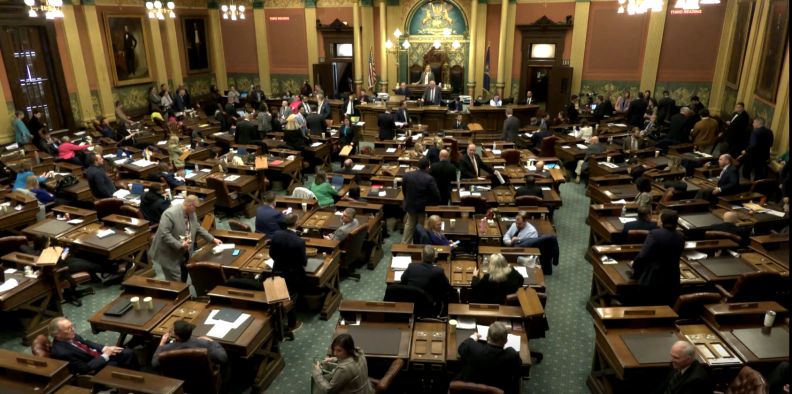
A wide-angle overhead view of the Michigan House of Representatives chamber during an active floor session. Dozens of legislators mill about, converse at desks, and move between rows of dark wood legislative desks arranged on a green carpeted floor.
Republicans forced the resident drivers license bill up for a vote after taking gaining control of the state House of Representatives. It failed with six Democrats voting against it alongside Republicans. (Michigan House TV)

In 2025, Republicans gained control of the state House. They put the driver’s license bill to a vote as Trump ratcheted up his anti-immigrant campaign. The vote failed 39-64, with six Democrats voting against.

“If this bill passes, Michigan would become a destination state for every illegal alien and prospective illegal alien all over the world,” said state Representative Josh Schriver (R-Oxford).

What’s next? 

Chang said the reforms are even more urgent with the second Trump administration’s immigration crackdown.

“Now, [if] you call Border Patrol, there is no question — even if there is no warrant at all, no history of criminal behavior — Border Patrol is coming,” she said. “I think the ramifications of someone not having a driver’s license or state ID now [are] that much greater.”

The sting of Democratic defections during the vote last year hasn’t faded for Danny Celaya, a community organizer who was involved in the Drive SAFE campaign and characterized the “no” votes as “cowardice.”

Still, both Chang and Celaya said they believe Michigan will eventually pass the reforms. Democrats have a chance of retaking the state House next year. Until the bills pass, Celaya said it will be normal for “a grocery trip to lead to a family separation.”

How to detect invasive insects early in Michigan? A dog nose

a brown Malinois mix dog sniffs grass in a field with blue sky
Kenna, Ashmore's Malinois mix, sniffs some grass. (Kate Furby)

Spotted lanternflies stink.

“They poop a lot. I know that's not a cute way of saying it, but they do. They poop a lot, and this honeydew deposition causes a lot of issues for people. It's sticky, it's gross. It creates sooty mold,” said Ashley Leach, an entomologist at Ohio State University who works on spotted lanternfly detection.

Spotted lanternflies are an invasive plant hopper that feed on a selection of plants in Michigan, including Tree of Heaven, grapevines and hops. They have expanded their range in southern Michigan this year. Early detection is important for preventing infestations, but the bugs can be hard to spot in low numbers.

Scientists and community members are working together on methods to track and find the lanternflies. From conservation dogs to paint rollers, the solutions to the buggy issue are creative and community-oriented.

Conservation dogs

“They are pretty stinky. The eggs and the teenagers all smell just about the same. So it's also a good source for community science. There's a lot of odor that's given off in pretty good volume. So dogs have a pretty good chance of finding them without much difficulty,” said Hannah Ashmore. She’s the lead educator and trainer for Longsnouts, a dog training organization that has a conservation focus. This includes nose work, or sniffing out specific things. Ashmore has trained her dog Kenna to hunt for spotted lanternflies.

The adult spotted lanternfly is light grey with polka dots and a Mothman glare. When it opens its wings, there's a bright pop of red. They're not a threat to humans. But lanternflies can devastate certain plants, including grapevines and hops.

Ashmore used a lanternfly “decoy” for cuing Kenna.

“[It’s an]  old reusable Keurig pod that I found for 50 cents at [a] thrift store, that I have about a tablespoon of spotted lanternfly [in],” Ashmore explained. The lanternflies inside are dead, so there’s no risk of spreading them to other places. She hid the pod in a low crook of a small tree just off the path. Kenna wore a bell on her collar.

“Are you ready? Are you ready? Go shopping!”

Kenna, a brown leggy blur, took off down the trail, bell ringing. At first she bounced around looking like any dog suddenly off leash. But soon, her ping ponging took on a definite purpose.

“She has figured out that there is something exciting over there. She is doing what we call bracket, where she's bouncing back and forth to try and find the strongest source of the odor,” said Ashmore. Kenna was a very good girl and located the decoy. She booped it and ran back around to Ashmore, who was standing on the trail.

“Good girl. Nice work!” praised Ashmore.

“BORK!” said Kenna.

Ashmore and Kenna work with scientists and community members on programs to detect lanternflies. Longsnouts has classes where anyone can join with their dog to try out sniffing and sleuthing.

“I can honestly say in our community classes, our citizen science classes, all of the dogs pick it up. And they're a variety of flavors and ages,” said Ashmore. “Sure, the high-powered detection dogs are fantastic, but what about all those shelter dogs, right? …. Being mindful of matching dogs to personalities and skills to particular projects. Like, my dogs, the current ones, are really good at the big, off-leash, cover lots of area, tell you things.”

Adult lanternfly on a tree trunk. The bug has grey wings with black spots.
Adult spotted lanternfly. Michiganders who encounter invasive spotted lanternflies are encouraged to "See it. Squish it. Report it." (Michigan Department of Agriculture and Rural Development)

She explained that dogs are particularly good at early detection, before the bugs become easy to spot and before they create large, damaging infestations.

Environmental DNA

Originally from parts of Asia, the spotted lanternfly was first found in the U.S. in 2014 in Pennsylvania. It has been slowly moving mostly west and south since.

Ashley Leach said that the spread of the bug is particularly impressive when you consider that it's not a great flyer.

“Pretty telling to how this pest is moving, which is primarily through human-mediated means, and then it's kind of hopping off the transportation corridor, whether that's a railway, a car, a moving truck,” she said.

Lanternflies are good hitchhikers. Their flight skills tend to be more of a controlled fall than an upward lift.

Leach is working on advanced scientific strategies, including using environmental DNA, or eDNA, to search for early signs of the insects. Sequencing eDNA is a way to sort through all the microscopic debris in the world, like dust, dandruff, pollen. Little particles that have fallen off their source and tumble through the world now, detached and tiny.

Scientists like Leach are able to take samples of this and sequence them. Looking for needles in haystacks. In this case, bits of lanternfly. To collect the samples for one study, Leach and her team moistened paint rollers and rolled them over trees in Cleveland, Ohio. In this way, they can map out locations of lanternfly clues. In areas with infestations, they sometimes found more than 100 insects per tree.

The lanternflies invaded Ohio before they reached Michigan, so the early detection work there may help inform strategies here as well.

What you can do

  Lanternflies have only been found in a handful of counties in southern Michigan. But it was just announced last month that they have expanded into yet another county, Berrien, in the southwestern corner of the state.

To help prevent the spread, always check your vehicle before driving long distances, across state lines, to make sure there aren’t any lanternflies attached. You can report spotted lanternfly sightings in Michigan here.

MSU Extension has a DIY “lampshade” trap you can make using easily accessible items from the hardware store. MSU has a number of other resources you can find here. 

Rogers, El-Sayed poised to clash in first debate of US Senate race

Republican U.S. Senate candidate Mike Rogers speaks at a lectern, gesturing with both hands.
Republican U.S. Senate candidate Mike Rogers speaks at a campaign event on September 23, 2026.(Steve Carmody / Michigan Public )

Republican Mike Rogers and Democrat Abdul El-Sayed are set to face each other Wednesday night in their first debate in Michigan’s U.S. Senate race, with trade and the war with Iran likely to be major points of contention.

In recent weeks, Rogers has softened his positions on both issues, calling for an end to the trade war with Canada, and the U.S. and Israeli war with Iran, because of their effects on the U.S. economy.

Rogers released a campaign video this week calling for an end to the trade war with Canada.

"We need to end this tariff war — now," Rogers said in the ad.

President Donald Trump said he did not believe Rogers was talking to him.

“I viewed him as saying that he thinks Canada should make a deal,” Trump said.

Trump defended the trade war, saying, “We want to make our own cars. We don't want them to make cars for us.”

Rogers also initially supported the war with Iran before calling for it to end in a recent campaign ad.

“The war with Iran needs to end and end quickly,” Rogers said. “When it does, energy costs will plummet. But Michigan families can't afford to wait for that to happen.”
El-Sayed has consistently opposed both the war with Iran and the broad tariffs imposed by the Trump administration. He supports targeted tariffs but opposes blanket tariffs of 25% or 50%.

El-Sayed has criticized Rogers for changing his positions.

“The guy's flip flopped so many times,” El-Sayed said. “He doesn't know what he believes. All he believes is that he has to keep Donald Trump happy.”

Rogers says he can work with the Trump administration to address problems facing Michigan.

“My opponent, all he wants to do is fight with Trump,” Rogers said. “That will not solve a problem here in Michigan.”

The war with Iran has also driven up diesel prices and affected the cost of goods, while Rogers has argued that ending the war would bring down energy costs.

“When you justify illegal, unjustifiable wars, people pay the price, and you can't just unring the bell,” El-Sayed said.

The debate is scheduled for 7 p.m. Wednesday in Grand Rapids.

US House speaker, law enforcement groups lend support to Barrett in tight reelection race

U.S. Representative Tom Barrett (R-MI 7) speaks at a rally for his reelection campaign on October 7, 2026.
U.S. Representative Tom Barrett (R-MI 7) speaks at a rally for his reelection campaign on October 7, 2026.(Colin Jackson / Michigan Public Radio Network )

Republican Congressman Tom Barrett took his reelection campaign to the sidewalk in front of the Ingham County Sheriff’s Office Wednesday.

The event’s message largely focused on the differences between Barrett and his Democratic challenger William Lawrence’s approaches to public safety.

Leaders from the Police Officers Association of Michigan and Fraternal Order of Police flanked Barrett, along with some mid-Michigan prosecutors and sheriffs. Republican Congresswoman Lisa McClain (R-MI 9) and U.S. House Speaker Mike Johnson of Louisiana also spoke.

Johnson said Barrett has long supported law enforcement through funding and other measures in both Congress and the Michigan Legislature.

“You have to look at the record and not the rhetoric in a campaign. And in this campaign, in Michigan’s 7th District, you have a clear contrast between two competing visions, two completely different world views,” Johnson said while talking to reporters.

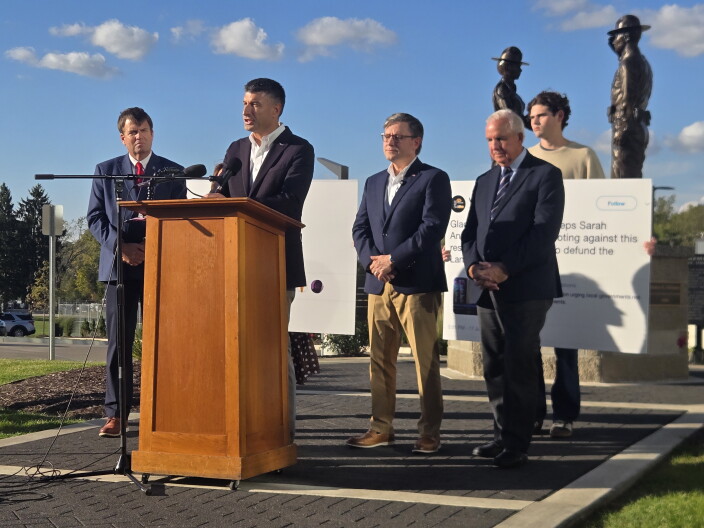
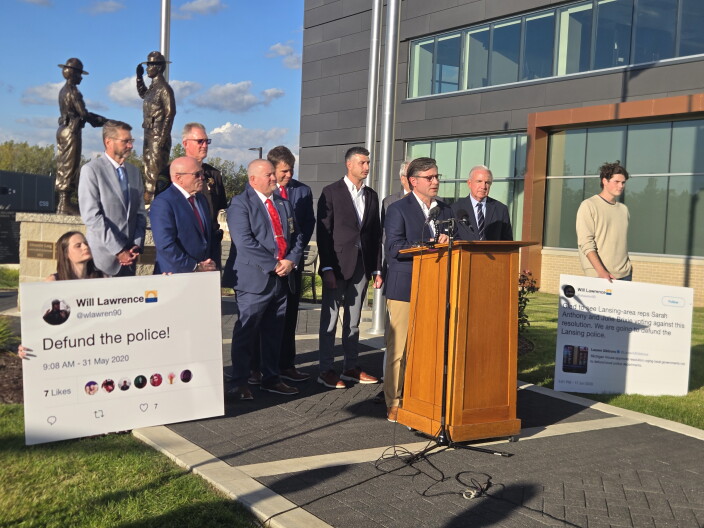
Republicans have repeatedly attacked Lawrence for past social media comments. In 2020, Lawrence called for defunding the police on what was then Twitter. The Democrat has since disavowed that position.

Barrett supporters stood behind him holding large printouts of Lawrence’s 6-year-old tweets as Barrett asked them — and his constituents — a question.

U.S. House Speaker Mike Johnson speaks at a wooden lectern outside a modern building, surrounded by several officials, including Congressman Tom Barrett. A police memorial statue stands behind them. Two oversized social-media posts criticizing police funding are displayed in the foreground and background.
U.S. House Speaker Mike Johnson lends his support to the reelection campaign of Congressman Tom Barrett (R-MI 7) on October 7, 2026. Behind Johnson, Barrett supporters hold posters showing deleted tweets by Barrett's Democratic opponent Will Lawrence.(Colin Jackson / Michigan Public Radio Network)

“Do you want somebody with a record of service like I have in our military supporting our law enforcement and doing the right thing to keep our communities safe?” Barrett asked. “Or are you going to turn your back on our police officers, and seek to have them defunded, take away their dignity, and abolish them altogether.”

A similar question came up Tuesday, during a TV debate hosted on WKAR and WILX-Lansing.

Lawrence told reporters afterward that he's changed his mind on the topic since those now-deleted posts. He said he now believes in a public safety approach that includes funding for police, community violence intervention, and more mental health resources.

Michigan’s 7th Congressional District is considered among the most competitive races in the country.

Democrats hope to flip the seat by taking advantage of anger with Republican support of President Donald Trump’s positions, like the Iran war.

Barrett has tried to distance himself from the president by introducing legislation to wind down the operation by this summer. But it hasn’t gone anywhere in Congress.

When asked about its prospects, Johnson, who controls which bills come up for votes in the House, sidestepped the question by calling the war a success and saying it’s close to ending.

“We’re right there now, that’s where we are. I believe our international partners, a combination of NATO countries, and our Arab states and friends and allies in that region who all have a direct in interest in this will be a part of that. And so the U.S. did the heavy lifting there and everyone will have to help,” Johnson told reporters.

Johnson also did not directly answer a question about the future of legislation Barrett cosponsors to stop federal agencies from using Flock surveillance cameras.

Despite the conference taking place in front of his office, Ingham County Sheriff Scott Wrigglesworth was not there Wednesday. Barrett did not say if he had the Democratic sheriff’s blessing to be there.

MSU backs lawsuit challenging Trump administration over international student work restrictions

(Branislav Ondrasik / Public Domain)

Michigan State University filed a declaration in federal court Monday in support of a lawsuit challenging the Trump administration over what the university described as a sudden restriction on work-experience opportunities for international students.

The challenge was brought by four groups that represent higher-education organizations and their administrators. MSU is a member of two of them.

Their lawsuit argues that the Department of Homeland Security “abruptly changed a position that the federal government had held for more than thirty-five years ... while simultaneously threatening college and university officials with criminal prosecution.”

The result of the DHS policy, according to the director of MSU’s office for international students, would be fewer international enrollees.

“MSU has welcomed international students to campus for over 150 years and benefited greatly from their many contributions,” Krista McCallum Beatty wrote. “Fewer international students will be a loss felt by the entire MSU community.”

At issue are rules authorizing international students on F-1 visas — used for attending academic institutions in the U.S. — to participate in select internships and other experiential learning opportunities.

Those placements must be directly related to the student’s area of study and, under the rules, “an integral part of an established curriculum.”

According to the lawsuit, DHS has traditionally interpreted “integral” experiences to mean either elective opportunities for which the student earns academic credit or programs that are a mandatory requirement for the completion of the student’s degree.

In August, Immigration and Customs Enforcement, which oversees F-1 visas for DHS, issued two “broadcast messages” that the universities say significantly restrict access to those training programs.

The messages instructed schools to only authorize a work experience “if its absence would make the attainment of a degree an impossibility and if the work associated with [the experience] is required for all students pursuing that degree.”

The lawsuit claims the broadcasts amount to a sudden and unlawful regulatory change and that the new interpretation eliminates opportunities that aren’t mandatory but are still essential to learning, like “a psychology student shadowing a mental health provider” or “a law student interning in a judge’s chambers.”

“Ongoing harm to MSU,” university says: international students have lost opportunities

McCallum Beatty, the MSU international student office director, filed a declaration supporting the suit, alongside leaders and administrators of 11 other universities and colleges.

“Experiential learning opportunities, such as internships, practicums, and clinic or field placements, are a critical part of MSU's educational mission,” McCallum Beatty wrote.

McCallum Beatty wrote that in a typical year MSU approves those opportunities for about 500 students among the 4,000 who attend the university on F-1 visas. The experiences are reviewed for eligibility each semester.

According to the declaration, the eligibility requirements laid out in ICE’s August broadcast messages “are causing ongoing harm to MSU.”

McCallum Beatty wrote the directives came “at a critical time - the week before fall semester classes started.” As a result, McCallum Beatty wrote, her office was forced to deny 62 pending applications.

Among the MSU students who lost opportunities, she wrote, are:

  • A doctoral student in chemistry forced to turn down “two prestigious fellowships that would have allowed them to lead research projects”
  • An undergraduate computer science major unable “to complete a competitive internship with a Fortune 500 company”
  • A doctoral student in Music scheduled “to teach a class at a nearby university,” who not only lost “a valuable learning experience, but … left the university without an instructor and having to cancel the course” 

Lawsuit challenges “DHS’s attempt to rewrite history”

The lawsuit MSU is supporting alleges that ICE’s broadcast messages “are unlawful several times over” because they change regulatory guidance “with no substantive explanation, opportunity for comment, or even acknowledgement of the change,” while “exposing institutions and officials to penalties for past conduct that fully complied with the government’s position at the time.”

A broadcast issued by ICE on August 12 was framed as a “reminder” of eligibility requirements. The agency said it had noticed an increase in authorizations “that do not meet regulatory requirements,” and was “increasing its scrutiny … to ensure compliance with federal regulations.”

The lawsuit describes the broadcast as a substantive policy change passed off “as mere ‘reminders’ of existing obligations, as if its new standards had been the rule all along.”

In the broadcast, DHS warned that failure to adhere to the guidelines could result in an institution losing the ability to host students on F-1 visas, and emphasized that school administrators who approve a training program do so “under penalty of perjury.”

The lawsuit argues that administrators “now face threats of criminal liability for authorizations that complied fully with the government’s own rules,” and that institutions “have had no choice but to comply immediately, given the government’s threat to strip their ability to enroll international students at all.”

The groups are asking a judge to strike down the eligibility requirements laid out in ICE’s broadcasts and to affirm that eligible opportunities can include elective experiences taken for credit.

A spokesperson for ICE told Michigan Public that the agency “does not comment on pending litigation.”

Stateside: Wednesday, Oct. 7, 2026

A black and white portrait of April Baer--a white woman with brown curly hair and a white blazer. The photo is against a green and blue ombre background. Text on the photo reads "Stateside with April Baer. Weekdays at 3pm and 8pm. On demand on your favorite podcast platform."

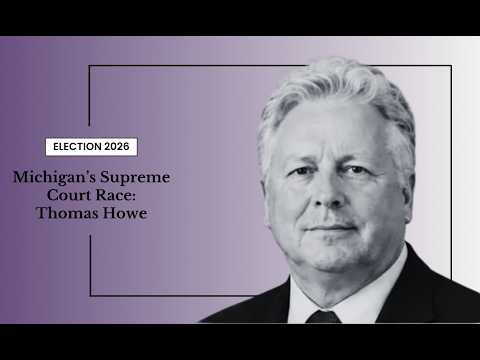
Today on Stateside, a conversation with Michigan Supreme Court candidate Thomas W. Howe. Howe is a Fenton resident who was nominated by the U.S. Taxpayers Party of Michigan. He is one of six candidates running for the two seats on the Michigan State Supreme Court this November. 

See more interviews with the candidates for Michigan Supreme Court here.

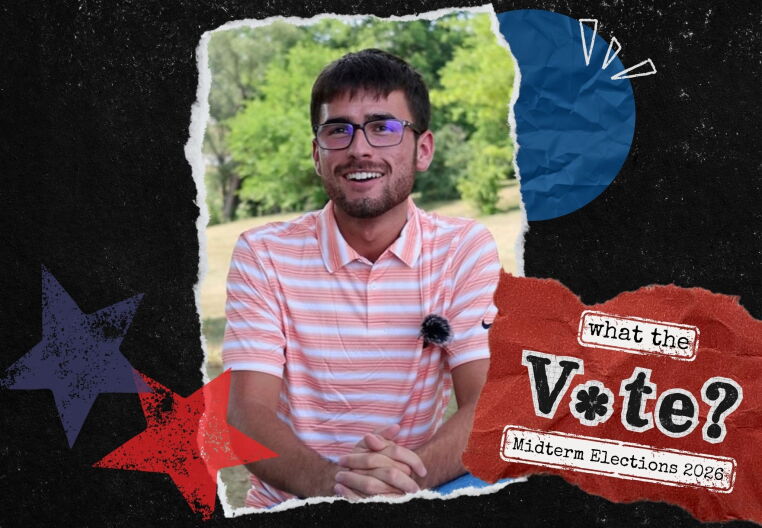
Then, why cost of living and affordability remain top of mind for some young voters. We heard from a Wayne State University student in our latest installment of What the Vote?, a series of conversations with Gen Z voters leading up to the 2026 Midterm Elections.

Plus, a preview of the kinds of stories that will be told at this year's Detroit Story Fest, a live event featuring local journalists and storytellers. We featured two live recording from previous years' storytellers, Bryce Huffman and Shannon Cason.

GUESTS ON TODAY'S SHOW:

  • Thomas W. Howe, Fenton resident and candidate for Michigan Supreme Court
  • Cody Bannick, Bad Axe native and Wayne State University junior
  • Bryce Huffman, engagement editor for Bridge Detroit
  • Shannon Cason, Detroit-based storyteller and host of the podcast Homemade

Meet the Michigan Supreme Court candidates: Thomas W. Howe

In November, Michigan voters will choose two justices to serve on the state Supreme Court. Michigan Public's Morning Edition is featuring interviews with the six candidates.

Thomas W. Howe is a resident of Fenton and he’s a candidate for the court. He spoke with Michigan Public's Morning Edition host Doug Tribou.

Doug Tribou: Judicial candidates in Michigan are listed without any party affiliation on the ballot. However, parties do nominate candidates for the court, and the U.S. Taxpayers Party of Michigan selected you as one of its two nominees. There are two seats up for election, and there are currently six Democratic nominees and one Republican nominee currently on the court.

To start, tell us a bit about your professional background and why you have decided to run for the court.

Thomas Howe: Well, I'm a 35, or more, I don't know, 36-year engineer for the automotive industry. I accidentally got involved in this probate disaster here in Michigan with my mom and in Genesee County here. And currently right now, I'm trying to unravel it in federal court.

So there's no justice here in Michigan at this point. And the Supreme Court is responsible for all the lower courts and making sure that they operate correctly and constitutionally. And our Supreme Court justice here, Megan Cavanagh, is not doing her job.

DT: The current chief justice of the court.

TH: Yeah. She's been there for eight years. These bar judges, just like Megan Cavanagh, who's a Michigan bar member, an unlicensed bar member, they're ignoring all the probate cases. They never get heard in the Michigan Supreme Court. And so your chances of justice are zero here in the state.

DT: Well, just to pick up on a couple of points there... most cases, of course, don't end up at the state Supreme Court. Most probate cases, even if they're appealed, might be resolved, say, at the Court of Appeals, if they went above the lower court level.

And you say she's an unlicensed member of the bar. She's a practicing attorney who is licensed to the bar. And I will say she's a Democratic nominee in this election and also running. So I think you're trying to make a distinction that the bar is not a license, but I believe it would be viewed that way as a license to practice law in the state of Michigan.

TH: Viewed is one thing. The facts are different, okay? If you look at any bar member's P-number card, it says membership on it. It does not say license at all. And there's no law in the state of Michigan that allows a private membership association like the Michigan Bar Association to be the official licensor in the state of Michigan.

DT: Just one additional point here: the state Supreme Court sets the rules for bar admission for members of the bar in the state of Michigan.

As I mentioned in the introduction, you are a resident of Fenton. You mentioned that you have worked professionally as an engineer over the last three and a half decades or so, but you're not an attorney. Michigan law requires Supreme Court justices to be licensed to practice law in Michigan, and to have been admitted to the practice of law for at least five years. You don't meet either of those requirements. So if you were to win the election, you would not be able to serve on the court. Why are you running then?

TH: Because the state needs a different choice. The issue is that the bar members that are currently on the Michigan Supreme Court are not doing their job. They'll never do their job, and the public needs to take this court back. The system is broke. Since Megan Cavanagh has been on the bench, the probate court has accelerated the damage that they do to the citizens. Now you have to remember, these are public functionaries. They work for me. They work for the citizens of their county.

DT: Right. And you can elect them or not elect them as you see fit. And if the terms are held in full, two seats come up every election cycle, so that people are coming and going on and off the bench often, if they're not re-elected. And then there are frequently cases where someone retires or resigns, and then there's an appointment. So the court is not a stable organization with eight people constantly in for eight years at a time. There's a rotation and the people have the chance to vote those people out.

TH: Well, that's true. So here's your chance, right now, for the state of Michigan to finally make a good decision and vote these two members out who have done nothing to help the people in the state of Michigan here in these particular courts.

DT: So for our listeners' clarification, I want to just make another note here. Under Michigan law and a 1997 opinion from the attorney general, it is legal for people to run for the Michigan Supreme Court, and they can qualify for the statewide ballot, as you've done, even if they don't meet the requirement of five years of legal practice.

But they must meet that requirement by the time they're sworn in. And again, since you are not practicing law under the bar as a member of the bar, it's impossible for you to have five years of experience by the start of next year. Was that the intention of the U.S. Taxpayers Party? Was the intention to purposefully run non-attorneys to make that case?

TH: It's possible.

DT: I might ask, why not try to run a constitutional amendment to change that? If you're unhappy with attorneys being the only ones eligible for the court, an amendment to the Constitution might be able to resolve the issue that it seems that you're trying to get to.

TH: And that's a great question. And that comes up for everybody to vote yes on the Constitutional Convention. And then over the next two years, there'll be a group of people, and I'm not sure who — they will be appointed, hopefully by our new governor, Donna Brandenburg, and Lieutenant Governor Robert Cowper, who [are running] for the U.S. Taxpayers Party, who are probably two of the smartest people I've met.

And people are really unhappy with basically the Uniparty. Both [major-party] candidates are both bad. And so you have a really good candidate. And you should look at Donna Brandenburg and Robert Cowper II for your governor.

DT: It's not hard to imagine someone getting into the voting booth who's interested in third-party candidates and has read or heard your name or the name of Jody White — who's also a nominee of the U.S. Taxpayers Party — and chooses you on their ballot, assuming that you might actually take office, which it certainly appears that you cannot.

Do you have any concern about confusing voters if it turns out that you're not going to be able to actually sit on the court when they've cast their ballot thinking that is the case?

TH: No, because we want this. This needs to be challenged because it's not legal to have an outside corporation, the Michigan Bar Association, to basically... they've shanghaied the state of Michigan and and they don't have authority to do this. The laws that have been passed are usurpation by both the Legislature and the Michigan Supreme Court.

DT: Thank you for your time this morning.

TH: All right. Thank you.

Editor's note: Quotes in this article have been edited for length and clarity. You can play the full audio of this interview near the top of this page.

Charlotte teachers negotiate over grievance resolution procedures

(Courtesy of Michigan Education Association)

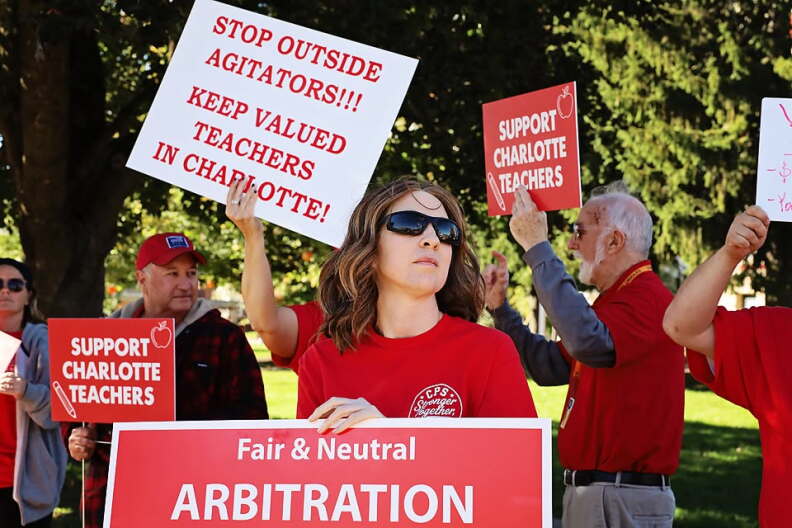
After hitting the picket line on Monday over an impasse in contract negotiations, members of the Charlotte Education Association met with school district administrators for a mediation session on Tuesday, October 7.

Teachers in the Eaton County community have been working under an expired contract since July. In September, administrators for Charlotte Public Schools requested to begin mediation proceedings in an attempt to resolve negotiations that have stretched since the beginning of this year.

Becky Carter, co-president of the Charlotte Education Association, said that the two sides have reached an agreement on salaries, insurance, and calendar. The sticking point, Carter said, is a disagreement over the process for grievance resolution.

The union wants the ability to resolve disputes over teacher evaluation and discipline through independent binding arbitration. Currently, Carter said, those disputes are limited to a non-binding mediation process, where administrators “have the final say.”

Arbitration is the final step in the district's grievance resolution process, occurring if the dispute remains unresolved after meetings with the principal, superintendent, and a mediator. Expenses for the arbitrator are split between the two sides, with each paying for their own legal representation and witnesses.

The district’s latest proposal would restrict arbitration over discipline to cases in which a teacher is facing a suspension of at least seven days without pay. The proposal would only allow for arbitration over an evaluation if a teacher receives two consecutive ratings of “needing support,” a situation in which state law requires arbitration to be available.

District administrators did not respond to a request for comment.

In an online statement, Charlotte Board of Education President Mark Byers wrote that “there should be reasonable limitations on the final step of arbitration due to the time and expense.”

Carter said that teachers shouldn't have to lose pay in order to seek arbitration and that the district should either allow for arbitration for any evaluation below “effective” or codify the evaluation process in the contract.

“It's not like we are going to go to arbitration for every single situation,” Carter said. “We just want there to be accountability on both sides … so that one side doesn't have an imbalance of power by always having the final say.”

The union’s push for new grievance procedures was made possible by a 2023 law signed by Governor Gretchen Whitmer, which gave teachers’ unions the power to negotiate procedures for discipline, evaluation, and placement. A previous law passed by Republicans in 2011 had made those categories off limits.

The two sides seem to have reached an agreement on most other contract issues. In the statement, Byers wrote that the “District has accepted the CEA’s most recent financial offer,” which he said would lead to increased benefits and the “largest pay raise in several years."

Carter said the agreement on salaries was “not even close to average market value in comparison to peer districts,” but that “we feel like we got as far as we were going to be able to get.”

Carter said the union’s membership supports the push for more access to independent arbitration.

“They feel like we've given and given and given over the years and they have asked me to continue fighting,” Carter said. “This is what is right and fair for teachers and it's going to have a lasting impact into the future."

Carter said Tuesday night’s mediation meeting led to “significant progress” and that the teams will meet again on Monday, October 12.

Incorrect social security numbers and other issues threaten hundreds of Flint water crisis settlement claims

Hundreds of  people could lose their share of the Flint water settlement Thursday, if they don’t complete their paperwork.

More than 25,000 people were approved for a share of a settlement with the state of Michigan and others tied to the Flint Water crisis.

A decade ago, improperly treated drinking water exposed tens of thousands of people in Flint to high levels of lead in their tap water. 

But paperwork issues, like incorrect social security numbers or a lack of signatures, have delayed the process of paying out the more than $600 million settlement.

There is a particular concern for individuals who were children at the time of the Flint water crisis. Nearly 80% of the settlement funds are to be distributed to individuals who were minors at the time of their exposure to Flint water.

A dozen years since the beginning of the water crisis, many of those children are now adults and may not have completed the paperwork they now are responsible for.

Special Master Deborah Greenspan acknowledged the issue in a court filing last month.

“As of the date of this Report, there are approximately 990 claims submitted for claimants who have now reached the age of 18 that have not responded to notices sent over a year ago requesting the necessary signatures, and approximately 1,571 claimants who have received notices more recently but have not yet provided the information,” wrote Greenspan.

A federal judge has given claimants with attorneys until October eighth to correct their paperwork or get booted from the settlement.    

People who filed without an attorney have until the end of next week. 

The Flint water settlement payments vary depending on the settlement category a claimant qualifies for, ranging from $400 to $25,000.

Flint Mayor Sheldon Neeley is urging city residents who applied for and accepted as a claimant to double check their paper before the deadline.

“Take a few minutes and make sure their information is up to date,” said Neeley. “Do not assume that everything has been completed simply because a claim was filed years ago.”

Seed collecting effort seeks to increase native grassland species

A woman works at the Saul Lake Bog Nature Preserve collecting seeds.
A woman works at the Saul Lake Bog Nature Preserve collecting seeds.(Marie Orttenburger / Saul Lake Bog Nature Preserve)

The Saul Lake Bog Nature Preserve, located in Rockford, MI, is hosting a conservancy effort on Oct. 10 from 9 a.m.-12 p.m. for volunteers to collect various native grassland seeds with the goal of increasing its habitat.

The 123-acre preserve was established in 1989 by the Land Conservancy of West Michigan. It contains walking paths, boardwalks, and outlooks in addition to native grasses and wildflowers.

The goal of the event is to expand the native grassland species found on the bog. Volunteers will gather at the parking lot before hiking into the preserve. The seed activity will take place even in the event of rain or inclement weather, according to the website.

Marie Orttenburger, the communications and outreach director of the Land Conservancy of West Michigan, said those attending can expect to collect seeds from species that represent native prairie communities.

“Plant species we'll be collecting include tallgrass species like big bluestem (Andropogon gerardii) and Canada wild rye (Elymus canadensis), as well as showy wildflowers such as bee balm (Monarda fistulosa), yellow coneflower (Ratibida pinnata), and tall coreopsis (Coreopsis tripteris),” said Orttenburger.

Orttenburger said the seeds will be used to restore or enhance a combined total of more than seven acres. This particular bog workday focuses on seed planting, though some others feature invasive species removal for plants.

The event had humble beginnings, and now has expanded – but from the start, it was always a restorative nature activity.

“Volunteers help collect seeds from this prairie and subsequently sow them on new restorations, enabling them to participate in the full progression of our habitat restorations,” Orttenburger said. “Seed collecting is a fun, calming activity and a great way to make an enduring difference for West Michigan's habitats.”

What the Vote?: Affordability crisis hits home for young voter

(April Van Buren / Michigan Public )

Cody Bannick has been exposed to a variety of political perspectives in his time: from the more conservative leanings of his hometown, to the liberal and progressive views you'll more easily find in Detroit. Bannick is a native of Bad Axe, Michigan—a small community in the Thumb. He's also a junior at Wayne State University in Detroit, where he is a part of the on-campus organization Warriors Vote.

Bannick said he was disheartened by how his hometown voted two years ago.

"If you look at the map, in 2024, when Trump got elected, it's very red. I think there's only a couple people that voted for the candidate Kamala Harris. And, it was very disheartening, you know, because I feel that — where I'm from — everyone is persuaded by their parents."

He acknowledged that, as someone whose political positions lean Democratic, he's an outsider back at home — even in political debates with family members.

"It's kind of like I'm the black sheep of the family, but that's what makes me different."

One of the things that shapes his views, he said, was his religion. While he believes many in his community are "not open to change," he feels they should "be open to the idea," as he's of the belief that "having a clear, open mind" can broaden one's horizons.

A frustration of his, Bannick explained, is that he doesn't think people his age are given the ability to have their concerns heard, and taken seriously, by older adults.

"It's like adults don't see us younger adults as adults. And I think that we're all very smart. We're all very educated. We all believe in different things. And I think that's why some students don't feel like they want to vote, because their vote doesn't matter."

It's not as if members of Gen Z, like Bannick, aren't staring down real issues. One of them, he noted, was the rising cost of living. He says "it's tough out there."

"I was gonna go find an apartment myself and rent was $900. I know my friends are doing it, but their parents are helping them a little bit."

Coming from a single-parent household, he explained, means that extra parental support isn't an option for him. In fact, he said that's meant taking on additional responsibilities himself.

"We don't have that second income that's coming in. That's why my mom has to work those 12 hours, and that's why I'm working 80 hours to help support my mom."

The pressure from an economy in which costs have climbed substantially is part of what is driving his participation in this year's midterm elections.

"The reason I'm voting this term, and that I voted last term, is to see change. I really want to see change in the world, because I want our world to go back to how it was three years ago. You know, where things are affordable, families are enjoying life."

James distances himself from Trump as Benson tries to connect them in gubernatorial debate

Republican John James and Democrat Jocelyn Benson stand at their lecterns during a gubernatorial debate on October 6, 2026.
Republican John James and Democrat Jocelyn Benson stand at their lecterns during a gubernatorial debate on October 6, 2026.(Colin Jackson / Michigan Public Radio Network)

Michigan’s major party candidates for governor met for the first time on the debate stage Tuesday night. The Grand Rapids television station WOOD-TV hosted the event.

Democratic Secretary of State Jocelyn Benson and her Republican opponent, Congressman John James (R-MI 10), used questions on foreign policy, education, and energy to differentiate themselves from one another.

Benson frequently tried to tie James to President Donald Trump and unpopular administration policies like going to war with Iran and starting a trade war with Canada.

“If you like gas pushing $5 a gallon, or mortgage rates over 7%, or tariffs taxing just about everything we pay for, then John James is your guy,” Benson said during her closing remarks of the debate.

James routinely emphasized his willingness to break with the president. He called for an end to the war in Iran — a turnabout from his previous statements — and for smarter trade policy.

“I’ve actually called out the administration, specifically talking with the trade ambassador, in saying we must get back to the table, stop acting like children, and negotiate a reciprocal, fair, and mutually beneficial arrangement,” James said.

Benson, for the first time, said she’d support suspending the state gas tax.

The question is among the latest policy debates to enter Michigan’s political races as gas prices spike largely due to the war with Iran. Benson previously called for the suspension of the federal gas tax to give Americans some savings on fuel.

Other policies Benson said would bring some price relief to Michiganders were a bit more unclear. She said she wanted to sign an agreement directly with Canada that would exempt Michigan from tariffs being charged under the trade war.

“You create an agreement between the state of Michigan and our neighbors to the north that says anything that goes from Michigan to Canada or Canada to Michigan are exempt from these tariffs,” Benson said.

It’s uncertain how Benson would go about putting that policy in place or what authority Michigan would have to supersede national trade policy.

“The state doesn’t have anything to do with international agreements,” James said during the debate when Benson first brought up the idea.

On education

Michigan’s poor reading scores have been a consistent theme for all candidates in the November general election. The state’s latest scores show only around 40% of 4th graders reading at level.

James and Benson have both named similar policies like increasing support for teachers and students as ways they’d improve education. But they drew some separation when it came to accountability measures.

Michigan in 2023 repealed its “Read by Grade 3” law that aimed to hold students back for falling behind. James said he’d be open to bringing a similar policy back.

“Retention is absolutely on the table, and we have to make sure that we’re doing it in a manner that doesn’t hurt or crush the spirit of the child,” James said.

He continued by calling on Michigan to follow Mississippi’s model for reversing its reading scores. It’s been a popular Republican refrain this election cycle. James campaigned with Mississippi Governor Tate Reeves earlier this week.

For her part, Benson said decisions to hold kids back should be left with teachers and parents, not the state.

“At the same time, we need to be providing the support for every school, for every parent, for every district, for every kid, for every teacher to ensure it never gets to that point, and if it does, that we do come in with the wraparound support that our teachers, our students and our school districts need,” Benson said.

Energy takes center stage

While Benson hammered James for his association with Trump administration policies, James criticized Benson for her support of Michigan’s clean energy laws. The state requires a full transition to clean energy by 2040.

James said Michigan shouldn’t rule out any forms of energy that could be cheaper to produce.

“We need to make sure we have an all-of-the-above approach where yes, renewables, yes, natural gas, yes, nuclear, all of the above so that we can keep our prices low so we can remain resilient, but this needs to be economical as well as environmental,” James said.

Benson doubled down on investing in clean and renewable energy sources as the best way to advance the state’s economy and lower power bills while also protecting the environment. She also pushed for greater utility company regulation.

“I know the next governor of Michigan must ensure we are ending profit-driven rate hikes that have gotten us here where our electricity bills are going up, in some cases more than many other states. Also, invest in clean energy infrastructure,” Benson said.

Data centers

The debate also gave both candidates a chance to rehash the ongoing debate over data center policy. Michiganders have shared concerns about their potential environmental impacts and high energy needs.

Benson advanced a statewide moratorium on data centers while lawmakers figure out better policy protections. James’ position focused more on “local control.”

James previously called for a moratorium as well. But he said he’d support communities’ choices to welcome or block a data center, without the state government getting involved.

“If free people decide what they want to do then the government should get the heck out their way, they should facilitate it,” James told reporters after the debate.

When pressed on how that would count as a moratorium if the state isn’t pausing approvals for new data center projects, James’ stance got less clear.

“It’s a moratorium on Lansing and not the people,” he said.

The candidates also accused each other of profiting off data centers — James because of his investment portfolio, Benson because her husband works for Related Companies, which helped bring a massive AI data center to Saline Township over the original wishes of the local government.

Benson sought to play down those concerns. “He earns a salary from a company that, among other things, he’s worked to build developments in Detroit like the University of Michigan Center for Innovation, and now works on no Michigan projects but only affordable housing work nationwide,” she told reporters, denying her family made money off data centers.

Third party unrest

Outside WOOD-TV’s Grand Rapids studio where the debate took place, Libertarian Party nominee Anthony Hudson held a small protest over not being invited to attend.

Speaking through a amp in the back of a pick up truck parked on the street, Hudson said he’d be responding in real time to the debate’s questions.

He argued he was doing it for all the third-party candidates who weren’t allowed to take part.

Nessel reassures Michiganders of voting security

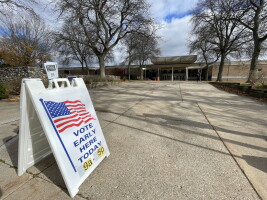
A white sandwich board sign rests on the concrete outside a building. On the sign is an illustration of an American flag, waving. The sign says VOTE EARLY HERE TODAY in blue letters, and 9a - 5p underneath
Some people have already voted in Michigan. For those yet to head to the polls, there may be more election challengers when you get there, but they're not allowed to talk to voters.(Dustin Dwyer / Michigan Public )

Michigan’s attorney general is reiterating that people should have confidence in the state’s elections.

Absentee voting in Michigan’s November general election began last month.

But Michigan Attorney General Dana Nessel said officials have been planning how to handle any possible disruptions for months.

“We want to make sure people know that it’s safe to vote, their votes are secure and that we have an accurate and democratic representation of votes cast,” Nessel said in an interview Tuesday.

Nessel said her office has been working with the governor’s team, state police, and election officials on “table-top exercises” to prepare for anything that could go wrong.

That’s as President Donald Trump continues to promote unproven claims about vote-rigging ahead of next month’s midterm elections. In a recent interview with Time Magazine, Trump didn’t rule out declaring a state of emergency in the lead-up.

Nessel said officials are preparing other briefs for everything from power outages to military troops at the polls.

“It could be the ones that we’re hearing the most about — federal agents or ICE being at the polls — or you have people who come to the polls who are disruptive in nature, or they plan to try to intimidate voters, or discourage people from not voting who are eligible voters,” Nessel said.

Voting has been relatively quiet in Michigan since 2020, when lies about the election being stolen fueled turmoil around its certification.

During this year's August primary election, federal monitors came to East Lansing, Lansing, Hamtramck, and Detroit. State officials said their presence didn’t cause any interruptions.

The Michigan Department of State Tuesday said it wasn’t aware of any future plans to send federal monitors to Michigan for the general election.

Meet the Michigan Supreme Court candidates: Chief Justice Megan Cavanagh

In November, Michigan voters will choose two justices to serve on the state Supreme Court. Michigan Public's Morning Edition is featuring interviews with the six candidates.

Megan Cavanagh is the chief justice of the Michigan Supreme Court. She was selected by her fellow justices to be chief justice in 2025 after Chief Justice Elizabeth Clement stepped down from the court. Cavanagh was first elected to the court in 2018 and is running for a new eight-year term.

Cavanagh spoke with Michigan Public's Morning Edition host Doug Tribou.

Doug Tribou: Would you start by describing your legal philosophy — for people who may not have followed your work — and the approach that you take to cases that come before the court?

Megan Cavanagh: I'm not one particularly that finds labels all that helpful. I think what we are all trying to do as judges, and what I try and do, is determine the intent of whatever that is — whether it's the citizens, the Legislature, voters who enacted the law — and try and understand what that intent is by looking at the words that are used, the context in which those words are placed, the overall statute or constitutional provision.

It's not a word or a label ... the intentionalist, I guess? You know, we're all trying to figure out what it is that is the law, because we are not the ones who enact the law, right? We are interpreting it and then trying to fairly apply that to the factual situation in front of us.

DT: You came to the court after a career in private practice with a prominent Detroit law firm. You had appeared before the Supreme Court as an attorney, but it was your first time as a judge or justice. Has your approach to the work changed over the eight years that you've been on the court?

MC: I tell you, one of the biggest surprises or learning moments for me was just the different role in the process, right? So as an attorney, when I was arguing a case in front of the Supreme Court, by the time that I got to oral argument, that was really the sort of end of the process. And so when I first got on the bench and started approaching oral argument and cases as a justice, I had to readjust.

Because, you know, following my first oral argument, I went in there thinking I knew what the answer was or what I thought the the result should be or my vote should be. I had to reevaluate that because of arguments that were raised and questions asked and answered.

DT: You've been a part of a lot of rulings over the past eight years on the Supreme Court, but I would like to ask if there's a case or two that have stuck with you, either because they seemed especially important or because they were unusual compared to other rulings?

MC: Sure. Probably foremost in my mind, because it was just an opinion that we released this last term, is People v. Jennings. And that is a a criminal case regarding the double jeopardy provision of the Michigan Constitution. And the significance, I think, of that case is it really lays out the analysis of how to look at Michigan's constitution independent of the U.S. Constitution. And so it's a really important opinion, I think, on the primacy of Michigan's constitution.

The other one is a case from earlier in my tenure, but again, with the Michigan Constitution. And that was Bauserman v. The Unemployment Insurance Agency. And that had to do with plaintiffs seeking a right to a remedy under Michigan's constitution when the state has violated Michigan constitutional rights recognized by our Michigan Constitution. And prior to that case, our court had held that there really was no remedy if the state violates the Constitution. And so I think Bauserman was significant in that regard.

DT: That was part of the fallout from when the state falsely accused thousands of people of unemployment fraud?

MC: Correct.

DT: In interviewing Supreme Court candidates and justices over the years, the issue of technology has come up a lot, especially the use of virtual hearings since the start of the COVID-19 pandemic. Your colleague, Justice Richard Bernstein, has strong opinions about courts operating in-person. And former Justice David Viviano told me that the courts were relying on Zoom too much, in his opinion, and that he felt that courts and litigants with different resources could end up on unequal footing.

What's your view of technology in the courtroom and what changes, if any, would you like to see if you're reelected?

MC: You know, a lot of what we studied during the pandemic and after was that there were certain improvements to the justice system in certain types of cases, right? Particularly in the area of child protective proceedings or in family-law cases where parents didn't have to take off work or kids didn't have to be pulled out of school. I think there was also some benefit to kids feeling more engaged and secure in the court process, right? Everybody's sort of the same size in a box, as opposed to going into an environment that can be intimidating.

But certainly there are downsides to it. In our Zoom world, it's different interacting, understanding mannerisms and body language and things online. And so what we have spent a lot of time — with a lot of input from the public, from attorneys, from our trial judges — is enacting rules, court rules that hopefully provide for that discretion to be exercised.

DT: Supreme Court candidates appear on the ballot without any party affiliation listed. However, the candidates for the court are nominated by political parties. You are a nominee of the Democratic Party, and justices who have Democratic Party support currently hold a 6-to-1 majority on the Michigan Supreme Court.

During your first campaign for the court in 2018, the split was 5 to 2 in favor of justices with Republican support. So there's been quite a swing over the past eight years or so. What would you say to voters who are concerned about imbalance in any direction, regardless of political affiliation?

MC: I think it's a legitimate concern. I think that, you know, different states do it differently. I am a fan of the elected system because I think it's important for people who serve the public in the role of justice, that they hear from voters, that they talk about the importance of our state courts and the job that we're doing and hear from people about what's working and what's not working. And I think the elective process in that regard is a very effective system for that.

I would prefer that the political nomination part were not part of our system, but it is. I will tell you that when we sit around a conference table, we are not saying, "Well, you're the Republican and you're the Democrat." Very few issues that come before us really fall along what I would call partisan lines. We may have differing opinions, but I think what we're trying to do as justices is decide the law fairly, like I said at the beginning. Decide the law fairly and to give effect to the what the public understands the law is, and explain that clearly so that the public can understand what their rights and responsibilities are.

DT: Well, chief justice, thank you very much for your time.

MC: Absolutely. Thank you. It's always a pleasure to talk about the great work that our state courts are doing.

Editor's note: Quotes in this article have been edited for length and clarity. You can play the full audio of this interview near the top of this page.

Ann Arbor City Council votes to oppose proposal that would create municipal utility board

A resident speaks at the podium during Ann Arbor City Council's October 5, 2026, meeting.
A resident speaks at the podium during Ann Arbor City Council's October 5, 2026, meeting.(Kevin Meerschaert / 89.1 WEMU )

The Ann Arbor City Council Monday night voted to oppose a citizen-initiated ballot proposal that would establish a municipal utility board. Its supporters said they aren’t going away.

Supporters say Proposal E would only start the process of what eventually could be a takeover of DTE’s electric grid and assets. Opponents say the proposal’s wording could force the city into a very expensive legal fight with the utility.

Mayor Christopher Taylor said there shouldn’t be a vote until the actual costs are known.

"We are able, over the course of time, to put a full, complete, and candid question to the voters about the costs associated, which are considerable.”

Ann Arbor for Public Power spearheaded the initiative. Executive Director Brian Geiringer told the council voters can decide for themselves if they want to support the proposal.

Originally, the resolution encouraged voters to oppose the proposal on the November ballot. That line was removed ahead of the final vote.

❌