❌

Reading view

There are new articles available, click to refresh the page.

The Metro: ‘The auto industry is in a mess.’ It could get worse.

Chaos. That’s the trend line in the auto sector of our economy. A war in Iran has raised gas prices. A Trump administration antagonistic to electric vehicles has reshaped the auto industry, causing Stellantis, General Motors and Ford to lose a combined $52 billion as they’ve shifted away from their electric investments. 

And through it all, the Trump administration has enacted tariffs. Recently, they’ve gotten steeper. 

In August, America enacted new tariffs on Canadian aluminum and steel. Canada responded with tariffs on many US goods, including those aforementioned products. 

Meanwhile, the price of cars — especially used cars — are increasing.

What do these trends mean for auto companies and auto workers? How are customers affected? And, how are both parties trying to adapt to rapidly changing policies?

Paul Eisenstein is the editor of headlight.news. He’s also the publisher and editor of “The Car Collective” Substack. He spoke with The Metro‘s Sam Corey.

Hear the full conversation using the media player above.

Listen to The Metro weekdays from 10 a.m. to noon ET on 101.9 FM and streaming on-demand. Never miss an episode — subscribe to The Metro on Apple Podcasts, Spotify, YouTube, or NPR, or wherever you get your podcasts. Have thoughts? Email the show at metro@wdet.org.

Support the podcasts you love.

One-of-a-kind podcasts from WDET bring you engaging conversations, news you need to know and stories you love to hear. Keep the conversations coming. Please make a gift today.

More stories from The Metro

The post The Metro: ‘The auto industry is in a mess.’ It could get worse. appeared first on WDET 101.9 FM.

The Metro: Does the public benefit from a redeveloped RenCen?

Many have an opinion about Detroit’s Renaissance Center.

Some view it as ugly, detached from the city, and with General Motors having moved out, they believe it should be redeveloped.

And then there are people who like the RenCen. They see its tallest towers as an emblem of the city. They’re often the same people who argue that pouring public money into its redevelopment will detract from other priorities — things like schools, public transit, and housing that teachers and nurses can afford.

This question — whether a large public-private project is worth it for the public — has come into sharper focus. That’s because GM and Bedrock are now asking for just under $550 million to subsidize the redevelopment of the RenCen. That’s up from about $350 million when they first announced the plan.

Jared Fleisher is the CEO of Bedrock. He spoke about the plan with The Metro’s Robyn Vincent. Later, Anne Goulet joined the conversation. She is the principal of two firms, ARGitct and Anne R Goulet Architecture and Design.

Hear the full conversation using the media player above.

Listen to The Metro weekdays from 10 a.m. to noon ET on 101.9 FM and streaming on-demand. Never miss an episode — subscribe to The Metro on Apple Podcasts, Spotify, YouTube, or NPR, or wherever you get your podcasts. Have thoughts? Email the show at metro@wdet.org.

Support the podcasts you love.

One-of-a-kind podcasts from WDET bring you engaging conversations, news you need to know and stories you love to hear. Keep the conversations coming. Please make a gift today.

More stories from The Metro

The post The Metro: Does the public benefit from a redeveloped RenCen? appeared first on WDET 101.9 FM.

The Metro: The Sunrise Movement co-founder trying to flip Lansing’s House seat

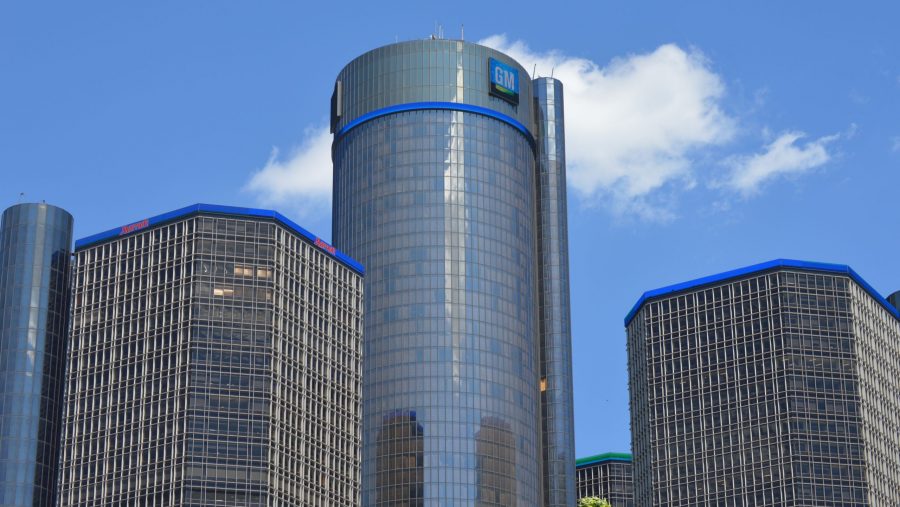
In August, Michigan Democrats picked a Sunrise Movement co-founder over a former ambassador and a former Navy SEAL. Will Lawrence has never held office. Until recently, he was a dues-paying member of the Democratic Socialists of America. 

Now he’s running in Michigan’s 7th District, which includes Lansing, East Lansing, and the farm counties and exurbs around them, out to Livingston County and the edge of Oakland. Sen. Bernie Sanders endorsed him in the race.

It is a seat Republican Rep. Tom Barrett won by under four points, in a district that narrowly backed President Trump in 2016 and former President Biden in 2020. 

Lawrence is running on universal health care, taxing the very rich to pay for child care and elder care, and a freeze on new data centers and the most advanced AI. Whether a campaign like that can win a district this close is a question Democrats have been arguing about for years. 

He spoke with host Robyn Vincent about Medicare for All, data centers, Trump’s tariffs on Canada, and whether a progressive can win a swing seat. Barrett joins The Metro next week.

Hear the full conversation using the media player above.

Listen to The Metro weekdays from 10 a.m. to noon ET on 101.9 FM and streaming on-demand. Never miss an episode — subscribe to The Metro on Apple Podcasts, Spotify, YouTube, or NPR, or wherever you get your podcasts. Have thoughts? Email the show at metro@wdet.org.

Support the podcasts you love.

One-of-a-kind podcasts from WDET bring you engaging conversations, news you need to know and stories you love to hear. Keep the conversations coming. Please make a gift today.

More stories from The Metro
The post The Metro: The Sunrise Movement co-founder trying to flip Lansing’s House seat appeared first on WDET 101.9 FM.

The Metro: How America has changed — and hasn’t — 25 years after 9/11

Tomorrow marks 25 years since the twin towers came down. That day, before people mourned, they were in shock.

What came next reshaped this country. The Patriot Act. Two wars. Here at home, a registration program fingerprinted, photographed and questioned more than 80,000 men and boys largely from Muslim-majority countries. It didn’t produce a single terrorism conviction.

Meanwhile, reported hate crimes against Muslims jumped seventeenfold in one year. They have never returned to where they were.

Almost none of that machinery was ever dismantled. So, we’re wondering how has American politics changed — and how hasn’t it — since September of 2001.

Ali Harb is a freelance journalist based in Washington D.C. He covers American politics, U.S. foreign policy, and politics in the Middle East. He spoke with The Metro‘s Robyn Vincent.

Hear the full conversation using the media player above.

Listen to The Metro weekdays from 10 a.m. to noon ET on 101.9 FM and stream on-demand. Never miss an episode – subscribe to The Metro on Apple Podcasts, Spotify, YouTube, NPR, or wherever you get your podcasts.

Support the podcasts you love.

One-of-a-kind podcasts from WDET bring you engaging conversations, news you need to know and stories you love to hear. Keep the conversations coming. Please make a gift today.

More stories from The Metro

The post The Metro: How America has changed — and hasn’t — 25 years after 9/11 appeared first on WDET 101.9 FM.

The Metro: An initiative wants to remove money from Michigan politics. Can it?

Is money corrupting Michigan’s politics?

According to a Politico poll, 72% of Americans say there’s too much money in politics. Respondents said special interest spending leads to corruption that should be restricted. 

In Michigan, a local campaign believes residents can have a stronger, more representative democracy if political spending by some big-time actors is limited.

The Michiganders for Money Out of Politics measure, which is now on the November ballot, would change some aspects of how money gets into the hands of politicians and political candidates. 

Voters decide Nov. 3, though opponents have asked the Michigan Supreme Court to block it.

Sean McBrearty is the executive committee co-chair for the Michiganders for Money out of Politics campaign.  He spoke with producer and host Robyn Vincent about what happens if the ballot measure passes.

Hear the full conversation using the media player above.

Listen to The Metro weekdays from 10 a.m. to noon ET on 101.9 FM and stream on-demand.

Never miss an episode — subscribe to The Metro on Apple Podcasts, Spotify, YouTube, NPR, or wherever you get your podcasts.

Support the podcasts you love.

One-of-a-kind podcasts from WDET bring you engaging conversations, news you need to know and stories you love to hear. Keep the conversations coming. Please make a gift today.

More stories from The Metro

The post The Metro: An initiative wants to remove money from Michigan politics. Can it? appeared first on WDET 101.9 FM.

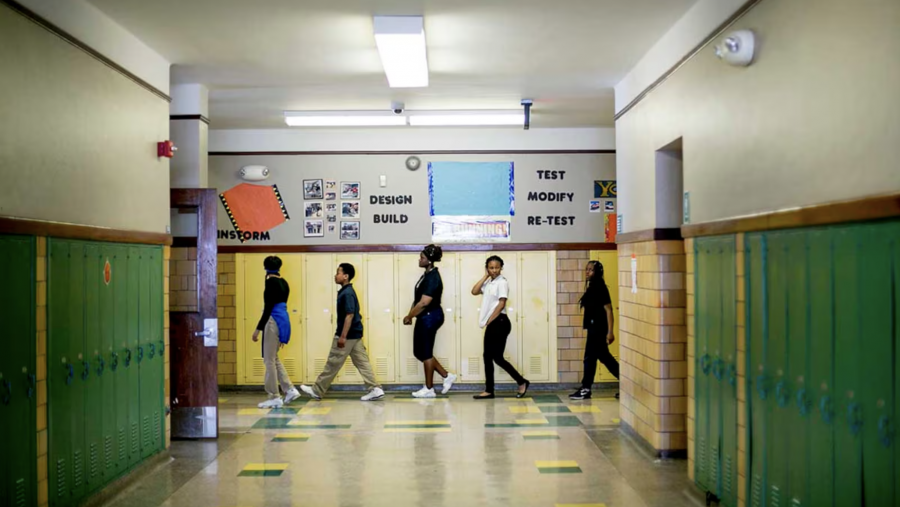
The Metro: School attendance is improving quickly in Detroit. Here’s why.

Since the pandemic, Michigan schools have faced a persistent problem: Students are not showing up enough to class. 

In Detroit public schools, the chronic absenteeism rate has been higher than the rest of the state’s. Recently, that number has been decreasing.

In just one school year, chronic absenteeism dropped 10 percentage points. Even in comparison with other high-poverty school districts, a recent report shows Detroit public schools have been the most effective in the state at boosting attendance rates. 

Why? And, should other school districts take note of what’s happening in Detroit’s schools?

Jeremy Singer is an assistant professor of education policy and leadership at University of Michigan-Flint, and does research with Wayne State. He helped write that report, and spoke about it with The Metro‘s Robyn Vincent.

Hear the full conversation using the media player above.

Listen to The Metro weekdays from 10 a.m. to noon ET on 101.9 FM and stream on-demand.

Never miss an episode — subscribe to The Metro on Apple Podcasts, Spotify, YouTube, NPR, or wherever you get your podcasts.

Support the podcasts you love.

One-of-a-kind podcasts from WDET bring you engaging conversations, news you need to know and stories you love to hear. Keep the conversations coming. Please make a gift today.

More stories from The Metro

The post The Metro: School attendance is improving quickly in Detroit. Here’s why. appeared first on WDET 101.9 FM.

The Metro: Why Michigan’s Senate race reveals gaps between candidates and voters

Michigan is in the national spotlight. 

That’s in part because of the state’s open U.S. Senate seat. If Democrats lose, their path to a Senate majority all but closes.

The race can tell us a lot about the direction of the Democratic Party — what is seen as acceptable to voters, and what appears too extreme. 

That’s because trends here represent things happening elsewhere, in places where manufacturing is declining but still deemed important, where wages are stagnating, and where younger people are leaving in hopes of finding greener pastures in other states. 

So, how should we be looking at the Senate race between Dr. Abdul El-Sayed and Mike Rogers? What does it tell us about the politics of the median Michigan voter? And what does it say about the kinds of politics that are possible. 

Adrian Hemond is the CEO of the bipartisan advocacy firm, Grassroots Midwest. He’s also a longtime Democrat. He spoke with The Metro‘s Sam Corey.

Editor’s Note: In this conversation, Adrian Hemond said Dr. Abdul El-Sayed has associated with people who have committed acts of antisemitism. He did not name anyone on air, and we did not press him to at the time. We should have. WDET asked Hemond afterward for specifics and reviewed what he provided. None of it involved conduct by Dr. El-Sayed, and we found no evidence supporting the claim as stated. We should not have let it air unchallenged.

An earlier version of this note included material that did not meet our editorial standards.

Listen to The Metro weekdays from 10 a.m. to noon ET on 101.9 FM and streaming on-demand.

Subscribe to The Metro on Apple Podcasts, Spotify, YouTube, or NPR or wherever you get your podcasts.

Support the podcasts you love.

One-of-a-kind podcasts from WDET bring you engaging conversations, news you need to know and stories you love to hear. Keep the conversations coming. Please make a gift today.

More stories from The Metro

The post The Metro: Why Michigan’s Senate race reveals gaps between candidates and voters appeared first on WDET 101.9 FM.

The Metro: Homicides are down. This former FBI agent credits community leaders.

The FBI put out its 2025 crime numbers this month, and they show the largest year-to-year decline in violent crime rates since estimations began in 1936. Robbery fell 18.5%. Murder dropped by 18 percent — that rate is now tied with 1955 for the lowest ever recorded in this country.

Detroit is part of that trend. The city ended last year with the lowest number of homicides since 1965. Carjackings dropped 46 percent.

What nobody fully agrees on is why. Detroit police credit a mix of strategies: More officers, a different approach to mental health calls, and community violence intervention — those are programs staffed by people from the neighborhoods where the shooting happens.

Andy Arena spent 24 years in the FBI and ran its Detroit division. He now leads the Detroit Crime Commission. He spoke about why violent crime is declining with host Robyn Vincent.

Listen to The Metro weekdays from 10 a.m. to noon ET on 101.9 FM and streaming on-demand.

Subscribe to The Metro on Apple Podcasts, Spotify, YouTube, or NPR or wherever you get your podcasts.

More stories from The Metro

Support the podcasts you love.

One-of-a-kind podcasts from WDET bring you engaging conversations, news you need to know and stories you love to hear. Keep the conversations coming. Please make a gift today.

The post The Metro: Homicides are down. This former FBI agent credits community leaders. appeared first on WDET 101.9 FM.

The Metro: El-Sayed won Michigan and lost Detroit. Pastors could shape what comes next

Dr. Abdul El-Sayed ran the health departments of both Detroit and Wayne County. Three weeks ago he won a U.S. Senate primary by roughly 15,000 votes statewide, and lost Detroit by nearly 2-1.

Seven miles away in Dearborn and Hamtramck, he took 78 and 82%, respectively.

In Detroit, fewer people voted in this primary than in 2016: About 98,000, which is down from 126,000.

So the question in front of him now isn’t only whether Detroit residents will vote for him — it’s whether Detroit residents will turn out to vote.

Bishop James Williams is founder and senior pastor of Spirit and Truth Christian Ministries, and second vice president of the Council of Baptist Pastors of Detroit and Vicinity— a group that supported Dr. El-Sayed during the primary. He joined host Robyn Vincent to speak about what his congregants make of the U.S. Senate race, and how their political preferences have been shifting.

Hear the full conversation using the media player above.

Listen to The Metro weekdays from 10 a.m. to noon ET on 101.9 FM and stream on-demand.

Never miss an episode — subscribe to The Metro on Apple Podcasts, Spotify, YouTube, NPR, or wherever you get your podcasts.

Support the podcasts you love.

One-of-a-kind podcasts from WDET bring you engaging conversations, news you need to know and stories you love to hear. Keep the conversations coming. Please make a gift today.

More stories from The Metro

The post The Metro: El-Sayed won Michigan and lost Detroit. Pastors could shape what comes next appeared first on WDET 101.9 FM.
The Metro: Why ‘the last vestige of acceptable racism’ is intensifying

A week ago, the Dearborn City Council moved its meeting to the public library because they expected a crowd. Police were outside in riot gear. Wayne County sent officers on horses. By the next morning, 22 people had been arrested from across Michigan, and from as far as New York and Tennessee.

Dearborn Mayor Abdullah Hammoud told the council his own daughter didn’t go to daycare that day. Some businesses stayed closed. Sports practices were rescheduled.

What brought all this on was a man with a megaphone who told the council that Muslims had come here to steal, and that their time in this country was running short.

Jake Lang doesn’t hold office. But his words are not far from the ones spoken by people who do. Three weeks ago, Dr. Abdul El-Sayed won Michigan’s Democratic Senate primary. Within hours, a sitting U.S. Senator called him a terrorist. A sitting congresswoman called every Muslim holding public office in America “a Trojan horse.”

Last year, the Council on American-Islamic Relations, or CAIR, logged over 8,600 complaints nationwide, more than in any year since the group started counting in 1996. In Michigan, the chapter recorded nearly 500 — also a record, up 25% from the year before. These are complaints people brought to an advocacy group, not hate crimes confirmed by police. But they’re climbing, and they have been for three years running.

Amy Doukoure is the lead staff attorney for CAIR-Michigan, a nonprofit dedicated to combatting anti-Muslim hate locally. She spoke with host Robyn Vincent about why anti-Muslim hate is rising, and what can be done to stop it.

Listen to The Metro weekdays from 10 a.m. to noon ET on 101.9 FM and streaming on-demand.

Subscribe to The Metro on Apple Podcasts, Spotify, YouTube, or NPR or wherever you get your podcasts.

Support the podcasts you love.

One-of-a-kind podcasts from WDET bring you engaging conversations, news you need to know and stories you love to hear. Keep the conversations coming. Please make a gift today.

More stories from The Metro

The post The Metro: Why ‘the last vestige of acceptable racism’ is intensifying appeared first on WDET 101.9 FM.

The Metro: Jay Inslee on where the climate movement should go next

What should we make of the climate movement’s accomplishments over the last decade?

On one side, the Inflation Reduction Act and Chips and Science Act helped distribute clean energy across the country. Those policies dropped solar prices — 90% over the last decade. Battery storage costs fell by the same amount from 2010 to 2020. 

But the Green New Deal never passed, and many Republicans in Michigan and across the U.S. are against a clean energy transition. President Donald Trump has consistently said climate change isn’t real and the world continues to warm at a rapid clip. 

Jay Inslee has been at the center of the climate movement. He was governor of Washington for three terms, and a presidential candidate in 2020 when he pushed Democrats to take climate change more seriously. 

What does he make of our climate politics today? And where should the climate movement go next?

The Metro’s Sam Corey recently spoke with Inslee when he was in town stumping for Jocelyn Benson in her bid for governor.

The Metro has reached out multiple times to the campaign for Republican John James for governor. They have not yet given us a time when the candidate is available to join us.

A few notes about this conversation:

Inslee mentioned a Washington ballot measure on climate that won 62 percent of the vote. That was a 2024 vote on whether to scrap the state’s climate program — the one that makes big polluters pay for what they emit. Voters chose to keep it.

He also cited a Washington vote on electric school buses. That wasn’t a ballot measure — it was a bill, passed by the Legislature in 2024.

He said President Trump’s White House construction and renovation projects will cost $800 million. According to Reuters, those projects are now more than $900 million.

Inslee said that 80% of rural voters supported a clean energy ballot initiative in Washington. We could not verify that.

Hear the full conversation using the media player above.

Listen to The Metro weekdays from 10 a.m. to noon ET on 101.9 FM and stream on-demand.

Never miss an episode — subscribe to The Metro on Apple Podcasts, Spotify, YouTube, NPR, or wherever you get your podcasts.

Support the podcasts you love.

One-of-a-kind podcasts from WDET bring you engaging conversations, news you need to know and stories you love to hear. Keep the conversations coming. Please make a gift today.

More stories from The Metro

The post The Metro: Jay Inslee on where the climate movement should go next appeared first on WDET 101.9 FM.

The Metro: Jewish Democrats are divided on El-Sayed’s victory. Andy Levin says they shouldn’t be

This has been a hard moment for many Jewish people. Antisemitism has been on the rise, and Americans’ views of Israel are now mostly negative. 

Those are big changes. And they’re translating into political shifts. 

It’s unknown how a majority of liberal Jewish residents voted during the Democratic Senate Primary. But a lot of older Jews are unsure of how to vote now that Dr. Abdul El-Sayed is the Democratic nominee. Do they support him or do they vote for Republican Mike Rogers?

This question carries weight beyond the election itself. It represents larger quandaries about what it means to be Jewish, about what antisemitism actually is, and about whether one can feel warmth toward Israel while being critical of its government.

Andy Levin organized for unions and served as president of his synagogue before running for office. His uncle, Carl Levin, served 36 years in the U.S. Senate, and his father, Sander Levin, served 36 in the House of Representatives. Andy Levin won his father’s seat in 2018 and held it for four years. Then redistricting put him in a primary against Congresswoman Haley Stevens. A super PAC tied to AIPAC spent more than $4 million to beat him, and it worked.

Levin spoke with host Robyn Vincent about why he’s supporting El-Sayed, and why many Jewish Metro Detroiters are struggling in this political moment.

Hear the full conversation using the media player above.

Listen to The Metro weekdays from 10 a.m. to noon ET on 101.9 FM and stream on-demand.

Never miss an episode — subscribe to The Metro on Apple Podcasts, Spotify, YouTube, NPR, or wherever you get your podcasts.

Support the podcasts you love.

One-of-a-kind podcasts from WDET bring you engaging conversations, news you need to know and stories you love to hear. Keep the conversations coming. Please make a gift today.

More stories from The Metro

The post The Metro: Jewish Democrats are divided on El-Sayed’s victory. Andy Levin says they shouldn’t be appeared first on WDET 101.9 FM.
The Metro: How this Democratic Socialist plans to govern Ann Arbor

In November, Ann Arbor voters will decide whether their city should build its own electric utility and stop buying power from DTE. A group funded by DTE is suing to stop the vote.

The man likely to be Ann Arbor’s next mayor wants the city to take over.

Yousef Rabhi is a Democratic Socialist. He beat 12-year incumbent Chris Taylor by 10 points — over the endorsements of Michigan Governor Gretchen Whitmer and U.S. Senator Elissa Slotkin — in a primary that was part of a bigger progressive wave.

Dr. Abdul El-Sayed won the U.S. Senate nomination. State Rep. Donavan McKinney beat a sitting congressman. Abbas Alawieh will likely be the first Arab American in the Michigan Senate.

Rabhi is a sitting Washtenaw County commissioner who spent six years in the state House. He spoke with host Robyn Vincent about why he ran for mayor, and how he wants to govern the city as a self-declared outsider.

Hear the full conversation using the media player above.

Listen to The Metro weekdays from 10 a.m. to noon ET on 101.9 FM and stream on-demand.

Never miss an episode — subscribe to The Metro on Apple Podcasts, Spotify, YouTube, NPR, or wherever you get your podcasts.

Support the podcasts you love.

One-of-a-kind podcasts from WDET bring you engaging conversations, news you need to know and stories you love to hear. Keep the conversations coming. Please make a gift today.

More stories from The Metro

The post The Metro: How this Democratic Socialist plans to govern Ann Arbor appeared first on WDET 101.9 FM.

The Metro: After anti-Muslim protest, Dearborn Mayor Abdullah Hammoud on belonging in America 

“Terrorist.” “Trojan horse.” “Terrorist sympathizer.”

These are the words top Republican officials have used to describe Muslim Americans in public office since Dr. Abdul El-Sayed won Michigan’s Democratic Senate primary two weeks ago. That’s following specific instructions from President Donald Trump about what Republicans should say to win the midterms.

Ku Klux Klan supporter at Jake Lang Protest in Dearborn, Mich.

In the days after El-Sayed’s win, anti-Muslim hate targeting him online rose twenty-fold. That’s according to the Center for the Study of Organized Hate. Researchers who track this say the language itself has shifted: from calling Muslims a terror threat to calling them a threat to civilization. 

Last night, that rhetoric arrived in Dearborn. Self-described anti-Islamic activist Jake Lang and Detroit pastor Lorenzo Sewell came to the city with a promised pig roast, timed to the city council meeting — which had been moved to the Henry Ford Centennial Library over safety concerns. Police made 22 arrests.

Man gets arrested in Dearborn at Jake Lang protest.
Protesters outside the Henry Ford Centennial Library protesting Jake Lang.
Jake Lang speaking before crowd outside the Henry Ford Centennial Library.
Police out front of the Henry Ford Centennial Library in Dearborn, MI.
People protesting Jake Lang in Dearborn, some showing support.
Protest in Dearborn, MI as Jake Lang attends city council meeting.
Photos by Isaiah Lopez, WDET

Jake Lang’s demonstration comes a week after an Alaska man was federally charged for threatening to kill Dearborn Mayor Abdullah Hammoud.

The mayor has been answering this with something other than anger. Host Robyn Vincent spoke with Hammoud about what that message is, and how he’s working to keep Dearborn residents safe.

Hear the full conversation using the media player above.

Listen to The Metro weekdays from 10 a.m. to noon ET on 101.9 FM and stream on-demand.

Never miss an episode — subscribe to The Metro on Apple Podcasts, Spotify, YouTube, NPR, or wherever you get your podcasts.

Support the podcasts you love.

One-of-a-kind podcasts from WDET bring you engaging conversations, news you need to know and stories you love to hear. Keep the conversations coming. Please make a gift today.

More stories from The Metro

The post The Metro: After anti-Muslim protest, Dearborn Mayor Abdullah Hammoud on belonging in America  appeared first on WDET 101.9 FM.

The Metro: How does a new, gigantic bridge affect people living nearby?

The Gordie Howe International Bridge includes a mile and a half of cable and steel stretching across the Detroit River. The architect calls it a work of public art. It can be seen from around the city.

On the American side sits Delray and parts of Southwest Detroit — neighborhoods that have long sat in the shadow of heavy industry.

The bridge was constructed in Delray for a reason: The area had a lot of vacant, publicly owned land available at low prices. Many residents didn’t want it there. Once it was clear the bridge was coming, they organized, and negotiated a $45 million community benefits agreement, including home repairs, new windows and air systems, and a buyout for those who wanted to leave.

The Metro is asking: When a billion dollar project lands on a neighborhood that spent decades being overlooked — can it actually leave the people who live there better off? 

Paul Draus is a sociologist at the University of Michigan-Dearborn. He’s been tracking how folks near the Gordie Howe International Bridge have been affected by its construction. He spoke with host Robyn Vincent.

One note: Professor Draus worked with a community park that received a donation from the bridge authority for a public sculpture a few years back.

Listen to The Metro weekdays from 10 a.m. to noon ET on 101.9 FM and streaming on-demand.

Subscribe to The Metro on Apple Podcasts, Spotify, YouTube, or NPR or wherever you get your podcasts.

Support the podcasts you love.

One-of-a-kind podcasts from WDET bring you engaging conversations, news you need to know and stories you love to hear. Keep the conversations coming. Please make a gift today.

More stories from The Metro

The post The Metro: How does a new, gigantic bridge affect people living nearby? appeared first on WDET 101.9 FM.

The Metro: What Republican candidates need to do to win Michigan

It’s said that all politics is local. But these days, that doesn’t appear to be so true. Instead, a lot of it is national because that’s where the drama is — much of it at the hands of President Donald Trump. 

The Republicans who disagree with the president are more likely to lose during an election year. 

That’s why Trump’s endorsements for U.S. Senate candidate Mike Rogers and gubernatorial candidate John James matter so much. But who are these candidates outside of Trump’s endorsement? What do they stand for? And, what do they need to do to win come November?

Dennis Darnoi is the founder of Densar Consulting, based in Farmington. He often promotes Republican candidates. Darnoi spoke with host Robyn Vincent about the Republicans advancing to the general election in both the Senate and governor’s race.

Editor’s note: Our guest mischaracterized Abdul El-Sayed’s work on medical debt. As Wayne County health director, El-Sayed launched a program that set aside $7 million to erase up to $700 million in debt for 300,000 residents, buying it from providers at a bulk discount. Bridge Michigan reported in June that about $57.4 million has been settled so far, for roughly 83,000 residents, and that El-Sayed has overstated the program’s results on the campaign trail. The program is still active. Our guest also referred to a “$40 trillion budget deficit.” That figure describes the national debt, which is approaching $40 trillion. The federal deficit for fiscal year 2026 is projected at roughly $2 trillion.

Listen to The Metro weekdays from 10 a.m. to noon ET on 101.9 FM and streaming on-demand.

Subscribe to The Metro on Apple Podcasts, Spotify, YouTube, or NPR or wherever you get your podcasts.

Support the podcasts you love.

One-of-a-kind podcasts from WDET bring you engaging conversations, news you need to know and stories you love to hear. Keep the conversations coming. Please make a gift today.

More stories from The Metro

The post The Metro: What Republican candidates need to do to win Michigan appeared first on WDET 101.9 FM.

The Metro: Detroit expands public transit, one millage at a time

Wayne County residents overwhelmingly approved a millage that ensures everyone pays into the suburban public transit system, known as SMART. 

One of the people who led the effort to pass the millage is Megan Owens. She’s the director of Transit Riders United. That organization has been advocating for public transit expansion in Metro Detroit for 25 years.

Owens joined The Metro‘s Robyn Vincent to discuss Wayne County’s transit millage, and what it would take to create more expansive, connected public transit in the region. 

Listen to The Metro weekdays from 10 a.m. to noon ET on 101.9 FM and streaming on-demand.

Subscribe to The Metro on Apple Podcasts, Spotify, YouTube, or NPR or wherever you get your podcasts.

Support the podcasts you love.

One-of-a-kind podcasts from WDET bring you engaging conversations, news you need to know and stories you love to hear. Keep the conversations coming. Please make a gift today.

More stories from The Metro

The post The Metro: Detroit expands public transit, one millage at a time appeared first on WDET 101.9 FM.
The Metro: Has economic populism come to Michigan?

Ever since President Donald Trump won a second term, Democrats have been arguing with each other about the same two questions: What is this party for, and who gets to lead it?

The insurgents have been winning across the country. But the big question is whether economic populist candidates, who run on platforms aimed at minimizing the influence of big money, can win in Michigan. Progressive candidate Abdul El-Sayed won the Senate Democratic primary, and Donovan McKinney beat sitting Congressmember Shri Thanedar. But important races still haven’t been called, and the general election may not be easy for all the progressive candidates. 

Branden Snyder is the state director of the Working Families Party. His group endorsed economic populist candidates up and down the ballot. He spoke with The Metro‘s Robyn Vincent.

Hear the full conversation using the media player above.

Listen to The Metro weekdays from 10 a.m. to noon ET on 101.9 FM and stream on-demand.

Never miss an episode — subscribe to The Metro on Apple Podcasts, Spotify, YouTube, NPR, or wherever you get your podcasts.

Support the podcasts you love.

One-of-a-kind podcasts from WDET bring you engaging conversations, news you need to know and stories you love to hear. Keep the conversations coming. Please make a gift today.

More stories from The Metro

The post The Metro: Has economic populism come to Michigan? appeared first on WDET 101.9 FM.

Metro: Progressives win up and down ballot

Michigan primaries usually come and go with most people not voting. They’re low-profile elections in August, and turnout tends to land somewhere around a quarter of registered voters. 

Last night was different.

Over 1.5 million ballots were counted in the Democratic Senate primary alone. That’s more than any non-presidential Democratic primary in this state going back to at least 1998.

That race, between Congresswoman Haley Stevens and Abdul El-Sayed, is the most expensive Democratic Senate primary in history. El-Sayed won the primary.

Other progressive candidates won their races too: Donovan McKinney won the Democratic nomination for the 13th District seat in the U.S. House against incumbent Shri Thanedar, and Abbas Alawieh won the primary for Michigan senate in the 2nd District. 

Zach Gorchow is president of Gongwer News Service of Michigan and has covered state politics for a long time. He spoke with The Metro‘s Robyn Vincent about how this election shook out, and what it may mean come November.

Hear the full conversation using the media player above.

Listen to The Metro weekdays from 10 a.m. to noon ET on 101.9 FM and stream on-demand.

Never miss an episode — subscribe to The Metro on Apple Podcasts, Spotify, YouTube, NPR, or wherever you get your podcasts.

Support the podcasts you love.

One-of-a-kind podcasts from WDET bring you engaging conversations, news you need to know and stories you love to hear. Keep the conversations coming. Please make a gift today.

More stories from The Metro

The post Metro: Progressives win up and down ballot appeared first on WDET 101.9 FM.

❌