Two Detroit Museum institutions want voters in Wayne and Oakland counties to support a joint operating millage on the November ballot.
The Detroit Historical Society and the Charles H. Wright Museum of African American History are proposing a 10-year 0.2 mills they say would generate nearly $29 million in revenue in its first year.
The President and CEO of the Wright Museum is Neil Barclay. He says without the millage there will be significant cuts to programming and services.
“I think mostly about our young people who would not be able to come to the museum as much as we even can do now. That those our hours could be reduced. …We would have to look at in terms of bringing our budgets into line with the resources that we have available.”
Barclay says at a time when African American history is under attack, it’s imperative that a museum stories of the Black community receives sustainable funding.
Last month the board of commissioners for both Oakland and Wayne counties created the Southeast Michigan Public Historical Museum Authority to put the proposal on the ballot.
Additional headlines from Friday, Aug. 21, 2026
Bookstore asks neighbors to stop using poisonous pest control
Owners of the historic bookshop John K King Used and Rare Books is asking neighboring retailers not to use chemical poisons to eradicate pests after squirrels were found dead outside the bookstore.
Owners are encouraging the use of enclosed bait stations and snap traps. The bookstores are asking people to report any animals that are acting strange in the area to them. The bookstore is keeping a record of occurrences.
Run Walk Picnic
The non-profit organization Zaman International is hosting their annual Run Walk Picnic next month. They are also celebrating their 30 years.
The event includes a 5k run and walk along the Rouge River Gateway Trail, a three-quarter mile kids run for ages 5 to 12 and an 100 meter kids run for ages 2 to 4. Other activities include pony rides, a petting zoo, pumpkin decorating, and more family-friendly games.
Zaman was created in 1996 to provide holistic support to women and children experiencing poverty in Southeast Michigan.
The event will be held Saturday, Sept. 19 from 8 a.m. to 2 p.m. at Ford Field Park in Dearborn.
Cafe Prince closing
Café Prince in Corktown is closing. The last day the café will be open is next Sunday, Aug. 30. The café will have a DJ performing a live set, as well as a market selling glassware, plants and fixtures that day.
The current owner Phillip Kafta alluded in an Instagram post the cafe will be turned over to new operator but did not reveal the new owner’s name. The new establishment will open on Sept. 4.
The closing party for the café will be on Aug. 30 from 9 a.m. to 8 p.m. Café Prince is located on 4884 Grand River Avenue.
Listen to the latest episode of the “Detroit Evening Report” on Apple Podcasts, Spotify, NPR.org or wherever you get your podcasts.
Support local journalism.
WDET strives to cover what’s happening in your community. As a public media institution, we maintain our ability to explore the music and culture of our region through independent support from readers like you. If you value WDET as your source of news, music and conversation, please make a gift today.
Far-right influencer and anti-Islam activist Jake Lang appeared before Dearborn City Council Tuesday. As WDET’s Bre’Anna Tinsley reports, supporters and opponents gathered around Lang as he arrived.
The city council meeting was moved to the Henry Ford Centennial Library in anticipation of large crowds for Jake Lang’s appearance in Dearborn Tuesday night. City officials encouraged residents not to engage with Lang supporters the day before. Several commentors praised Lang’s rhetoric during public comment.
Mayor Abdullah Hammoud also condemned that message. “Ultimately, they’re attacking something much larger than any one faith or community, they are attacking the idea that all of us can belong to America at the same time.”
Lang was escorted out of the city council meeting after failing to yield when his allotted time for public comment was over.
Dearborn Police made 22 arrests.
Additional headlines for Wednesday, Aug. 19, 2026
Benson meets with Black Detroiters
Michigan Secretary of State Jocelyn Benson met with Black Detroiters as a part of her Democratic campaign for governor. Benson -who’s white —is running against Republican Congressman John James – who is Black.
At the Benson event, Detroit Federation of Teachers president LaKia Wilson-Lumpkins told the crowd that shouldn’t matter. “All skinfolks are not kinfolks. Staying at home in November is not an option. Brothers and sisters in this room, voting for John James is a vote against our own interests.”
Republicans have criticized Benson for racial discrimination lawsuits her department faced while she was in charge. Benson has denied any allegations of racism and has often brought up her time fighting racial extremism with the Southern Poverty Law Center. The Justice Department has accused the SPLC of targeting conservatives.
Americans for Citizen Voting campaign hits a roadblock
Voters might not get to decide on a proposed constitutional amendment to tighten Michigan’s voter I-D and registration policies this November.
The “Americans for Citizen Voting” campaign may not have turned in enough valid signatures to qualify — based on a sample of a thousand signatures the state Bureau of Elections reviewed. The panel says a large chunk of those signatures are invalid. The Board of State Canvassers will decide next week whether the measure belongs on the ballot.
– Reporting by Colin Jackson, MPRN
Small Business Social Hour
The Tejara Innovation Hub is hosting the City Institute and New Economy Initiative for a social and networking event in Dearborn tomorrow. The Small Business Social Hour Summer series ends with its Dearborn event after two Detroit events in June and July.
Thursday’s event is free but registration is encouraged. It starts with networking from 4-7 p.m. with a program from 5-6 p.m.. It’s at the Tejara Innovation Hub 4921 Schaefer Road.
Listen to the latest episode of the “Detroit Evening Report” on Apple Podcasts, Spotify, NPR.org or wherever you get your podcasts.
Support the podcasts you love.
One-of-a-kind podcasts from WDET bring you engaging conversations, news you need to know and stories you love to hear. Keep the conversations coming. Please make a gift today.
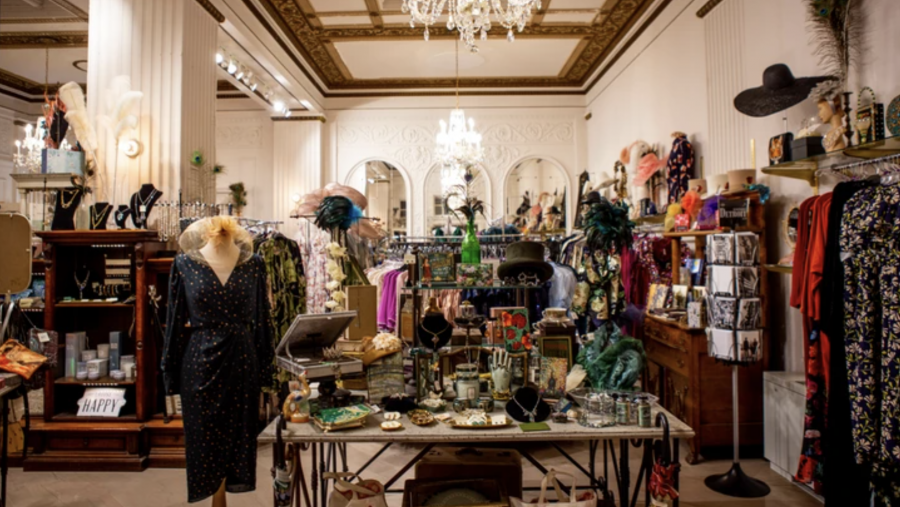
The Peacock Room that left Detroit 100 years ago lives on today in Rachel Lutz’s boutique.
When looking for a name for her business, Lutz referenced Detroit art collector Charles Lang Freer, who first brought the Peacock Room to Detroit as a part of his art collection.
Now the shop has evolved, making a name for itself with careful curation, styling expertise and intimate knowledge of the stories behind the pieces sold. The New York Times recently included The Peacock Room in a list of 25 favorite stores across the country.
Rachel Lutz joins the show to talk about Detroit history, what’s behind the success of her store and what lays ahead.
The origins of The Peacock Room
In 1876 and 1877, Harmony in Blue and Gold: The Peacock Room was completed by artist James McNeill Whistler.
It was originally a dining room in the London home of Frederick Richards Leyland, a wealthy shipowner from Liverpool, England. The room was to house Leyland’s priceless Chinese blue-and-white porcelain.
But while Leyland was away, the room became a fresh canvas. Whistler covered the ceiling with imitation gold leaf and peacock feathers, gilded the shelving, and painted peacocks across the shutters.
Leyland became infuriated and the two men feuded over the work and the bill for the rest of their lives. It remained intact in Leyland’s home until his death in 1892.
Charles Lang Freer, patron of the arts.
Enter Charles Lang Freer, a Detroit railroad-car manufacturer and later a student of art. He was an avid collector of Asian and Middle Eastern art works and bought The Peacock Room in its entirety. Freer had it shipped to his home on East Ferry Avenue in 1904. It remained in Detroit until 1919.
The room currently is on display in its entirety in the Freer Gallery at the Smithsonian’s National Museum of Asian Art.
Detroit’s new Peacock Room
Rachel Lutz’ retail store The Peacock Room pays homage to Charles Lang Freer’s vision of collecting and the room Detroit lost. Located in The Park Shelton and Fisher buildings, since 2011, Lutz has curated her spaces like galleries.
This fall, The Peacock Room Antiques Studio opens in the Park Shelton, which will be an event-driven destination for collecting, education and community.
The Peacock Room sells accessories, clothing and dresses in a vast range of sizes and price points.
Hear the full conversation using the media player above.
Listen to The Metro weekdays from 10 a.m. to noon ET on 101.9 FM and stream on-demand.
One-of-a-kind podcasts from WDET bring you engaging conversations, news you need to know and stories you love to hear. Keep the conversations coming. Please make a gift today.
The United Farm Workers Foundation, which advocates for farm workers and immigrants in the U.S., recently released a survey finding most farmworkers are worried about detention and deportation because of the Trump administrations latest immigration crackdown.
Anna Hill Galendez is the managing attorney at the Michigan Immigrant Rights Center. She leads the team providing legal services to farmworkers throughout Michigan.
“So while we haven’t seen large-scale raids at agricultural sites in Michigan during this administration, the constant threat or potential threat of that enforcement has really created a chilling effect and climate of fear for farmworkers in Michigan,” says Galendez.
The UFW Foundation surveyed over 2,200 farm workers in 12 states including Michigan. The survey found that beyond deportation, people are afraid of seeking medical help, shopping or using social media. Many have been working in the U.S. for more than 10 years.
Additional headlines for Monday, Aug. 10, 2026
ProsperUs Plan to Profit
The nonprofit ProsperUs Detroit is hosting a Financial Readiness Accelerator program. The free 3-week program is for entrepreneurs who face financial barriers or have limited access to resources. The courses will cover how to build credit, manage debt and prepare for future funding.
The cohort will be held Sept. 9 through Sept. 23 on Wednesdays between 10 a.m. and 1 p.m. The courses will be held at the JHub at 950 Selden Street.
Democratic Senate nominee Abdul El-Sayed says he spoke with former President Barack Obama and hopes Obama will campaign with him and other Michigan Democrats. El-Sayed told NBC’s Meet the Press the conversation was warm and inspiring.
Obama did not endorse anyone in the state’s primary election. El-Sayed’s main Democratic rival, Congresswoman Haley Stevens, campaigned on her ties to the Obama administration, where she worked on reviving the auto industry. El-Sayed faces Republican Mike Rogers in November.
-Reporting by Pat Batcheller
Work summit for refugees, immigrants
Registration is open for a workforce summit which aims to create networking opportunities for refugees and new immigrants.
The Southeast Michigan Immigrant and Refugee Collaborative is hosting the 2026 Opportunity Workforce Summit to introduce refugee and immigrant job seekers to employers, workforce organizations and educational institutions.
The event takes place Sept. 22 from 10 a.m to 3 p.m. at the Schoolcraft College, mVistaTech Center in Livonia, Michigan.
Wellness summit
A global movement is bringing a wellness summit to Detroit in October. The Hearth Summit Detroit is focused on communal wellbeing through art and reflection.
Event organizers hope to attract 200 changemakers from Detroit and Wayne County to discuss art, philanthropy and mental health. The organization says they want educators, entrepreneurs, artists and mental health practitioners to work toward a more just and equitable society.
As of last year, there have been 27 regional summits hosted in 18 countries. The event in Detroit will take place Oct. 8-10 at the Kintsugi Village in Corktown. People can sign up at hearthsummitdetroit.com.
Listen to the latest episode of the “Detroit Evening Report” on Apple Podcasts, Spotify, NPR.org or wherever you get your podcasts.
Support the podcasts you love.
One-of-a-kind podcasts from WDET bring you engaging conversations, news you need to know and stories you love to hear. Keep the conversations coming. Please make a gift today.
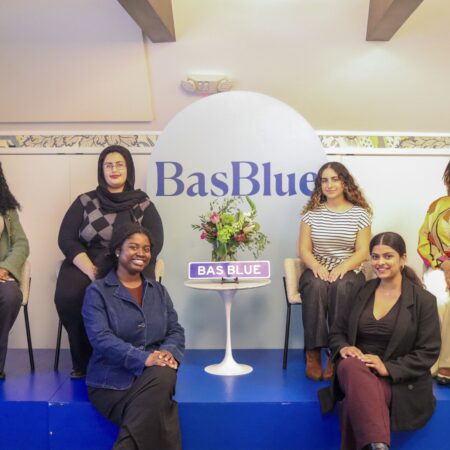
BasBlue, an organization of women and non-binary individuals, celebrated a five year anniversary by focusing on their Future Founders and Future Leaders program.
Ellen Gilchrist is the Chief Executive Officer of BasBlue. Gilchrist says finding solutions to problems begins with self determination. “When you find your passion, it pushes you forward,” Gilchrist says.
Fatoumata Sacko is an entrepreneur of Katii Café, a Malian inspired tea cart. Sacko is also a BasBlue Future Leaders member. She says networking with peers and learning from mentors motivated her to push forward with her business.
They join The Metro to discuss how the business ideas and professional networks of people should be nourished from an early age to increase odds of success.
Hear the full conversation using the media player above.
Listen to The Metro weekdays from 10 a.m. to noon ET on 101.9 FM and stream on-demand. Never miss an episode – subscribe to The Metro onApple Podcasts,Spotify,YouTube,NPR, or wherever you get your podcasts.
Support the podcasts you love.
One-of-a-kind podcasts from WDET bring you engaging conversations, news you need to know and stories you love to hear. Keep the conversations coming. Please make a gift today.
Mark Lee runs The Lee Group, where he has advised small businesses in this region for nearly 20 years. He joins host Robyn Vincent to talk tolls, tariffs, Delray, and whether Canadian visitors are coming back.
Hear the full conversation using the media player above.
Listen to The Metro weekdays from 10 a.m. to noon ET on 101.9 FM and streaming on-demand. Never miss an episode — subscribe to The Metro onApple Podcasts,Spotify,YouTube, orNPR, or wherever you get your podcasts.Have thoughts? Email the show at metro@wdet.org
Support the podcasts you love.
One-of-a-kind podcasts from WDET bring you engaging conversations, news you need to know and stories you love to hear. Keep the conversations coming. Please make a gift today.
The City of Detroit has announced a three year, $9.2 million investment to help unhoused families move out of emergency shelter and into stabilized housing. The Homeless to Housed initiative will provide families with 6- 12 months of rental assistance, help them find a home, and provide additional support along the way.
The program touts that it will assist up to 140 households each year with this program, which is approximately 500 Detroiters each year.
In a press conference for the program, the city’s first ever Chief Executive of Health, Human Services and Poverty Solutions Dr. Luke Shaefer says this program is about more than providing shelter. “Its about creating pathways to stability. The mayor has challenged us to build a system where homelessness is rare, brief, and non recurring.”
Shaefer also describes how they were able to fund this program. “This didn’t happen by accident…it happened because dedicated public servants were willing to rethink how we use available resources, they strategically aligned federal emergency solutions and grant funding to launch the Homeless to Housing initiative leaning into the mayor’s charge to us.”
Priority for this program will be given to families with minor children. This program is also expected to free up space in existing shelter homes to provide assistance to other Detroiters facing homelessness.
Additional headlines for Thursday, July 30, 2026
Small business summit
The city of Detroit is hosting a micro and small business summit on July 31 at the Wayne County Community College District Northwest Campus.
The summit is part of the Office of Contracting and Procurement, and it’s part of an effort to build Detroit based micro and small business industries.
The free event will provide attendees an opportunity to interact with funders, banks, and partner organizations including Goldman Sachs, First Merchant bank, the Detroit Development Fund, the Detroit Economic Growth Corporation and the Small Business Association.
For more information and to register go to detroitmi.gov.
Sports
Detroit City FC faces Miami FC on Saturday, Aug. 1 at Pitbull Stadium in Westchester Florida. Also, the club soccer team’s development of their new home stadium broke ground earlier this month.
The AlumniFi Field will hold 15,000 seats, an increase from Keyworth stadium that only holds 7,000 seats. It will also be the city’s first soccer-specific stadium, and the state’s only privately owned major sports stadium. The project also includes a 421-space parking garage and a 104-unit residential building with 76 affordable housing units.
Completion of the stadium was slated for spring of 2027 but its now slated for 2028 USL Champion season.
Sports
MLB
And the Tigers efforts to climb up the American League Central division stalled a bit with a high scoring loss to the Baltimore Orioles yesterday 10-9.
They now face the Athletics in a 3 game weekend affair at Sutter Health Park in West Sacramento, California. First pitch for tomorrow’s game is at 9:40 p.m. EST.
Talk it Out Walk it Out
And on Saturday August 1 from 10:30 a.m. to 3:30 p.m., the Charles H Wright Museum of African American History is hosting Talk it Out Walk it Out. This free admission event is an annual community conversation and awareness walk to highlight health disparities impacting Black women.
The event serves as a start to Black Women’s Health Month in Detroit. The event is being held at the museum.
Listen to the latest episode of the “Detroit Evening Report” on Apple Podcasts, Spotify, NPR.org or wherever you get your podcasts.
Support the podcasts you love.
One-of-a-kind podcasts from WDET bring you engaging conversations, news you need to know and stories you love to hear. Keep the conversations coming. Please make a gift today.
One-of-a-kind podcasts from WDET bring you engaging conversations, news you need to know and stories you love to hear. Keep the conversations coming. Please make a gift today.
New tariffs and threats to annex Canada were the concerns small businesses at the last Mackinac Policy Conference. This year, those concerns persist, plus you can tack on the high cost of gas.
However, CEO of the Small Business Association of Michigan, Brian Calley, says the rising cost of employee healthcare is the looming giant for employers. He spoke to WDET about the issues surrounding small businesses and his views on how to support them.
Listen: Brian Calley speaks to Russ McNamara at the Mackinac Policy Conference
The following interview has been edited for length and clarity
McNamara: Last year when we talked, we were absorbing a fight with Canada and tariffs. This year it’s high oil prices, high gas prices. How are small businesses doing after one year of uncertainty?
Calley: Uncertainty is always hard for small businesses to fight through, but I would add something to that list, which I think even eclipses the collective impact, and that is the rising cost of health care. If you’re to talk to a person who has employees and provides benefits to those employees, which is most small businesses, they are buckling under this year over year over year increased costs. We just did a survey with our members to ask, what does that mean, where are they at? They tell us it’s hindering their ability to grow and to add to their team. They put all their capital growth and their margin toward paying next year’s increases. The increase is on the order of what it would cost to bring on a new employee or two, and so that’s huge. But then now we’re finding 42% of our members in our last survey said that at the current rates they’re one to three years away from being able to offer it at all, and that’s a massive, massive change, and so we’re trying to raise the alarm on this. This is the most talked about thing by small business owners, at least those with employees that gets very little attention or discussion out there in the landscape. These other issues are difficult to deal with, but this one is widespread across this across the board.
McNamara: Two questions: What can the state do, and what do you need from the federal level?
Calley: At the state level, which seems to be the more realistic place to make something happen, at least at the moment. Couple of things: when insurance companies file for their rate increases, you can look under the hood, you can see exactly what’s driving the cost, and we know it’s utilization and the cost per service, so we need to look upstream from there. What is driving that? We need to be able to look under the hood of upstream costs, and we’ve seen definitely more consolidation among the health systems, where you have a handful of huge conglomerates that control most of the health care system, and vertical integration, so from your local doctor all the way through to very complex surgical cases, it’s all controlled by a very small number of entities, and with that consolidation, you’ve seen costs rise a lot faster than regular inflation, and so that’s something that we really need to get a handle on.
A lot of states have transparency rules, so they can make the appropriate adjustments and policy to deal with these cost increases. We need something like that here. The other thing that could be changed is to allow small businesses of multiple industries to band together to create their own insurance risk pools, like a big company does. So, if you have a large company, they might use an insurance company to manage their claims, but their employee base is their own risk pool. Small businesses are too small to do that. And so the law could be changed to allow unrelated businesses to pool together, and at least at that point they could have more control over plan design and cost containment and wellness initiatives and negotiation power with networks. This would be an important change that we’re hoping the state will consider.
McNamara: Will Matt Hall listen? Will Governor Whitmer listen? Are you already planting the seeds for this with the current gubernatorial candidates?
Calley: We’ve been talking to all the leadership about these issues, and there are things that are happening. We know that on the transparency side, Speaker Hall has indicated and talked a lot about moving forward with something in this arena. With the Senate Democrats, who are in control of that part of the legislature, have introduced legislation to allow that multi-industry pooling of small businesses. So, we do think that there’s good bipartisan support for this.
Small businesses is of those constituencies that, across the political spectrum, Republicans and Democrats appreciate in their community, and I think generally and genuinely want to be successful. We’re hopeful that even during these partisan times that initiatives that can help small businesses move forward and to grow and to sustain will be embraced by all of them.
McNamara: What kind of feedback are you getting from Michigan’s congresspeople like Moolenaar, Dingle, McClain, Huizenga? What are they telling you? They listen to you. They know you.
Calley: And I served with some of them in the state legislature, and this is an issue that I know they care deeply about, and there is legislation that same small business pooling, they call them association health plans at the state level, would be called a MEWA, or Multiple Employer Welfare Arrangement, those bodies of work enjoy support among our delegation. In fact, Congressman Walberg from Michigan has introduced legislation to do it at the federal level. It’s not a lack of will, it’s a lack of the ability of that system to move forward to make big changes in the health care arena. It just seems to be difficult to get it off the ground with the broader group, and that’s why our main focuses are at the state level, can kind of get your arms around that, and you can visit the capital, and all of those people represent folks in Michigan, and our delegation, they do a lot of great work, and they care a lot about small businesses, but there’s such a small fraction of the entire body that makes those decisions, and so it’s much harder to move things through that. I think if we are going to make changes that, in the short term, that impact small businesses is more likely to be at the state level.
McNamara: Is there something else on the state level that can be done, at least in the short term to help these small businesses to deal with the transportation costs and the like?
Calley: In terms of transportation costs specifically, it’s difficult to establish a state policy to reduce gasoline prices, for example, just because we’re talking about a global marketplace of commodities. But there is also bipartisan work that’s happening in the House and the Senate to move the Michigan Strategic Fund, which is the fund that does incentives for these big deals, to move the focus of that more to support for small businesses, and we think that that’s a smart bet. It’s one thing to try to convince somebody from someplace else to come in here and save us, but what we say is we don’t need that.
What we need is for those that are already here to do well. That’s our best bet, and people that have already made their lives here, they’ve already put their name and reputation and their mortgage of their house on the line in order to make this business go, they’re fully vested, and so their success is our best bet. Our entrepreneurship scorecard report showed yet again this year that when it comes to job growth, that the most reliable and dependable and consistent job creators are small and medium-sized businesses, and it makes a lot of sense, because in a lot of cases, they don’t even have options to go other places. This is where they’re at, this where they’re known, where they have their contacts and their customer base, and it’s not easily transferable to someplace else. If they’re successful, our communities will be successful, workers will be successful, the state will be successful.
McNamara: So, instead of swinging for the fences, maybe settling for some singles and some doubles.
Calley: I think that the small business support is the home run, because it’s more of a sure bet when you put the support and the resources here, when you create an environment of success around the people that are already here, it’s gardening. When you go out hunting, you may or may not see something, you may or may not get something, but when you’re gardening, if at least if you know what you’re doing, that’s going to pay dividends over the long term.
And by the way, even the big companies all started out as small companies. When you think about the corporate names that are known all over the world from Michigan, we’re so thankful to have them. Companies that started here, like Dow or Meijer or Kellogg or Gerber or Ford, Striker. These are huge corporate names around the world, but to us here in Michigan, those are family names. In many cases, the family’s still around and involved, which is incredible.
And so, at the Small Business Association of Michigan, we think of those companies as part of our heritage. They didn’t start out big, they made it big, and they changed the world. If you support small businesses, then the next one that makes it big is going to be somewhere in that group, and you can’t predict who it’s going to be, so you might as well just make the environment of success around all of them, instead of trying to pick which one, which industry. The government’s never been successful in knowing where the economy is going to go.
McNamara: Too slow to react.
Calley: Yeah, that’s the thing. When things move, they do move fast, and it’s about being well positioned to support people as they grow and they innovate and they change, as opposed to trying to decide ahead of time which one is going to grow and innovate and change in a way that makes a big difference in the economy. There’s so much research and data around economic gardening. When you create the environment of success around the entrepreneur, you will have more economic success collectively.
Trusted, accurate, up-to-date.
WDET strives to make our journalism accessible to everyone. As a public media institution, we maintain our journalistic integrity through independent support from readers like you. If you value WDET as your source of news, music and conversation, please make a gift today.
It is one of the older and more uncomfortable patterns in working life: women in power sometimes pull the ladder up behind them, leaving the women coming after stranded.
Research shows it’s less about gender than about scarcity — about what happens when there are only so many seats at the table.
Fast forward to this moment, when Michigan has more women in power than ever: a woman governor, a woman secretary of state who has a good chance to be the next governor, a woman attorney general, a woman leading Detroit for the first ever. Many of them are here at the Mackinac Policy Conference this week. So today we’re asking: when women finally get power, how do they keep the door open for others?
North joined Robyn Vincent to discuss.
Listen to The Metro weekdays from 10 a.m. to noon ET on 101.9 FM and streaming on demand.
One-of-a-kind podcasts from WDET bring you engaging conversations, news you need to know and stories you love to hear. Keep the conversations coming. Please make a gift today.
The Becharas Brothers Coffee Co. is celebrating 112 years of business this year. It was founded in 1914 by to Greek immigrant brothers in Chicago. They invited their nephew move the states as well to come work with them in the 1920s. It was him, Dean D. Becharas, who opened a branch in Detroit and then later Highland Park.
Today the Highland Park roasting plant is the last remaining location of the company, and the last institutional roaster in the metro Detroit area.
Nick S. Becharas is the CEO and president of the company. He is the third-generation owner along with his brother, Dean, and is two sisters, Demi and Stephanie. The family business spans across four generations, as Nick’s son, who is also named Nick, and his nephew Paul are also on site daily.
“It’s a real sense of pride for us to have this kind of longevity and sometimes we take a little bit for granted, until people bring it to our attention,” Nick said.
Coffee is staged to test and make sure it meets the standards at Becharas Brothers Coffee.
CEO and President of Becharas Brothers Coffee sits down with Bre'Anna Tinsley to discuss his families coffee buisness.
The original spoon used for sampling coffee by Nicholas D. Becharas's grandfather is still used today.
Many of Becharas Brothers coffee beans are sourced from Hondauras.
Coffee beans ready to be roasted at Becharas Brothers Coffee.
Photos by Isaiah Lopez/WDET.
The families most prized long-standing tradition in the business is the cupping table. It’s a large, wooden table that spins—kind of like a lazy susan. It’s where they taste and test every bean that is shipped into the factory before it hits the roasting floor.
Hanging over the table is a picture of Nick’s great uncles cupping coffee.
“Yeah, that’s my same table. My two great uncles doing the same thing that we’re still doing almost 100 years later,” Nick said.
This story was originally made for the ear. We encourage you to listen to the full piece using the media player above.
Support local journalism.
WDET strives to cover what’s happening in your community. As a public media institution, we maintain our ability to explore the music and culture of our region through independent support from readers like you. If you value WDET as your source of news, music and conversation, please make a gift today.
All of this comes after months of tariffs, rising healthcare premiums, and an unsettled workforce.
Mark Lee runs The Lee Group, where he consults with small businesses across Southeast Michigan. He spoke with Robyn Vincent on The Metro about what another month of pain at the pump is doing to the businesses he advises. Lee is also hosting his 12th annual Small Business Workshop on May 13 at the Corner Ballpark in Detroit — a free, half-day event for local entrepreneurs and business owners navigating exactly this kind of pressure.
Hear the full conversation using the media player above.
Listen to The Metro weekdays from 10 a.m. to noon ET on 101.9 FM and streaming on demand.
WDET strives to cover what’s happening in your community. As a public media institution, we maintain our ability to explore the music and culture of our region through independent support from readers like you. If you value WDET as your source of news, music and conversation, please make a gift today.
Highland Park is a small city that once had a relatively large population for its size. At the height of Detroit’s automotive boom, more than 50,000 people lived within Highland Park’s 2.9 square miles. Today, the population is less than 9,000.
WDET’s Crossing the Lines series features conversations with and stories about Highland Park’s people, culture, and history.
Detroit Public Radio’s Citizen Vox project gives residents a chance to express how they feel about their communities and the issues that matter to them.
WDET’s Pat Batcheller spoke with Highland Park resident Ken Bates at a coffee shop on Woodward Ave. on April 10, 2026.
Listen: Highland Park resident says smart planning can reduce poverty
Bates was born in Detroit but moved to Highland Park with his wife more than 25 years ago. They bought a Craftsman-style bungalow in a historic district of the city. Voters elected Bates to the city council in 2018, where he served until 2022. He chairs the board of an energy nonprofit called Soulardarity. Its mission includes installing solar-powered streetlights in Highland Park’s neighborhoods.
Bates shares his thoughts on housing, poverty, community pride, and development.
Ken Bates: We know that there’s a housing crisis, a housing shortage nationally, affordable housing. Highland Park has an abundance of land that is underutilized, that really could be put forth in terms of development. So, we could look at land trusts. We could look at affordable housing, low-income housing, market rate housing, duplexes to grow the population because that’s what we have in abundance.
Manufacturing? I doubt that will ever come back to the extent that Henry Ford and Chrysler and some of the other manufacturers had here. That’s a bygone era.
And so, we have to look into the future as to what will help Highland Park become sustainable. What kind of industries should we count on?
You have to get education on board. You have to get private development. You have to get your government funding all in order, and you have to have a plan and a vision and the expertise in order to do it.
If not, you’re just maintaining the status quo. And year after year, you’re just one disaster away from some financial calamity, whether it be a natural disaster or something like the Great Lakes Water Authority suing us for $19 million and threatening to put it on our tax rolls.
Pat Batcheller: What do you like about being in Highland Park?
KB: Highland Park is centrally located. It’s convenient. There’s a sense of—like with my block, I never expected it to be so diverse. And yet you’ve got immigrants, you’ve got people of different faiths. You’ve got people who are ascribed to different lifestyles. I mean, it just it goes on and on, different political beliefs, and we all live together in the same community, and we’re able to communicate and talk and look out after each other.”
PB: From the conversations I’ve had with you and some of the other folks I’ve talked to, it isn’t really the borders that define Highland Park, it’s the people. Would you agree with that?
KB: Well, yeah, I would say the people do define Highland Park because, because again, they’ve been here. Most have been here quite a long time. And even if you travel outside of Highland Park and talk to people that formerly lived here, many people will tell you, ‘Yeah, my grandparents lived here.’ They remember it as a great city. They’ve had fond memories.
The historical district is obviously something that has gained attention. People are looking at those homes and, if they have the means to renovate them, are coming in and deciding, “well, let’s renovate this home.” Because you can’t rebuild those anywhere for anything that I would consider reasonable.
Highland Park has just had its own identity for a long, long time. And so, I can’t see that changing because it would be so difficult to incorporate us into the Detroit culture. We’re not Detroit. We’re not Hamtramck. We’re Highland Park.
PB: What’s the most pressing issue facing Highland Park right now?
KB: It’s poverty. You’ve got to figure out how to raise people’s incomes up, so to speak, their standard of living. So, whether it be through employment, homeownership, because poverty impacts everything around us. For example, ALDI is usually out of shopping carts because people abscond with them. If you’re running a business, that’s not helpful. We were fortunate in that Foot Locker moved into the old CVS building because CVS, Rite-Aid, and another drugstore left.
Convincing businesses to come here is a real challenge because the landscape has changed. Brick and mortar stores aren’t necessarily how people are going about retail experiences. You would think that we would have a thrift shop or something of that nature in a community like that. We don’t.
So, trying to look at trends that will allow people to be gainfully employed, increase home ownership, educate their children are things that should be made priority.
The appearance of the city has to change because we have a lot of blight. We had a press conference celebrating the announcement of Highland Towers on Woodward being torn down. We’ve got to have news that is uplifting, that is showing progress now. Yes, the building should be torn down because it’s caught on fire sixteen years ago. But we need to be announcing opportunities for growth projects that will bring about change.
Support local journalism.
WDET strives to cover what’s happening in your community. As a public media institution, we maintain our ability to explore the music and culture of our region through independent support from readers like you. If you value WDET as your source of news, music and conversation, please make a gift today.
WDET reporters have been visiting the city since March, getting to know Highland Park, its history, and its people. These conversations are part of our Crossing the Lines series, which explores what unites and divides metro Detroit as a region.
Highland Park is a city within a city, an enclave of Detroit. At its peak, more than 45,000 people lived in Highland Park, mostly auto workers. Ford and Chrysler called the city home for years. When they moved out, people left in droves. Today, the population is less than 9,000.
One person who stayed is Glenda McDonald. She came to Highland Park as a child in the 1970s and still lives in the city. Voters elected her mayor in 2022.
WDET’s Pat Batcheller spoke with the mayor about her life in Highland Park and her efforts to make the city better.
Listen: A conversation with Highland Park’s mayor
People, not borders, define the city.
Pat Batcheller: How has Highland Park managed to survive as a city despite enormous financial challenges?
Mayor Glenda McDonald: It’s a place where you come and you’re in a neighborhood, but it’s also a city, so everybody in the city rallies around each other, supports each other. We get our support from our partners, Wayne County, the state of Michigan, and others. And they continue to believe in the city, just like I know that right now, I’m believing in this city, and we’re going to move forward, and it’s going to continue to grow.
PB: What makes you believe in it?
GM: I believe because I’ve been here, I saw what the possibilities are, and I know the endless possibilities for Highland Park. You don’t find a place like this, like the housing stock is 100 years old and it’s still standing and they are beautiful. You don’t find neighbors and community the way you do here. This is one community, and that’s what I use as one of my models, is we are one community, even though it’s 2.9 square miles. I know a person on every single street here. You can’t find it in Detroit because it’s so large.
PB: So, it’s not just the borders that define the city, that make it unique?
GM: It’s the people. The people make it unique. It’s hard to explain that we love each other. We take care of each other when it when it’s necessary, and then also we can disagree with each other and move forward and continue to move forward.
Grow the tax base
PB: No city can survive long without a stable tax base at a stable population. As mayor, what are you doing to keep businesses and residents that you already have here and then attract new ones?
GM: One is to make sure that everybody knows that they’re loved and needed here. That’s one thing we have to do is to make sure that people in those businesses and in this community understand we are a people of unity. And you know, we have to make sure that they all already know, that they’re doing a service for folks that some other people are not willing to do.
And a lot of people stay here because they just love the space, they love the area. They love the fact that Highland Park is just a small community.
Yes, our budget is low right now, but it’s not going to always be that way, and that’s the hope for the future. And people that stay here know that there’s a future.
Fix the infrastructure
PB: Tell me about some of the work that’s going on in Highland Park.
GM: We’re replacing every lead line in this city. We were blessed to get some appropriations from the State of Michigan, and they are having us replace every single lead line in the city. Some of them were over 100 years old. Some were wood. There was, at one time, a lead problem, but there’s not anymore. We have our testing, and our testing show that there’s not lead in the water so. But it’s inevitable that [the lead lines] need to come up, because there’s popping going on.
You know, we have water main breaks, like every other city. And so, at this moment, it’s a great thing to be able to change. And that will help businesses come here, because they didn’t want to come to a failing infrastructure that they would have to replace on their own. Right now, it’s being replaced.
It’s a good opportunity for everyone to come now and start the developments that they would like to see, to start the growth of Highland Park again, get in on the ground floor and be the beacon of light for Highland Park.
A sign breaks down the city of Highland Parks water main replacement project.
PB: This was something that you’d been going back and forth with the Great Lakes Water Authority (GLWA) for years. You were looking, as I recall, at the prospect of maybe having to go through bankruptcy if you couldn’t work all that out.
You did make a deal. As you mentioned, the state came in with $100 million to help pay off not only the debt [to GLWA], but to fix the root cause of the problems. If you had not been able to secure that money, would Highland Park still exist?
GM: I think it would. I mean, we’re resilient. If we couldn’t go in directions that we needed to go, we could always find another direction. We have been surviving now with this water situation for 20 years. It’s been ongoing and ongoing, and I decided, and along with my team, we’re going to put an end to it right here in some kind of way. And so we got that tentative agreement taken care of.
We’re working with the state. We’re working with GLWA, and hopefully we’ll continue that moving forward. I would say that I would have used whatever was necessary for us to do, to survive in Highland Park, to stay alive.
The state took over in 2001
PB: Going back the beginning of the century, the state appointed an emergency manager for the city that lasted about eight years and then state returned control. That fixed some of the immediate problems, but it didn’t really fix all of the financial difficulties. What did the state get wrong?
GM: Emergency management! I mean, I think the biggest issue we had was that eliminating the things that brought people to the city or kept people here caused a flight. And that would be a reason for the decline of revenues.
So, I think if it should have been a different plan of, how do we keep people in the city? What do we do to make sure that the children, the working-class people, the seniors, and everyone else benefit from what we’re about to do? And I didn’t see a benefit in that. I think that especially closing our library, that has been a devastating point for the city of Highland Park.
PB: What kind of shape is the [McGregor Library] in after being closed this long?
GM: Well, we did have an evaluation done, and there are some things that need to be done to it, to get it back in place. And it will take some doing. But it’s not impossible to do.
Attract business
PB: Do you have any businesses coming in in the near future?
GM: Yes, we have, I think, three that’s going to be opening up by the summer. One, there’s a coffee shop coming. Two, there’s going to be a restaurant, and three, there’s going to be a juicing bar, all coming in the same building. One of our developers has a building that has a mixed use at the bottom, and he’s starting to rent it out. So there will be spaces there for them and other businesses that are in the queue.
Here to stay
PB: You say you’ve been here since you were 11. Why did you stay when so many other people left?
GM: Why should I leave? That’s the question. I mean, I own my home. I raised my children here. They were born here in Highland Park. Well, they were born in hospitals, but they grew up here, and it’s beautiful place to me.
It’s the people. You can’t match the people here that stay in Highland Park. They’re resilient, they’re loving, they’re kind, and we take care of each other. Like I said, we have our issues sometimes, but all in all, we love Highland Park, and I love Highland Park.
My children have started to convince me to leave for years, and I will not. I don’t want to go to Atlanta. I don’t want to go to North Carolina. I don’t want to go to where they are. I want to stay right here in the city that raised me and bring it back to where it should be so future generations can feel the same way I feel when they’ve been here 54 years.
Highland Park City Hall sits on Woodward Ave.
PB: What gives you pride in Highland Park?
GM: Everything. The people, the places, the possibility. I have a connection to every aspect of the city, the industry, the auto industry, everything like that, is something that has been a part of my life since I’ve been here. The schools, bringing back the school system, Highland Park Public School System, and we’re still working with the charter system that we have.
We are people who believe in in good things. We are people who believe that things are possible. And I’m one of those people that believes that things are possible if you just put your mind to it. It’s a challenge, but it’s a good challenge. As long as I live here, I’m going to do whatever I have to do to try to make sure that the city survives.
What happens in Detroit affects Highland Park
PB: Even though Highland Park and Detroit are different cities, their fates seem to be intertwined. The things that happen in Detroit have an effect here. We do now see some things, some progress in Detroit. Do you hope that Highland Park will benefit from that?
GM: I know it will. We’re the next leg of the development chain they have developed from Woodward downtown all the way up to the north end in Detroit. And when you’re the nucleus of a large city—and we call ourselves the capital of Detroit because we sit right in the middle—everything affects us. Because you can’t go to Pontiac without coming through Highland Park, leaving from downtown. Even coming through a freeway, you’re going to enter Highland Park off of Chrysler. You’re going to enter Highland Park off the Lodge. You’re going to be connected to the Davidson, which was the first freeway.
We have a connection that is like a bond. What affects them affect us, and that’s why we need to be working together to make sure that every aspect of this is healed, and Highland Park needs to be healed, and that’s what I see for it. I see a healing coming.
PB: Why wouldn’t being physically part of Detroit foster that healing.
GM: Blasphemy! I had to clutch my pearls. I’m sorry [laughs]. Because then it wouldn’t be Highland Park. Most people in Highland Park do not claim Detroit.
I love Detroit. Don’t get me wrong, I go to visit there. But if it’s just looking at Detroit, then you’re missing out on the opportunity to see what Highland Park has to offer, what Hamtramck has to offer. And I’m not advocate. You know, I love Hamtramck too, but my city has a lot to offer, and you miss out on that.
Everywhere I travel, the first thing they say is, “where are you from?” I said, “Highland Park.” “Oh, you’re from Detroit?” “No, I’m from Highland Park. And you need to look that up.”
PB: So, sell me. If I’m looking for a place, either to open a business or perhaps buy a home, what does Highland Park have to offer?
GM: Highland Park has a lot to offer. We have two corridors that are ripe for the picking right now to run a business. You have Woodward Avenue. There’s over 100,000 people who travel up and down Woodward Avenue every single day. And then you have Hamilton Avenue, which is what we used to call the antique row. We had all of these small businesses, and we’re building back that. We have a lot of people ready to build up on Hamilton.
Our housing stock here is one of the best in the country. We have had people travel from across the country to come buy houses. When we’re selling in the auction, we get people from California, from everywhere, who has done the research about Highland Park and the stock here, and why you can’t beat this. For the price of a house that you get here, you’re going to take that house and pick it up and put it in California, and it’s going to be $500,000 to almost $1 million.
So yes, you have to come here. You have to check out what we have. As far as housing stock, it’s amazing. It’s beautiful. We have Craftsmen houses. I live in a Craftsman bungalow. Those houses are very unique. We have Tudors, we have Colonials, we have a variety of housing here. We even have ranches and smaller ones, but they are here. So that’s the uniqueness of Highland Park. There’s every type of house that you imagine.
Support local journalism.
WDET strives to cover what’s happening in your community. As a public media institution, we maintain our ability to explore the music and culture of our region through independent support from readers like you. If you value WDET as your source of news, music and conversation, please make a gift today.

 Login
Login