
 Login
LoginDetroit Evening Report: Trump says he use executive order to pay TSA agents during partial government shutdown
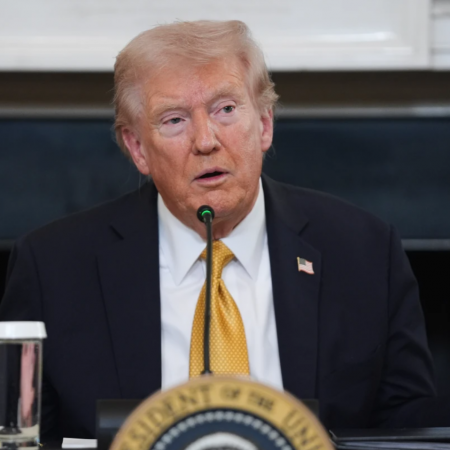
President Trump announced on Thursday that he will sign an executive order to pay TSA officers during the ongoing shutdown impacting the Department of Homeland Security.
On his Truth Social platform, he said his order will instruct the Secretary of Homeland Security Markwayne Mullin to pay the TSA agents in what he calls an emergency situation.
A senior administration official said the money provided by President Trump’s Reconciliation Act, also known as the Big Beautiful Bill, will be used to pay TSA officials.
This comes as the president signed an executive order asking federal contractors to eliminate diversity, equity, and inclusion practices. Since the beginning of his presidency, Trump has targeted public and private organizations over DEI practices despite multiple experts and advocates showing DEI practices help address historic inequities for marginalized groups.
Additional headlines from Friday, March 27, 2026
Netflix raises prices
Netflix is raising U.S. Prices for the second time in less than two years. The new pricing was on their website on Thursday.
The standard plan with ads will go from $7.99 to $8.99. The standard plan without ads will go from $17.99 to $19.99. And the premium plan is going from $24.99 to $26.99.
According to Variety, the higher pricing shows Netflix is confident that they that this increase won’t turn away too many subscribers from the biggest subscription-streaming platform in the world with 325 million customers.
The increased pricing will be applied for both existing and new members.
Sports
March Madness
Both Michigan and Michigan State have made it to the sweet 16. Things will be even sweeter if they make it
to the elite 8.
But first No. 1 Michigan will face No. 4 Alabama at 7:35 p.m. EST at the United Center in Chicago. And No. 3 Michigan St. Will face No. 2 UConn tonight at 9:45 p.m. at Capital One Arena in Washington DC.
NBA
The Pistons dominated the New Orleans Pelicans with the score 129-108. Now all they need to do is win at least five more games to clinch the No. 1 seed of the Eastern Conference.
They are 4.5 games ahead of the Boston Celtics. Cade Cunningham, who is out because of a collapsed lung, is projected to get back by mid April according to reports.
The Pistons play again tomorrow against the Minnesota Timberwolves at 5:30 p.m. EST at the Target Center.
MLB
The Detroit Tigers opened up the season with a dominate win over the San Diego Padres. Final score was 8-2. They play again today at 9:40 p.m. EST at Petco Park.
Soccer
Detroit City FC face off against the Charleston Battery tomorrow at 4:00 p.m.
Hip Hop night
And tomorrow, March 28th 2026 is HipHop night at Big Pink. DJs Mobeatz, Auset, and Stardust are on the line up to play some of the best hip hop hits that are circulating playlists.
The event starts at 10 p.m. tomorrow and it’s for folks 21 and up.
Listen to the latest episode of the “Detroit Evening Report” on Apple Podcasts, Spotify, NPR.org or wherever you get your podcasts.
Support local journalism.
WDET strives to cover what’s happening in your community. As a public media institution, we maintain our ability to explore the music and culture of our region through independent support from readers like you. If you value WDET as your source of news, music and conversation, please make a gift today.The post Detroit Evening Report: Trump says he use executive order to pay TSA agents during partial government shutdown appeared first on WDET 101.9 FM.












 Majestic Theatre
 March 27
 $33+
$33+