
โŒ

Reading view

There are new articles available, click to refresh the page.

Zaman International marks 30 years of fighting poverty with annual Run Walk Picnic in Dearborn

Around 1,000 people gathered in Dearborn Saturday for Zaman International's annual Run Walk Picnic, marking 40 years since the Inkster-based nonprofit began its mission to help families in need.

The event was a celebration of community, compassion, and years of creating hope. Today, Zaman operates in 25 countries, helping women and children break the cycle of poverty and build better futures.

Christel Ciolino and her mother, Jean Ciolino, said running the event's 5K is their annual tradition.

Watch Faraz Javed's report in the video player below: Zaman International celebrates 30 years at Dearborn Run Walk Picnic

"We love it. I live really close by, and it's such a great cause, so I wouldn't miss it," Christel said.

Jean said the event brings together people from all walks of life.

"It's just a real sense of community you have here. From littles to olds, every age group and every ethnicity everybody's here for the same reason: to support a good cause," Jean said.

In Metro Detroit alone, Zaman helps nearly 700,000 people. That's why for founder Najah Bazzy, reaching the 30-year milestone has been an emotional journey.

"It's been a lifelong journey. What it means is that there is so much goodness in our humanity, and people really just want an opportunity to serve. That's why we say hope for humanity," Bazzy said.

Bazzy said the milestone also brings to mind the children the organization serves around the world.

"It's the idea that in a world right now that is very distraught, and thinking of children around the world who are hungry, who are dying, who do not have health care services to know that we can participate in alleviating a little bit of that pain," Bazzy said.

Zaman offers programs focused on workforce development, education, healthcare, and job training, among others. Zaman board member Wafa Dinaro said the organization tracks outcomes to ensure its programs are making a difference.

"We have so many incredible success stories we track the data, and that's really the whole idea of Zaman is to support the woman holistically so that she can be independent," Dinaro said.

One program helping shape the next generation is Zaman's youth running club. Zahraa Boussi said the club is an extension of the organization's broader mission.

"This youth running group really ties into that mission because not only are we empowering our youth to take care of themselves, but also to show them that these positive life skills will eventually follow them into adulthood," Boussi said.

One young participant said the club inspired her from the start.

"That I should try it out and never give up," Lilian said.

Supporters said the event draws them back year after year. Johnny Hamood of Hamood Law said his reasons for showing up are personal.

"Being a husband and a son and a father to daughters. I think it's important to make sure we take care of our women," Hamood said.

John Ciolino said he came out to carry his wife and daughter's rain gear and that was enough for him.

"I can carry this gear all day long," John said, adding that it is his way of giving back to the community.

Looking ahead, Bazzy said the next chapter for Zaman is focused on removing the barriers that still stand in the way of the women the organization serves.

"The next 30 years looks like: How do we break the three barriers that remain? Transportation, housing, and childcare I'd like to do that in the next three to five years. Beyond that, it's about how does the man teach what it's learned to other nonprofits around the world," Bazzy said.

To learn more about how to support Zaman International through volunteering or donations, visit www.zamaninternational.org.

This story was reported on-air by a journalist and has been converted to this platform with the assistance of AI. Our editorial team verifies all reporting on all platforms for fairness and accuracy.
Melvindale senior loses nearly $6,000 in bank impersonation scam; suspect arrested after Flock camera alert

A 68-year-old Melvindale woman lost nearly $6,000 after scammers convinced her to hand over her debit and credit cards to a man posing as a bank employee who showed up at her front door.

Watch the story in the video player below: Melvindale senior loses nearly $6,000 in bank impersonation scam

The incident happened on Sept. 2. The woman, identified only as Cindy G. due to safety concerns, said it started with a phone call that sounded legitimate.

"As he was talking to me, he made the comment. He goes, 'it's people like this that really make me mad. That hurt our senior citizens.' And I think that's where he broke down the ice a little bit because I thought he really meant it," Cindy said.

The caller claimed her bank accounts had been compromised and told her she needed to hand over her cards for protection.

"He said to protect my debit card and that, he goes, they're going to need my PIN number. But I mean, I gave it to him," Cindy said.

The caller then told her someone from "card demolition" would come to her home to collect and destroy her cards. Minutes after she shared her address, a man arrived at her door wearing what appeared to be the bank's uniform and what police say was a fake ID badge.

The caller instructed Cindy to place her debit and credit cards in an envelope and hand them to the man using a special code phrase.

"Well, the code was, this is for my grandson," Cindy said.

Cindy said she did not realize something was wrong until about 45 minutes after handing over the cards.

"After I gave it to him. And like I said, 45 minutes went by. That's when I called my bank. We started freezing everything," Cindy said.

By then, the suspect had already withdrawn close to $6,000 from her accounts.

"I was duped, and I was crazy because I did give him the information he wanted," Cindy said.

Three days later, investigators caught a break when a Flock camera alert identified the suspect's vehicle in a neighboring city.

Melvindale Police Chief Chris Egan said the technology was critical to cracking the case.

"It would be almost impossible to crack. It was a rental car. They used fake names," Egan said.

Police arrested Damere Jackson. Investigators say they found nearly $10,000 in cash inside the vehicle, including a bundle matching one of the withdrawals from Cindy's bank. The 24-year-old now faces eight felony charges, including identity theft.

Egan said Flock cameras have proven valuable beyond this case.

"We've had five or six cases this month that were solved because of Flock. Serious cases," Egan said.

Egan said enforcement alone is not enough to protect residents and urged the community not to blame victims of these types of scams.

"So you can't always blame the victim, and you shouldn't. But what's unique about this case a little bit is we did use our tools," Egan said.

The Melvindale Police Department has launched a new app, MyMEPD, to help keep residents informed and make it easier to report suspicious activity. Egan said the department plans to use the app as its primary communication tool with the public.

"90% of the information we put on the public is going to be through this app," Egan said.

The MyMEPD app is free and available on both the Google Play and Apple App stores.

This story was reported on-air by a journalist and has been converted to this platform with the assistance of AI. Our editorial team verifies all reporting on all platforms for fairness and accuracy.

Chef Nadine Messelmani built Loop Detroit Bagels' menu from scratch, found herself along the way

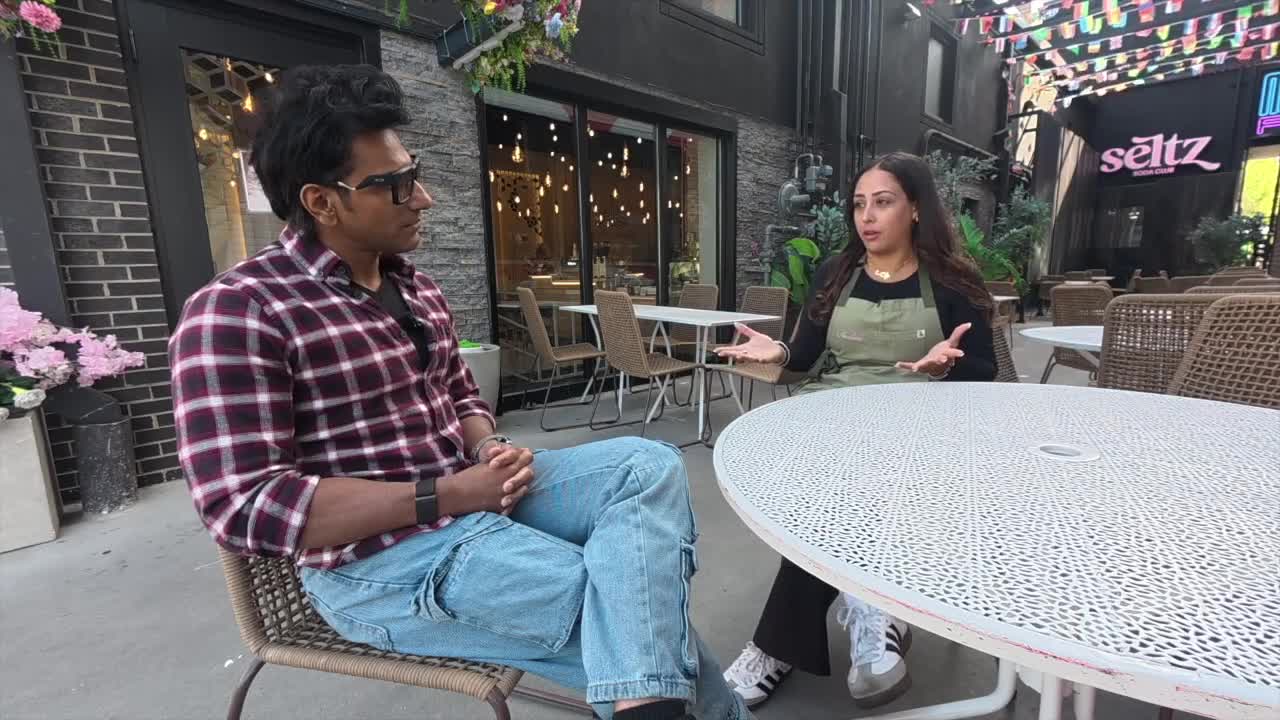
A new bagel shop in Dearborn is quickly building a following, drawing customers from across metro Detroit and the chef behind the menu never expected food to become her career.

Loop Detroit Bagels has become a destination for fresh bagels, creative flavors and a growing fan base.

Watch Faraz Javed's video report below: Nadine Messelmani built Loop Detroit Bagels' menu from scratch, found herself along the way

"I've heard so much about it. I've seen so much viral stuff about it," customer Lily Grantham said.

Customers say the hype is real.

"The bagels are always so fresh," customer Serena Tahini said.

"We come here for a meal and something to drink. There's everything for everyone," customer Jenna Amro said.

But behind the buzz is a story many don't know. Chef Nadine Messelmani once had a different path in mind.

"My dad's a nurse and it was always, you know, go into the medical field... I'll go ahead and go to nursing school," Messelmani said.

She eventually traded a future in nursing for becoming the chef behind Loop Detroit.

"I've always been passionate about food and working in the food industry as well. So when it came to me, I had met the owner, Batul Bazi. And I met her through a mutual friend, and she wanted to actually open up the bagel shop. And she kind of entrusted me to bring her vision to life," Messelmani said.

There was just one challenge: Messelmani had never baked a bagel before.

"So in the beginning, a lot of it was research and development. Like I said, I've never baked before. I traveled to New York a couple times. I just kind of wanted to understand bagels and the whole art of making bread," Messelmani said.

She studied, tested batch after batch and spent nearly two years perfecting the bagels customers enjoy today.

For Messelmani, the menu is also a way of paying homage to her roots.

"I'm Lebanese, so there's also Lebanese roots on the menu too with the Beirut Bite. It has the labneh olive cream cheese that we do in house... and it tastes like a breakfast sandwich in Lebanon," Messelmani said.

Customers say those unique flavors are what keep them coming back.

"Yeah, my favorite bagel is the Cinnamon Crunchies. I feel like the Cinnamon Toast Crunch cereal," Tahini said.

"My favorite sandwich I like the sandwiches My favorite is the Loopocado, for sure," Amro said.

Tucked inside the shop is Seltz, where customers can order another growing trend: dirty sodas.

"It's just, like, Cokes with different creamers and syrups and stuff. It comes from when I was researching on it from that show House of Mormons," Messelmani said.

But the 27-year-old said her biggest accomplishment isn't the menu.

"What I'm most proud of is finding myself through all of this," Messelmani said.

And her father, who once steered her toward nursing, is fully on board with the path she chose.

"My dad is very, very supportive of me and all my siblings," Messelmani said.

As for what's next, Messelmani is already working on a fall menu and she's offering a hint.

"I don't want to give it away, but you definitely can expect pumpkin. That's all I can say. There's going to be a lot of pumpkins," Messelmani said.

Loop Detroit Bagels is located in Dearborn. More information is available at loopdetroitbagels.com.

This story was reported on-air by a journalist and has been converted to this platform with the assistance of AI. Our editorial team verifies all reporting on all platforms for fairness and accuracy.

Metro Detroit Parkinson Hero Walk raises awareness and support for patients and veterans

The Metro Detroit Parkinson Hero Walk wrapped up Saturday in Utica, bringing together patients, caregivers, researchers, and families affected by Parkinson's disease.

Organizers say the event is about more than fundraising it's about reminding people living with the disease that they don't have to face it alone.

"The mission for today is to continue to raise awareness around Parkinson's, the research that is done to support those that are dealing with it, and also to be able to celebrate caregivers and all the work that they do," Terry Whitfield said.

Watch Faraz Javed's report in the video player below: Metro Detroit Parkinson Hero Walk raises awareness and support for patients and veterans

For Whitfield, that mission hits close to home. His father Bill, a Marine veteran, was diagnosed with Parkinson's in 2018.

"How he, every day and every way, chooses to take steps forward, no matter how small those steps might be. They're not the steps as large as they used to be, but for him, every day is an opportunity to wake up and do it again," Whitfield said.

For the Whitfields, Parkinson's has become a family journey.

"So you're looking at Whitfield Warriors. These are all of our family, my sister, my brother-in-law, my cousins, my aunties. These are all the people that make up the village that support his care, and every day, how we support our mother in supporting him," Whitfield said.

This year's walk also shines a spotlight on veterans. Michigan Parkinson Foundation CEO Kristin Rossi says Parkinson's is a progressive neurological disease that affects movement, balance and coordination. While treatments can help manage symptoms, there is currently no cure.

"Veterans have a higher incidence of Parkinson's disease. So we really want to shine the light on their experience, how they came to have Parkinson's, and how it's affecting them now," Rossi said.

One of those veterans is Nate Jolliff. The former Marine was diagnosed with Parkinson's at age 55. Today, he uses his experience to help others navigate their journey.

"For me, the diagnosis was unplanned. It was really a surprise. I had denial and all the other phases that you have when you're diagnosed with something terrible like that. But got through that, lined myself up with a support group..." Jolliff said.

While support groups help patients navigate the emotional challenges of Parkinson's, research companies, including Quest Research, continue searching for better treatments. Alison Chanley, an intake specialist and patient liaison at the Farmington Hills-based company, says clinical trials are showing promise.

"We've actually seen people improve, their conditions improve. When a trial goes into later phases, we have open-label studies. So they're getting the medication; there's no placebo, and we've actually seen patients make progress and symptoms be reduced," Chanley said.

The goal of Saturday's walk is to raise $350,000 to support education, exercise programs, support groups and caregiver respite services across Michigan. Rossi says the foundation's support extends well beyond the annual event.

"I really want people to know that we're here for them throughout the entire year, not just this day. I want them to feel like they've been enveloped in a big hug... and then come to us for support groups and mentorship and very, very importantly, exercise and education," Rossi said.

For the Whitfields, Parkinson's is part of their story but it doesn't define their family.

"That what happens to you does not have to dictate how you then move forward. No matter what the situation, circumstance, trial or tribulation, we all have the opportunity to take our best step forward," Whitfield said.

More information about the Michigan Parkinson Foundation is available at www.parkinsonsmi.org.

This story was reported on-air by a journalist and has been converted to this platform with the assistance of AI. Our editorial team verifies all reporting on all platforms for fairness and accuracy.

Arab and Muslim Americans in Dearborn reflect on 9/11's lasting impact on their identity 25 years later

Twenty-five years after September 11 became one of the darkest days in American history, Arab and Muslim Americans in Dearborn say they grieved alongside the rest of the country but in the years that followed, many found themselves defending something they never thought they'd have to explain: their American identity.

Dearborn Mayor Abdullah Hammoud, Dearborn Police Chief Issa Shahin, and entrepreneur and philanthropist Haider Koussan each remember exactly where they were when the attacks happened.

See the full story in the video below Arab and Muslim Americans in Dearborn reflect on 9/11's lasting impact on their identity 25 years later

"I woke up that day and my wife says, 'Come watch the news,'" Koussan said.

"I was in middle school," Hammoud said.

"I was in bed getting ready to go to work that morning," Shahin said.

But for many Arab and Muslim Americans, the fear did not end with the attacks.

"I knew our nightmare started that day," Koussan said.

"And we suffered for years to come," Koussan said.

Koussan was 31 and already running one of Dearborn's first major Arab-American businesses when the attacks occurred. He says the threats came quickly.

"I personally took two threatening calls. We're gonna burn you. Another incident where they wanted us to go back to our country. I remember telling the guy, 'This is my country,'" Koussan said.

At the same time, an 11-year-old Hammoud was trying to make sense of a tragedy that had suddenly changed the way some people saw him.

"You know when I was walking home from school in the days after 9/11, I remember an individual pulled a gun out from his second-floor window... pointed at us and said, keep walking before I decide to shoot you Muslim kids. And that was just another series of incidents to myself and other who look like me how are perceived to be Arab or Muslims," Hammoud said.

Shahin, who was a patrol officer at the time, described a painful dual reality for the community.

"Arab Americans suffered like the rest of the nation. They were concerned and scared. But then there's this other dynamic at play. People started to look at our community differently. We felt potentially targeted or misrepresented," Shahin said.

Hammoud described the impossible position many in the community found themselves in.

"We as Americans were trying to reckon with the idea that our country had just been attacked by terrorists. And at the same time... we were now under greater scrutiny and being the target of other individuals' hate," Hammoud said.

For Shahin, the normalization of that hate carried serious consequences.

"Once hate becomes normalized against a group of people, I'm concerned as the chief of police because what follows after that is violence," Shahin said.

In the 25 years since, the three men's lives tell a story of resilience. The business owner who received death threats became a respected entrepreneur and philanthropist. The patrol officer became chief of police. And the middle school student was voted in as mayor.

"Proud of the work that we are doing here in public service, I think that's a part of the American dream, that a son of an immigrant can assume a public office," Hammoud said.

Despite everything they experienced, all three remain fiercely proud to call themselves American.

"My father immigrated in 1967 came from Egypt, with nothing more than a few dollars in his pocket. He was able to work hard raise three boys, who have now all moved on and have families of their own. I mean there are not a lot of countries where you can do that. And so I love this country, what it represents, I'm proud to be an American as always and I think better days are ahead," Shahin said.

Yet 25 years later, one question still lingers. When asked if he is tired of proving himself as a patriotic American, Koussan did not hesitate.

"I'm very tired," Koussan said.

Hammoud reflected on what that burden has meant.

"I think as the 11-year-old boy in that time, I was American before and after. I think to many outside of the city of Dearborn, I was American with an asterisk. One who had to continually demonstrate their Americanness, how much they love this country. I think it's as a result of what befell this country. decades ago," Hammoud said.

Shahin described the toll of nearly three decades of service alongside that persistent scrutiny.

"Yeah, it's really upsetting. I mean, look, I've spent 30 years almost safeguarding the people in this community, their property and their lives. Any police officer that wears this badge has, and we don't ask your ethnicity, your race, your background when we do that. I mean, that's our responsibility. It's the oath that we've taken. But yet, you know, over the last 25 years and even most recently, as you've seen with some of the folks that have come to town to portray us in negative ways, Constantly having to profess my patriotism or my loyalty in ways that I don't think is right or fair," Shahin said.

Hammoud acknowledged the reality his community continues to navigate.

"People have a bull's eye on this city, on this community for all the wrong reasons," Hammoud said.

"Thus is life. These are the cards that we have dealt. This is the road that we have to navigate. And you know, we're not the only community that has been the target of such bigotry throughout our existence. You know, I look to our neighborhood city, Detroit, one of the most beautiful and black cities in America," Hammoud said.

Still, despite the pain, all three refuse to let the past define the future.

"Whether you call me Muslim American, Arab American, I am an American," Hammoud said.

"I think it's important as Americans that we recognize that there's far more that we have in common that separates us," Shahin said.

"This is a country where individuals from all corners of the earth have come together to build something beautiful," Hammoud said.

"It's a shining example on the hill, right, of how people can coexist," Shahin said.

"And we are creating that tapestry together and working each day to make it more perfect," Hammoud said.

This story was reported on-air by a journalist and has been converted to this platform with the assistance of AI. Our editorial team verifies all reporting on all platforms for fairness and accuracy.
โŒ