Reading view

There are new articles available, click to refresh the page.

SMART looks to chill out riders with ‘cooling buses’ and heat up regional transit through new ballot proposal

The hot and smoky weather recently invading metro Detroit takes a toll on more than just residents.

It also stresses machinery, including the massive public buses used by Detroit’s Department of Transportation, or DDOT, and the regional SMART bus system.

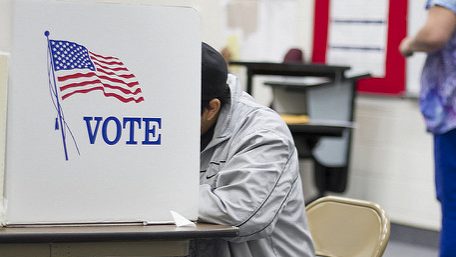
SMART also faces an upcoming vote on a ballot proposal to renew its existing millage for another decade.

It would also extend that tax to Wayne County communities that so far have opted out of the system.

SMART’s general manager and CEO, Tiffany Gunter, says the bus service provides both independence for riders and, in these current weather conditions, a way to beat the heat.

Interview edited for length and clarity.

Tiffany Gunter: We started these cooling buses when the temperatures top 90 degrees because we recognize our shelters are limited in amenities. So being able to get away from the heat while you’re waiting on public transportation to come pick you up is just sort of our responsibility to provide shelter for our passengers.

And we opened it to everyone. You don’t have to have a fare to use the cooling buses. You can just simply get on. They were out there from July 13-17 from 11 a.m.-7 p.m. We even extended the weekend hours.

Even though the temperatures dropped below ninety, we still have this issue with air quality and we don’t want to expose our passengers to this current particulate matter. Because providing shelter is part of being a community partner and providing the public transportation.  

Quinn Klinefelter, WDET News: The hot weather in particular is not only taking a toll on people out and about, it’s stressing some equipment and vehicles in the region. And that’s what you guys rely on. Is that having an effect on the SMART bus system?

TG: It is happening. It happens naturally in the summer months with the air conditioning units. But before we even worry about that, we first are most concerned with our operators, our mechanics, and our passengers. We passed out masks to everyone when we started having the air quality issue last week, making sure our operators have sufficient PPE. We onloaded passengers through the backdoor of the bus and didn’t charge a fare, so that people can just get on the bus and we didn’t have that front door opening and slamming our operators with that air quality immediately. We keep the windows closed on the bus. When the HVAC fails on the bus, the bus could still run, but we choose to pull it out of service. And that’s a deliberate safety choice, not a failure on the bus’s part. We’d rather absorb a schedule impact than to put our drivers or our passengers on a sweltering bus. I think that’s worse than having the bus not come.

And we encourage everyone to use the free transit app. It’s a real-time tracking tool. We’ll let you know when the bus is coming. That way, you know if you need to stay inside of a grocery store or shopping mall for a little bit longer. That real-time tool is how we work in partnership with our passengers, so they can see when that bus is actually coming, if in fact we’ve had an accident or there is a traffic or construction delay. Those things happen as well as mechanical failures with our vehicles.

QK: I’ve talked to a number of people in auto racing over the years. They’ll tell me, “Our vehicles, our cars, they don’t just run on fuel, they run on money. That’s what keeps them going.” One would assume SMART has the same thing. But as far as I can tell, you guys have not raised the cost for fares for a while. Are you bringing in enough revenue to really properly monetize the system?

TG: The fares bring in a base amount. But our local contribution comes from the property tax millage that’s levied for SMART. That base fare allows us to provide rides for seniors for 50 cents and offer discounted student fare rides. Our fares remain the same because oftentimes if you do $2 a day for a month, it can add up to close to 70 bucks. And that can be a hindrance for a lot of people to use the system.

QK: When we’re talking about money, there is a 10-year transit millage proposal that is on the upcoming ballot which could raise some extra revenue for SMART. As general manager of the system, you’re probably for that ballot proposal. Why would you argue to voters that they should approve that mileage?

TG: My job is not to tell anyone how to vote. As a public entity we only are allowed to educate, so I don’t have a view on how people should vote. But when we talk about what’s at stake here, we know that that the measure is going to replace an expiring millage in Wayne County. It will represent a new millage for the 17 current opt-out communities. This ballot initiative will fund our fixed route service, our on-demand Smart Flex service, which is that microtransit curb-to-curb service that you can use with the app, our paratransit service, which serves people with disabilities and our most vulnerable populations, plus 46 community transit providers.

This is the first countywide vote with all 43 communities deciding to go together once the state has repealed that opt out provision. In 2022, Oakland County went all in. They closed out their opt outs and they voted to go in as a county. Since that time we’ve seen increases in ridership with our community providers in the northern Oakland space and that western Oakland space of 125%. That’s when the system really begins to work as a truly regionally connected system with no gaps.

QK: I have read articles where the writers oppose the millage because they claim that only municipalities that have previously opted out of the smart system would have to pay this increased tax. And I’ve heard others argue for years that they should not have to pay for something if they’re in, say, a rural area or some other place where they don’t think they’ll ever use a bus. Or when they do see a bus go through, it looks like it’s got only a couple of people in it. What’s your response to those kinds of comments?

TG: Public transit is investment in infrastructure. It’s access. When we look at what the industry asks us for when they’re considering where to place their businesses, they want to know two things: They want to know about the talent pool. We know we have a talent. And they want to know about access to transportation. So those two things are top of mind as we’re thinking about how a region and community grows. When you talk about the rural areas, it’s not just a fixed route bus. We had some of the same arguments against bus service in Oakland County in 2022. And those same communities are seeing a 125% increase in usage. Because it’s not a fixed route bus. It’s microtransit, it’s community transit. And the people that are using them are those same folks that oftentimes have argued against them.

You can’t look at public transit as if it’s going to be a constantly congested highway. Highways aren’t congested all day. You look at it more like an elevator where people are on-and-off throughout the day. Increased investment means we can increase frequencies, meaning the bus shows up every 20 minutes versus every 30 minutes. When we did that, added Wi-Fi and a couple of other amenities, people started trusting SMART again and came back to the service. That, combined with the transit app that shows real-time information, means we’re starting to look like a real public transit agency out here. And I’m excited about that.

Support local journalism.

WDET strives to cover what’s happening in your community. As a public media institution, we maintain our ability to explore the music and culture of our region through independent support from readers like you. If you value WDET as your source of news, music and conversation, please make a gift today.

The post SMART looks to chill out riders with ‘cooling buses’ and heat up regional transit through new ballot proposal appeared first on WDET 101.9 FM.

Transportation advocates tour transit systems across the state

Transportation Riders United (TRU) is forming a statewide coalition to advocate for better transit options throughout Michigan called Move MI.

The Detroit-based group toured the state on their Around the Mitten Transit Tour, visiting and riding public transit in 16 cities.

TRU Executive Director Megan Owens spoke with WDET’s Bre’Anna Tinsley about the tour and the issues other transit systems face.

Listen: Transportation advocates tour transit systems across the state

The following interview was edited for time and clarity.

Executive Director Megan Owens: TRU has worked for 25 years now in the metro Detroit area. And we know a lot about the benefits and the challenges of public transportation in metro Detroit. But we know that there’s another 70+ transit agencies around the state of Michigan, and that there are millions of people who depend on transit. So, we wanted to get a better understanding of the strengths and challenges of public transit all across the state of Michigan.

We traveled for 14 days over 1,800 miles, went all the way up to Port Huron, Alpena, Marquette, Traverse City, Benton Harbor—all over the state, 16 different cities, all to learn how public transit works, and where there are gaps, and where it needs improvement. And to think about how the state, the next governor, and other state leaders can be better supporting opportunities for Michiganders who don’t drive or don’t want to drive to still be able to get around and visit friends, family, and all of Michigan’s beautiful locations.

Bre’Anna Tinsley, WDET: So, after seeing all of those different transportation organizations, is there some trend, maybe, that you’ve discovered across the state that’s happening among our transit systems?

MO: There were a couple of things we learned. One that I don’t think a lot of people realize is that you can, in fact, take public transportation across the state of Michigan. It’s not always as convenient or easy as it should be, but we were able to visit 16 different cities using Amtrak, using regional busses, using inner city busses, and could visit all sorts of great places. So one, it was exciting to know that you can do all of these things, but we also learned that the service is way too limited, whether you’re talking about traveling between cities or traveling within any different metropolitan area. There are options to get around, but they’re not nearly as frequent, as reliable, they don’t go as many places as many people want to go.  

So while there are transit agencies that are working extremely hard to provide the very best service that they can, they’re all limited by funding and are really torn to try to provide the very best they can with extremely limited resources.

BT: The reason for the limited resources, did you discover if that was something that’s happening at the state level, or do all of these communities have their own individual limitations?

MO: One of the reasons we did want to explore all of these different areas is that the state does fund an important component of transit in every single community. There’s something called the “local bus operating budget item” (LBO) that we’ve been fighting for years to get the state to increase to make sure that Smart and DDOT have the resources they need. But it funds every one of the 77 transit agencies across the state. At one point in time, the LBO, as it’s called, covered half the costs of running local transit service, so the state covered half the costs, and the local communities came up with half the costs.

But, as costs have gone up and the state budget allocation has not. It’s cover and the state funds are covering barely a third of the of what it costs to run local transit services across the state. And right now it’s one of those things that’s debated in the state budget every year. How much is going to go into this local bus type operating? So, we did make sure one of our last stops was at the state capitol to make sure legislators knew just how important this local bus operating budget is.

Just about every legislator and most of the people they deal with every day are people who drive, and a lot of us are used to driving everywhere. But we wanted to remind legislators that every community has thousands of people who don’t drive, whether that’s seniors, whether that’s students, whether that’s somebody who is saving up for their first car, whether that’s a person with a disability, whether they’re in a wheelchair or have epilepsy or have a developmental disability. There are thousands of people all around us who don’t drive, who deserve to have just as full and robust lives as everyone else. They should be able to see the Great Lakes, they should be able to visit, so many of these wonderful places that we have in our state, even if they don’t drive.

BT: So, are there any takeaways from this trip that you think maybe we can implement here that might help improve the systems?

MO: We learned some great things about the different transit agencies around the state and what they are doing. Flint has been working with a lot of alternative fuels. DDOT and  Smart have tested out electric buses that have had mixed success. But Flint is working with compressed national natural gas and with hydrogen, and so even as diesel prices shoot up, several of the systems, like Flint and Port Huron, have not had to deal with those skyrocketing costs. So, exploring different types of fuels for the buses.

There are a number of the systems around the around the state, you can just use any old credit card and tap as you enter the bus, and use that as a way to pay. So that’s something I know that our local agencies are looking into, but it was neat to see just how quick and easy it was. You didn’t need any special app, you didn’t need any official pass…if you got a credit card, you tap it, and you enter. So, I think that’s something that could make it again even easier to ride transit in our areas as well.

Support local journalism.

WDET strives to cover what’s happening in your community. As a public media institution, we maintain our ability to explore the music and culture of our region through independent support from readers like you. If you value WDET as your source of news, music and conversation, please make a gift today.

The post Transportation advocates tour transit systems across the state appeared first on WDET 101.9 FM.

Detroit City Council President looks forward to working with mayor on poverty and transit issues

James Tate is the latest in a long line of Detroit city council presidents as of January.  He attended the Mackinac Policy Conference on Mackinac Island last week and sat down to speak with WDET’s Jerome Vaughn.  

Listen: Detroit City Council President James Tate speaks with Jerome Vaughn at the Mackinac Policy Conference

Tate has been on the city council for years, but now he’s learning how to perform in his new role as president. He’s had conversations with current Mayor Mary Sheffield about her transition from council member to council president.

The city council president says he looks forward to working closely with Sheffield on an issue that he sees as Detroit’s biggest challenge: poverty.  Tate hopes potential opportunities posed by transit could help ease some of the effects of Detroit’s income gap.

Support local journalism.

WDET strives to cover what’s happening in your community. As a public media institution, we maintain our ability to explore the music and culture of our region through independent support from readers like you. If you value WDET as your source of news, music and conversation, please make a gift today.

The post Detroit City Council President looks forward to working with mayor on poverty and transit issues appeared first on WDET 101.9 FM.

The Metro: Ford, GM and Stellantis retreated from EVs. Now more drivers want them

Automakers and auto suppliers are a huge part of metro Detroit’s economy. And they will likely have to change as the war unfolds. 

As America’s strikes against Iran continue, and the Strait of Hormuz remains in question, gas prices are rising, and more people are thinking about purchasing an electric vehicle

But despite interest, how much will EV sales actually increase for companies like Ford, GM and Stellantis — especially as car sales in general have plummeted over the past few decades?

John McElroy is an automotive analyst with Autoline. He spoke with The Metro‘s Robyn Vincent.

Listen to The Metro weekdays from 10 a.m. to noon ET on 101.9 FM and streaming on demand.

Subscribe to The Metro on Apple Podcasts, Spotify, NPR.org or wherever you get your podcasts.

Support the podcasts you love.

One-of-a-kind podcasts from WDET bring you engaging conversations, news you need to know and stories you love to hear. Keep the conversations coming. Please make a gift today.

More stories from The Metro

The post The Metro: Ford, GM and Stellantis retreated from EVs. Now more drivers want them appeared first on WDET 101.9 FM.

❌