Reading view

There are new articles available, click to refresh the page.

MichMash: Candidates clash during Michigan primary debates

“In this episode”

  • Key takeaways from the Democratic U.S. Senate debate.
  • Analysis of the Republican gubernatorial debate.
  • How did each debate show divides among party candidates?

Subscribe to MichMash on Apple Podcasts, Spotify, NPR.org or wherever you get your podcasts.


Both the Democratic U.S. Senate debate and the Republican gubernatorial debate showed the divides among the party’s candidates. This week on MichMash, WDET’s Cheyna Roth and Gongwer News Service’s Alethia Kasben and Zach Gorchow break down the major components of the race.

During the Republican gubernatorial debate, former Attorney General Mike Cox and businessman Perry Johnson called out the current frontrunner U.S. Rep. John James. In return James had some rebuttals for the two, one of which he may have created because of a MichMash episode.

On March 20th’s episode of MichMash, businessman Perry Johnson said
Johnson touted repealing the income tax will save every family $4,747. On the episode he mentioned part of his calculous was using Google or Chat GPT to figure out the median income in Michigan.

Kasben said James brought those numbers into question. “James called Johnson’s income tax plan magic numbers. That was an interesting attack from James on Johnson’s main policy point for his campaign.”

In the U.S. Senate debate, the remaining two candidates Abdul El-Sayed and Haley Stevens showed their different styles, presenting two different looks of a Democratic candidate. Gorchow pointed out both candidates might still have different challenges when facing their Republican opponent. “I think they both definitely have their own challenges, but I think based on the environment, I would give the Dems the advantage going into November regardless of if it’s El-Sayed or Stevens.”

The Michigan primary elections are on August 4.


More from WDET:

Support the podcasts you love.

One-of-a-kind podcasts from WDET bring you engaging conversations, news you need to know and stories you love to hear.

Keep the conversations coming. Please make a gift today.

Give now »

The post MichMash: Candidates clash during Michigan primary debates appeared first on WDET 101.9 FM.

Millionaire Mike Rogers says voters blaming Trump for high prices are ‘nuts’

Millionaire U.S. Senate candidate Mike Rogers said people who blame President Trump for rising prices have “lost their mind,” dismissing voter concerns about affordability as Michigan families continue to struggle with higher costs.

The post Millionaire Mike Rogers says voters blaming Trump for high prices are ‘nuts’ appeared first on Detroit Metro Times.

The Metro: What Michigan’s Senate race reveals about the state — and future — of the Democratic Party

Come November, thousands of political seats are up for grabs.

One of the most compelling races in Michigan is the Senate. That’s in part because of what it says about the Democratic Party, especially after Mallory McMorrow dropped out.

Most polls have Abdul El-Sayed leading in the race, but there is still uncertainty as to whether he can defeat Haley Stevens, a sitting congresswoman who gained notoriety for her moderation, and for bailing out the auto industry.

Dennis Darnoi is the founder of Densar Consulting, based in Farmington. He says many voters want candidates that have an anti-institutional and populist bent.

“Progressive candidates are running against these establishment candidates and they’re being more successful because the Democratic base is really looking for two things: They’re looking for people who are going to fight and they’re looking for people who are anti-system.”

Darnoi spoke with The Metro’s Robyn Vincent about the Senate race and how it reflects changes to politics in Michigan and beyond.

Hear the full conversation using the media player above.

Listen to The Metro weekdays from 10 a.m. to noon ET on 101.9 FM and stream on-demand.

Never miss an episode — subscribe to The Metro on Apple Podcasts, Spotify, YouTube, NPR, or wherever you get your podcasts.

Support the podcasts you love.

One-of-a-kind podcasts from WDET bring you engaging conversations, news you need to know and stories you love to hear. Keep the conversations coming. Please make a gift today.

More stories from The Metro

The post The Metro: What Michigan’s Senate race reveals about the state — and future — of the Democratic Party appeared first on WDET 101.9 FM.

The Metro: Are concerns about data centers overblown?

Michiganders are broadly against data centers, especially when they’re proposed near their residence.

Their concerns about electricity and water use are compounded by a general feeling that large tech companies control too much of their lives. Residents have gotten particularly loud about those problems at town hall meetings, including at one Saline Township meeting.

Despite local apprehension, Saline is now slated to host one of the largest data centers in the country.

At this point, 52 localities in Michigan have passed data center moratoriums.

But are concerns about hyper-scale data centers overblown? And, are there more benefits that townships aren’t fully appreciating?

Eric Paul Dennis is the infrastructure research associate for the Citizens Research Council. A new report he did on data centers says their benefits often actually outweigh the costs.

“You cannot discount the idea that data centers can increase electricity rates, but it’s actually not that common and quite minimal,” says Dennis. “Regulatory agencies have now kind of gotten ahead of this and I don’t think it’s going to be as much of a concern for the future.”

The Metro‘s Sam Corey spoke with Dennis about why he thinks data center projects sometimes offer more benefits than drawbacks.

After the two spoke, electricity rates increased in Henrico County, Virginia — which is home to 37 data centers. Dominion Energy says it increased the rates due to inflation, rising fuel costs, the cost of grid equipment, and the need to make more grid investments.

The Metro contacted Dennis about the rate increase. He said that while data centers “have caused headaches for grid managers” in Virginia, the problems are not necessarily “critical or unavoidable.” He says, in fact, “We appear to be managing the risks and even benefiting from the addition of data centers on the grid.”

Hear the full conversation using the media player above.

Listen to The Metro weekdays from 10 a.m. to noon ET on 101.9 FM and stream on-demand.

Never miss an episode — subscribe to The Metro on Apple Podcasts, Spotify, YouTube, NPR, or wherever you get your podcasts.

Support the podcasts you love.

One-of-a-kind podcasts from WDET bring you engaging conversations, news you need to know and stories you love to hear. Keep the conversations coming. Please make a gift today.

More stories from The Metro

The post The Metro: Are concerns about data centers overblown? appeared first on WDET 101.9 FM.

After deaths and abuse allegations, former Huron Valley prisoners and families take their fight statewide

A new coalition of formerly incarcerated women and family members of women held at Women’s Huron Valley Correctional Facility is launching a statewide tour to amplify allegations of abuse, neglect, unsafe conditions, retaliation, and medical mistreatment at Michigan’s only women’s prison.

The post After deaths and abuse allegations, former Huron Valley prisoners and families take their fight statewide appeared first on Detroit Metro Times.

MichMash: What is your favorite state park?

It’s the 4th of July weekend and many Michiganders are celebrating by going to their favorite parks to go swimming, hiking, camping and fishing. This week on MichMash, WDET’s Cheyna Roth and Gongwer News Service’s Zach Gorchow discuss the recent investments  put into parks. They are joined by Kristen Kosick. She is the chief of the Michigan Department of Natural Resources, Parks and Recreation division.

Subscribe to MichMash on Apple Podcasts, Spotify, NPR.org or wherever you get your podcasts.

In this episode

  • How did the American Rescue Plan Act affect Michigan state parks?
  • Which parks are getting massive renovations?
  • Michigan’s state park infrastructure over the years.

Kosick share that Governor Whitmer helped them with the Building Michigan Together Plan. This plan is a $250 million dollar federal relief program to help tackle the backlog of critical infrastructure needs in our state parks system.

Kosick shared this plan helped in multiple ways. “There was a lot of utility upgrades, water improvements upgrades, electrical upgrades at our campgrounds. These are things that visitors may not be able to physically see, but are so foundational to the work we do in our parks and to all the visitor services that we provide.”

According to Kosick, these backlog projects were a huge focus to the improvement plans. The plan also helped address aging historic structures, camping facilities, parking lots, and more. 

More from WDET:

Support the podcasts you love.

One-of-a-kind podcasts from WDET bring you engaging conversations, news you need to know and stories you love to hear. Keep the conversations coming. Please make a gift today.

The post MichMash: What is your favorite state park? appeared first on WDET 101.9 FM.

Black Americans may have a different viewpoint of America 250

The United States of America is celebrating its 250th anniversary this week.  There will be parades and fireworks and lots of speeches. But does this holiday mean the same thing to African Americans as it does to other Americans? 

Vincent Hutchings is a political science professor at the University of Michigan.  WDET’s Jerome Vaughn asked him about the meaning of “Independence Day” for the country’s Black citizens.

Hutchings says the holiday doesn’t mean the same for whites as it does for Black Americans because of their different experiences over the last 250 years.  He says, for example, that Black people were largely enslaved for the first 80-plus years of the country.

“The truth of the matter is that the country that we think of today as the United States of America, from the vantage point of most African-Americans doesn’t actually start until 1865, not 1776.”

Hutchings says there has been a disparity between the lived experiences of most White Americans and most Black Americans throughout the history of the country.  And he says that continues to be the case as demonstrated by a number of metrics today.

“On multiple dimensions from life expectancy to maternal health to infant mortality to unemployment to poverty, to the racial wealth gap and various other outcomes, Black Americans, on average are living in very different circumstances.  And it’s not by accident.”

Hutchings says the facts are not in dispute, but the question to be asked is why is that the case. He says, perhaps, many Black Americans will be celebrating their endurance and their ability to survive during the country’s history.

Support local journalism.

WDET strives to cover what’s happening in your community. As a public media institution, we maintain our ability to explore the music and culture of our region through independent support from readers like you. If you value WDET as your source of news, music and conversation, please make a gift today.

The post Black Americans may have a different viewpoint of America 250 appeared first on WDET 101.9 FM.

MichMash: Review of major political stories and a forecast of what’s ahead

The Republican gubernatorial race just had a major shake up with President Donald Trump making an endorsement. This week on MichMash, WDET’S Cheyna Roth and Gongwer News Service’s Alethia Kasben discuss how surprising the endorsement was and what this means for the upcoming primaries. 

Also, with Cheyna being back, we thought we would catch her up on the major political stories from the past couple of months and look ahead to see what the rest of 2026 has in store. 

Subscribe to MichMash on Apple Podcasts, Spotify, NPR.org or wherever you get your podcasts.

In this episode

  • Why was it surprising that President Donald Trump made an early endorsement for a Republican gubernatorial candidate in Michigan?
  • Will the state budget get finished on time?
  • Who are the frontrunners in this year’s primaries?

Consider this episode as a catch up of all the major news that have been occupying your headlines and a preview of the stories that might come in the future. Like Alethia says in this episode, MichMash is a great summer activity. 

More from WDET:

Support the podcasts you love.

One-of-a-kind podcasts from WDET bring you engaging conversations, news you need to know and stories you love to hear. Keep the conversations coming. Please make a gift today.

The post MichMash: Review of major political stories and a forecast of what’s ahead appeared first on WDET 101.9 FM.

Michigan website’s live severe weather coverage gains followers

Michigan has seen 22 confirmed tornadoes 2026, including three in Metro Detroit.

The National Weather Service has issued more than 50 tornado warnings statewide this year. Joel Fritsma has tracked every one of them online.

Fritsma is the chief meteorologist for Michigan Storm Chasers. The website launched in 2022 and hired Fritsma straight out of Central Michigan University, where he studied meteorology. He says their goal is to fill communication gaps between NWS and the public so people watching online have time to take shelter. 

“Every time there’s a severe thunderstorm warning or a tornado warning in the state, we’d be covering it live,” he says. “Since 2024, we haven’t missed a single warning.”

It’s “go” time

Fristma says he and his team start live streaming as soon as the weather service issues its first warnings for any severe event. And they don’t stop until the last warning comes out.

“Sometimes, it’s upwards of 10 to 11 hours,” he says. “It just depends on how long the storms want to go.”

Joel Fritsma is the chief meteorologist for Michigan Storm Chasers

And it doesn’t matter what time it is. Fritsma was live streaming when a brief tornado hit Lincoln Park between 2 and 3 a.m. on April 15. He doesn’t mind.

“I kind of like taking the night shift,” he says. “We always have at least one person on call throughout the day.”

Fristma says when the weather is fine, he’s still working full-time.

“We’re looking at the forecast multiple days in advance,” he says. “We host live streams prior to an event so that people can ask questions.”

A lot of people tune in

Fritsma says the website’s staff has grown from a handful of people to about 30 since 2022. And he says its audience has grown, too.

“We have over a million followers between all of our platforms,” he says. 

People can watch and interact with the live streams on Facebook and YouTube. And soon, they’ll be able to download a new mobile app.

Fritsma says the app will allow followers to get live streams on their phones and let them report storm damage.

“We have Messenger, we have Discord, there’s so many options,” he says. “And that information will be very crucial when we send it to the National Weather Service.”

The app is set to launch this summer.

Trusted, accurate, up-to-date.

WDET strives to make our journalism accessible to everyone. As a public media institution, we maintain our journalistic integrity through independent support from readers like you. If you value WDET as your source of news, music and conversation, please make a gift today.

Donate today »

The post Michigan website’s live severe weather coverage gains followers appeared first on WDET 101.9 FM.

The Metro: Confidence is at a record low. So why is metro Detroit launching businesses in droves?

If it feels like everyone you know is stressed about money right now, the numbers back you up. This spring, U.S. consumer confidence fell to its lowest level ever, dragged down by gas prices and tariffs. Here in metro Detroit, unemployment is running nearly a point above the national rate, and small business owners are gloomy — just 28% think the economy is in good health.

So here’s the puzzle: At the same time, Michiganders are starting businesses at a furious pace — more than 40,000 new business applications in the first three months of this year, up 25% from a year ago. People say the economy scares them, yet they are betting on themselves anyway.

Mark Lee has spent his career advising small businesses across southeast Michigan, and he started his own company in January 2008, right as the last recession hit. He joined Robyn Vincent on The Metro to discuss if these new business owners are jumping or being pushed.

Hear the full conversation using the media player above.

Listen to The Metro weekdays from 10 a.m. to noon ET on 101.9 FM and stream on-demand.

Never miss an episode — subscribe to The Metro on Apple Podcasts, Spotify, YouTube, NPR, or wherever you get your podcasts.

Support the podcasts you love.

One-of-a-kind podcasts from WDET bring you engaging conversations, news you need to know and stories you love to hear. Keep the conversations coming. Please make a gift today.

More stories from The Metro

The post The Metro: Confidence is at a record low. So why is metro Detroit launching businesses in droves? appeared first on WDET 101.9 FM.

The Metro: Why homes are built more quickly in West Michigan — and what the rest of the state can learn

Michigan is facing a serious housing shortage, with experts estimating the state needs to build nearly 100,000 homes.

Outdated zoning laws hinder the creation of diverse, mixed-use neighborhoods, and lengthy permitting processes slow new developments. Additionally, ongoing shortages of construction workers and building materials make it even harder to add new housing units. As a result, many new developments cater to wealthier residents, leaving residents struggling to find affordable options.

Joe Agostinelli, founder of Miller Johnson Growth Advisors, believes better financing and strong partnerships between local leaders and developers are key to expanding Michigan’s housing supply. His team is developing a new riverfront project in Grand Rapids featuring a mix of offices, apartments, and condos. Agostinelli says that city and the broader Kent County area have been able to develop homes faster than places in metro Detroit.

The Metro’s Sam Corey spoke with Agostinelli at the annual Mackinac Policy Conference to discuss how his group is trying to build homes quickly in an environment that often moves slow. 

Hear the full conversation using the media player above.

Listen to The Metro weekdays from 10 a.m. to noon ET on 101.9 FM and streaming on-demand. Never miss an episode — subscribe to The Metro on Apple Podcasts, Spotify, YouTube, or NPR or wherever you get your podcasts.

Support the podcasts you love.

One-of-a-kind podcasts from WDET bring you engaging conversations, news you need to know and stories you love to hear. Keep the conversations coming. Please make a gift today.

More stories from The Metro

The post The Metro: Why homes are built more quickly in West Michigan — and what the rest of the state can learn appeared first on WDET 101.9 FM.

The Metro: How government inefficiency hampers population growth in Michigan

In Michigan, we have many needs: higher-paying jobs, better educational outcomes, and more public transit. Above all, we need more people. 

A lot is at stake. Even if your neighborhood feels bustling, when Michigan’s population stops growing, the state actually shrinks in all the ways that matter. Since 1970, we’ve lost a seat in Congress after every census, and those same population counts decide how hundreds of billions in federal funding are divided. That means less money for roads, water systems, housing, and more. As baby boomers retire, our workforce is shrinking, and Michigan has lost 93,000 workers just since last spring. Fewer people here means less political power, fewer resources, and a smaller tax base to pay the bills.

Michigan’s leaders agree — we need to attract more people to our state. Yet one central question remains: how do we make it happen, and who is responsible for leading the way? Some are trying to answer that question. The state of Michigan has a growth office. The City of Detroit has an initiative to grow its population. 

Jeff Donofrio is a leader in the population growth space. He’s the president and chief executive officer of Business Leaders For Michigan. He’s written about this topic in several reports, and he’s worked for the City of Detroit and the State of Michigan to resolve the problem.

He believes we need to reform teaching.“It’s about making sure that [students are] engaged and can do stuff besides passing a standardized test,” says Donofrio.

He joined host Robyn Vincent on The Metro to explore how government culture needs to change to build more housing, create better regional transit, and to ultimately attract more people to the state.

Hear the full conversation using the media player above.

Listen to The Metro weekdays from 10 a.m. to noon ET on 101.9 FM and streaming on-demand. Never miss an episode — subscribe to The Metro on Apple Podcasts, Spotify, YouTube, or NPR or wherever you get your podcasts.

Support the podcasts you love.

One-of-a-kind podcasts from WDET bring you engaging conversations, news you need to know and stories you love to hear. Keep the conversations coming. Please make a gift today.

More stories from The Metro

The post The Metro: How government inefficiency hampers population growth in Michigan appeared first on WDET 101.9 FM.

Drinking water expert who helped expose Flint crisis sues Trump administration after EPA firing

A Michigan drinking water expert who helped expose the Flint water crisis is suing the U.S. Environmental Protection Agency, alleging she was fired for signing a petition critical of the Trump administration’s environmental policies.

The post Drinking water expert who helped expose Flint crisis sues Trump administration after EPA firing appeared first on Detroit Metro Times.

Former officer at troubled Michigan women’s prison sentenced for sexually abusing prisoners

A former corrections officer at Michigan’s only women’s prison was sentenced to up to 15 years in prison after pleading guilty to sexually abusing prisoners, another sign of deep problems at a facility already plagued by allegations of unsafe conditions, medical neglect, deaths behind bars, and employee misconduct.

The post Former officer at troubled Michigan women’s prison sentenced for sexually abusing prisoners appeared first on Detroit Metro Times.

Transportation advocates tour transit systems across the state

Transportation Riders United (TRU) is forming a statewide coalition to advocate for better transit options throughout Michigan called Move MI.

The Detroit-based group toured the state on their Around the Mitten Transit Tour, visiting and riding public transit in 16 cities.

TRU Executive Director Megan Owens spoke with WDET’s Bre’Anna Tinsley about the tour and the issues other transit systems face.

Listen: Transportation advocates tour transit systems across the state

The following interview was edited for time and clarity.

Executive Director Megan Owens: TRU has worked for 25 years now in the metro Detroit area. And we know a lot about the benefits and the challenges of public transportation in metro Detroit. But we know that there’s another 70+ transit agencies around the state of Michigan, and that there are millions of people who depend on transit. So, we wanted to get a better understanding of the strengths and challenges of public transit all across the state of Michigan.

We traveled for 14 days over 1,800 miles, went all the way up to Port Huron, Alpena, Marquette, Traverse City, Benton Harbor—all over the state, 16 different cities, all to learn how public transit works, and where there are gaps, and where it needs improvement. And to think about how the state, the next governor, and other state leaders can be better supporting opportunities for Michiganders who don’t drive or don’t want to drive to still be able to get around and visit friends, family, and all of Michigan’s beautiful locations.

Bre’Anna Tinsley, WDET: So, after seeing all of those different transportation organizations, is there some trend, maybe, that you’ve discovered across the state that’s happening among our transit systems?

MO: There were a couple of things we learned. One that I don’t think a lot of people realize is that you can, in fact, take public transportation across the state of Michigan. It’s not always as convenient or easy as it should be, but we were able to visit 16 different cities using Amtrak, using regional busses, using inner city busses, and could visit all sorts of great places. So one, it was exciting to know that you can do all of these things, but we also learned that the service is way too limited, whether you’re talking about traveling between cities or traveling within any different metropolitan area. There are options to get around, but they’re not nearly as frequent, as reliable, they don’t go as many places as many people want to go.  

So while there are transit agencies that are working extremely hard to provide the very best service that they can, they’re all limited by funding and are really torn to try to provide the very best they can with extremely limited resources.

BT: The reason for the limited resources, did you discover if that was something that’s happening at the state level, or do all of these communities have their own individual limitations?

MO: One of the reasons we did want to explore all of these different areas is that the state does fund an important component of transit in every single community. There’s something called the “local bus operating budget item” (LBO) that we’ve been fighting for years to get the state to increase to make sure that Smart and DDOT have the resources they need. But it funds every one of the 77 transit agencies across the state. At one point in time, the LBO, as it’s called, covered half the costs of running local transit service, so the state covered half the costs, and the local communities came up with half the costs.

But, as costs have gone up and the state budget allocation has not. It’s cover and the state funds are covering barely a third of the of what it costs to run local transit services across the state. And right now it’s one of those things that’s debated in the state budget every year. How much is going to go into this local bus type operating? So, we did make sure one of our last stops was at the state capitol to make sure legislators knew just how important this local bus operating budget is.

Just about every legislator and most of the people they deal with every day are people who drive, and a lot of us are used to driving everywhere. But we wanted to remind legislators that every community has thousands of people who don’t drive, whether that’s seniors, whether that’s students, whether that’s somebody who is saving up for their first car, whether that’s a person with a disability, whether they’re in a wheelchair or have epilepsy or have a developmental disability. There are thousands of people all around us who don’t drive, who deserve to have just as full and robust lives as everyone else. They should be able to see the Great Lakes, they should be able to visit, so many of these wonderful places that we have in our state, even if they don’t drive.

BT: So, are there any takeaways from this trip that you think maybe we can implement here that might help improve the systems?

MO: We learned some great things about the different transit agencies around the state and what they are doing. Flint has been working with a lot of alternative fuels. DDOT and  Smart have tested out electric buses that have had mixed success. But Flint is working with compressed national natural gas and with hydrogen, and so even as diesel prices shoot up, several of the systems, like Flint and Port Huron, have not had to deal with those skyrocketing costs. So, exploring different types of fuels for the buses.

There are a number of the systems around the around the state, you can just use any old credit card and tap as you enter the bus, and use that as a way to pay. So that’s something I know that our local agencies are looking into, but it was neat to see just how quick and easy it was. You didn’t need any special app, you didn’t need any official pass…if you got a credit card, you tap it, and you enter. So, I think that’s something that could make it again even easier to ride transit in our areas as well.

Support local journalism.

WDET strives to cover what’s happening in your community. As a public media institution, we maintain our ability to explore the music and culture of our region through independent support from readers like you. If you value WDET as your source of news, music and conversation, please make a gift today.

The post Transportation advocates tour transit systems across the state appeared first on WDET 101.9 FM.

Michigan data centers aren’t the gold rush boosters promised, but report finds benefits

A new report on Michigan’s growing data center industry offers a mixed verdict on one of the state’s most controversial development issues, finding that the massive facilities are unlikely to drain the state’s water resources or crash the power grid but are also not the economic boon that boosters often promise.

The post Michigan data centers aren’t the gold rush boosters promised, but report finds benefits appeared first on Detroit Metro Times.

Most Detroit landlords have no legal right to collect rent, housing attorneys say

About 85% of the rental properties in Detroit are owned by landlords with no legal right to collect rent, a discovery that could upend thousands of eviction cases, according to a coalition of housing attorneys and tenant advocates. 

The post Most Detroit landlords have no legal right to collect rent, housing attorneys say appeared first on Detroit Metro Times.

MichMash: Michigan primary voters could pick nominees for secretary of state and attorney general

Michigan is one of three states that nominates candidates for secretary of state and attorney general at party conventions. There is currently a push to put those nominations to the statewide primary ballot instead.
 
This week on WDET’s MichMash, Gongwer News Service’s Zach Gorchow and Alethia Kasben discuss the factors being weighed with this decision. Then Lon Johnson, former chairperson of the Michigan Democratic Party, stops by and explains why he supports this proposal.

Subscribe to MichMash on Apple Podcasts, Spotify, NPR.org or wherever you get your podcasts.

In this episode

  • How do we currently nominate secretary of state and attorney general?
  • Reactions to this new proposal

Johnson says that having voters choose secretary of state and attorney general nominees allows for better representation for both the Democratic and Republican parties, as opposed to party conventions which are dominated by “insiders and special interests.”

“Anytime you have more people involved, you get a better reflection of society,” said Johnson. “It’s time to move forward and present this choice to the people of Michigan.”

The other two states that don’t use voters to nominate these roles are South Dakota and Indiana.

Johnson said roles that he and his group may focus on next includes Michigan Supreme Court seats and university trustees.

More from WDET

Support the podcasts you love.

One-of-a-kind podcasts from WDET bring you engaging conversations, news you need to know and stories you love to hear. Keep the conversations coming. Please make a gift today.

The post MichMash: Michigan primary voters could pick nominees for secretary of state and attorney general appeared first on WDET 101.9 FM.

Detroit Evening Report: Gordie Howe Bridge ribbon cutting cancelled

The Windsor-Detroit Bridge Authority abruptly canceled festivities planned for the Gordie Howe Bridge ribbon cutting tomorrow.

Windsor Detroit Bridge officials said that the US and Canada have agreed to push back the opening of the span in order to take, “the necessary time to resolve outstanding issues”. The statement did not say what those issues are.

President Trump has planned to block the opening of the Gordie Howe Bridge saying that he wants the bridge crossing to be a better deal for the US. Bridge officials haven’t clarified whether the construction of the span is complete.  

Additional headlines for Thursday, June 11, 2026

Charity car show

Local nonprofit Healing Choices is hosting a charity event on Sunday June 14 to support domestic violence survivors. It’s the Healing Choices Charity Car Show at Metro Beach featuring classic cars, hotrods, muscle cars and more.

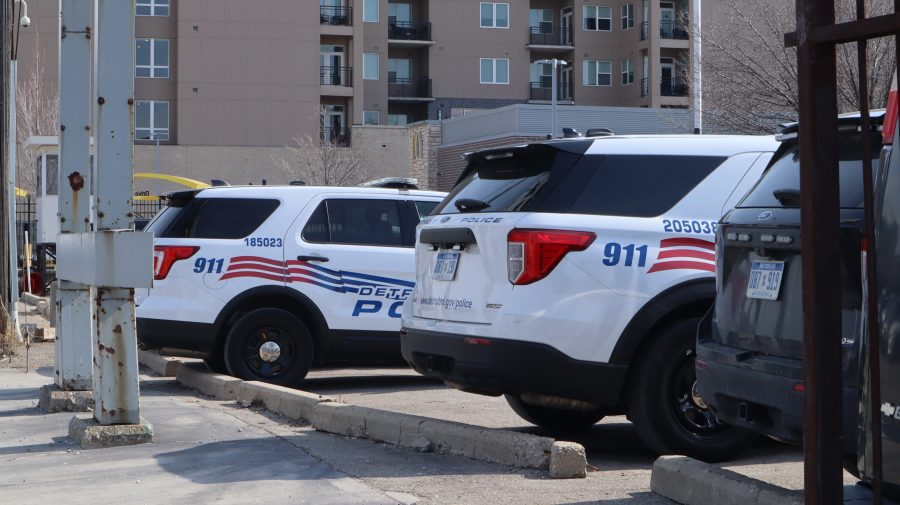
The Detroit Police Department will be at the event to showcase some of their vehicles. And The organization will also provide resources to survivors.  

The event will run from 9 a.m. to 3 p.m. Admission is $10 per ticket and can be purchased at the park entrance.  

Sports updates

FIFA 
Detroit City FC AND the El Paso Locomotive FC tied yesterday 1-1. Before the game the rain was non stop at the Keyworth Stadium but they were still able to have their match. Their next game is Saturday June 13 at 7 p.m. 

Also the Fifa World Cup starts today with co-host Mexico playing the opener in Mexico City against South Africa.

The United States plays their first game against Paraguay tomorrow at 9 p.m. EST at the Los Angeles stadium in Inglewood. 

MLB 
The Tigers lost against the Minnesota Twins yesterday 6-4. We’ll have the results of today’s tie breaker game of this three game series on tomorrow’s DER. 
 
NBA  
Last night, NBA history was made. The New Knicks had the largest finals comeback in history after erasing a 29 point deficit yesterday against the San Antonio Spurs.

Final score was 107-106.  

Henry Ford exhibits to recognize 250 years of the US

And last but not least, to celebrate America’s 250th year the Henry Ford Museum is showcasing 250 acres of special programming, new exhibitions, exciting events and more to highlight the history of American innovation. 
 
Some of the exhibits will be: 

  • Handmade: The Crafting of America  -This exhibit explores how fabrics helped shape American history.
  • Freedom Plane National Tour: Documents That Forged a Nation – This exhibit looks at the important key documents of this nation. The Henry Ford is one of eight institutions across the U.S. where nine original founding-era documents and it will be on display.
  • Artemis Adventure with LEGO® Bricks – This exhibit looks at American space exploration to the wonder of legos.  

Listen to the latest episode of the “Detroit Evening Report” on Apple Podcasts, Spotify, NPR.org or wherever you get your podcasts.

Support local journalism.

WDET strives to cover what’s happening in your community. As a public media institution, we maintain our ability to explore the music and culture of our region through independent support from readers like you. If you value WDET as your source of news, music and conversation, please make a gift today.

The post Detroit Evening Report: Gordie Howe Bridge ribbon cutting cancelled appeared first on WDET 101.9 FM.

❌