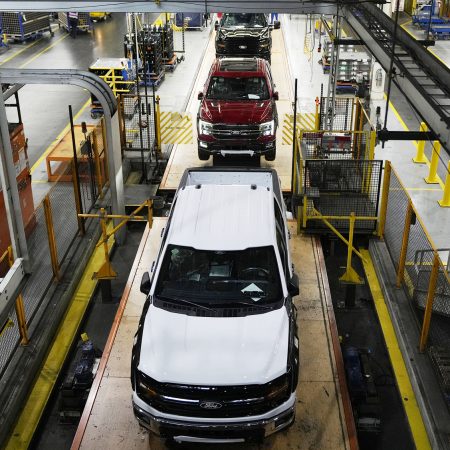
For well over a hundred years, Detroit has been the main hub for the auto industry in America.
The industry brings a lot of jobs with it One of the most prestigious positions is to be the person who designs how the car looks — but not many get that chance.
Those who work in design studios will tell you that there are fewer auto designers in the country than there are pro athletes in any sport. The industry is also known to be as grueling as it is glamorous.
Raphael Zammit has spent his career in the field. He is now a professor of transportation design and is chair of the graduate transportation design program at the College for Creative Studies.
He discussed the field with Alex McLenon on The Metro.
Hear the full conversation using the media player above.
Listen to The Metro weekdays from 10 a.m. to noon ET on 101.9 FM and stream on-demand.
One-of-a-kind podcasts from WDET bring you engaging conversations, news you need to know and stories you love to hear. Keep the conversations coming. Please make a gift today.
That’s in part because of a 25 % tax the president issued on steel and aluminum, which has cost thousands of jobs for people in Windsor alone. Most of those folks work for auto suppliers.
Today is not only Canada Day, it’s also the day that talks are set to begin to renew the U.S.-Mexico-Canada-Agreement. And so, The Metro wanted to learn about what sentiments are like across the Detroit River.
How are workers in the “steel belt” of Ontario and Quebec reacting to changes? And, how is it shifting their orientation towards America and altering how they see themselves?
Flavio Volpe is the president of the Automotive Parts Manufacturers’ Association, which is located in Toronto. He says American tariffs on Canada have made many Canadians skeptical of America.
“We may never trust them the same,” says Volpe.
The Metro’s Sam Corey spoke with the auto manufacturer president about why America’s aggressions toward Canada have led to losses for everyone.
Hear the full conversation using the media player above.
Listen to The Metro weekdays from 10 a.m. to noon ET on 101.9 FM and stream on-demand.
One-of-a-kind podcasts from WDET bring you engaging conversations, news you need to know and stories you love to hear. Keep the conversations coming. Please make a gift today.
This year’s running of the Detroit Grand Prix is in the books. The temporary walls along Jefferson Avenue will be coming down over the next few days.
While the eyes of race fans in the grandstands and parking decks were drawn to the drivers over the three-day weekend, auto racing is a team sport.
Kyle Kirkwood is driver of the No. 27 Andretti Global Honda and winner of last year’s Detroit Grand Prix. He says the tight downtown streets play into his team’s hands.
“It’s like a thing for us at Andretti,” says Kirkwood, “that we’re really good in slow speed corners. The bumps, the low grip nature of the track, it suits our car.”
Listen: What goes into an IndyCar race weekend
Kirkwood and his team came into the weekend looking to gain momentum. The Floridian drove his car to a mid-pack 16th place finish at the Indy 500 just days before coming to the Motor City.
It was a result that Kyle Kirkwood’s race strategist, Bryan Herta, says was a disappointment for the team.
“So we’re looking to kind of just get back on track here with Kyle and get a good result,” says Herta.
As race strategist, it’s Herta’s job to pick through data, communicate with the driver and call pit stops.
“Really I’m playing the telephone game,” he explains. “So we’ve got a number of engineers in the timing stand as well as in the truck relaying information to me throughout the race.”
But cars don’t just show up to the track and race. That’s why the Detroit Grand Prix is a multi-day event.
Practice and qualifying
Practice sessions allow teams to dial in their setup. That comes after teams spend hours running simulations and working on the car at the shop before it ever turns a wheel.
“Car rolls out of the trailer; we hope that we’re good,” says Kyle Kirkwood. “We have some test items that we want to get through.”
If all goes to plan, Kirkwood says his Andretti Honda won’t need too much tweaking.
“If you’re throwing changes at the car, looking for balance, trying to find speed, that’s when you typically fall behind a little bit,” he explains.
After practice comes qualifying, to decide the starting order for race day. Kirkwood says it can be hard to set a clean lap time in Detroit. Traffic is common on the narrow track.
“It’ll create some excitement for sure,” he says. “I don’t like the excitement if I’m being honest, because I think we just have really fast cars. But, same time, if we have a fast car we should be able to do the right thing.”
And he was fast in qualifying. The No. 27 Honda advanced through each round with a chance to start the Detroit Grand Prix on pole.
However, Bryan Herta says an error by Kirkwood on his final qualifying lap cost them a chance to roll off first on Sunday.
“We’ve had a really fast car,” says Herta. “I think we’re a little disappointed with qualifying in sixth.”
Despite that, Herta doesn’t expect the mistake to stick to his driver.
“The thing I’ll say is I really enjoy working with Kyle,” Herta explains. “He doesn’t get too up when things are going well and he doesn’t get down when we’re working through struggles… and he’s fast. He can deliver. He does what we need him to do in races.”
And what Herta needs Kyle Kirkwood to do is not always drive like it’s the last lap of the Detroit Grand Prix.
Strategy
Racing is about more than just raw speed. If you drive the car as hard as it can possibly be driven, you will use more fuel and wear the tires out quicker, slowing you down in the long run.
In IndyCar, there are two different kinds of tire — one that is slower but lasts longer, and one that is fast but has a shorter lifespan.
Teams must run both types of rubber during the race. Herta says that adds an element of strategy crews need to figure out.
“So it’s really just the order in which you want to run your tires that’s going to be the differentiator.”
Race day
On race day, Herta and Kirkwood played their strategy correctly. A well-timed pitstop early in the running allowed the Andretti team to move its way forward and into a fight for the race win.
When the checkered flag flew after 100 laps, Kyle Kirkwood crossed the finish line in second position. He says the result made for a good day.
“You can’t be very upset with starting sixth and finishing second.” — Kyle Kirkwood, IndyCar driver
“You can’t be very upset with starting sixth and finishing second,” says Kirkwood. “We did all the right things. Pit stops were great, strategy was great.”
The result moves the No. 27 Honda up into second place in the season-long championship standings. Unfortunately for the Andretti Global team, it the man leading the title fight, Alex Palou, won the race.
Never-the-less, Kyle Kirkwood says he has his eye set on winning his first title.
“I still think that we can catch up,” says Kirkwood, “It’s not done and lost by any means.”
Kirkwood and Herta still have time to make that happen. As the IndyCar series leaves the Motor City, there are 10 races left to decide this year’s champion.
Trusted, accurate, up-to-date.
WDET strives to make our journalism accessible to everyone. As a public media institution, we maintain our journalistic integrity through independent support from readers like you. If you value WDET as your source of news, music and conversation, please make a gift today.
President Trump is visiting Beijing to meet with Chinese President Xi Jinping this week. Michigan lawmakers are warning him against agreeing to any deals that would allow Chinese electric vehicles into the U.S.
While they are not currently available in the states, President Trump suggested he may be open to allowing them during a visit to the Detroit Economic Club earlier this year. The EVs have become popular, low-cost sellers in Europe and are now available in Canada and Mexico.
Listen: Elissa Slotkin discusses Chinese EVs
Legislation has been introduced in Washington to ban sale of the vehicles. That includes a bill co-sponsored by Democratic Michigan Senator Elissa Slotkin and Ohio Republican Bernie Moreno.
Slotkin argues that having those models on U.S. roads driving near military bases and civilian infrastructure could be a security risk.
“Taking all that data, all that video, all that mapping and sending that back,” says Slotkin. “As someone who’s from the Pentagon, that is the exact detailed information an adversarial nation loves to have in their war planning.”
While Slotkin acknowledges that major tech companies, such as Google, are already collecting people’s data, she argues those companies must follow U.S. laws when handling that information.
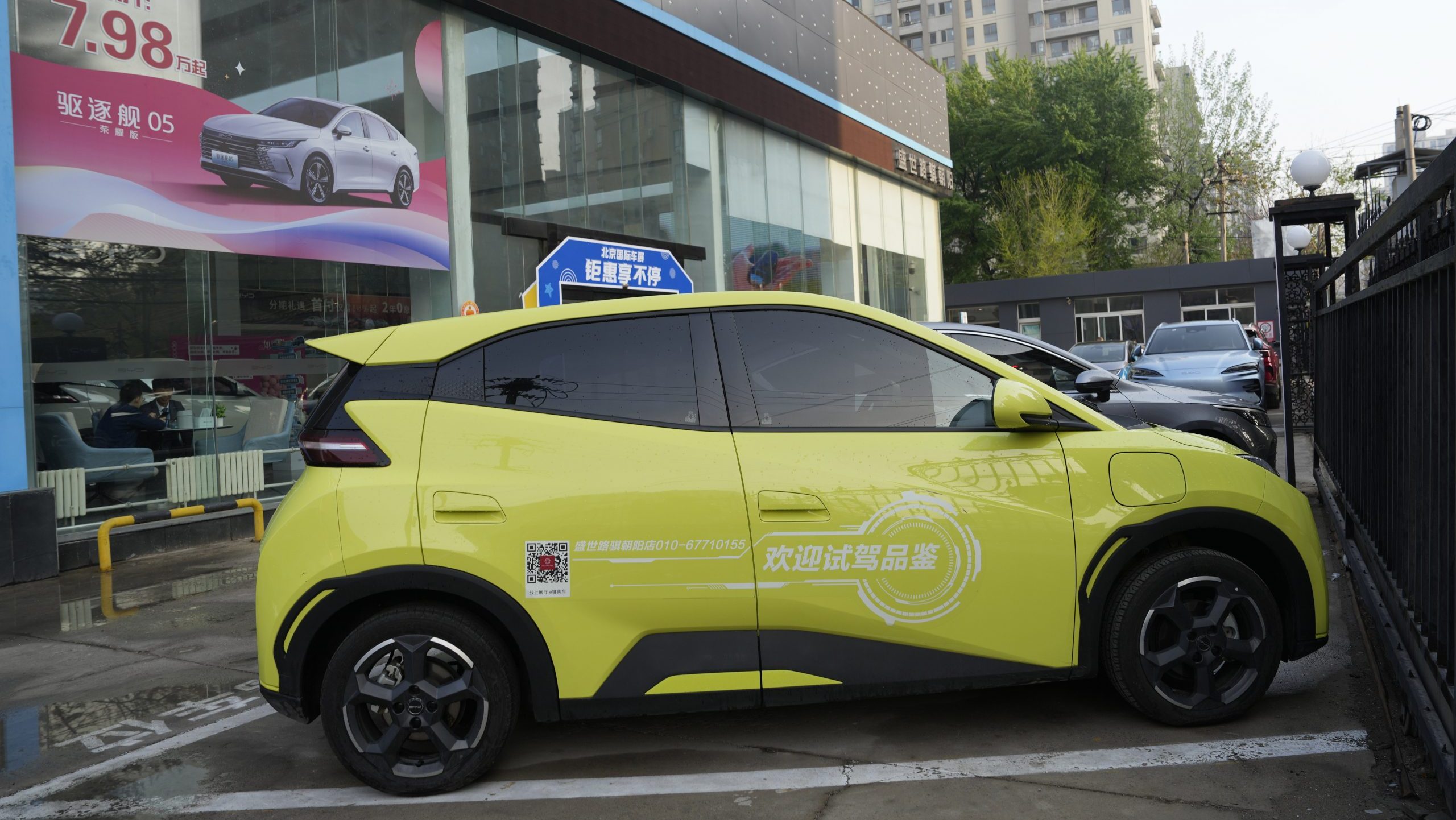
A Seagull electric vehicle from Chinese automaker BYD for test driving is parked outside a showroom in Beijing, Wednesday, April 10, 2024.
Another concern is the impact it could have on American manufacturers, who would stand to lose out on sales.
Republican John Moolenaar represents Michigan’s 2nd Congressional District. He warns that one of the factors keeping Chinese vehicle prices down are unethical labor practices in the country.
“Chinese companies use slave labor to undercut the fair wages of hard-working Americans,” says Moolenaar.
Lawmakers say the U.S. can’t compete with the way the Chinese government subsidizes their auto industry. They argue that creates artificially low pricing for Chinese products that American companies can’t compete with.
Trusted, accurate, up-to-date.
WDET strives to make our journalism accessible to everyone. As a public media institution, we maintain our journalistic integrity through independent support from readers like you. If you value WDET as your source of news, music and conversation, please make a gift today.
In the early 20th Century Ford and Chrysler operated extensive facilities in Highland Park, helping its population grow to more than 50,000 people by the 1930s.
But both car companies moved away from Highland Park decades ago. Now its population hovers between 8,000 and 9,000.
Automotive historian Robert Tate writes for the website MotorCities and worked with the Chrysler museum.
Tate says Ford mass-produced its Model T in Highland Park, creating the moving assembly line that forever changed manufacturing.
Tate says even the Highland Park plant’s architecture was inspiring.
Listen: Robert Tate on Highland Park’s automotive history
The following interview edited for length and clarity.
Robert Tate: The building was designed by Albert Kahn. He and Henry Ford had a great relationship. The doors opened January 1, 1910, on Woodward Ave. It became one of the largest factories in the world because they manufactured the Model T. The factory was about 865 feet and ran parallel to Woodward Ave. This was one of the most historic sites in the United States and the world, to be honest with you. And it also attracted a lot of people from European countries and other cultures to finally get a job and become an American citizen. So, the factory itself created a lot of things for a lot of people, not just the Model T, but for people to live a good life.
Quinn Klinefelter, WDET News: Why did it attract people from Europe and elsewhere?
RT: Henry Ford began using the moving assembly line. And in 1914, the average wage was $2.30. But he raised it to $5 a day. That attracted a lot of people from all over the world to come here, including my ancestors. My family came here from the South to get jobs like that. The only problem was that the hours were long, 10 hours a day and then five hours on Saturday for the workers. And that created a lot of health issues for a lot of individuals because they were so regimented in putting together parts at the assembly plant.
QK: How much did the Ford factory actually mean to the city of Highland Park?
RT: It meant a lot because you’re talking about taxes and people coming in. The Highland Park Hotel was there, they had a racetrack as well at the time. That generated a lot of income.
Site of the old Ford plant in Highland Park.
QK: Why did Ford move it out eventually? Why did it leave Highland Park?
RT: My belief is that things began to change when the 1927 Ford came out and the company had the model assembled at the River Rouge plant. The Model T was produced from 1908 to 1926. And then Ford introduced the 1927 Model A, which was very, very popular. Ford sold millions of those cars. Also, and people don’t like to talk about this, unfortunately there were a lot of workers who got killed at the Highland Park plant. Because at that time they didn’t have things enclosed for safety. So, a lot of men, unfortunately, lost their lives. But I think that Ford wanted to get out of Highland Park and move it closer to River Rouge because you had more goods coming into that particular facility for models to be assembled.
QK: In regards to Chrysler, how did they get into Highland Park?
RT: It was their major headquarters until they moved to a larger facility in Auburn Hills. I used to hear a lot of Chrysler employees say that the Chrysler Highland Park site was just too archaic.
QK: I’ve heard some experts say that when Chrysler in particular moved out, it truly devastated Highland Park’s economy. And that the enclave has struggled to really replace that revenue since. Do you agree?
RT: Yes, I do. The same thing happened with American Motors when they moved out. Unfortunately, the neighborhoods and the communities suffered when both of those companies moved to Auburn Hills. The neighborhoods were devastated.
QK: There must have been a lot of tax revenue and other money coming into Highland Park that suddenly vanished. But you say that from what you heard people who were working for Chrysler were happy to vacate and to go to a newer facility.
RT: My God, yes. I would hear that all the time because it was a new facility. It created a new way of thinking, using the new things that they were not accustomed to having at Highland Park. I remember walking through the hallways at the Chrysler facility in Auburn Hills and it was a showcase. It was a very beautiful building.
Designed by Albert Kahn, the old Ford plant in Highland Park stands as a symbol of automotive history.
QK: After all that has happened since Ford opened the Model T assembly line, when you look at Highland Park now, what do you think is the legacy that automakers have left there?
RT: As a historian, I look at the 1950’s in Highland Park. Virgil Exner, who was the chief designer in charge, came out with the 1957 Chrysler line. And I’m a big fan of the 1957 Chrysler line. So, whenever I think of Highland Park, I think of the good days that launched a lot of cars that were popular, the 1964 Dodge, the 1957 Chrysler. Those cars changed America.
Support local journalism.
WDET strives to cover what’s happening in your community. As a public media institution, we maintain our ability to explore the music and culture of our region through independent support from readers like you. If you value WDET as your source of news, music and conversation, please make a gift today.
Inquiries for new electric vehicles has risen more than a quarter since America and Israel’s war in Iran began. But EVs need to be charged — and that’s easier to do in some places.
If you’re in China, you can charge an EV in just a few minutes. In Michigan, we’re way behind that reality.
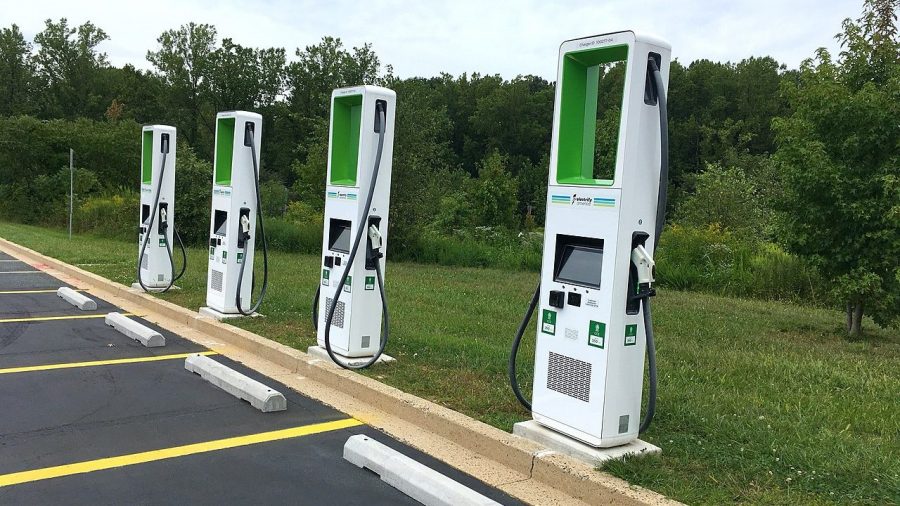
But despite the Trump administration’s distaste for EVs, the infrastructure for electricity is improving. The number of charging ports in the state grew by about 1,800 last year — the most significant uptick in one year.
So, if you’re thinking about buying or leasing an EV, what does all this mean for you?
One-of-a-kind podcasts from WDET bring you engaging conversations, news you need to know and stories you love to hear. Keep the conversations coming. Please make a gift today.

 Login
Login